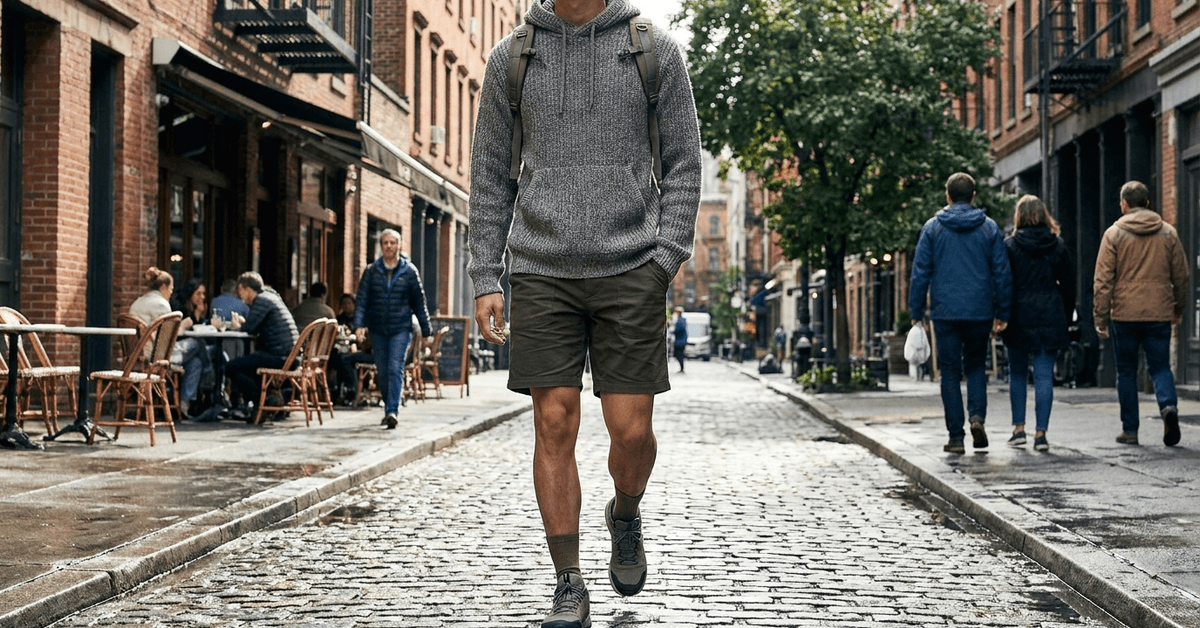
A 15°C morning and a 26°C afternoon hit the same city block six hours apart. That swing turns a single outfit decision into a gamble most commuters lose by lunchtime.
The default advice says match your layers: cold enough for a hoodie means cold enough for pants. But anyone who has overheated on a packed subway after dressing for the chill outside knows uniform layering fails in cities with aggressive temperature swings.
This article is for the person who walks, bikes, or rides transit through San Francisco fog, Berlin park loops, or Toronto lakefront wind. The person who changes environments five times before noon and needs clothes that keep up.
The Thermal Split That Makes Shorts and Hoodies Work
Most layering guides treat the body as one temperature zone. Dress warm everywhere or dress light everywhere. That logic breaks down the moment legs start generating serious heat during a 20-minute walk to the office or a bike commute across town.
How City Microclimates Punish Uniform Outfits
A single commute through a city like New York passes through at least three distinct temperature zones. The subway platform runs hot. The street-level crosswalk catches full wind. The sunny side of a block can feel 8°C warmer than the shady side.
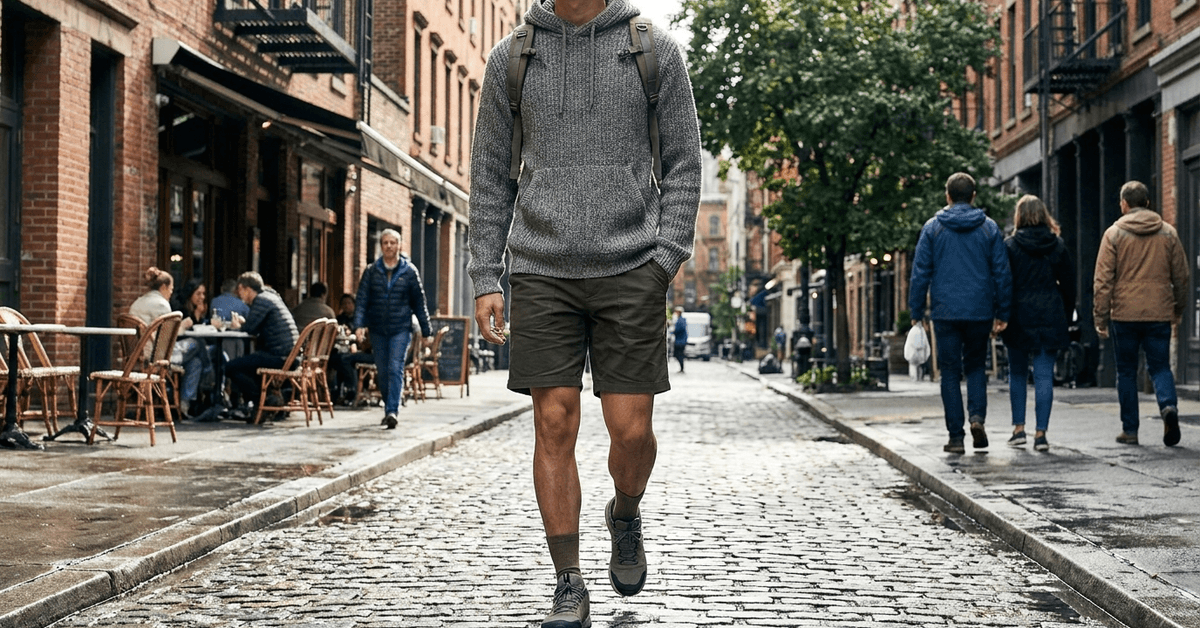
Pants and a hoodie work fine in the first zone but turn suffocating in the second. Shorts and a t-shirt handle the heat but leave the torso exposed during a chilly wait at a crosswalk or bus stop. The split approach: heavy knit on top, shorts below, lets each half of the body regulate separately.
I’d argue this split outperforms matched layering specifically for days above 12°C, because legs produce and dissipate heat faster during walking than the torso does while carrying a bag or sitting on transit.
The hoodie traps warmth where the body cools quickest. The shorts release heat where the body builds it.
Picking a Heavy-Knit Hoodie That Survives a City Day
The wrong hoodie ruins this whole approach. Too bulky and it becomes dead weight by afternoon. Too thin and it does nothing against a cold bridge crossing at 7 a.m.
Fabric Choices and What They Cost
Cotton blends with brushed fleece interiors stay breathable and soft. They absorb sweat, though, so a long walk on a warm afternoon can leave them damp and heavy.
Wool blends add insulation without much bulk. These tend to cost more, but they handle early spring mornings and late autumn evenings in cities like London or Berlin better than cotton.
Synthetic knits resist water and dry fast. For a city where rain starts without warning (looking at San Francisco and London here), synthetic fabric can save the outfit. The tradeoff: synthetics trap odor faster than natural fibers after a full day of walking.
Fit That Works on Crowded Transit
A slightly relaxed cut gives room to layer a t-shirt underneath without looking stuffed. Extra-long sleeves and oversized hoods get caught on handrails, bag straps, and other passengers.
A clean shoulder seam and ribbed cuffs that hold their shape matter more in a subway car than they do in a lookbook photo.
Deep pockets big enough for a phone, transit card, and keys turn the hoodie into a functional piece instead of just an aesthetic one. A hood with adjustable drawstrings blocks wind or light drizzle during a walk between stations.
Shorts That Hold Up Across Three Weather Zones
Picking shorts for transitional weather is trickier than grabbing whatever is clean. The fabric and cut need to handle morning chill, midday sun, and the grime of public seating without falling apart visually by dinner.
Material Picks for City Wear
- Twill or chino shorts look polished enough for a co-working space or a casual restaurant. They hold structure through a full day and pair well with heavier knit textures on top.
- Technical fabric shorts dry fast after a surprise rain shower and work for bike commuters who plan routes through apps like Citymapper. These tend to wrinkle less, too.
- Thin athletic shorts should stay at the gym. They look cold, feel cold in morning shadows, and clash with the intentional streetwear feel of a heavy-knit hoodie.
Length, Color, and the Stain Problem
Shorts that hit just above the knee offer the best balance between coverage during wind gusts and ventilation during warm stretches. Anything shorter risks looking out of place at a museum entrance or a café terrace.
Neutral colors like navy, olive, and grey pair easily with heavy knits and hide city grime. Lighter colors look great for about two hours.
Then a park bench, a subway seat, or a rain-splashed sidewalk leaves a mark. My take on white or cream shorts for a city walking day: skip them unless the route stays entirely above ground.
| Feature | Chino Shorts | Technical Shorts |
|---|---|---|
| Drying speed | Slow (cotton-heavy) | Fast (synthetic blend) |
| Style range | Casual to semi-formal | Sporty to casual |
| Stain resistance | Low | Moderate to high |
| Price range | $30–$70 | $40–$90 |
Chino shorts win on versatility across occasions, while technical shorts handle weather better.
Layering Moves for When the Forecast Flips Mid-Walk
The hoodie-and-shorts combo handles a 10-degree range on its own. Past that, a single extra layer or accessory keeps things comfortable without requiring a full outfit change.
Base Layer Tricks
A lightweight quick-dry t-shirt under the hoodie lets the hoodie come off entirely during a warm stretch without looking underdressed. Merino crew necks serve the same purpose but add warmth for early mornings when the air still bites.
The move that separates planned layering from random dressing: the hoodie slung over a shoulder or tied around the waist during warm windows, then back on the moment shade or wind hits.
That transition takes five seconds. Changing out of pants does not.
Rain Backup Without a Full Jacket
- A packable windbreaker stuffed into a sling bag adds rain protection without replacing the hoodie. It folds down to the size of a sandwich.
- A compact umbrella protects the hoodie knit from getting waterlogged. Wet wool-blend hoodies gain weight fast.
- Waterproof sneakers (brands like Vessi or treated Nike models) keep the feet dry when puddles form. This matters more in shorts than pants, because there is no fabric covering the shin to absorb the splash.
Adjusting the Combo for Different City Scenarios
The same two pieces shift context depending on color, accessories, and footwear. That flexibility is the entire reason this combination works better than people expect.
Work Days and Study Sessions
Structured chino shorts paired with a clean, heavy-knit hoodie and premium sneakers land in the middle ground between dressed up and dressed down.
Libraries, co-working spaces, and casual office Fridays all tolerate this look when the pieces are fitted well. A wrinkled oversized hoodie with gym shorts sends a different message entirely.
Full Exploration Days
Technical shorts with cargo-style pockets, a hoodie, and walking shoes turn the outfit into a functional uniform for hours of sightseeing.
The pockets carry everything a small daypack would, and the hoodie’s hood doubles as sun protection during long stretches through open plazas.
Evening Plans
Darker color palettes (black hoodie, charcoal shorts) dress the combo up enough for rooftop bars, casual bistros, and outdoor music events. A lightweight scarf or a structured cap adds a visual layer without any warmth penalty.
One thing to check before heading to a sit-down dinner or a major museum: some venues in cities like Milan and Paris enforce dress codes that exclude shorts entirely. A quick look at the venue’s website saves an awkward redirect at the door.
Weather Apps That Make This Outfit Strategy Practical
The split-layer approach works best when the wearer checks conditions hour-by-hour rather than relying on a single morning forecast. Two apps make this easier than it sounds.
AccuWeather provides hyperlocal hourly forecasts that break a day into manageable windows. Checking the next two hours of rain probability before leaving a café decides whether the hoodie stays on or the windbreaker comes out of the bag.
Citymapper routes around weather by suggesting underground or sheltered paths when conditions turn.
Combining a weather forecast with a transit route creates a plan that keeps the outfit performing all day instead of fighting the elements after the first hour.
Questions People Ask About Shorts and Hoodies for City Weather
A few things tend to come up when people consider this outfit for real daily use rather than just weekend walks.
- Q: Can shorts and a hoodie work below 10°C?
Below 10°C, bare legs get uncomfortable fast, especially in wind. The combo performs best in the 12°C to 25°C range where the temperature swings hard enough to punish a single-layer outfit but stays warm enough that legs can self-regulate. - Q: Do heavy-knit hoodies work on planes or long train rides?
They double as a travel pillow and temperature control in one piece. Airplane cabins and train cars run cold, so the hoodie stays useful while shorts keep legs from sticking to seats during longer trips. - Q: Are there cities where this combo looks out of place?
Conservative business districts in Tokyo, Milan, and parts of London may read shorts as too casual regardless of the hoodie quality. Residential neighborhoods and creative districts in those same cities accept the look without a second glance. - Q: How do I wash a heavy-knit hoodie without ruining the shape?
Cold water and a gentle cycle prevent the knit from shrinking or pilling. Lay it flat to dry instead of hanging it, because the weight of a wet heavy knit stretches the shoulders out permanently. - Q: What shoes ruin this outfit fastest?
Sandals and flip-flops pull the look toward beach territory, which clashes with the urban intent of a heavy hoodie. Chunky boots swing too far formal. Clean sneakers keep the outfit in its lane.
Conclusion
The hoodie-and-shorts split works because cities throw multiple seasons at pedestrians within a single afternoon. Matching layers top and bottom ignores how differently the torso and legs regulate heat during active movement.
A good heavy knit paired with the right shorts handles more daily variation than most full outfits do. Try it on a day when the forecast shows a 10-degree swing and see which approach has you reaching for a change of clothes first.