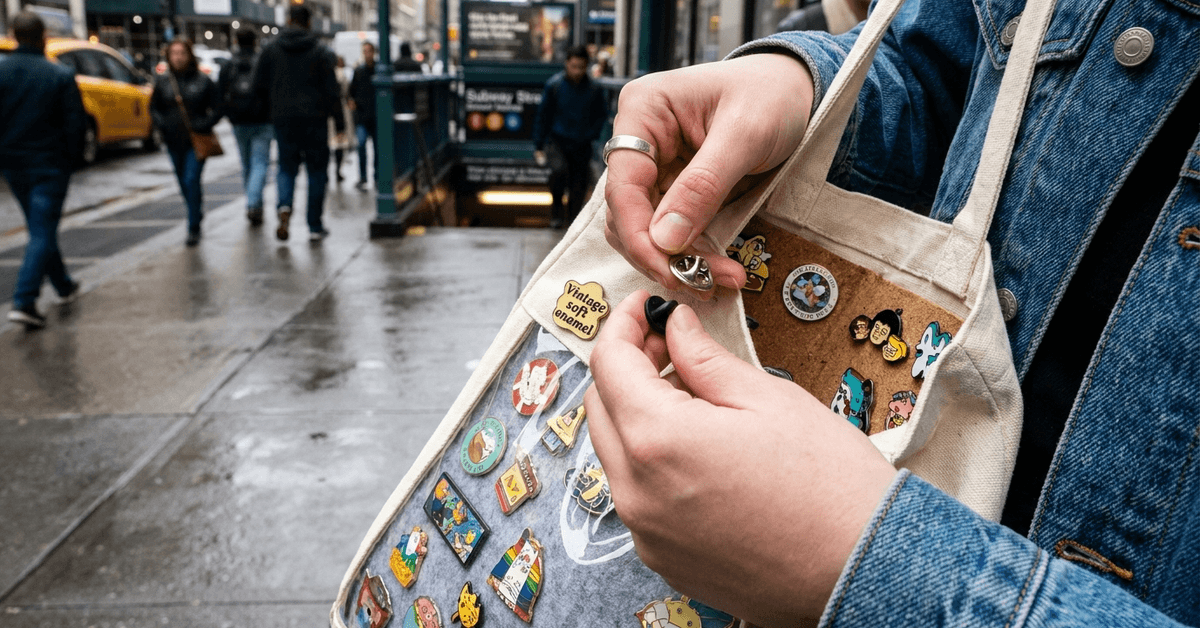
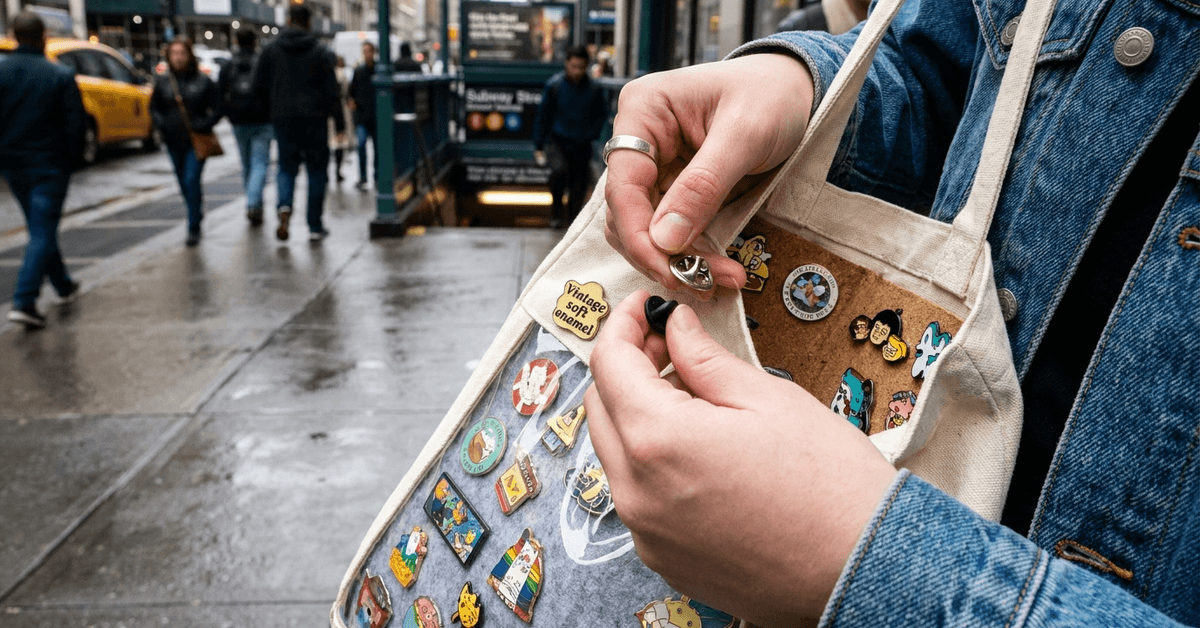
Soft enamel pins chip after about two weeks of daily subway commuting. That timeline surprises most people, because the damage happens in tiny, invisible increments rather than one dramatic scratch.
The standard advice centers on which pinback to buy. But pin backs solve a loss problem, and loss is rarely the thing that ruins a city commuter’s collection. Abrasion is. Bags land face-down on train floors, lean against grimy seats, and get squeezed between bodies during rush hour.
This article is for the person who pins flair to a daily bag and rides transit in cities like New York, London, or Tokyo. Not the collector storing pins in a felt-lined case at home.
Why Enamel Pins Chip So Fast on City Bags
Enamel pins take damage from two directions at once, and most care guides only talk about one. The pin back prevents falling. The pin face takes every bump, scrape, and smear from the world outside.
City commuting puts bags through dozens of contact events per trip: setting a bag on a platform bench, leaning it against a subway wall, pressing through a crowd. Each contact is gentle enough to go unnoticed, but the cumulative effect shows up as dull spots on gold plating and tiny enamel chips along raised metal lines.
Soft Enamel vs Hard Enamel on Transit
Soft enamel pins have recessed paint areas sitting below raised metal ridges. Those ridges catch friction first, so the metal plating wears down before the color does. Hard enamel pins are polished flat, making them more resistant to surface scratches.
I would pick hard enamel for any pin I plan to wear on a commuter bag, specifically because the flat surface doesn’t catch against fabric weave the way soft enamel ridges do.
The metal type matters just as much. Pins with iron or zinc alloy bases oxidize faster in humid transit environments. Brass-based pins hold up longer against city moisture but cost more per unit.
Pin Backs for Daily Commuters: Rubber vs Locking
The pin back conversation dominates every forum thread about enamel pin security. Two main options exist for daily bag use: rubber clutch backs and metal locking backs. The choice seems obvious. Locking backs hold tighter. But the answer gets more complicated for someone who actually commutes with pins every day.
Rubber Clutch Backs and Backer Cards
Rubber backs grip the pin post snugly and pop off with a quick pull. Members of pin communities in Berlin and Tokyo favor these for commuting because they allow fast swaps without tools.
Pairing rubber backs with the original backer card adds a layer of shock absorption. The card sits between the pin post and the bag fabric, preventing the post from piercing too far through and reducing wobble during movement.
A bag bouncing on a bus seat sends vibrations through every pin. Backer cards absorb a small amount of that energy. Rubber backs paired with backer cards create a low-friction attachment: secure enough for a subway ride, easy enough to remove at home.
Metal Locking Pin Backs
Locking pin backs (sometimes called pin lockers) use a metal cylinder that clamps the post and requires a tiny screwdriver or Allen wrench to release. They’re popular among collectors in fast-moving cities like Paris and Chicago, where crowded platforms create genuine theft or snag risk.
I think locking pin backs are overrated for anyone commuting daily with a rotating collection, and the reason is specific: every lock-unlock cycle puts rotational torque on the pin post.
Rubber backs slide straight on and off. Locking mechanisms twist. Over weeks of daily use, that repeated twisting can loosen the solder joint where the post meets the pin body.
For a collector who pins once and displays for months, locking backs are ideal. For a commuter swapping three pins before the morning train, the tool requirement and post stress make them a worse fit than a firm rubber clutch.
Best Bag Fabrics for Wearing Enamel Pins Every Day
Not every bag material holds pins equally well. Thin nylon lets pins wobble. Leather resists pin puncture, which sounds like a plus until the pin hole stretches and won’t close.
The sweet spot is a medium-weight woven fabric that grips the pin post without tearing.
Canvas and Denim Tote Bags
Canvas and denim are the default choices for pin display in cities like San Francisco. Both have a tight enough weave to hold a pin post firmly, and they resist tearing even after repeated pin insertions in the same spot.
Denim is slightly better for long-term use because its twill weave distributes stress across more threads per square centimeter than plain-weave canvas.
One overlooked trick from experienced urban pin wearers: slide a piece of thick felt or foam inside the bag, behind the section where pins attach.
The pins push through both the outer fabric and the felt, which cushions impacts when the bag gets knocked around on rough sidewalks or cobblestone streets. The felt also prevents pin posts from snagging on items stored inside the bag.
Ita Bags for Complete Pin Protection
Ita bags come from Japanese fan culture and have a clear PVC window on the front, with pins attaching to a removable fabric insert behind the window.
The clear panel completely shields pin faces from outside contact. Rain, grime, friction from other bags on the train: none of it touches the enamel surface.
- Standard ita bag crossbodies hold roughly 20 to 30 pins of 25mm size
- Backpack-style ita bags fit 40 to 80+ pins with larger display windows
- The removable insert means swapping an entire pin layout takes seconds, not minutes of individual pin removal
I was skeptical about ita bags for daily commuting until I saw reviews on FandoMara’s ita bag guide describing users carrying them through full convention days and rainy commutes without a single scratch on their pins.
The PVC window does what no pin back can: it protects the front of the pin, the part that faces outward and takes the most city abuse.
The tradeoff is aesthetic. Ita bags have a specific look rooted in anime and fandom culture. For someone who prefers a minimal canvas tote, an ita bag won’t fit their style.
Weatherproofing Enamel Pins Against Rain and City Grime
Urban pin wear means exposure to rain, humidity, air pollution, and the mysterious sticky residue that coats every public transit seat. Each of these degrades pin quality in different ways.
Protecting Pins During Rain
Rain doesn’t ruin pins on contact. But water sitting in the recessed areas of soft enamel pins accelerates oxidation on exposed metal.
Cities with frequent sudden showers, like Amsterdam or London, create repeated wet-dry cycles that stress metal plating.
- Spray a water-resistant coating on the bag fabric around the pin area, not on the pins themselves
- For full rain protection, use a clear pouch or zip-close bag that fits over the pinned section
- After getting caught in rain, pat pins dry with a soft cloth as soon as possible
Cleaning Off City Grime
City air deposits a thin film of particulate matter on exposed surfaces. Over weeks, this film dulls enamel and discolors metal plating. Pins worn daily on a commuter bag need cleaning every two to three weeks.
A microfibre cloth (the kind used for eyeglasses) works well because it lifts grime without scratching. Mild dish soap mixed with warm water handles heavier buildup.
PinMart’s pin care guide recommends avoiding abrasive cleaners entirely, even on metal-only pins. The polishing compounds in abrasive cleaners strip plating faster than city pollution does.
Rotating and Storing Pins Between Commutes
Most pin damage on city bags accumulates over time. Rotating pins off the bag and onto a home display board gives high-value or fragile pins a break from daily wear.
A practical rotation system looks like this:
- Keep a small organizer box at home with divided compartments for pins not in active rotation
- Limit daily bag display to five or fewer pins, which reduces total loss exposure per trip
- Use travel pin rolls (fabric rolls with individual pin slots) for day trips or multi-city travel
- Reserve rare, vintage, or sentimental pins for display boards at home and carry replaceable pins on the daily bag
The weekly pin check is the habit that prevents gradual damage from going unnoticed. Every Sunday, pull each pin off the bag and inspect for bent posts, loose backs, chipped enamel, or dull spots.
Catching a bent post early means a simple straightening. Catching it late means a snapped post and a lost pin on the Tuesday morning commute.
Questions People Ask About Protecting Enamel Pins on Bags
A few quick answers to the searches that keep coming up around this topic.
- Q: Can I put clear nail polish on enamel pins to protect them?
Clear nail polish adds a thin protective layer, but it yellows over time and can peel off in humid conditions. A better option for daily-wear pins is choosing hard enamel construction, which already has a polished, durable surface that resists scratching without any added coating. - Q: Do magnetic pin backs work for city commuting?
Magnetic backs are convenient for dress shirts and thin fabrics, but they slip too easily on heavier bag materials like canvas or denim. A strong bump on the subway can knock a magnetic-backed pin right off. Rubber clutch backs grip better on thick fabrics. - Q: How many pins can I safely put on a messenger bag?
That depends on the bag’s fabric weight and the pin spacing. Five to eight pins spaced at least two centimeters apart is a good range for most canvas messenger bags. Placing pins too close together lets them knock against each other during movement, which chips enamel edges faster than any external contact. - Q: Are enamel pins safe to wear on bags in the rain?
Brief rain exposure won’t destroy a pin, but repeated wet-dry cycles corrode exposed metal, especially on soft enamel designs where the metal ridges sit above the paint. Drying pins immediately after rain and storing the bag in a dry spot overnight prevents most weather damage. - Q: What’s the best way to carry pins through airport security?
Remove pins from your bag before the security line and place them in a small padded pouch inside your carry-on. X-ray machines won’t damage enamel, but the rough handling of bins and conveyor belts chips exposed pin faces. Put them back on your bag after clearing security.
Conclusion
City commuting puts enamel pins through conditions that home display never does. The right bag fabric, a firm rubber clutch back, and a weekly inspection habit prevent most of the damage.
Rotating pins off the bag and cleaning them with a microfibre cloth every few weeks keeps the enamel looking sharp.
Treating pins as gear that needs maintenance, rather than decoration that takes care of itself, is the real difference.