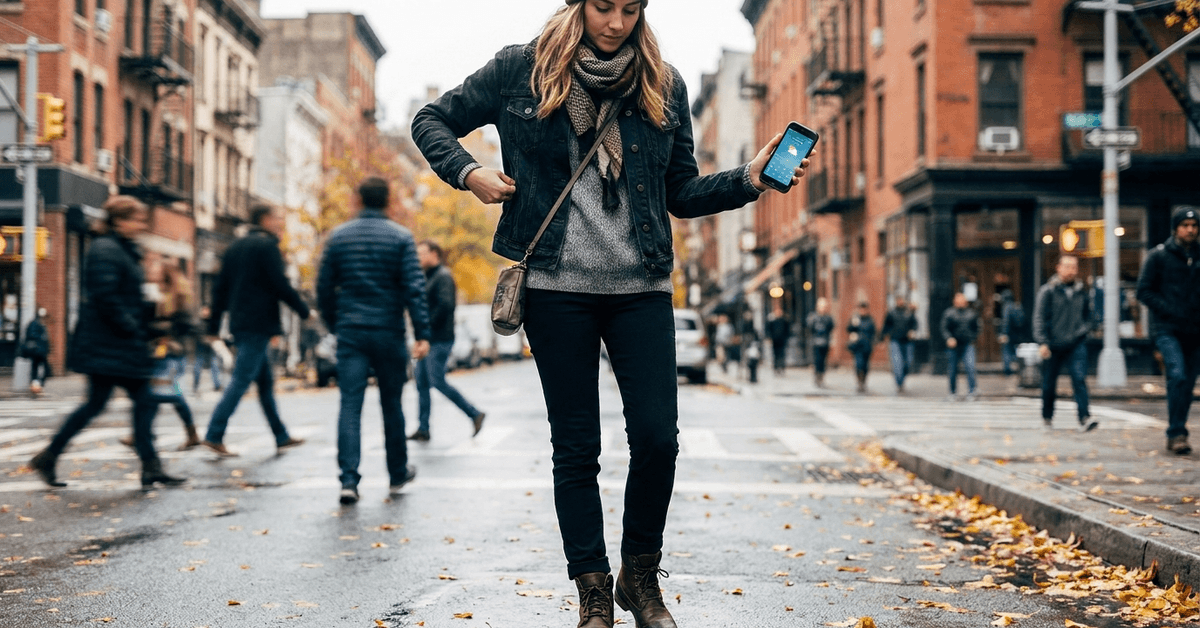
A 7 a.m. subway platform in Toronto hits about 12°C in late September. That same afternoon, the sun pushes the sidewalk temp past 22°C.
This daily temperature swing is the single biggest wardrobe problem city dwellers face between August and November. And most style advice skips right past it to sell you a new jacket.
The audience that gets hit hardest: daily commuters who walk, bike, or ride transit and carry everything on their backs. This one is for the backpack-and-sneakers crowd, not the drive-to-the-office set.
The “Transitional Wardrobe” Myth and the One-Layer Fix
Every autumn style guide pushes the same line: build a transitional wardrobe. That phrase sells clothes. It doesn’t solve the actual problem, which is a single outfit that works at 7 a.m. and 2 p.m. on the same Tuesday.
Skip the Shopping Spree, Add One Smart Layer
I’d argue against buying a dedicated autumn capsule wardrobe, and my reasoning comes down to a specific fabric gap.
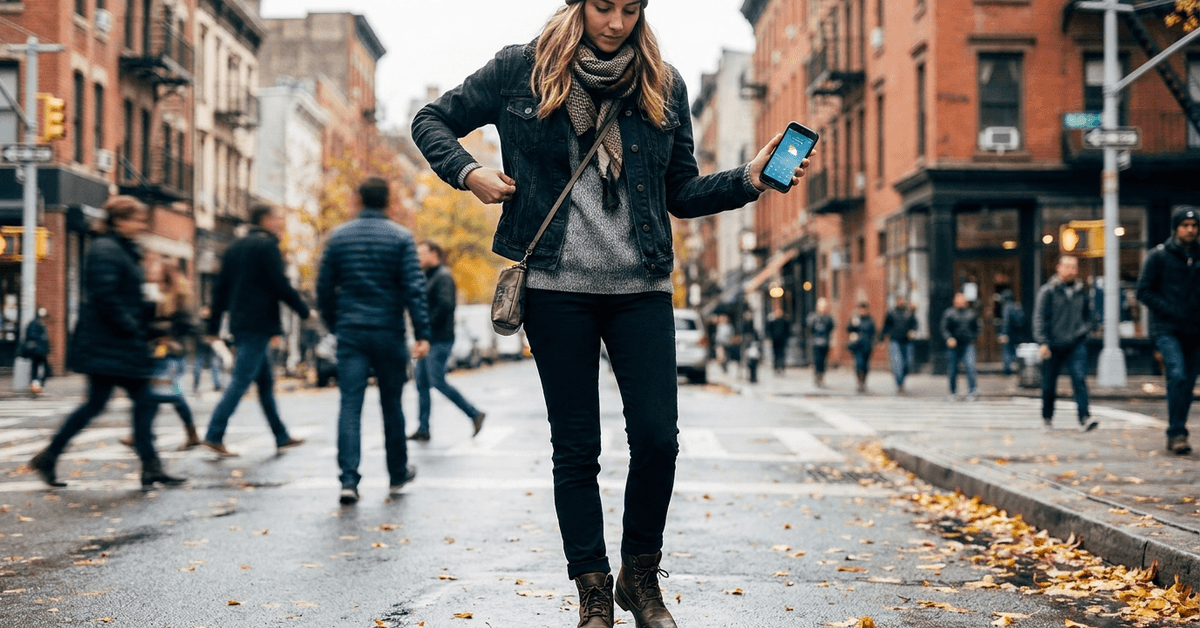
A lightweight cotton-blend bomber jacket or an unbuttoned utility shirt over a summer tee handles 80% of the temperature range between 10°C and 23°C. That range covers most of September and October in cities like Berlin, San Francisco, and Barcelona.
The summer clothes already in the closet do the heavy lifting. A fitted tee, a pair of cropped jeans, and sneakers work from June through late October in most temperate cities. The missing piece is one outer layer that ties around the waist or stuffs into a bag without wrinkling.
Denim jackets still do this job better than almost anything on the market. They breathe when it’s warm, block wind when it’s cool, and look fine balled up on a cafe chair. Cities with rain (Vancouver, Amsterdam, London) call for a water-resistant bomber instead, but the principle stays the same: one layer, not five new pieces.
What to Pair Under That Single Layer
The base matters more than the outer layer during this in-between period. A long-sleeve Breton stripe top or a simple button-up shirt gives enough warmth for a cool morning without overheating by noon.
Button-ups pull double duty: wear them closed early, then open over a tee as a second skin when the afternoon warms up. Trousers need the same flexibility. Cuffed chinos or cropped jeans sit in a sweet spot where they don’t look like summer shorts or winter armor.
Some commuters in cities like Copenhagen and Amsterdam have shifted toward lightweight joggers with zip pockets, which keep a phone and transit card secure during rush hour.
Fabrics and Colors That Survive a Full Day on City Streets
Picking the right material matters more than picking the right brand during this season shift. A morning subway, a lunchtime walk, a crowded bar after work: one outfit gets tested across wildly different temperatures and situations in a single day.
Cotton Blends and Lightweight Wool Over Everything Else
Cotton-bamboo blend tees resist wrinkles after a full day of sitting, standing, and cramming into bus seats. Heavyweight cotton creases badly. So does linen.
Lightweight wool-mix sweaters regulate body temperature better than synthetic fleece, which traps sweat during a warm afternoon walk and then turns cold and clammy on a breezy evening patio.
The price gap between a synthetic mid-layer and a merino-blend one is usually around €20 to €40 on resale platforms like Vinted, and the difference in comfort across a 12-hour city day is enormous.
Color Choices That Hide a City Day’s Damage
This is a detail that fashion-focused articles gloss over completely. Pale summer colors pick up every coffee drip, every construction-site dust cloud, every subway seat smudge. Autumn in a city is dirty.
Practical picks for daily urban wear:
- Forest green and deep navy hide stains and pair with almost anything already in a summer wardrobe
- Mustard yellow adds a pop of warmth without the visibility problems of white or cream
- Burgundy reads autumn without screaming “seasonal palette change”
Those four shades mix and match with each other and with black, grey, or white basics. A reader wearing one of these as a top layer over a neutral tee won’t need to plan outfits in advance.
Footwear When City Streets Turn Slippery
The first fallen leaves on a wet sidewalk are a specific hazard. Flat-soled canvas sneakers, the summer default, lose grip fast on damp stone or tile. This shift happens almost overnight in cities like Amsterdam and London, usually by mid-October.
Water-Resistant Sneakers and Chelsea Boots
Chelsea boots have dominated autumn street style in northern European cities for a reason: they slip on fast, handle rain, and look sharp enough for an evening out.
Platform soles help on cobblestones and uneven pavement, which is half the walkable surface in older European city centers.
Runners who want to keep a sneaker silhouette should look for water-resistant leather or treated canvas uppers. Brands have caught up to the demand here, and most major sneaker companies now carry weather-ready versions of their popular models.
One small hack for stretching summer shoes into October: a gel insole plus no-show wool-blend socks. The insole adds cushion for colder, harder ground. The wool sock wicks moisture instead of holding it like cotton does.
Using Apps to Plan Outfits Around Weather Swings
City weather changes faster than regional forecasts suggest. A coastal city like San Francisco can swing 10°C between neighborhoods on the same afternoon.
Checking AccuWeather or the Norwegian YR.no app the night before gives an hour-by-hour breakdown that makes morning outfit decisions take about 30 seconds.
Style Inspiration Apps Worth Opening
Instagram location tags for specific neighborhoods (search “#BerlinStreetStyle” or “#TorontoFashion”) show what real people wore that week in that exact city.
This beats any editorial roundup because the outfits reflect actual conditions, not a studio shoot.
Pinterest boards organized by city and season pull up the same kind of local intel. The difference is that Pinterest saves are more curated and easier to scroll quickly while drinking coffee.
Resale Platforms for Quick Autumn Swaps
Platforms like Vinted and Depop move fast during seasonal transitions. Late August through mid-September is the window when summer sellers flood those apps with inventory and autumn pieces appear at steep discounts.
Selling three summer tops and buying one wool-blend sweater can be a net-zero transaction.
Packing for Autumn Day Trips and Weekend City Breaks
A weekend trip to a different city during October demands a different packing approach than a July getaway. The bag needs to be lighter, but the outfit range needs to be wider.
A carry-on or weekender bag should hold:
- One versatile jacket that layers over two or three different tops
- Both a tee and a button-down for flexible morning-to-evening transitions
- A lightweight scarf that covers shoulders on cold trains or doubles as a blanket on outdoor terraces
Rolling a packable rain jacket into the bottom of the bag takes almost no space and saves a trip from being ruined by a sudden shower. Cities like Dublin, Brussels, and Hamburg rarely make it through an October weekend without at least one downpour.
Accessories That Pull Autumn Outfits Together
A few small additions can push a basic summer outfit into autumn territory without a full wardrobe change. The trick is choosing items that pack flat and serve more than one purpose.
Worth carrying:
- A mid-weight scarf that works as a neck wrap, a shoulder cover, or a lap blanket at outdoor cafes
- A small crossbody bag that keeps a phone and transit card accessible in crowded stations
- A beanie or bucket hat that adds warmth without messing up a hairstyle
Frequent cyclists in cities like Copenhagen report that fingerless gloves make a surprising difference on sub-15°C morning rides. They look odd in September. They feel right the first time the wind hits bare knuckles at 7 a.m.
| Accessory | Best For | Packability | Weather Range |
|---|---|---|---|
| Mid-weight scarf | Wind, style, cafe blanket | Rolls small | 8°C to 18°C |
| Crossbody bag | Transit security, hands-free | Wears on body | Any |
| Beanie | Morning chill, bad hair days | Pocket-sized | Below 14°C |
| Fingerless gloves | Cycling, early commutes | Pocket-sized | Below 12°C |
The scarf does the most work across the widest temperature range, making it the single most useful autumn accessory for a city commuter.
Questions People Ask About Transitioning Street Style for Autumn
These are the kinds of questions that come up every September when the weather starts acting unpredictable and the closet feels wrong.
- Q: Can I still wear summer dresses in early autumn?
Absolutely. A neutral long cardigan over a sleeveless dress changes the look instantly. Tights or ankle boots add enough coverage for anything above 10°C, and neither takes up much bag space. - Q: How do I avoid overdressing on warm autumn afternoons?
Build the outfit so every upper layer can be removed and carried. A tied jacket around the waist or a scarf stuffed into a tote means the outfit still looks complete with just a tee underneath. - Q: What’s the best rain layer for city commuting?
A packable rain jacket that folds into its own pocket beats an umbrella in crowded transit. Umbrellas are a hazard on busy sidewalks and impossible to deal with on a packed bus or train.
Conclusion
Autumn city style works best when the closet stays lean and each piece earns its space across multiple outfits. The gap between summer and winter is shorter than it feels, and one good layer bridges most of it.
Spending less on “transitional” pieces and more on versatile fabrics keeps the whole system simple. The best autumn outfit is probably already hanging in the closet, waiting for a jacket on top.