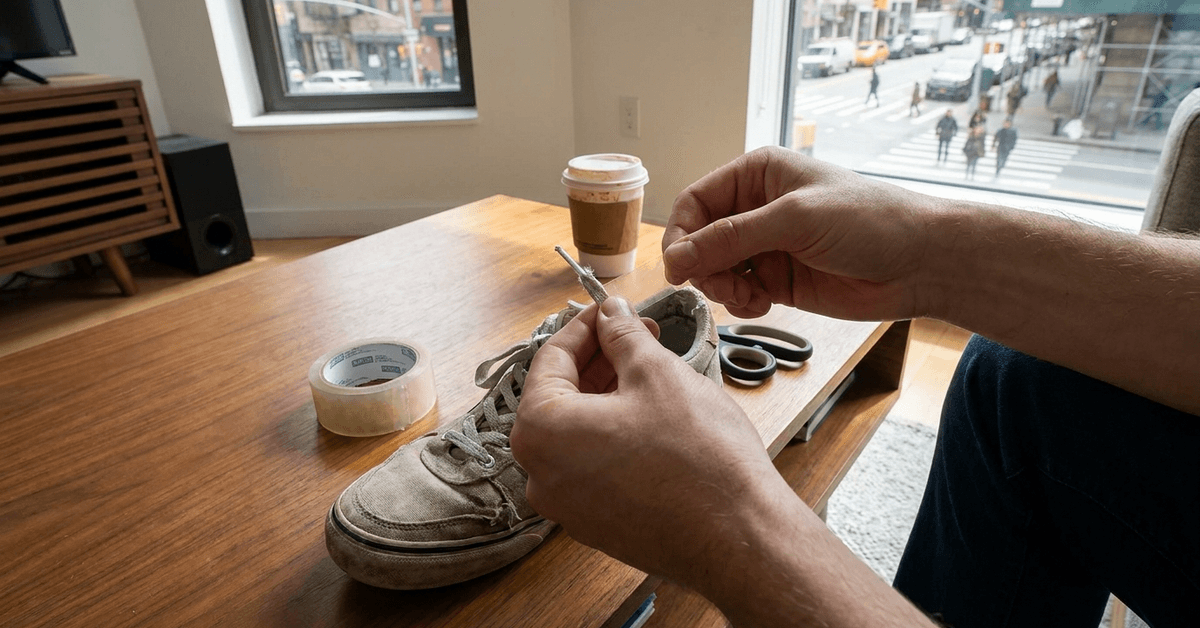
Every shoelace repair guide on the internet starts with the same advice: grab clear tape. That recommendation fails within 48 hours if your shoes see rain, sweat, or a single puddle on a city sidewalk.
The little plastic cap at the end of a shoelace has a name: an aglet. And aglets don’t just wear down from age. Constant walking on concrete, stepping on and off buses, and cycling through wet streets strips them faster than most people expect.
This guide is for commuters, bikers, and daily walkers who go through two or three pairs of laces a year and want a fix that survives past the weekend. Not a hack that peels off on Monday morning.
Why City Walking Shreds Aglets Faster
Sidewalks do more damage to shoelace tips than almost any other surface.
The combination of hard concrete, sharp curb edges, and repetitive motion wears the aglet plastic thinner every single day. Suburban walking on softer paths and lawns spreads the friction more evenly.
Wet Weather Speeds Things Up
Rain and slush don’t just get shoes wet. Moisture softens the adhesive holding the aglet to the lace, and once that bond weakens, the plastic tube slides off completely. Cold weather makes the remaining plastic brittle, so it cracks instead of bending.
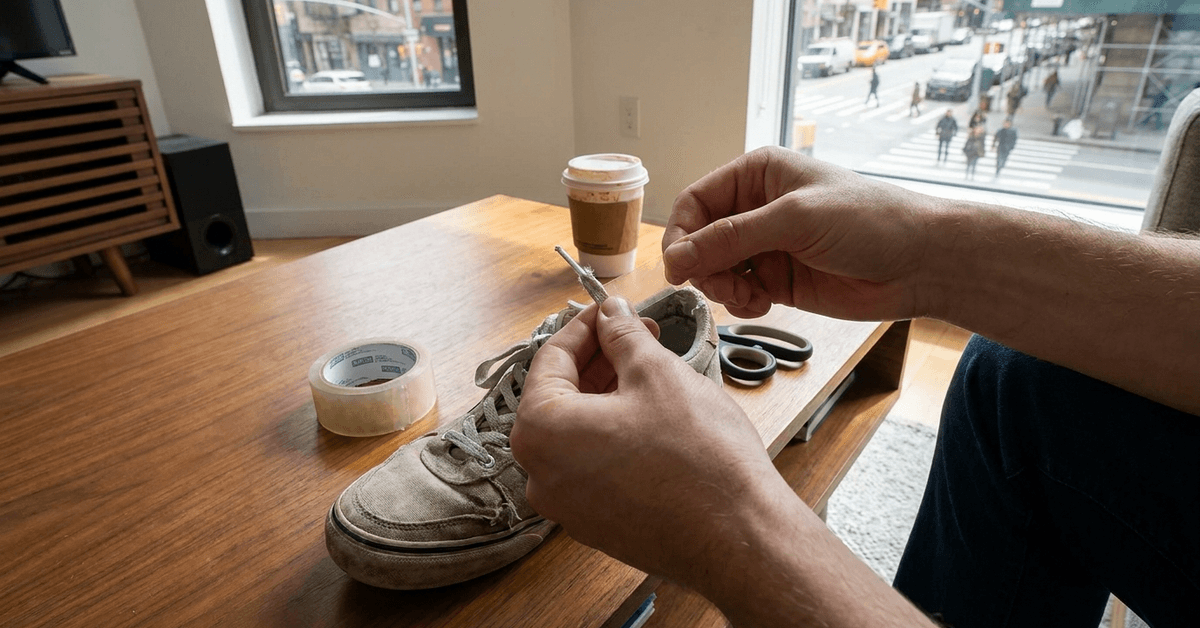
Bike pedals add another friction point that most walkers never encounter.
The lace tip catches on the pedal cage during rotation, tugging and fraying the aglet from a different angle than walking alone. City cyclists tend to see double the aglet wear compared to people who only walk.
Stop Using Clear Tape on Shoelaces
I would skip clear tape entirely after comparing it to heat shrink tubing and nail polish across a full week of city use. Tape peels. It absorbs moisture.
And the adhesive residue it leaves behind makes the lace tip stickier, which attracts lint, grit, and dirt that speed up the next fray.
Why Tape Fails So Quickly
The problem is structural. Tape wraps around the outside of the lace, and shoelace tips flex every time they pass through an eyelet. That repeated bending breaks the tape seal within a day or two of regular use.
Nail polish and heat shrink tubing bond to the lace fibers themselves, so the fix moves with the lace instead of fighting it.
Most people reach for tape because it takes 30 seconds. But a nail polish application takes about 90 seconds of active time (the rest is drying), and heat shrink tubing takes under two minutes with a lighter. Saving one minute upfront costs a redo every few days.
Five Shoelace Tip Fixes Ranked by Durability
Each of these methods uses supplies that most apartments already have, or that cost less than a replacement pair of laces. The ranking below reflects how long each fix holds up under daily city walking conditions.
Heat Shrink Tubing: The Longest-Lasting DIY Aglet
Hardware stores like Home Depot sell heat shrink tubing in small diameters for under $5 a pack. The process is simple: trim the frayed end clean, slide a 2 to 3 cm piece of tubing over the tip, and warm it with a lighter or hairdryer while rotating the lace slowly.
The tubing shrinks tight around the lace fibers and creates a seal that flexes without cracking. This method lasts the longest of any home repair option and produces a result that looks close to a factory aglet.
One thing to watch: hold the flame about 3 cm away from the tubing and keep rotating. Direct contact melts the tubing unevenly and can scorch the lace underneath.
Nail Polish Layering: Surprisingly Tough
Clear nail polish is the second-best option and the easiest to find in most households. Trim loose threads first, then apply two to three coats with full drying time between each coat. The dried polish creates a hard, glossy shell around the lace tip.
The fix holds well against dry friction but breaks down faster in wet conditions than heat shrink tubing. A single heavy rain can crack a thin coat, so the multiple layers matter.
Super Glue and Paper Wrap
A more aggressive fix for laces that are already too damaged for polish alone.
Cut away all loose threads, wrap a thin strip of paper (a business card works) tightly around the tip, then seal with a drop of super glue. Hold firm for 30 seconds until the bond sets, and trim any excess paper.
The result is stiff, functional, and ugly. It gets laces through eyelets, but the paper wrap adds bulk that can make tight-fitting eyelets harder to thread.
Wax Coating: Good Enough for Travel
Candle wax or beeswax rubbed over a frayed tip creates a temporary seal that travels well. Warm the wax slightly, press it around the lace end, and shape it into a point while it cools.
The fix holds for a few days of light use, which makes it useful for trips but not for daily commuting.
Clear Tape: A Temporary Patch (at Best)
Tape goes last on this list for a reason. A 4 to 5 cm strip wrapped tightly around the tip looks clean for about a day.
After that, moisture, friction, and bending start peeling the edges. The sticky residue left behind traps dirt and weakens the lace fibers underneath.
The comparison across all five methods breaks down like this:
| Method | Active Time | Estimated Durability | Supplies Needed |
|---|---|---|---|
| Heat shrink tubing | ~2 minutes | Several weeks to months | Tubing, lighter or hairdryer |
| Nail polish (3 coats) | ~90 seconds + drying | 1 to 3 weeks | Clear nail polish, scissors |
| Super glue + paper | ~2 minutes | 2 to 4 weeks | Super glue, paper strip, scissors |
| Wax coating | ~1 minute | 3 to 5 days | Candle wax or beeswax |
| Clear tape | ~30 seconds | 1 to 2 days | Clear tape |
Heat shrink tubing wins on durability by a wide margin, and the two-minute time investment pays off within the first week.
The Section of Lace Nobody Repairs
Most aglet fixes focus on the last centimeter of the lace: the tip itself. But the 2 to 3 cm of lace directly above the aglet is where the next fray starts.
Once the original aglet cracks or falls off, that section of lace has already been weakened by repeated flexing inside the bottom eyelet.
I think applying nail polish or heat shrink tubing to just the tip is a mistake when the 3 cm section above it on a standard cotton lace is already showing fiber separation. The fix should cover at least 2 cm past the original aglet line.
This is why heat shrink tubing works so well. A 2 to 3 cm piece covers the tip and the weak zone above it, reinforcing the full stress area. Tape and wax can only coat the very end.
When Replacing Laces Beats Repairing Them
Some laces are past saving. If the fray extends more than 4 cm up from the tip, or if the lace material itself feels thin and stretched, no home fix will hold for long. Replacement is the faster and cheaper option at that point.
Brands that sell laces with reinforced aglets tend to hold up better under city conditions:
- Dr. Martens replacement laces come with metal-tipped aglets that resist sidewalk friction
- Adidas flat laces use a heat-sealed aglet that handles wet conditions well
- Shoe repair directories on Citymapper can locate cobblers and shoe repair shops nearby when a quick replacement is needed
A spare set of laces in a daypack or desk drawer eliminates the morning scramble entirely. Keeping two pairs in rotation also spreads wear across both sets, roughly doubling the life of each.
Budget replacement laces from supermarkets often use thinner aglet plastic that cracks within a month. Spending an extra dollar or two on brand-name laces or buying from a dedicated shoe repair shop makes a measurable difference.
Questions People Ask About Fixing Fraying Shoelace Tips
These are the searches that keep coming up around shoelace repairs, and a few answers that go beyond the obvious.
- Q: Can hot glue fix a frayed shoelace tip?
Hot glue can work in a pinch, but it dries thick and lumpy. Threading the lace through small eyelets becomes difficult, and the glue tends to crack after repeated bending. Super glue with a paper wrap produces a thinner, tighter result. - Q: How do I fix shoelace tips without heat?
Nail polish and super glue both work at room temperature. Nail polish needs two to three coats with drying time between each, while super glue sets in about 30 seconds. Wax can also be softened with hand warmth alone. - Q: Do metal aglet tips last longer than plastic ones?
Metal aglets outlast plastic by a large margin, especially on boots and heavier shoes. Dr. Martens and some hiking boot brands include metal tips as standard. Aftermarket metal aglet kits are also sold online for a few dollars per set.
Conclusion
Fraying aglets seem minor until a lace refuses to thread through an eyelet ten minutes before work. Heat shrink tubing takes two minutes and lasts longer than any other home method by a wide margin.
The tape-first instinct costs more time in repeated fixes than spending those extra 90 seconds on a real repair. Carry a spare pair of reinforced laces, and the problem mostly stops coming back.