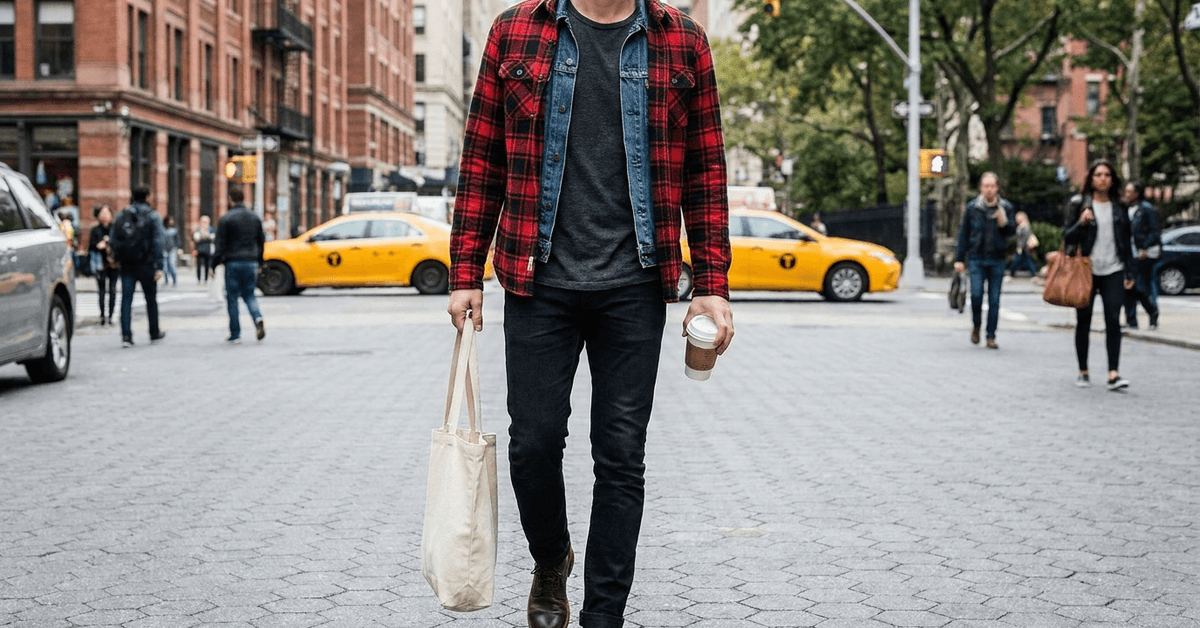
Every menswear blog in 2026 tells you the same thing about flannel: go slim-fit, keep it buttoned, treat it like a casual dress shirt. That advice falls apart the moment you step onto a crowded morning train with a backpack and a coffee.
Flannel has a reputation problem. Most style guides file it under “fall weekend wear,” which completely ignores what makes the fabric useful for the other nine months of city living.
This one is for the commuter who walks 20 minutes to the station, rides transit for 40, and sits in a coworking space by 9 AM. That temperature swing across a single morning is where flannel earns its place over a hoodie or a cotton button-down.
A good flannel shirt solves a specific wardrobe problem that no single alternative handles as well. And the way most people buy them creates its own set of issues.
Why Flannel Performs Better Than a Cotton Button-Down on Transit
The standard recommendation for men who want to look “put together” on a city commute is a fitted cotton button-down. Clean lines, professional enough, pairs with anything.
I’d pick flannel over a cotton Oxford for daily transit wear after comparing how both fabrics handle a week of packed subway rides and rain-soaked walks.
Cotton button-downs wrinkle within an hour of sitting on a train. Flannel’s brushed texture hides creasing and wear marks in a way that smooth-weave fabrics cannot.
How Flannel Handles Temperature Swings Between Underground and Street Level
The gap between an air-conditioned subway car and a 28°C sidewalk in June is brutal on clothing choices. A flannel shirt, worn open over a T-shirt, acts as a removable insulation layer. Pull it on underground. Push the sleeves up outside.
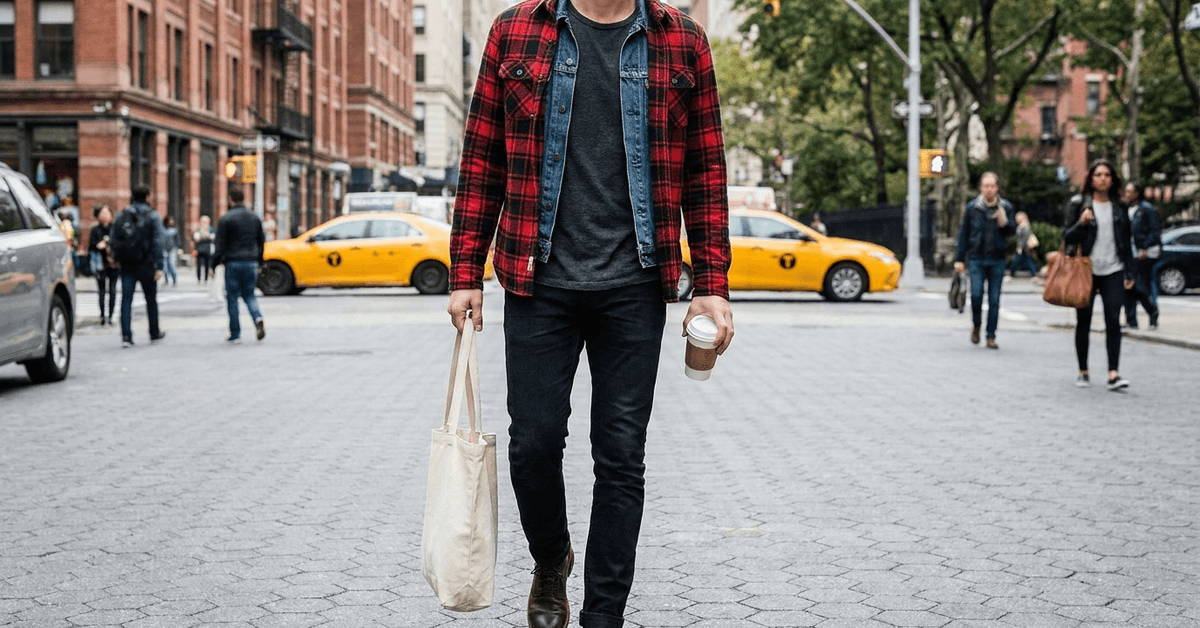
Cotton button-downs don’t work this way because they’re designed to be worn buttoned and tucked. The moment you unbutton one and roll the sleeves, it looks sloppy. An unbuttoned flannel looks intentional.
Flannel’s Texture Hides City Wear
Commuters deal with backpack strap friction, splashes from puddles, and coffee spills at least once a week.
A cotton shirt shows every mark. Flannel’s raised fiber surface and busy plaid patterns absorb minor stains and abrasion without broadcasting them to the office.
That matters for anyone who doesn’t have time to change between the commute and a meeting. The shirt that looked clean at 7 AM needs to still look clean at noon. Flannel clears that bar more often than any other casual shirt fabric.
Flannel Outfit Pairings That Work Beyond October
The seasonal box that flannel gets stuffed into is one of the biggest blind spots in urban menswear. A heavy wool-blend flannel? Sure, that’s a cold-weather piece. But a lightweight cotton flannel in a muted pastel or gray plaid is a three-season shirt.
Spring and Summer Flannel: Lighter Than People Expect
A thin flannel in a washed-out blue or sage green, worn unbuttoned over a white crew-neck tee, works in Barcelona in April or Vancouver in May. The shirt weighs almost nothing. It blocks a light breeze. It rolls up small enough to stuff in a bag.
I think the advice to retire flannel after March ignores brands like Uniqlo’s flannel line, which has offered lightweight flannel shirts since at least 2023 at price points under $30. Those shirts weigh less than most hoodies.
The pairing is simple for warm-weather cities: light flannel, straight-leg chinos or joggers, and a pair of clean white sneakers. Skip the boots until October.
Cold-Weather Layering: Flannel Under a Puffer or Overcoat
Colder cities like Stockholm or Montreal demand more structure. A mid-weight flannel in forest green or deep burgundy layers under a puffer vest or wool overcoat without adding bulk.
The brushed surface creates friction against the outer layer, so the flannel stays in place instead of bunching at the waist.
Pair a dark flannel with black slim jeans and chukka boots for a look that moves from a morning commute to an evening bar without needing a wardrobe change.
Buying Flannel for City Life: Weave, Buttons, and Fit
Not all flannel shirts are built for regular urban use. The difference between a $15 fast-fashion flannel and a $50 mid-range one usually comes down to three things: weave tightness, button quality, and seam construction.
A loose weave pills within a month of backpack use. Plastic buttons crack. Weak seams at the shoulder split under strap pressure.
What to Check at the Store or Online Listing
A few details separate a flannel that lasts two seasons from one that falls apart after six washes:
- Button material: Metal or thick resin buttons survive machine washing. Thin plastic ones don’t.
- Shoulder seam placement: The seam should sit right at the shoulder bone, not an inch inward. A dropped seam creates a sloppy look under jackets.
- Hem length: A flannel meant to be worn untucked should hit mid-fly. Anything longer looks like a nightshirt. Anything shorter rides up when you reach for overhead handles on the train.
Secondhand Flannel Fits Better (and Costs Less)
Apps like Vinted and Depop have made secondhand flannel shopping ridiculously efficient. A broken-in flannel shirt that someone wore for a season has already gone through its shrinkage cycle. The fit you see in the listing photo is the fit you’ll get.
New flannel, especially from budget brands, can shrink up to half a size after the first hot wash. That’s why a size-medium flannel bought new sometimes fits like a small after a month. Buying secondhand sidesteps this entirely.
| Feature | Budget Flannel (Under $20) | Mid-Range Flannel ($35 to $60) |
|---|---|---|
| Weave density | Loose, pills quickly | Tight, resists pilling |
| Buttons | Thin plastic | Resin or metal snap |
| Shrinkage after first wash | Noticeable (up to half size) | Minimal if pre-washed |
| Expected lifespan | 1 season of regular wear | 2 to 3 seasons |
Budget flannel works for occasional wear. Daily commuters should spend more or buy quality secondhand pieces.
Caring for Flannel in a Small City Apartment
Laundry routines differ when the “laundry room” is a stacked washer-dryer in a closet or a shared machine in the basement. Flannel needs colder water and gentler cycles than most people give it.
Washing Without Shrinkage or Fading
A cold wash on a gentle cycle keeps flannel soft and prevents the colors from bleeding. Hot water is the single biggest destroyer of flannel shirts. It tightens the fibers and fades plaid patterns within three or four washes.
Skip the dryer entirely if possible. Hanging a flannel shirt on a door hook or a drying rack overnight keeps the fabric relaxed and avoids the stiffness that tumble drying creates. Apartments with limited space can use a retractable clothesline in the shower.
Storing flannel folded rather than hung prevents hanger bumps at the shoulders. A shelf or drawer in a ventilated area is better than a packed closet. Small apartments trap moisture, and flannel absorbs odors faster than synthetic fabrics.
Matching Flannel to Specific City Moods
Different cities pull different things out of a flannel shirt. A red-and-black buffalo check reads grunge in Portland and lumberjack-costume in Paris. Pattern selection should match where the shirt gets worn most.
A few city-specific notes worth keeping in mind:
- London and Amsterdam: Muted earth tones (olive, charcoal, brown) blend with the overcast palette and look sharp on a bike.
- New York and Berlin: Bolder patterns and oversized fits lean into the streetwear energy of both cities.
- Melbourne and Toronto: Mid-tone plaids in blue or green work across the unpredictable weather swings both cities are known for.
My take on flannel color: I’d skip red plaid entirely for city use in 2026. Red buffalo check has become a costume piece. Charcoal, navy, and muted green plaids look current without trying.
Questions People Ask About Flannel Shirts for City Wear
These come up a lot, and a couple of the answers might save a bad purchase.
- Q: Can flannel shirts be worn in summer in the city? Absolutely, but fabric weight matters. A lightweight cotton flannel worn open over a tee weighs about the same as a thin hoodie. Avoid wool-blend flannels until temperatures drop below 15°C.
- Q: Are flannel shirts appropriate for a business-casual office? A solid or subtle plaid flannel in navy, charcoal, or olive can pass in most business-casual settings. Pair it with chinos and leather shoes rather than jeans and sneakers. Loud plaids and oversized fits won’t clear the bar.
- Q: How often should I wash a flannel shirt? Every three to four wears is a reasonable cycle unless the shirt picks up visible stains or odors. Overwashing breaks down the brushed fibers and fades color faster. Spot-cleaning small marks between washes extends the shirt’s life.
- Q: Does flannel shrink every time it’s washed? Most shrinkage happens during the first wash, especially in hot water. After that initial cycle, a cold-wash routine keeps the fit stable. Pre-washed or secondhand flannels have already gone through this stage.
- Q: Is it better to buy flannel new or secondhand? Secondhand flannel from apps like Vinted has already been through its shrinkage phase, so the fit is more predictable. New flannel is fine too, but size up if the brand doesn’t specify pre-washing.
Conclusion
Flannel shirts solve a real wardrobe gap for people who commute, layer, and move through different settings daily. The fabric handles temperature swings and physical wear better than cotton button-downs or hoodies.
Picking the right weight, fit, and color for a specific city keeps the shirt looking intentional rather than accidental. A single well-chosen flannel can pull more duty across a week than most items hanging in a city closet.