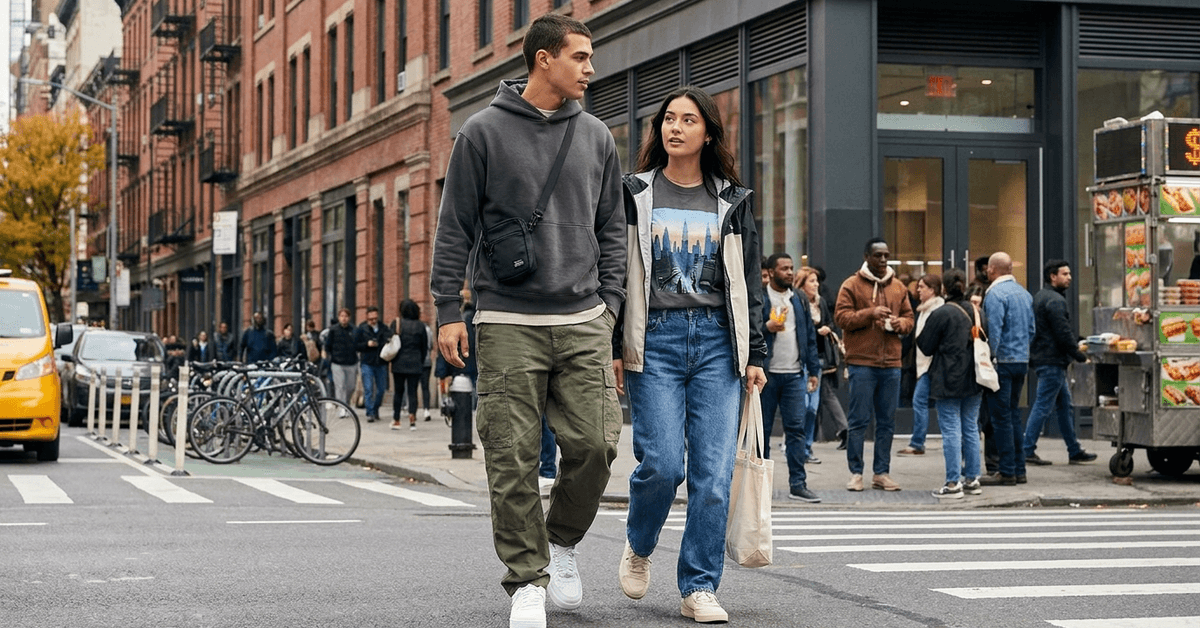
A single city day can throw five different dress codes at you. Morning subway, afternoon meeting, rooftop drinks, a walk through a night market, then a rainy sprint to the last train home.
Most streetwear guides list products. They skip the part where your outfit has to survive 14 hours of unpredictable weather, packed trains, and concrete.
This one is for the daily commuter who treats getting dressed like solving a logistics problem. If a wardrobe piece can’t pull double duty across at least two city contexts, it doesn’t earn closet space.
The Hoodie Gets Too Much Credit and Too Little Thought
Everyone recommends a hoodie. Fair enough. But the conversation usually stops at “get a black one,” and that’s where the bad purchases start.
Cotton-Poly Blends and the Grime Factor
A cotton-poly blend resists city grime better than 100% cotton. Pure cotton absorbs sweat, pollution, and that mysterious subway smell within a few wears.
A 60/40 or 70/30 cotton-polyester mix holds its shape wash after wash and dries faster after getting caught in the rain.
Color matters too, but not for the reasons style blogs suggest. Black and navy work because they hide the micro-stains that come from leaning on railings, brushing against walls, and sitting on public benches. It sounds unglamorous. That’s the point.
Pockets and Hoods That Do Something
A kangaroo pocket fits a phone and a transit card without bulging. Lined hoods add warmth on windy corners between buildings, where wind tunnels hit hardest.
Zippered hoodies let you shed a layer on a crowded bus without pulling fabric over your head and elbowing someone in the face.
I’d pick a zip-over hoodie for cities like New York or Tokyo where trains run hot even in winter. A pullover works better in consistently cold places like Berlin or Chicago, where removing layers mid-commute happens less often.
Sneakers: Stop Overspending on a Single Pair
The standard advice says to invest in one high-end pair of sneakers. I think that advice falls apart in cities like London or Toronto, where wet sidewalks, metro stairs, and daily mileage of 8,000+ steps chew through even premium soles within six months.
Rotation Beats Price Tag
Two pairs of mid-range sneakers in rotation will outlast one expensive pair every time. The logic is simple: letting shoes dry and decompress for 24 hours between wears extends their lifespan dramatically.
Alternating between an Adidas Stan Smith and a Veja Campo, for example, means neither pair hits the replacement point as fast.
Cushioned insoles matter more than brand prestige when the day involves standing on a subway platform, walking eight blocks, climbing office stairs, and then doing it all in reverse.
Look for that detail on the product page. It tells you more than the marketing copy ever will.
Traction on Wet City Surfaces
Rubber outsoles with grooved tread patterns prevent slipping on marble metro floors and rain-slicked sidewalks. Flat-soled sneakers look clean but become a liability the moment weather turns. This is a spec most people check last, if they check it at all.
Neutral colors add the most outfit flexibility. Classic white pairs with everything from cargo pants to dark jeans. A second pair in grey or black handles the dirtier commute days without showing wear.
Cargo Pants, Bags, and the Gear That Does the Real Work
Pants and bags are the unglamorous half of a city wardrobe. Nobody posts them on mood boards.
But they carry your phone, wallet, keys, charger, headphones, and snacks through a 14-hour day, and the wrong choice means fumbling through a backpack on a moving train.
Cargo Pants and Relaxed-Fit Jeans Compared
| Feature | Cargo Pants (e.g., Carhartt Relaxed) | Relaxed-Fit Jeans |
|---|---|---|
| Pocket count | 6-8 pockets, including side and thigh | 4-5 standard pockets |
| Mobility | Loose cut, good for cycling and stairs | Stiffer fabric, less range of motion |
| Stain resistance | Twill and canvas resist marks well | Denim shows stains on lighter washes |
| Cold weather layering | Fits thermals underneath without bulk | Tighter fit limits under-layers |
| Best city use | Tech-heavy days, festivals, bike commutes | Office-casual, evening plans |
Cargo pants win on pure utility. Relaxed jeans win on versatility across more formal settings. A one-pair-only commuter should lean toward dark jeans. A two-pair setup benefits from having both.
Crossbody Bags Over Backpacks
Crossbody and sling bags solve a problem backpacks create: access. Reaching into a backpack on a crowded train means either removing it entirely or doing an awkward shoulder twist.
A crossbody bag sits at hip level, and the zip compartment faces your body, which adds a layer of anti-theft security in crowded markets and transit stations.
Three things to check before buying:
- Padded strap width: anything under 2 cm digs into the shoulder after an hour of walking
- Waterproof material: nylon or coated polyester handles sudden rain without soaking through to electronics
- Compact profile: the bag should tuck against your torso, not swing wide in tight spaces
Brands like Herschel and Eastpak have city-tested models, though generic waterproof sling bags on Amazon often perform just as well for half the price.
Graphic Tees and Layering for Variable Weather
A graphic tee and a layering strategy turn three pieces into a full week of outfits. This is where a small wardrobe starts to punch above its weight.
Graphic Tees as a Personality Layer
A graphic tee adds character to an otherwise neutral outfit. Anime-art tees dominate Tokyo street style. Music and band tees run Los Angeles. Small local print shops in cities like Brooklyn produce designs that mass brands can’t replicate.
The fabric matters here too. Soft, breathable cotton in a slightly relaxed fit layers better under jackets and over long-sleeve thermals than a stiff, boxy blank. A fitted tee rides up under a hoodie. A relaxed one sits flat.
Layering for Cities That Change Weather by Afternoon
A plain white tee or thermal Henley goes under hoodies or light jackets. This two-layer base handles the temperature swings between outdoor wind and overheated indoor spaces.
For rain-prone cities like Seattle or Dublin, a lightweight waterproof jacket that packs into its own pocket takes up almost no bag space. Pair it with:
- A beanie or bucket hat for wind and light rain coverage
- Adjustable cuffs and drawstrings on outer layers, so fit tightens when weather worsens
- Packing cubes inside a day bag to keep dry clothes separate from damp layers
That last point sounds obsessive. But pulling a dry tee out of a structured cube after getting soaked on a morning commute changes the entire day.
Putting Outfits Together on a Tight Rotation
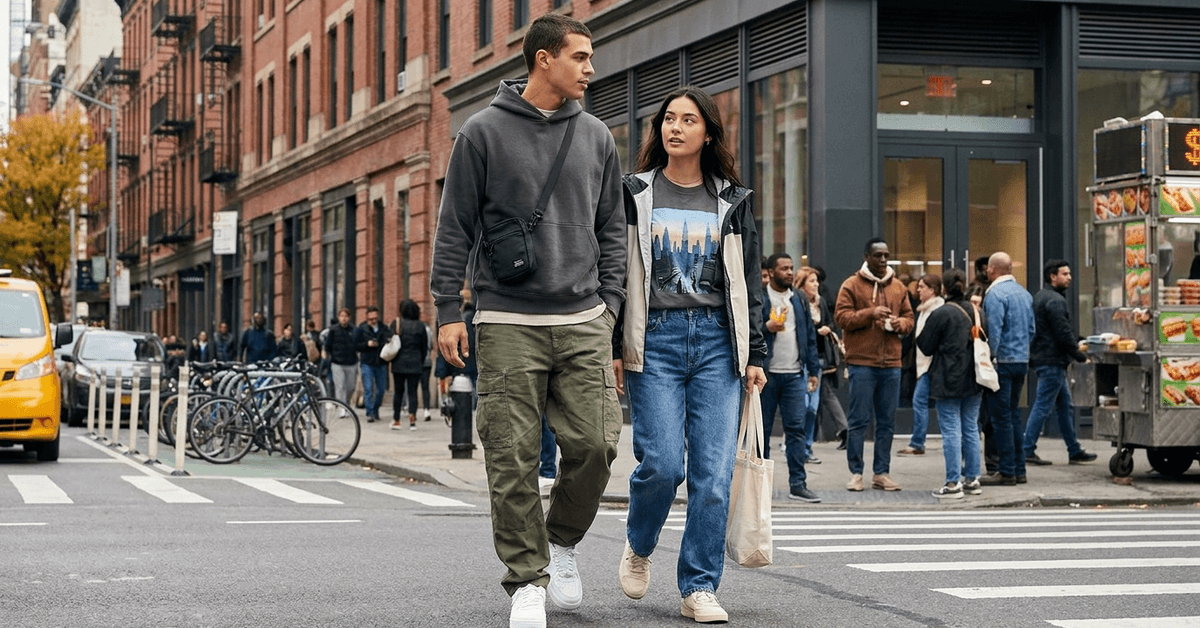
Owning fewer pieces means each one needs to pair with almost everything else. A dark hoodie, white sneakers, olive cargo pants, and two graphic tees already create four or five distinct combinations just by swapping one element.
Tools That Make Mixing Easier
Pinterest boards organized by city or season help visualize pairings before buying anything new.
Weather apps like AccuWeather guide layering decisions: a 10°C morning and 18°C afternoon in the same city means the jacket stays in the bag, not on a hook at home.
Fashion communities on Reddit, especially r/streetwear and r/malefashionadvice, post fit-check photos tied to specific cities and events.
That kind of context beats a generic style guide because the outfits exist in real weather, on real transit, and in real neighborhoods.
Questions People Ask About Streetwear Essentials
These come up a lot, and a few answers might save a bad purchase.
- Q: How many sneakers do I need for a city wardrobe? Two pairs in rotation is the sweet spot. One neutral pair for daily wear and one darker pair for rain or rough days. Going below two means each pair wears out in half the time.
- Q: Are cargo pants still in style for 2026? Cargo pants have moved past trend cycles at this point. Brands like Carhartt and Dickies keep producing relaxed-fit cargos because commuters and festival-goers keep buying them for the pocket utility alone.
- Q: What size crossbody bag works best for city commuting? Stick to bags under 4 liters for daily carry. Anything larger starts to bounce and shift during walks. The bag should hold a phone, wallet, keys, and earbuds without needing to be stuffed full.
- Q: Can graphic tees work in a semi-casual office? Layered under a clean jacket or overshirt, a subtle graphic tee passes in most creative and tech offices. Loud all-over prints are harder to dress up. A small chest logo or minimal line art blends better.
- Q: Do I need a waterproof jacket if I carry an umbrella? An umbrella does nothing when wind hits sideways, and it occupies a hand on crowded sidewalks. A packable waterproof jacket folds into a bag pocket and keeps both hands free for transit cards and phone maps.
Conclusion
Streetwear built for real city use comes down to pieces that handle weather, crowds, and long hours.
The temptation to chase trends fades once a small, functional rotation clicks into place. Every item earns its spot by working across multiple parts of the day. Start with the pieces that solve your commute, and style fills in around them.