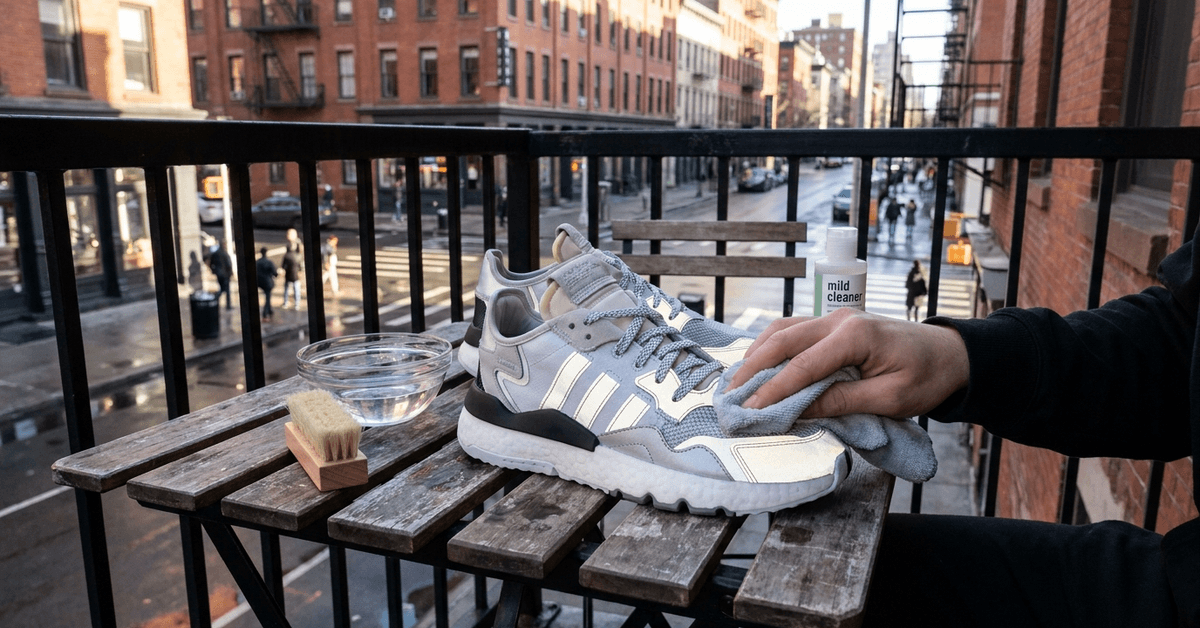
That reflective 3M panel on your sneakers looked electric the first week. Two subway rides later, city grime turns it into a dull grey patch that barely catches a phone flash.
Standard sneaker cleaning advice doesn’t help here. Brushes, all-purpose sprays, and branded kits are built for leather and mesh, not Scotchlite micro-beads.
This one is for the city sneakerhead who dropped real money on a reflective pair and wants the flash to last past month one.
The cleaning process is short and cheap. But the wrong move is permanent.
Why Regular Sneaker Cleaning Wrecks 3M Panels
Sneaker care guides tend to treat every surface the same: stiff brush, all-purpose spray, scrub hard. That routine works fine on leather uppers and mesh knit. On 3M reflective overlays, it causes damage that can’t be reversed.
The problem is structural. 3M Scotchlite uses thousands of microscopic glass beads bonded to a thin adhesive layer.
Those beads bounce light directly back toward its source, which is why reflective panels pop so hard under headlights and camera flash. But that bead layer is far more fragile than the rest of the shoe.
How Scotchlite Micro-Beads React to Brushes and Chemicals
A stiff-bristled brush can scratch and dislodge individual beads, leaving dull patches that no product will fix. Chemical-based wipes and alcohol sprays strip the coating that holds beads in place.
Even water temperature plays a role: hot water softens the adhesive layer, and the reflective film can bubble, peel, or lift away from the shoe permanently.
This is why the most dangerous cleaning mistake on reflective sneakers isn’t using the wrong product. It’s treating reflective sections the same way as leather or canvas.
Cleaning 3M Reflective Areas Step by Step
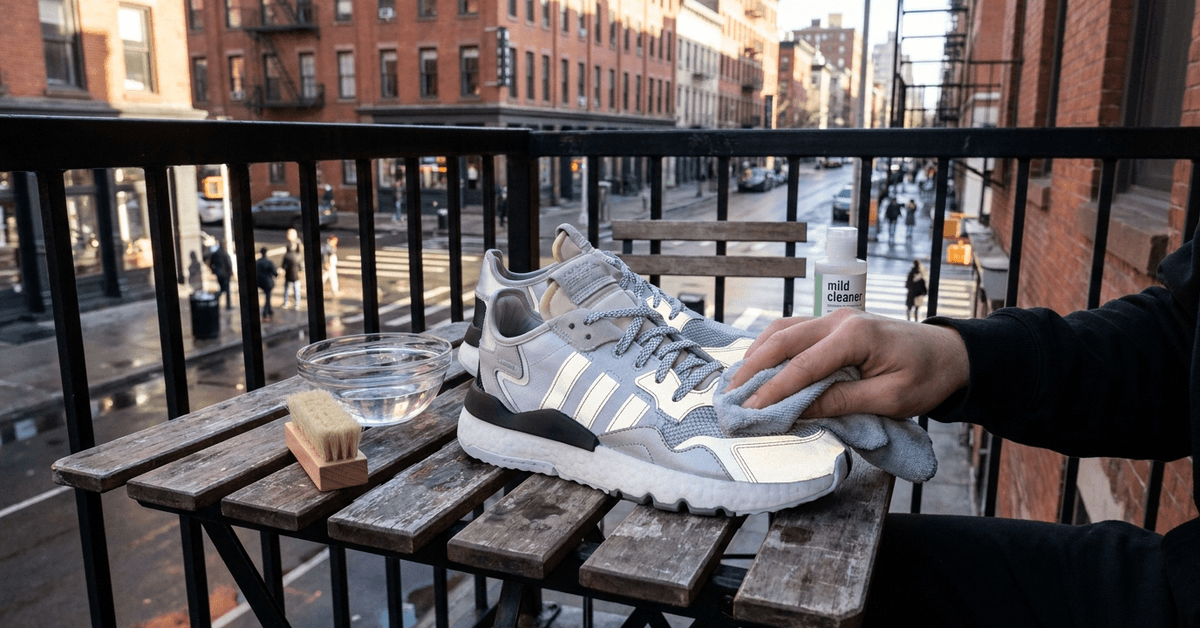
The supplies for this job are simple. A soft microfiber cloth, a soft-bristled brush (a clean makeup brush or baby toothbrush works for edges), dye-free soap diluted in room-temperature water at a ratio of about one drop per cup. That’s the full kit.
An optional silicone-based protector spray designed for reflective finishes can add a barrier after cleaning. Apply it outdoors or near an open window to avoid inhaling fumes.
Dry Dust-Off and Damp Cloth Technique
Start dry. A clean microfiber cloth picks up loose dust and fine city grit before any liquid touches the surface. Skipping this step means wet grit acts like sandpaper on the micro-beads.
Then lightly dampen the cloth. Not dripping, not soaked. Dab it across the reflective panels with zero downward pressure. The goal is to lift surface grime, not push particles deeper into the bead layer.
A drop of diluted soap on the cloth handles anything the dry pass missed. Rinse the cloth frequently so grime doesn’t spread back onto clean sections.
Stubborn Marks and When to Stop Scrubbing
Marks that survive the damp wipe need the soft-bristled brush. Small circular motions work better than back-and-forth scrubbing, which tends to streak reflective surfaces.
There’s a point where pushing harder causes more damage than the stain itself. A faint mark on a working reflective panel is better than a clean spot that no longer catches light. Knowing when to quit is part of the process.
After cleaning, dry the area immediately with a fresh cloth. Never leave water sitting on 3M panels. Room-temperature air drying is the safest finish. Skip hairdryers, radiators, and direct sunlight entirely.
Branded Sneaker Cleaning Kits vs. Soap on 3M Panels
Sneaker cleaning brands have built a massive market around specialty kits. Jason Markk, Reshoevn8r, and Crep Protect all sell cleaning solutions at the $15 to $25 range.
These kits do solid work on leather, suede, and mesh. The question is whether they belong anywhere near a reflective 3M surface.
Why I’d Skip Expensive Kits for Scotchlite Specifically
I would skip branded sneaker kits like Jason Markk or Reshoevn8r for 3M panels specifically, because their cleaning solutions are formulated for porous materials.
Some contain surfactants not listed on the label that can cloud reflective coatings over time. A microfiber cloth and dye-free soap do the same job on 3M Scotchlite surfaces without that risk.
I know this goes against the popular advice to “just use Jason Markk for everything.” On leather, sure.
On suede, absolutely. But 3M micro-bead panels are a completely different material, and treating them as one more shoe surface is how reflective coatings die early.
If a kit’s label does not specifically mention 3M compatibility, treat it as unsafe for the reflective areas. Use it on the rest of the shoe and switch to diluted soap for the panels.
| Branded Sneaker Kit | DIY (Soap + Microfiber) | |
|---|---|---|
| Cost | $15–$25 per kit | Under $5 total |
| Tested on 3M? | Rarely specified on label | Soap is pH-neutral, microfiber is non-abrasive |
| Risk to reflective coating | Unknown surfactants may cloud beads | Minimal when diluted properly |
| Best for | Leather, suede, mesh uppers | 3M reflective panels |
Save the branded kit for everything else on the shoe and keep plain soap for reflective sections.
Mistakes That Permanently Destroy 3M Reflective Sneakers
The wrong cleaning move on a reflective panel is usually irreversible. These errors end reflectivity for good:
- Bleach or alcohol-based cleaners dissolve the bead-bonding adhesive and destroy reflectivity permanently
- Stiff brushes or abrasive sponges scratch and dislodge micro-beads, creating dead patches no product can restore
- Hot water softens adhesive layers, causing bubbling and separation of the reflective film from the shoe surface
- Forced drying with heat (hairdryers, radiators, direct sun) warps adhesive and discolors the reflective coating
- Glass cleaner or screen wipes contain ammonia and solvents that strip reflective coatings within just a few uses
Sneakerheads on the r/Sneakers subreddit have posted panels flaking after just two rounds of glass wipes. The damage shows up as small clear spots where beads have lifted off the surface. Once those beads are gone, so is the reflectivity.
How to Maintain 3M Reflective Panels Between City Wears
Cleaning reflective panels only matters if daily habits don’t undo the work. And honestly, what happens between cleanings affects panel longevity more than the cleaning itself.
Rotation and Proper Storage
Wearing the same reflective pair every day grinds city grime into the panels through sheer repetition. Rotating between two pairs gives reflective surfaces time to air out and prevents buildup from settling permanently into the bead layer.
After wearing, store shoes away from direct sunlight and heat sources. Both humidity and UV light degrade 3M adhesive over time. A closet shelf or shoe box beats an open rack near a window every time.
The Quick-Wipe Routine That Cuts Full Cleanings in Half
A 30-second wipe with a dry microfiber cloth after each wear prevents grime from hardening on reflective panels. This one habit cuts the need for full soap cleanings dramatically.
Stashing a travel-size microfiber cloth in a jacket pocket or bag makes this easy to do right after getting home. City weather shifts fast, and catching dirt before it dries into the bead layer saves real effort later.
A few more habits that protect reflective panels over time:
- Avoid wearing reflective sneakers in heavy rain. Light rain is fine if dried promptly, but prolonged moisture weakens adhesive bonds.
- Check weather apps before heading out in a reflective pair. Planning dry walking routes sounds obsessive, but it extends panel life noticeably.
- Test any new cleaning product on a small hidden section of the reflective area before applying it to the full panel.
Questions People Ask About Cleaning 3M Reflective Sneakers
Sneaker forums and search queries surface the same questions constantly. A few are worth answering directly.
- Q: Can I put 3M reflective sneakers in the washing machine?
No. Machine agitation, detergent chemicals, and uncontrolled water temperature all risk shredding the reflective micro-bead layer. Hand cleaning with a damp cloth is the only safe method for these panels. - Q: Does rain permanently damage 3M reflective panels on shoes?
Light rain exposure won’t cause lasting damage if shoes are dried promptly. The real danger is prolonged moisture sitting on the adhesive layer for hours, which loosens the bond between beads and fabric. - Q: How often should I clean the reflective parts of my sneakers?
A dry microfiber wipe after each wear handles regular maintenance. Full soap cleanings should only happen when visible stains appear, roughly every two to four weeks for daily city wear.
Conclusion
Reflective 3M sneaker panels demand a different cleaning approach than every other material on the shoe. A microfiber cloth, dye-free soap, and room-temperature water handle nearly every city stain safely.
Heat, harsh chemicals, and rushed drying cause more permanent damage than the dirt itself ever will. Protect the adhesive layer underneath those micro-beads, and the reflective flash lasts for years.