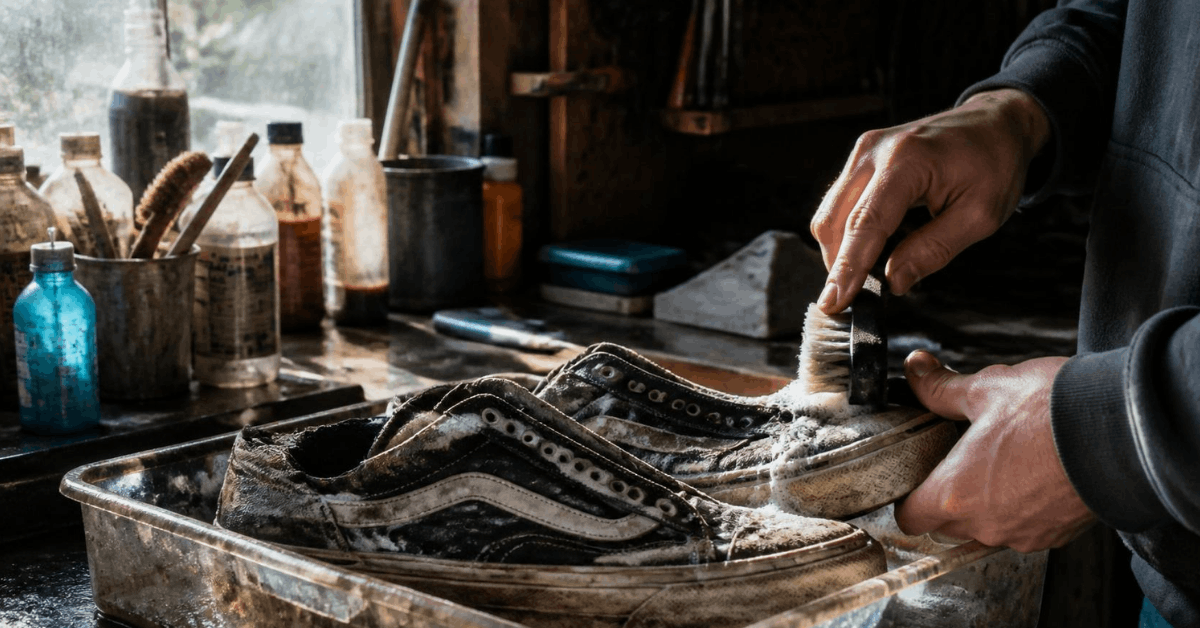
Suede skate shoes pick up permanent water marks during cleaning, not during skating. The scrubbing itself does more damage than a month of city sidewalks.
Most cleaning tutorials treat every skate shoe the same way. A canvas Vans Old Skool and a suede Nike SB Dunk need completely different methods, different amounts of water, and different drying times.
This matters if you commute, skate, or just walk through cities like New York, Berlin, or London in shoes that cost $80 or more. The grime builds fast. The wrong cleaning method costs even faster.
I’d aim this at the daily-wear skater spending five days a week on concrete and public transport, staring at shoes that looked fresh two weeks ago and now look like they survived a construction site.
Suede Gets Damaged During Cleaning, Not Skating
The single biggest mistake in skate shoe care happens when someone dunks a suede shoe into soapy water the same way they’d clean a canvas pair.
Suede fibers absorb moisture differently than woven fabric. Over-saturating suede during cleaning causes permanent discoloration, stiff patches, and tide lines that no amount of brushing removes.
Canvas shoes can handle a damp cloth, a scrub brush, and a generous amount of mild detergent. Suede cannot.
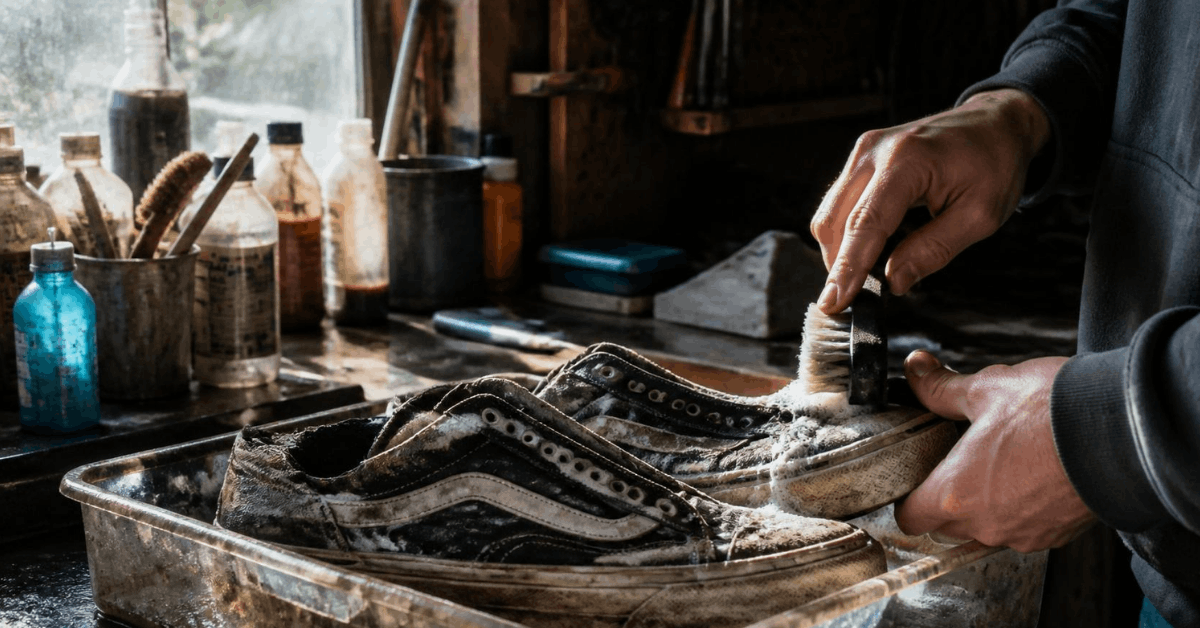
The distinction sounds obvious when stated plainly, but most step-by-step guides online bury this detail three paragraphs into a generic “cleaning uppers” section, if they mention it at all.
Canvas Takes Water. Suede Doesn’t.
Canvas uppers tolerate warm water mixed with a few drops of mild laundry detergent. A microfiber cloth works for general grime, and a sneaker cleaning brush or old toothbrush handles stubborn spots. Circular motions on high-traffic areas pull dirt out of the weave without fraying threads.
Suede uppers need minimal moisture. A dry suede brush removes surface dust. For stains that won’t budge, a barely-damp cloth with a tiny amount of detergent can be applied to the specific mark. The surrounding area should stay dry.
Any water that spreads across the suede panel will leave a visible ring once the shoe dries.
Brands like Nike SB and Vans Pro sometimes include material-specific care notes on the shoe label or inside the tongue. Checking that label before scrubbing takes ten seconds and can save $90 worth of shoes.
A $3 Cleaning Setup Does What $20 Sneaker Kits Do
Dedicated sneaker cleaning products have built a whole culture around themselves. Bottles of Jason Markk or Reshoevn8r run $15 to $20 per kit, and skate shops push them hard.
I would skip both for daily-wear skate shoes and spend that $20 on a box of baking soda, a bottle of mild dish soap, and a cheap pack of microfiber cloths.
The reasoning is simple. The active cleaning agents in most sneaker-specific solutions are mild surfactants. The same surfactants sit in a $3 bottle of dish soap on your kitchen counter.
For canvas and synthetic uppers, there is no performance gap between a name-brand sneaker cleaner and diluted dish soap applied with the same brush.
Baking Soda on Rubber Soles
The one area where a specialized product might seem tempting is white rubber midsoles. Scuff marks, yellowing, and embedded street grit can make clean uppers look worse by contrast.
But baking soda mixed into a paste with a little water handles rubber better than most dedicated sole cleaners.
Spread the paste over scuffed rubber sections, scrub gently with a toothbrush, and wipe clean with a damp cloth. A Mr. Clean Magic Eraser on dry rubber also works for quick touch-ups between deep cleans, especially on white midsoles before a night out.
I’d keep the Jason Markk bottles for collectors maintaining deadstock pairs or rare collaborations. For a daily pair of skate shoes that hits pavement five days a week? Dish soap and baking soda. Save the money for new grip tape.
Deep Cleaning Skate Shoes Step by Step
A proper deep clean follows a specific order. Jumping straight to scrubbing uppers while laces are still threaded through eyelets traps dirty water behind the tongue and inside the collar. Preparation matters as much as the scrub itself.
Prep the Shoes First
Pull the laces out completely and remove the insoles. Tap the soles together outdoors or over a trash can to knock off loose dirt, pebbles, and dried mud.
A dry brush pass over the uppers at this stage removes surface dust that would otherwise turn into muddy paste the moment water hits the shoe.
This is also the right time to check the shoe label for material-specific warnings. Some synthetic mesh panels react badly to hot water.
Cleaning Uppers by Material Type
The method splits based on what the upper is made of:
- Canvas or synthetic mesh: dampen a microfiber cloth in warm soapy water, blot and gently scrub high-traffic areas, then target stubborn marks with a small brush using circular motions
- Suede or nubuck: use a dry suede brush for dust, spot-treat specific stains with a barely-damp cloth, and keep water away from surrounding panels
- Leather or synthetic leather: wipe down with a damp cloth and mild soap, then dry immediately with a clean towel to prevent water spots
Scrubbing Rubber Soles and Midsoles
After the uppers are clean, flip the shoe over. The baking soda paste method works here. Apply, scrub with a toothbrush, wipe off. For deeply embedded grit in the tread pattern, an old toothbrush reaches into grooves that a flat cloth cannot.
| Component | Cleaning Method | Drying Time |
|---|---|---|
| Canvas uppers | Warm water + mild detergent, microfiber cloth | 6 to 12 hours air dry |
| Suede uppers | Dry brush + minimal damp spot cleaning | 12 to 24 hours, no direct heat |
| Rubber soles | Baking soda paste + toothbrush scrub | 1 to 2 hours |
| Insoles | Soapy water hand scrub, rinse, air dry | 12 to 24 hours |
| Laces | Mesh bag in washing machine, cold cycle | 4 to 6 hours |
Suede takes the longest because it needs the most controlled environment during drying.
Laces and Insoles Get Separate Treatment
Toss laces into a mesh laundry bag and run them through a cold wash cycle with other light-colored items. Scrub insoles by hand with soapy water, rinse gently, and let them air dry completely before putting them back in the shoe.
Replacing insoles before they are fully dry creates a trapped-moisture environment inside the shoe. That leads to bacterial growth and the kind of smell that no amount of Febreze fixes.
Stain Removal for City Grime on Skate Shoes
Different stains on skate shoes need different treatments. The all-purpose scrub that works on general dirt will set an oil stain permanently or spread a coffee stain wider.
Coffee, Oil, and Grass Each Need Different Treatment
City life produces specific messes. Coffee splashes from a sidewalk cup, grease from street food, grass streaks from park sessions. Each one has a targeted fix:
- Oil and grease stains: apply a small amount of cornstarch directly to the spot, wait five minutes for it to absorb the oil, then brush off and dab with a damp soapy cloth. Repeat if the mark persists.
- Coffee and beverage stains: blot immediately with cold water to prevent setting. For older, dried stains, a diluted white vinegar solution lifts the discoloration without damaging fabric.
- Grass and soil stains: a blend of baking soda and detergent scrubbed gently into the mark, left to sit for a few minutes, then wiped away. This combination breaks down chlorophyll better than soap alone.
The common thread across all three: blot, don’t rub. Rubbing pushes the stain deeper into fabric fibers and spreads the affected area.
Drying Skate Shoes Without Wrecking the Shape
More shoes get ruined during drying than during cleaning. Placing freshly washed skate shoes near a radiator, using a hairdryer, or leaving them in direct sunlight degrades adhesive bonds between the sole and upper. Heat warps rubber and shrinks canvas.
The correct method: pat dry with a towel, stuff with paper towels or clean packing paper, and set near a window for natural air circulation. Avoid direct hot air entirely.
Protection Sprays After Deep Cleaning
Once shoes are fully dry, a stain and water repellent spray adds a barrier against the next round of city grime. Crep Protect is a popular choice among urban skaters for post-clean protection. Spray evenly, focusing on seams and toe caps where water tends to seep in first.
City humidity slows drying time for the spray itself, so allow extra time beyond what the label suggests. A shoe sprayed and worn before the repellent cures offers almost no protection.
Frequency matters too. Heavy daily wearers benefit from a deep clean every four to six weeks, with spot cleaning between sessions. Lighter users can stretch to every two or three months, paired with a weekly dry brush and quick wipe-down.
A soft brush pass before heading out the door each morning keeps surface grit from grinding into fabric throughout the day. That ten-second habit reduces how often a full deep clean is needed.
Questions People Ask About Deep Cleaning Skate Shoes
Skate shoe care brings up a lot of specific questions, especially for city wear. These are the searches that come up most often.
- Q: Can I put skate shoes in the washing machine? Machine washing works for some canvas shoes on a cold, gentle cycle inside a mesh bag. But the agitation can delaminate glued soles and warp padded collars. Hand cleaning gives more control and carries far less risk for shoes that cost $80 or more.
- Q: How do I get the smell out of skate shoes without washing them? Sprinkling baking soda inside each shoe overnight absorbs odor-causing bacteria. Shake the powder out the next morning. Doing this once a week between deep cleans keeps smell manageable without involving water at all.
- Q: How do I clean white skate shoe laces that have turned gray? Soaking laces in a mix of warm water and a tablespoon of baking soda for thirty minutes before machine washing lifts embedded dirt that regular detergent misses. Bleach works faster but weakens the fibers over time, so baking soda is the safer long-term move.
Conclusion
A proper deep clean adds weeks of life to skate shoes that take daily punishment on city streets. Suede and canvas need different methods, and treating them the same way is the fastest path to permanent damage.
The drying step matters more than the scrubbing step, which is the part most cleaning guides rush through. Spending $3 on baking soda and dish soap beats a $20 sneaker kit for shoes that hit pavement every single day.