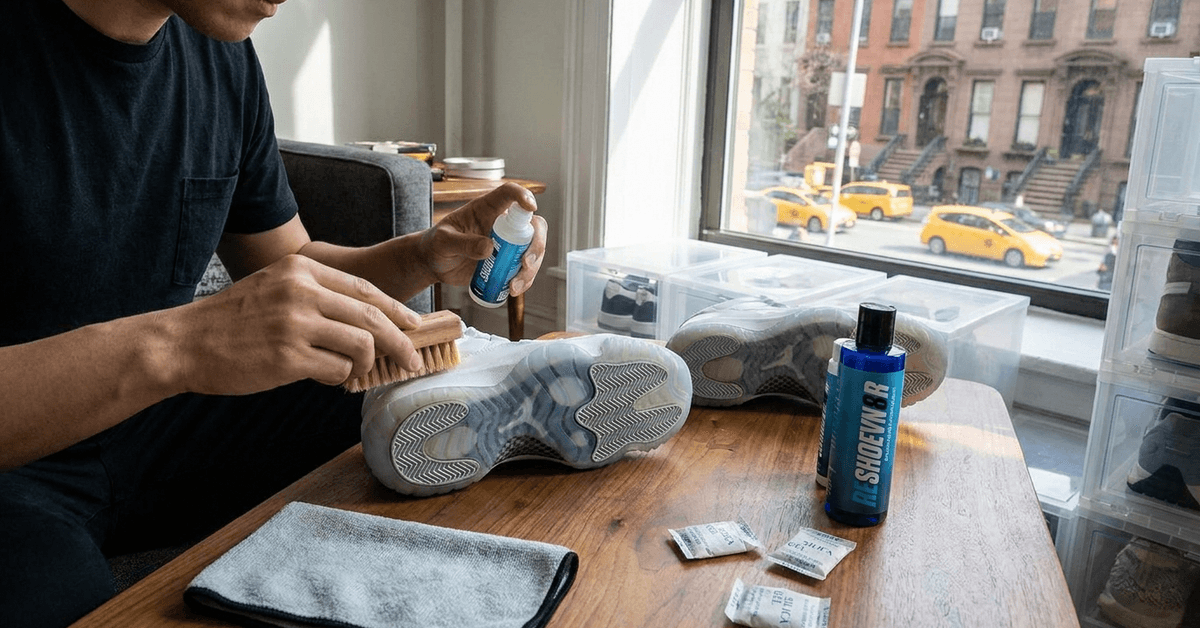
Clear icy soles can yellow inside a shoe box. No city grime needed, no rainy commute, no mud puddle. Just oxygen and time doing quiet damage while the sneakers sit untouched.
That fact breaks the standard advice loop. Cleaning guides focus on what happens after a wear, not what happens during the six months a pair spends on a shelf between rotations.
This one is for the city sneaker collector running a rotation of four to eight pairs. The person who cleans after every wear but still opens a box to find cloudy, amber-tinted rubber staring back.
Oxidation Starts Before the First Scuff
Most yellowing conversations start and end at dirt. Pavement grime, rain puddles, construction dust. All real problems. But the chemical process behind cloudy soles starts the second clear rubber meets air.
Oxidation changes the molecular structure of the transparent rubber compound. Oxygen bonds with the polymer chains in the sole material, and those bonds shift the color from clear to amber.
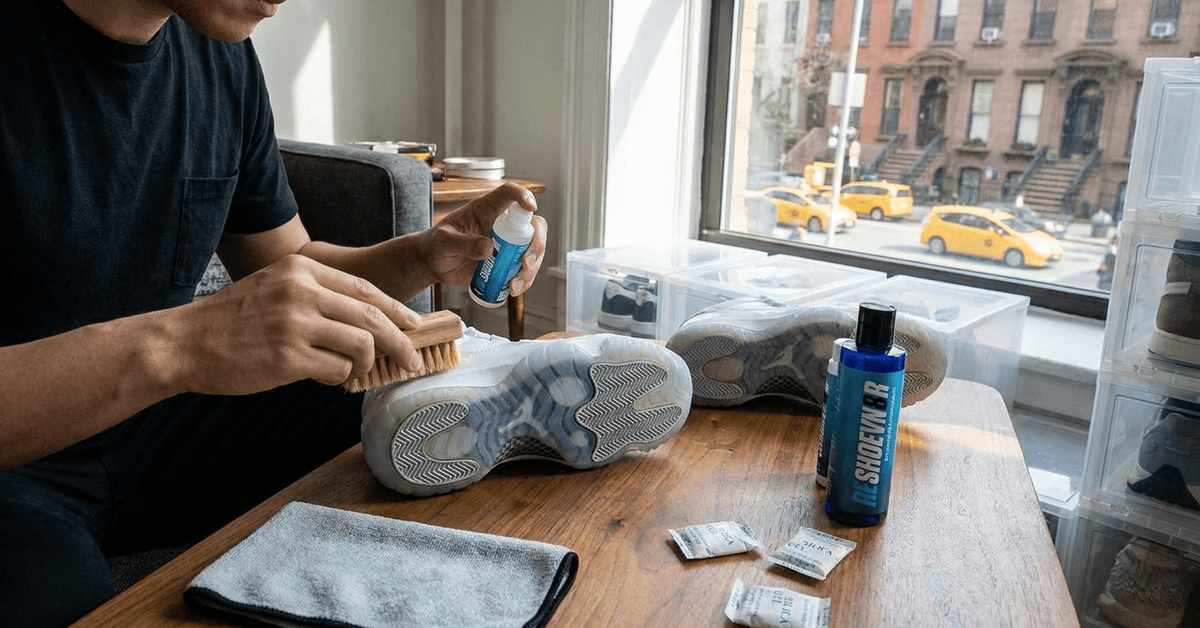
Sunlight accelerates the reaction, and so does heat. A pair stored near a radiator or a south-facing window will yellow faster than one worn twice a week on clean sidewalks.
Why Polluted Air Makes It Worse
City air carries particulate matter and volatile organic compounds that bond to sole surfaces. Nitrogen dioxide and ozone, both common in dense urban areas, speed up oxidation on exposed rubber.
A pair sitting on a shelf in a Manhattan apartment with the windows cracked is aging faster than an identical pair in a sealed container.
The Storage Paradox Nobody Talks About
The sneaker community treats storage as a solved problem: throw in some silica gel, close the box, done.
I’d argue that silica gel alone is doing less than most collectors think for icy soles, because silica controls moisture but does nothing about oxygen exposure. The soles still sit in ambient air.
Wrapping individual pairs in plastic film or vacuum-sealing them removes the oxygen contact that drives yellowing during long storage gaps. Gel packs handle humidity. Plastic wrap handles oxidation. Two separate enemies need two separate defenses.
The Sunlight Restoration Trick Has a Built-In Contradiction
A popular deep-cleaning method involves applying a gel like Reshoevn8r Sole Revive, wrapping the sole in plastic film, and leaving the shoe in direct sunlight for up to four hours.
The UV energy activates the cleaning compound and lifts some of the yellowed layer.
I think this method is a net negative for anyone using it more than once or twice on the same pair, and the reason is simple: UV radiation is the same force that causes oxidation in the first place.
The temporary brightness fades within weeks, and each session weakens the sole material slightly. Repeated UV restoration creates a cycle where the sole looks good for a short window, then yellows faster than it did before the treatment.
A Safer Approach to Deep Cleaning
Skip the sunlight step. Apply the restoration gel, wrap the sole, and place it under an indoor UV lamp for controlled, timed exposure.
UV cabinets used by professional restoration shops like Sole Fresh in New York work on this principle: controlled dosage, consistent distance, timed sessions. The result lasts longer because the sole material takes less cumulative UV damage.
Rinsing and drying speed matters too. Leaving moisture on a treated sole lets mineral deposits settle into the surface. Pat dry immediately with a microfiber cloth and let the pair air out in a shaded, ventilated spot.
Weekly and Monthly Cleaning Routines That Fit City Life
Cleaning icy soles does not need to be a weekend project. The two-tier system works well for anyone wearing their pairs on regular rotation in a city.
Quick clean after each wear takes under two minutes. A soft-bristle toothbrush, a drop of dish soap in warm water, and circular motions across the sole surface. Wipe dry immediately. That’s it. The goal is removing surface particulates before they bond to the rubber.
Monthly Deep Maintenance
Once a month, a more thorough session catches anything the daily wipe misses:
- Apply a dedicated sneaker cleaning solution to the sole and scrub with a medium-bristle brush
- Wipe the midsole and outsole edges where grime collects in seams
- Inspect for micro-scratches or cloudy patches that signal oxidation starting
- Dry completely before returning to storage
This monthly session takes about ten minutes per pair. For a rotation of six pairs, that’s an hour a month. Manageable.
Over-Cleaning Creates Its Own Problem
One thing that gets buried in cleaning guides: micro-scratches from aggressive scrubbing trap dirt particles and accelerate discoloration.
Stiff brushes, abrasive sponges, and excessive pressure on clear rubber leave tiny grooves invisible to the naked eye. Those grooves fill with city dust and create a permanently hazy layer that no amount of cleaning can reverse.
Soft bristles and light pressure protect the surface. A toothbrush works better than a shoe brush for icy soles specifically because the bristles are softer and shorter.
Tools Worth Buying vs. Tools That Waste Money
The sneaker care market sells a lot of products. Some of them work. A city-based collector needs a short list, not a full arsenal.
| Product | Best Use | Price Range |
|---|---|---|
| Jason Markk Quick Wipes | On-the-go cleaning after transit or events | $10-$15 for a pack |
| Reshoevn8r Cleaning Solution | Monthly deep cleans for heavy city grime | $10-$18 per bottle |
| UV-protective spray | Pre-wear coating to slow oxidation on soles | $12-$20 per can |
| Stackable clear shoe boxes with UV filter | Long-term storage that blocks light | $25-$40 for a set of six |
The UV-protective spray is the most underrated item on this list. A single coat before wearing a pair creates a thin barrier between the rubber and ambient air.
The protection fades after a few wears, so reapplication matters, but the cost per use is low.
Skip the Bleach
Bleach and hydrogen peroxide solutions appear in DIY sneaker forums as yellowing fixes. Both accelerate the exact chemical reaction they claim to reverse. Bleach breaks down rubber polymers.
Hydrogen peroxide creates initial brightening followed by faster oxidation. A pair treated with bleach will look worse within a month than an untreated pair left in storage.
Smart Storage for Small Urban Apartments
Closet space in city apartments is a known constraint. The typical sneaker rotation gets stuffed into a shared closet, sometimes near heating pipes or under a window. Both locations speed up yellowing.
A few storage adjustments make a measurable difference:
- Keep boxes away from heat sources: radiators, dryer vents, south-facing windows
- Wrap each pair in acid-free tissue paper or plastic cling film before boxing
- Place one silica gel packet per box and replace them every three to four months
- Stack boxes in a closet interior, not along an exterior wall where temperature swings are wider
Seasonal rotation helps too. Pairs worn during summer can go into sealed storage for fall and winter, reducing their total air exposure by months.
The Rainy Day Pair Strategy
Owning one designated “beater” pair for wet or dirty conditions protects the rest of the collection. This does not need to be a cheap shoe.
It can be any pair with a darker or opaque sole that handles rain and slush without cosmetic risk. Reserving icy-soled pairs for dry days alone cuts their exposure to the worst city conditions by a wide margin.
When DIY Stops Working and a Pro Shop Makes Sense
Severe yellowing on a pair worth $300 or more is a case for professional restoration.
Shops like Kicks Clinic in London and Sole Fresh in New York use UV cabinets and industrial-grade formulas that remove oxidation layers without the surface damage of home methods. Most services run under a day for turnaround.
A professional restoration typically costs between $30 and $80 per pair depending on severity. For a pair with resale value above $200, that math works out. For a $90 pair with moderate yellowing, it probably does not.
What to Ask a Restoration Shop
Not all shops handle icy soles the same way. A few questions filter the good ones from the ones guessing:
- Do they use a UV cabinet or natural sunlight? Cabinet is better for controlled results.
- Do they apply a post-treatment sealant? A sealant layer slows re-oxidation after restoration.
- Can they show before-and-after photos of similar sole types? Icy soles behave differently than standard rubber.
Questions People Ask About Clear Icy Sole Care
These come up constantly in sneaker forums and search results. Short answers that add something the sections above touched only briefly.
- Q: Can I use a magic eraser on icy soles? Magic erasers are micro-abrasive sponges. They remove surface grime effectively but create fine scratches on clear rubber that trap future dirt. A soft toothbrush and soapy water is safer for transparent soles.
- Q: How long do icy soles stay clear without any care? Depends on climate and storage. A pair stored in a sealed box in a cool, dry room can stay clear for six to twelve months. The same pair in an open rack near a window may yellow within weeks.
- Q: Does wearing icy soles more often prevent yellowing? Wearing them does not prevent oxidation, but it does let you catch discoloration early and clean it off before it bonds permanently. Rotation between wearing and proper sealed storage is the best balance.
Conclusion
Clear icy soles stay sharp when storage gets as much attention as cleaning. Sealed containers and oxygen barriers matter more than any scrub brush.
A soft-bristle toothbrush and monthly routine can outperform expensive kits used carelessly. The collectors who keep their soles clear for years treat prevention as the real skill.