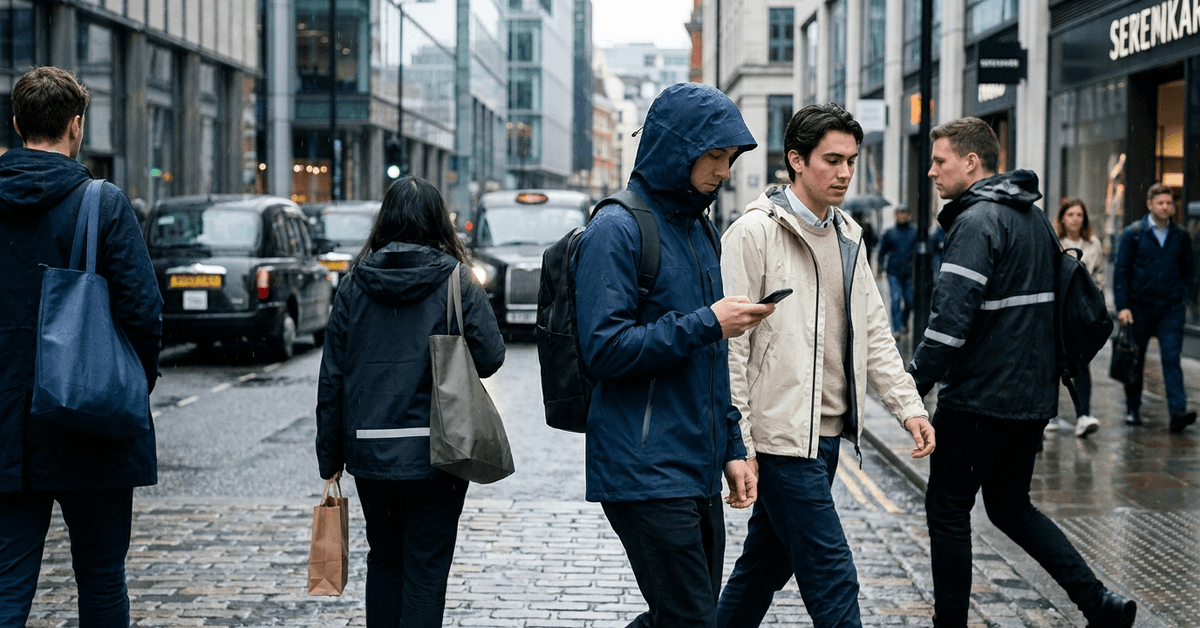
An Arc’teryx Beta jacket retails for $400. A Uniqlo BlockTech Parka costs around $80. Both will keep a commuter dry during a 15-minute walk from the subway to the office.
That $320 price gap buys real performance differences. But those differences almost never activate during a normal city commute. Gore-Tex earns its premium over hours of sustained exposure, not during the sprint between a bus stop and a lobby.
Most windbreaker recommendations treat city commuters and mountain hikers as the same buyer. They’re not. The transit rider who ducks underground every 10 minutes has wildly different demands than someone spending six hours on an exposed ridgeline.
This piece is for the office commuter in a weather-variable city: London, New York, Tokyo, Toronto. Someone who needs a jacket that works with trousers and clean sneakers, fits inside a tote, and handles surprise rain without looking like expedition gear.
Gore-Tex on a Metro Platform
The outdoor gear industry built its pricing around sustained weather exposure. A three-layer Gore-Tex shell like the Arc’teryx Beta SL at $500 makes sense when rain hammers you for two straight hours on a trail.
The sealed seams, pit zips, and RECCO reflectors justify the price tag in that context.
Why 15 Minutes Changes Everything About Waterproofing
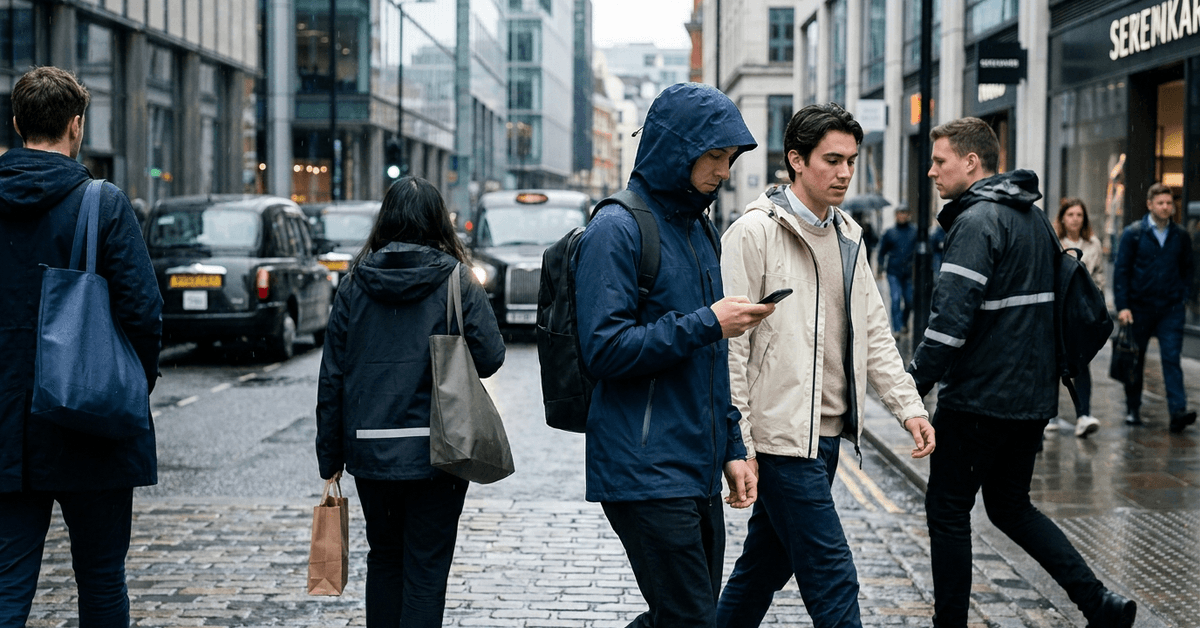
City commuting creates an entirely different wear pattern. A typical transit commuter spends maybe 10 to 20 minutes outdoors between heated buildings, covered platforms, and enclosed vehicles.
At that exposure level, a water-resistant polyester jacket performs nearly identically to a fully waterproof Gore-Tex shell.
I’d skip Gore-Tex entirely for a daily city commute. The Uniqlo BlockTech Parka at roughly $80 handles wind resistance, water repellency, and light rain through a 20-minute walk just as capably as a $400 Arc’teryx Beta for that duration.
Gore-Tex earns its cost after 30 to 60 minutes of continuous, heavy rain. Urban commuters almost never reach that threshold.
This matters because the jacket you can afford to replace easily is the jacket you wear without anxiety. Cramming onto a packed metro car, brushing against wet railings, tossing it over a chair at lunch: that casual treatment destroys expensive technical shells faster than weather does.
How to Pick a Windbreaker for Your Actual Commute
Jacket shopping for city use means filtering out features designed for backcountry conditions. A commuter doesn’t need avalanche reflectors or helmet-compatible hoods. What matters lives in a much smaller set of specs.
Breathability and Weight for Transit Riders
Rush-hour trains and buses run hot. A jacket that blocks wind and rain but traps heat creates a different kind of misery: showing up to work damp from sweat instead of rain.
Light polyester shells, like the BlockTech fabric Uniqlo uses, tend to breathe better than heavier waterproof membranes in stop-and-go transit situations.
Weight plays into this too. Anything over 15 ounces starts feeling like unnecessary armor for a commute. The sweet spot for city windbreakers sits between 8 and 12 ounces, heavy enough to block a strong gust but light enough to forget you’re wearing it.
Pockets, Hoods, and the Details That Save a Morning
I think pocket placement matters more than waterproof ratings for the daily commuter, and the Uniqlo BlockTech line gets this right with a chest pocket fitted with a slide fastener for a phone or transit card.
Reaching into a deep hip pocket while wearing a backpack is awkward. A chest-level zippered pocket solves that small daily friction.
Hoods deserve more scrutiny than most buyers give them. A hood that adjusts tightly around the face stays put during wind. A loose, decorative hood flaps around and blocks peripheral vision at crosswalks. Adjustable drawcords are not optional for city walking.
Removable hoods add versatility for indoor-outdoor transitions, but the attachment mechanism needs to be clean enough that removing the hood doesn’t leave visible snaps or zippers exposed.
Layering a Technical Jacket for the Office
Technical jackets carry an image problem. The outdoor industry designed them to look sporty, which clashes with most office dress codes. But the right pairing erases that tension.
Pairing a Shell with Workwear
A neutral-toned shell jacket (black, navy, charcoal) over slim-fit trousers and low-profile sneakers reads as polished rather than athletic. The trick is avoiding anything with loud branding, reflective strips, or contrast-colored zippers. Minimal, discrete logos make a technical jacket blend into a professional wardrobe.
Berlin commuters figured this out early: a windbreaker over a crewneck knit or a lightweight hoodie creates a layered silhouette that works for both the train and the office kitchen. The combination hits that space between too casual and too corporate.
Switching Between Day and Evening Plans
Spontaneous dinner plans after work don’t require a full outfit change. Swapping athletic sneakers for low-profile leather shoes and adding a crisp button-up shirt underneath the same shell jacket shifts the look enough for most restaurants and bars.
Jackets with adjustable cuffs and a clean hem make this transition smoother. A cinched waist or drawcord hem can be loosened for a relaxed evening look or tightened during a rainy walk.
This dual functionality is why a single well-chosen windbreaker can replace both a rain jacket and a light evening layer.
City Windbreaker Brands Compared: Price vs. Performance
The gap between budget and premium technical jackets shrinks dramatically when the use case is strictly urban. This comparison focuses on what each jacket delivers for a daily transit commuter, not a weekend hiker.
| Feature | Uniqlo BlockTech | Rains Jacket | Arc’teryx Beta |
|---|---|---|---|
| Price | ~$80 | ~$125 | ~$400 |
| Waterproofing | Water-resistant (DWR coating) | Fully waterproof (PU-coated) | Fully waterproof (Gore-Tex) |
| Weight | Light (~12 oz) | Medium (~16 oz) | Light (~13 oz) |
| Packability | Folds small, fits in a tote | Stiff PU, harder to compress | Packs into its own pocket |
| Office-appropriate look | Clean, minimal logos | Sleek Scandinavian aesthetic | Sporty, visible branding |
| Best city use | Daily all-weather commuting | Walking-heavy rainy days | Long outdoor exposure, weekends |
For pure city commuting under 20 minutes of outdoor exposure, the Uniqlo and Rains options cover the functional requirements. The Arc’teryx earns its price for commuters who also bike, run, or spend extended time outdoors.
Packability: The Feature That Decides Daily Wear
A jacket you leave at home on a clear morning is useless when the sky opens at 4pm. That’s why packability matters more for city commuters than any waterproof rating or breathability score.
A windbreaker that folds into its own pocket or compresses flat inside a tote bag gets carried on sunny mornings “just in case.” It sits in a desk drawer or the bottom of a backpack without taking space. That constant availability is the real performance metric for urban outerwear.
Stiff, structured jackets like the Rains Jacket at $125 look great but compress poorly. The PU-coated fabric holds its shape, which is a styling advantage and a packability disadvantage.
For commuters who walk to work rain or shine, that tradeoff might work. For anyone who needs to stash a jacket mid-day, compressibility wins.
Accessories Worth Pairing with a City Windbreaker
Accessories fill the gaps a single jacket can’t cover. These pairings extend a windbreaker’s usefulness across more situations:
- Waterproof crossbody bag for protecting a phone, wallet, and headphones during downpours
- Packable beanie for cold-weather layering under or without a hood
- Touchscreen-compatible gloves for phone access on chilly transit platforms
- Water-repellent backpack (brands like Rains make matching panels) for laptop protection during bike commutes
Matching bag and jacket materials creates a cohesive look. More practically, a water-repellent backpack means the laptop inside stays dry even if the commuter skips the jacket on a borderline weather morning.
Keeping Technical Fabrics Working Through City Seasons
Technical fabrics lose their water repellency over time. The DWR (durable water repellent) coating on most windbreakers degrades with washing, body oils, and friction from backpack straps.
Washing a technical jacket with the brand’s recommended detergent (not regular laundry soap) and hang-drying instead of machine drying extends the DWR coating’s life span. High heat from dryers breaks down the coating faster than normal wear.
Some brands build repair and replacement programs into the purchase. Patagonia’s repair service and Arc’teryx’s ReBird program both extend jacket lifespan past what normal consumer care achieves.
A jacket that lasts four city seasons instead of two cuts the annual cost in half, even at a higher purchase price.
Signs the DWR coating needs reapplication:
- Water stops beading on the fabric surface and instead soaks in
- The jacket feels heavier after light rain
- Damp patches appear on the outer shell where the fabric used to repel
Reproofing sprays and wash-in treatments cost under $15 and add another season of performance. The 20 minutes spent reapplying DWR saves a $100+ replacement.
Questions People Ask About Technical Windbreakers for City Commuters
These are the questions that come up most when commuters start shopping for a city windbreaker.
- Q: Can I wear a windbreaker to the office without looking too casual? Stick to solid, muted colors with no visible branding and pair the jacket with structured trousers or chinos. A black or navy shell over a collared shirt reads as intentional rather than sporty. The fabric should have a matte finish, not a shiny athletic sheen.
- Q: How often should I wash a technical windbreaker? Less often than you’d think. Once every 10 to 15 wears is enough for most commuters unless it gets visibly dirty. Washing too frequently strips the DWR coating. Spot-clean stains and air the jacket out between wears.
- Q: Are expensive Gore-Tex jackets worth it for city use only? For strictly urban commuting, probably not. Gore-Tex performance advantages appear during sustained exposure past 30 minutes in heavy rain. A $80 to $125 water-resistant jacket handles the typical 10 to 20 minute commute walk identically. The premium makes sense if you also hike, bike long distances, or spend weekends outdoors.
- Q: What’s the difference between water-resistant and waterproof for city rain? Water-resistant fabrics (DWR-coated polyester) handle light to moderate rain for short periods. Waterproof fabrics (Gore-Tex, PU-coated materials) block water indefinitely. For a commuter who ducks indoors within 15 minutes, water-resistant is functionally equivalent to waterproof in most city rain situations.
- Q: Do packable windbreakers hold up as well as structured jackets? They hold up differently. Packable jackets use thinner fabrics that compress easily but can feel less substantial. Structured jackets feel more polished but resist folding. For daily commuting where the jacket spends half its life crammed in a bag, packable designs handle that wear pattern better.
Conclusion
The best city windbreaker isn’t the one with the highest waterproof rating or the most technical specs. It’s the one that fits in a bag, looks right with office clothes, and costs little enough that spilling coffee on it doesn’t ruin a morning.
Technical outerwear for commuters should solve the problems commuters face, not the problems the outdoor industry built its marketing around.
A rainy Tuesday in October deserves a jacket that earns its spot in a tote bag, not one that earns its spot on a mountain.