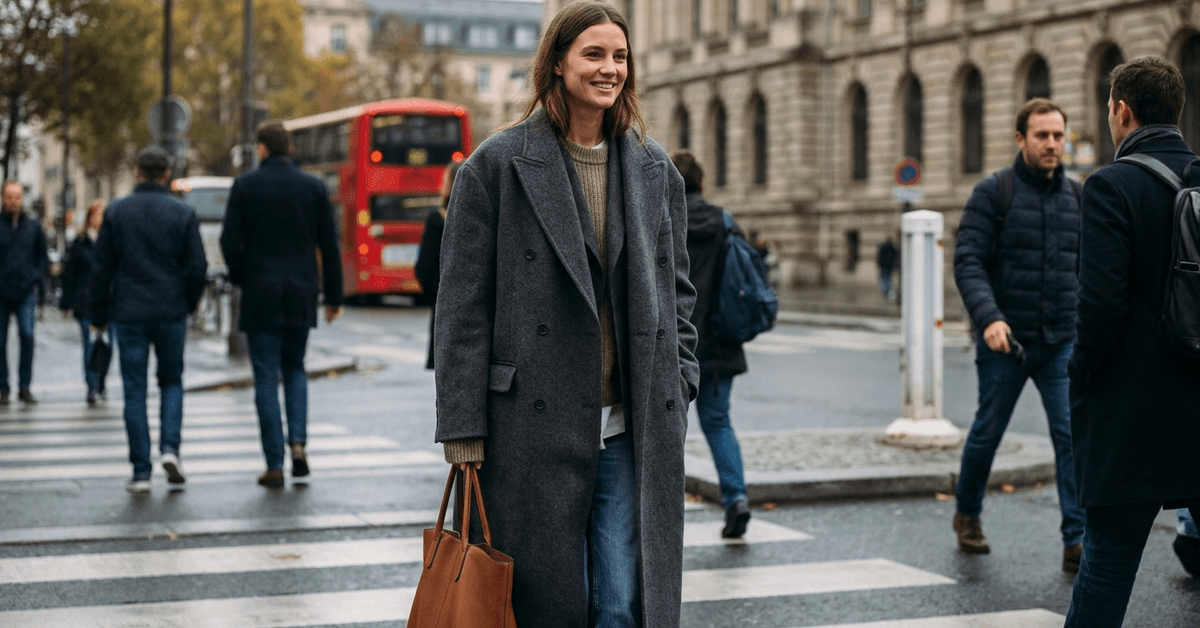
An oversized jacket that feels perfect on the rack can turn into a wearable sleeping bag the moment two sweaters go underneath it. That single layering failure ruins more purchases than poor color choices or wrong fabric picks combined.
Most styling guides match body shapes to jacket cuts and stop there. Nobody talks about what happens when that same jacket meets a crowded morning train, a bike lane, or a rainstorm that wasn’t in the forecast.
This one is for the city commuter. The person who walks, cycles, or sardine-packs into public transit five days a week and still wants to look like they thought about getting dressed.
The Layering Mistake That Kills Most Oversized Jacket Purchases
A jacket tried on over a t-shirt in a climate-controlled fitting room tells you almost nothing about how it performs in real life.
That relaxed shoulder drop and roomy torso? Add a hoodie, a wool sweater, and a scarf, and the arms suddenly bind at the shoulder seam. The chest pulls. The zipper fights back.
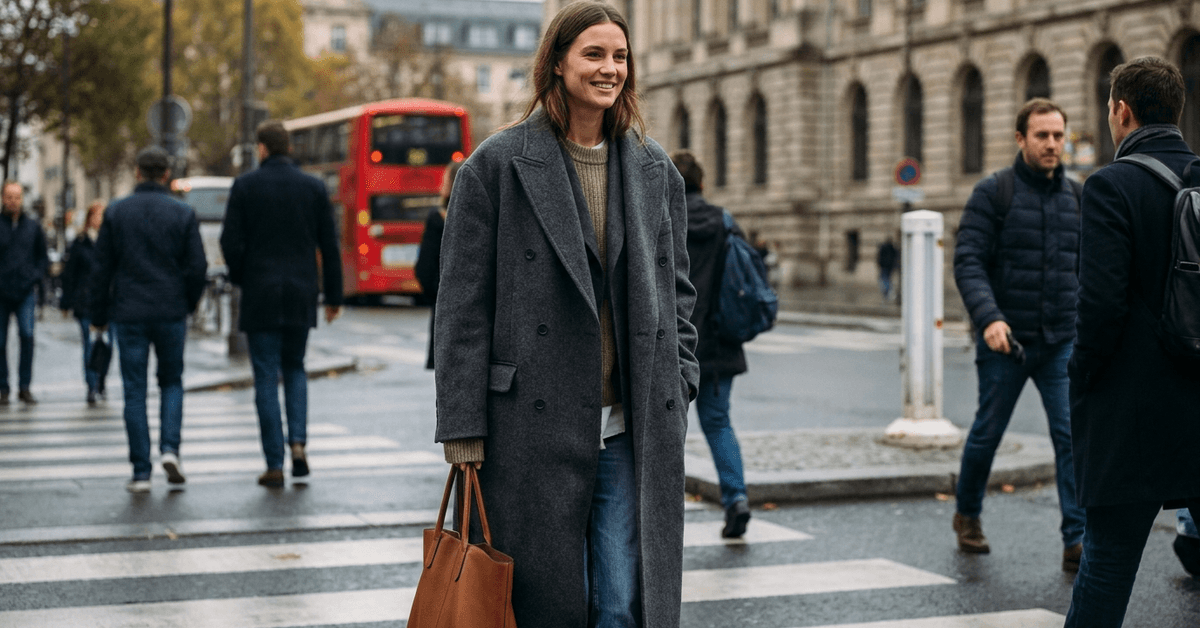
I would skip any oversized jacket that doesn’t pass a three-layer test in the fitting room. Bring the hoodie. Bring the sweater. Raise both arms overhead.
If the jacket rides up past your belt line or the shoulders pinch, that “oversized” cut is just a regular jacket with extra length.
Test mobility before you test the mirror
This matters more for city dwellers than anyone else. Reaching for a subway handrail, locking a bike, shouldering a bag: these movements expose tight armholes and restrictive back panels that a mirror selfie won’t catch. Sit down in the jacket.
Twist at the waist. The range of motion check takes thirty seconds and saves a lot of regret.
Matching Oversized Jackets to Body Shape Without Overcomplicating It
Body type guides love categories. And categories can be useful starting points. But treating them as rigid rules leads to returns, not outfits. The goal is to know which proportions a jacket will change so you can decide if you want that change.
Rectangle body shapes and the belt trap
Rectangles have balanced shoulders, waist, and hips. The raw proportions are even, so most oversized silhouettes land cleanly. Some guides recommend cinching the waist with a belt to “add shape.”
I think belting an oversized jacket is bad advice for rectangle shapes specifically because it turns a deliberate silhouette into something that looks like the wrong size pulled tight.
The whole appeal of an oversized jacket is the relaxed drape. A belt chops that line in half and creates a bunched, awkward fold above the waistband. Dropped-shoulder designs do a better job of adding visual interest without fighting the jacket’s own proportions.
Hourglass shapes: cropped cuts keep definition
A defined waist disappears inside a long, boxy oversized jacket. Cropped oversized jackets that hit just below the ribcage preserve the waist-to-hip ratio. Pairing with high-waisted pants reinforces that proportion line.
Adjustable drawstrings or internal waist tabs are better than external belts here because they shape the jacket without creating bulk.
Pear shapes and the bomber advantage
Broader hips with narrower shoulders benefit from jackets that add volume on top.
Bomber jackets and boxy blazers that end just above the hip bone balance the silhouette without adding width below. Longer oversized coats can work too, but anything that flares at the hip will exaggerate the proportion rather than balance it.
Apple shapes: straight lines over double-breasted closures
A straighter, single-breasted oversized jacket can lengthen the torso visually. Double-breasted styles add bulk through the midsection because the overlapping fabric creates a wider front panel exactly where an apple shape carries the most volume.
Stick to clean vertical lines and avoid jackets with horizontal chest pockets or wide lapels.
Inverted triangle: simple shoulders, no embellishment
Broad shoulders need jackets that don’t add more width. Epaulets, padded shoulders, and wide collars are all out.
Single-breasted trenches and minimalist car coats keep the shoulder line clean. A longer length can also draw the eye downward, which balances the proportions without needing any structural tricks.
Which Jacket Types and Fabrics Survive City Wear
Not all oversized jackets handle the same abuse. A nylon puffer and a wool overcoat live in two completely different maintenance universes, and the choice depends on what your commute throws at you.
| Feature | Denim Jacket | Wool Overcoat | Nylon Puffer | Cotton Gabardine Trench |
|---|---|---|---|---|
| Rain resistance | Low | Low | High | Moderate |
| Layering room | Moderate | High | High | Moderate |
| Care difficulty | Machine wash | Dry clean | Machine wash | Dry clean or hand wash |
| Best season | Spring/Fall | Winter | Winter | Spring/Fall |
| Bike-friendly | Yes | No | Yes | Somewhat |
A denim jacket that survives a machine wash cycle beats a wool coat that needs a dry cleaner after every rain.
Denim and nylon for daily commuters
Denim oversized jackets are the low-maintenance workhorse. They pair with sneakers or boots, survive bike commutes, and develop a patina that looks better with wear.
Nylon and technical fabrics fill the wet-weather gap. Cities like London, Amsterdam, and Stockholm get enough drizzle to justify owning at least one water-repellent oversized layer.
Wool and gabardine for office-adjacent days
Wool oversized jackets look polished enough for office environments and layer well over sweaters without bunching.
Cotton gabardine works for trench coat styles that need some weather resistance without the weight of wool. Both fabrics demand more care, so they fit better as second-rotation pieces rather than everyday beaters.
Colors and Patterns That Work Across Multiple Outfits
Buying an oversized jacket in a loud print locks it into a narrow set of outfits. A neutral base color multiplies the jacket’s usefulness across a wardrobe.
The colors that earn the most rotation tend to follow a simple pattern:
- Camel, charcoal, and navy match almost everything already in a city wardrobe and don’t show urban grime as fast as lighter shades
- Black works for every city and every occasion, but shows lint and pet hair instantly
- Olive and rust split the difference between neutral and statement, and work particularly well with denim and earth-toned accessories
Prints have their place. A checked oversized blazer or a color-blocked bomber can carry an entire outfit on its own.
But a printed jacket becomes the outfit, so it needs to be the piece you reach for on purpose rather than the jacket you grab on the way out the door.
City-specific color tendencies
Seoul and Berlin lean monochrome. Barcelona runs brighter. London leans into earth tones and vintage checks. These tendencies aren’t rules, but they can help narrow down choices if you want to blend with local style rather than stand out against it.
The outfit culture in your specific city can be a surprisingly useful filter for color selection.
Keeping an Oversized Jacket Alive in a Dirty City
City jackets absorb dust, pollen, coffee splashes, and bus-seat mystery stains. Maintenance isn’t optional.
A few practices extend the life of any oversized jacket by a significant margin:
- Wide wooden hangers prevent shoulder dimples that wire hangers create on oversized cuts
- Garment bags keep city grime off jackets during storage and travel, especially on public transport
- Spot-cleaning after each wear catches stains before they set, reducing the need for full washes that wear down fabric faster
Apps like Sojo connect city residents with local tailors who pick up and deliver via bike courier. A ripped lining or a busted zipper doesn’t have to retire a jacket when a repair costs less than a replacement.
For sourcing vintage or second-hand oversized jackets, platforms like Depop have enough listing volume and user reviews to filter by size, condition, and even specific cities.
Second-hand oversized jackets often have softer fabric and broken-in proportions that new off-the-rack pieces take months to develop.
Questions People Ask About Oversized Jackets for Body Types
A few of these come up constantly, so they’re worth answering directly.
- Q: Can short people wear oversized jackets without looking swallowed?
Absolutely. The trick is proportion, not avoidance. Cropped oversized jackets that hit at the waist work well for shorter frames. Pairing with slim or tapered pants below the jacket keeps the overall silhouette balanced rather than shapeless. - Q: Should an oversized jacket be one size up or two sizes up?
One size up is the safer bet for a relaxed fit that still reads intentional. Two sizes up can work for specific styles like parkas or puffers, but on structured jackets like blazers, it tends to look like a hand-me-down rather than a choice. - Q: Are oversized jackets warm enough for winter commuting?
That depends entirely on the fabric. A nylon puffer with synthetic insulation handles cold well. An unlined denim jacket does not. The oversized cut itself does allow more room for thermal layers underneath, which is an advantage over slim-fit outerwear. - Q: Do oversized jackets work for cycling in the city?
Some do. Bombers and shorter puffers stay out of the way of pedals and handlebars. Long trench coats and wool overcoats can catch in wheels or restrict leg movement. Checking back hem length while seated is a useful test before buying. - Q: How do I keep an oversized jacket from looking sloppy?
Rolling the sleeves to show a bit of wrist goes a long way. Pairing with fitted pants rather than baggy bottoms on both halves keeps the proportions readable. And a clean, structured jacket in a neutral color reads “intentional oversized” rather than “borrowed from someone bigger.”
Conclusion
The oversized jacket that works best is the one that handles your real daily routine. Fit guides are starting points, and your commute is the actual test.
Fabric choice matters as much as the cut when city weather is the variable. Spend more time in the fitting room with layers on than in front of the mirror without them.