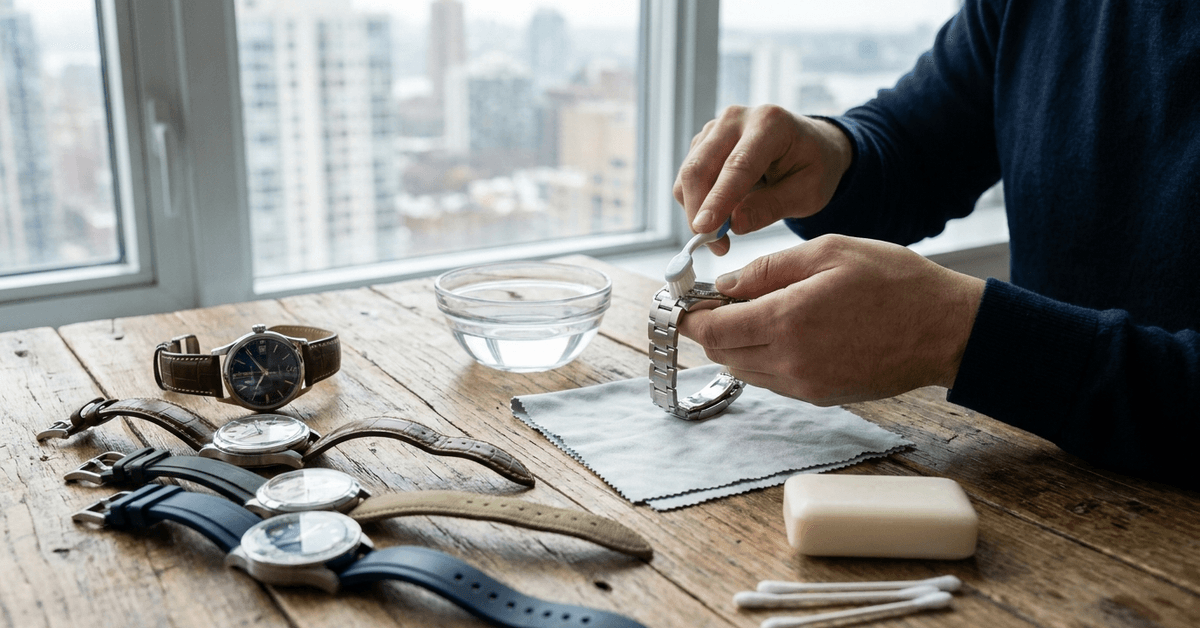
A single drop of soapy water on an alligator leather strap can leave a permanent stain. That same drop is exactly what a stainless steel bracelet needs to look new again.
That mismatch is where most watch cleaning advice falls apart. Leather, metal, rubber, and fabric straps each react to moisture, pressure, and soap in completely different ways.
This one is for the city commuter wearing a TAG Heuer through the subway or a Cartier to client meetings. The goal: clean straps at home without a jeweler’s invoice.
What City Living Does to Your Watch Strap
A watch worn through eight hours of office air conditioning, a packed train, and a walk through construction dust picks up a layer of grime that watches in smaller towns rarely see. Pollution particles bond with sweat on leather.
Metal links trap tiny debris between every joint. Rubber absorbs oils that won’t come off with a dry wipe.
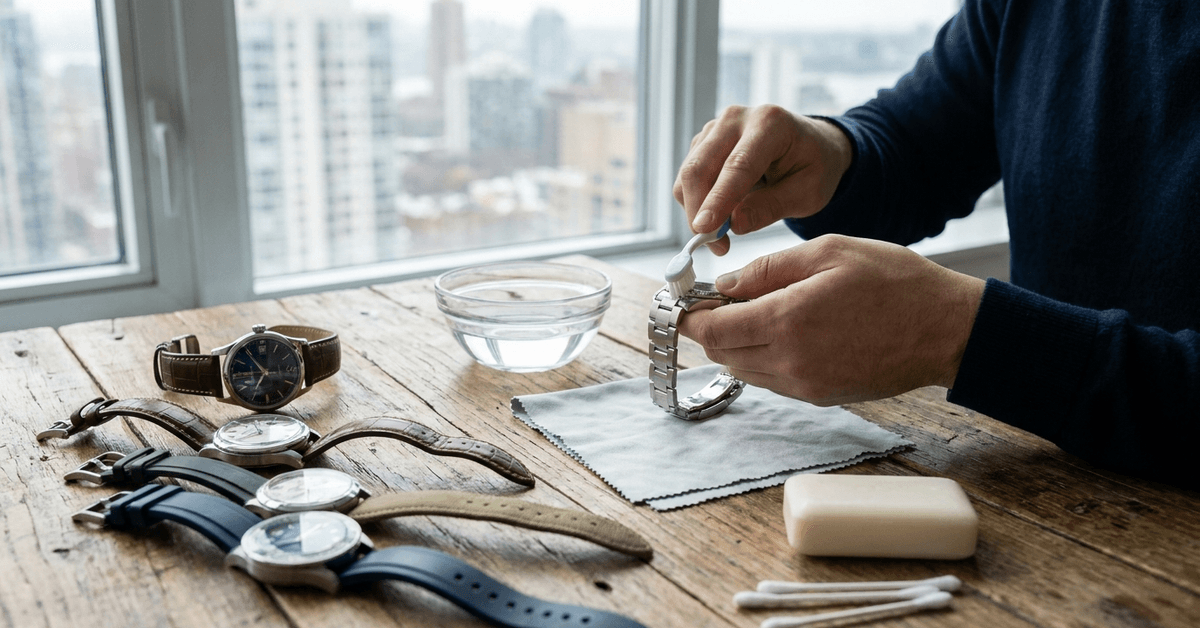
The damage is cumulative, and it looks different on each material. A leather strap darkens and starts to smell. Stainless steel loses its polish under a film of dried sweat. Fabric straps soak up coffee splashes and city humidity until the color shifts permanently.
How Pollution and Sweat Break Down Different Materials
Calfskin and alligator leather are the most vulnerable. City humidity accelerates cracking, and salt from sweat eats into dye over weeks. Brands like Hermès and IWC use treated leathers, but treatment only slows the process.
Stainless steel and titanium bracelets handle urban exposure better, but the gaps between links become tiny traps. Skin cells, soap residue, and fine dust collect in those joints. The bracelet still looks clean from a distance while growing a micro-layer of gunk underneath.
Rubber and silicone are tougher than they seem, but they’re not maintenance-free. Pollutants and sweat from humid city air degrade the material gradually. The strap starts feeling sticky or develops a gray tint that won’t wipe away.
Fabric and NATO straps absorb everything. Sweat, rain, spilled drinks. These straps need the most frequent cleaning of any material type.
Cleaning Leather Watch Straps Safely
Leather is the strap material where mistakes cost real money. A replacement strap from a brand like IWC or Cartier can run $200 to $500, so getting the cleaning method right matters.
The instinct most people follow is to soak the strap or scrub hard at a stain. Both are wrong for leather. Excessive moisture warps the material and loosens stitching. Aggressive scrubbing strips dye and leaves rough patches.
The Mild Soap Technique for Calfskin and Alligator
The method is simple and needs three things: a lint-free cloth, lukewarm water, and a drop of mild hand soap.
Dampen the cloth lightly. Apply one small drop of soap. Dab both sides of the strap with gentle, even pressure. For a stubborn mark, a soft-bristled toothbrush making tiny circles with minimal force works better than harder scrubbing.
Wipe all soap residue off with a separate damp cloth. Then lay the strap flat to air-dry away from sunlight or heat. Portable heaters and hair dryers, common in city apartments, can shrink and crack fine leather fast.
Why Leather Conditioner Matters Twice a Year
I would call twice-yearly leather conditioning the single most overlooked step for watch owners wearing brands like Omega or Hermès. City air dries out leather faster than most people expect, and conditioning keeps the material soft enough to resist cracking.
A specialized leather conditioner costs around $10 to $15 and takes five minutes to apply. That small investment extends strap life by months. Skip it, and the leather starts flaking at the edges right around the point where a new strap order becomes the only option.
Metal Bracelet Cleaning for Steel, Titanium, and Gold
Metal bracelets are the most forgiving material to clean, and also the one people neglect the longest. Because the bracelet still looks fine on the wrist, the buildup between links goes unnoticed for months.
Removing the bracelet from the watch head is the first step if your model allows it. This protects the case and movement from water exposure if the watch isn’t rated for submersion.
Soaking and Brushing Between Links
Drop the bracelet into a small bowl of lukewarm, soapy water. A few minutes of soaking loosens most city dirt without any scrubbing at all.
After soaking, a soft-bristled toothbrush works gently between links. Small circular motions are safer than back-and-forth scrubbing, which can leave micro-scratches on polished steel. A wooden toothpick handles tight corners where bristles can’t reach.
Rinse under running water, pat dry with a clean cloth, and lay flat. Air finishes the job.
Here is how cleaning routines compare across the four main strap materials:
| Leather | Metal | Rubber/Silicone | Fabric/NATO | |
|---|---|---|---|---|
| Soak time | Never soak | 2-5 minutes | 10-15 minutes | 10-15 minutes |
| Cleaning tool | Damp cloth, soft brush | Soft toothbrush, toothpick | Soft brush or fingers | Soft brush, both sides |
| Drying method | Air-dry flat, no heat | Pat dry, then air | Hang to air-dry | Hang to air-dry |
| Frequency | Every 2-3 weeks | Monthly | After heavy sweat | Weekly if worn daily |
The biggest takeaway from this comparison: leather is the only material that should never touch standing water.
Rubber, Silicone, and Fabric Strap Care
These straps are the workhorses of urban watch wearing. They handle gym sessions, rainy commutes, and weekend cycling better than leather or even some metals. But “low maintenance” doesn’t mean “no maintenance.”
I think the common recommendation to simply rinse these straps under a tap after wearing is too casual for anyone living in a humid city like Tokyo or Miami.
A quick rinse doesn’t remove the oils and pollutants that bond to rubber and silicone over repeated wearings. That buildup is what causes the sticky, discolored texture that eventually makes the strap unwearable.
Dealing with Sweat and Humidity on Synthetic Straps
Detach the strap and soak it in a bowl of warm water with a small amount of mild cleanser for 10 to 15 minutes. This loosens dirt that a rinse alone misses.
After soaking, use a soft brush or your fingers to clean the surface. For fabric straps, work both sides and rinse thoroughly. Hanging the strap to dry prevents the mildew that shows up faster in humid environments.
A few things to keep handy for strap cleaning at home:
- A soft-bristled toothbrush dedicated to watch care (not the one from your bathroom counter)
- A lint-free cloth or old cotton T-shirt for drying and buffing
- Mild hand soap or gentle cleanser, nothing with alcohol or bleach
- Wooden toothpicks or cotton swabs for clearing debris from tight spots
- Small bowls for soaking and rinsing
For fabric straps specifically, a tiny amount of stain remover can work on stubborn marks. Test it on a hidden section first. The underside near the spring bar is a safe spot for testing.
Protecting Straps After You Clean Them
Cleaning solves the immediate problem. But the strap picks up the same grime again within days if nothing else changes. Protection is where most watch care advice goes quiet.
Strap Rotation as a Maintenance Strategy
I’d argue that rotating between two or three straps prevents more long-term damage than any cleaning technique.
One leather strap worn seven days a week absorbs a full week of sweat and pollution without a break. Two straps in rotation each get time to dry out completely between wearings.
Match the strap to the day. Rubber or silicone for gym days and rainy commutes. Leather for office meetings. Metal for everything in between. That rotation alone cuts cleaning frequency in half and extends each strap’s lifespan.
Storage Mistakes That Cause More Damage Than Dirt
Where a watch sits overnight matters almost as much as how it’s worn. A few storage errors to avoid:
- Leaving watches on windowsills, where temperature swings warp leather and fog crystals
- Storing in bathrooms, where shower steam creates exactly the humidity that breeds mildew on fabric straps
- Laying straps buckle-down on hard surfaces, which scratches clasps and polished metal over time
A dry, soft-lined watch case is the simplest fix. Manufacturers like Omega and Jaeger-LeCoultre publish detailed care guides on their websites, and those guides are updated when new materials or coatings enter their product lines.
Chrono24 also runs community forums where collectors share material-specific cleaning results, including side-by-side photos of straps before and after various methods.
City-based watch boutiques in places like Geneva and Los Angeles occasionally host hands-on cleaning workshops, too.
Questions People Ask About Cleaning Luxury Watch Straps
A few of the most common searches around this topic, answered quickly.
- Q: Can I use rubbing alcohol to clean my watch strap?
Alcohol strips dye from leather and can dry out rubber over repeated use. Mild hand soap and lukewarm water handle the same job without the risk. Stick with the gentler option for anything more expensive than a $20 strap. - Q: How often should I clean a leather watch strap?
Every two to three weeks for daily wearers in a city environment. Lighter wiping after a sweaty day prevents the kind of salt buildup that causes permanent discoloration. Twice-yearly conditioning is a separate step that shouldn’t be skipped. - Q: Is it safe to put my metal bracelet in an ultrasonic cleaner?
Ultrasonic cleaners work on solid stainless steel bracelets, but they can loosen glued elements or damage plated finishes. A bowl of soapy water and a toothbrush gets close to the same result with zero risk to the bracelet’s construction. - Q: Do I need to remove the strap from the watch before cleaning?
Removing the strap protects the watch case and movement from water exposure, especially for watches without a water-resistance rating. If the watch is rated for submersion, strap-on cleaning works fine for metal and rubber. Leather should always come off the watch first. - Q: Can I machine-wash a NATO strap?
A mesh laundry bag on a cold, gentle cycle works for cotton or nylon NATO straps. Avoid hot water and the dryer. Air-drying flat or hanging prevents the fabric from shrinking or losing its weave pattern.
Conclusion
A clean luxury watch strap lasts longer and looks better than one scrubbed too hard with the wrong product. Matching the cleaning method to the strap material is the only rule that matters across every brand.
Rotation and proper storage do more preventive work than any single cleaning session ever will. Spend five minutes on the right technique now, and the strap repays it with months of extra life.