A polishing cloth costs about $3 and fits in a coat pocket. That single purchase does more for stainless steel jewelry than any elaborate cleaning routine posted on Pinterest.
Most jewelry care guides treat stainless steel like it needs the same babying as sterling silver. It doesn’t. Stainless steel is an alloy built to resist corrosion, and the grime it picks up in a city is surface-level stuff.
The part that trips people up isn’t the cleaning itself. It’s knowing which specific substance is dulling the metal and picking the right 60-second fix.
This guide is for the person who wears stainless steel rings, chains, or bracelets five or six days a week in a city and wants the fastest path back to that factory shine.
What Dulls Stainless Steel Jewelry in a City
Stainless steel earns its reputation as a low-maintenance metal. But “low maintenance” still means some maintenance, especially if pieces are worn daily through subway commutes, gym sessions, and nights out.
The specific threats vary by climate and personal routine, so knowing which one is attacking your jewelry changes the cleaning approach entirely.
Air Pollution and Fine Dust
City air carries particulate matter that settles on exposed surfaces throughout the day. Stainless steel won’t corrode from this exposure the way silver does, but a thin film of grime builds up over weeks.
The metal doesn’t tarnish. It just loses its reflective quality gradually, and the change is slow enough that most people don’t notice until they compare a daily-wear piece to one that’s been sitting in a drawer.
Sweat and Skin Oil Buildup
Long days generate sweat, and that sweat mixes with natural skin oils to create a greasy film.
Rings and bracelets catch this the worst because they sit against skin with no airflow underneath. Chains worn under a shirt collar collect it faster than pendants that hang freely.
The Substance Most Guides Bury: Beauty Products
I’d argue that perfume, sunscreen, and hair spray do more cumulative damage to stainless steel’s appearance than pollution and sweat combined.
Creams and sprays leave a chemical residue that bonds to the metal surface differently than dust or oil. Soap and water can handle sweat.
But a perfume residue that’s been baking onto a bracelet in humid conditions (think Singapore, Miami, or anywhere with 80%+ humidity) often needs something slightly stronger.
The standard advice is “avoid contact with chemicals.” I think that advice is useless for anyone living in a real city. A better rule: put jewelry on last, after all products have dried. That single habit reduces buildup by a noticeable margin within the first two weeks.
How to Clean Stainless Steel Jewelry at Home
Two methods handle about 95% of stainless steel cleaning situations. The first one is so simple it barely counts as a method, and the second one costs pennies. Everything beyond these two is optional polish.
Warm Soapy Water: The 3-Minute Reset
Mild dish soap and warm water is the default cleaning solution for stainless steel jewelry, and nothing else comes close for daily or weekly grime. The process takes less time than brewing a cup of coffee:
Fill a small bowl with warm (not hot) water and add two or three drops of dish soap. Swish the piece around gently for two to three minutes.
Then take a soft-bristled toothbrush and work the soapy water into clasps, chain links, and any textured areas where grime hides. Rinse under clean running water. Pat dry immediately with a lint-free cloth.
That last step matters. Letting stainless steel air-dry leaves water spots, and those spots look exactly like the grime you just cleaned off.
Baking Soda Paste for Stubborn Spots
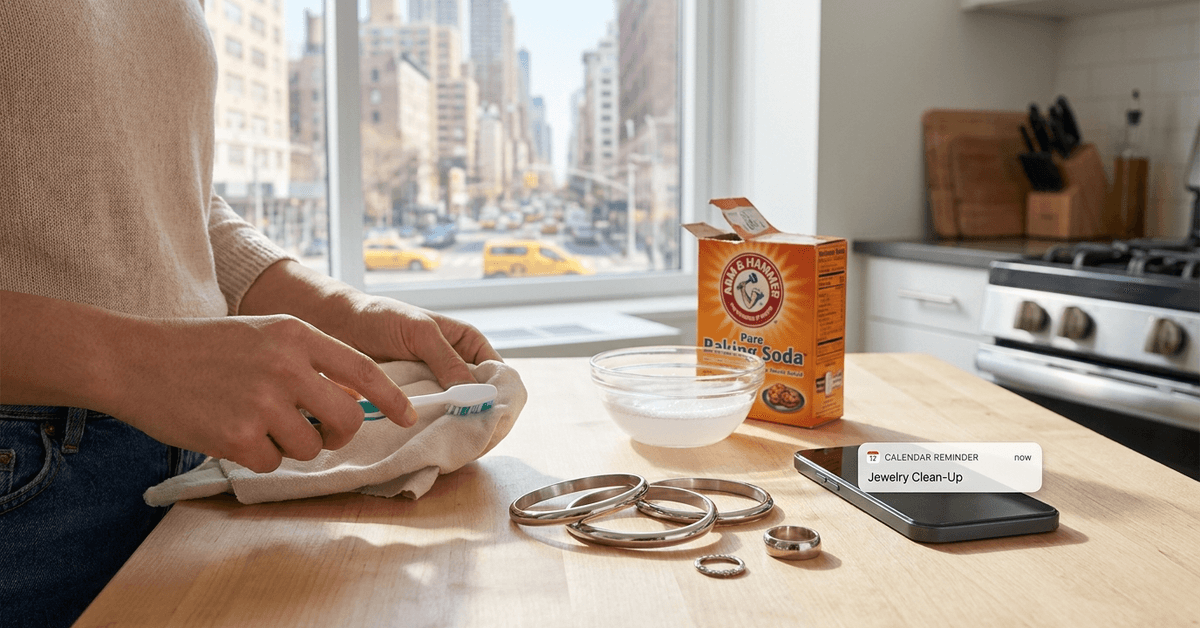
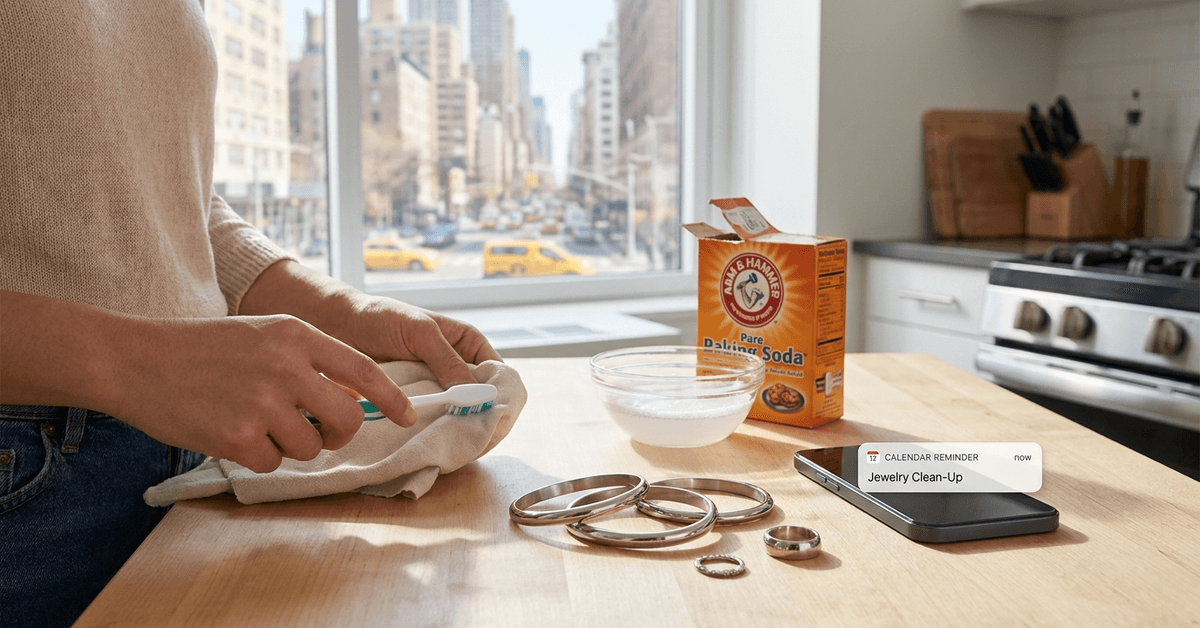
Some buildup won’t budge with soap alone. Baking soda paste handles these cases without scratching the metal. Mix equal parts baking soda and water until the consistency is thick enough to stay on the jewelry without dripping.
Apply it with a soft toothbrush using small circular motions, focusing on the dull patches. Rinse thoroughly and dry right away.
A mistake people make here: leaving the paste on too long. Baking soda is mildly abrasive. Thirty seconds of scrubbing is enough for most spots. Letting it sit for five minutes doesn’t improve results and can leave a hazy residue of its own.
The White Vinegar Rinse (Use It Carefully)
Diluted white vinegar works as a final rinse to cut through smudges that soap missed. Dip the piece briefly, rinse immediately with water, and dry. The entire process takes about ten seconds.
One hard rule: never use vinegar on pieces with glued-on stones or crystals. The acidity can weaken adhesive bonds over time. Pieces with prong-set stones are fine. Pieces where a stone is glued into a bezel are not.
Polishing Stainless Steel Jewelry for Extra Shine
Cleaning removes grime. Polishing restores the reflective finish that makes stainless steel look like it just came out of the box. These are different steps, and skipping straight to polishing over dirty metal just pushes particles around the surface.
Polishing Cloths vs. DIY Baking Soda Buff
A jewelry polishing cloth is the lowest-effort option. These cloths come pre-treated with a light polishing compound and remove minor surface dullness in a few swipes. They’re small enough to keep in a bag, a desk drawer, or a jacket pocket.
For someone who wears stainless steel daily, a quick wipe before leaving the house takes about fifteen seconds.
The DIY alternative uses the same baking soda paste from the cleaning step, applied with a soft cloth in small circular motions. The result is comparable, but the polishing cloth is faster and less messy.
I’d pick the cloth over the paste for daily touch-ups and save the baking soda approach for deeper monthly cleanings when a piece has visible buildup.
| Method | Speed | Effort | Best For |
|---|---|---|---|
| Polishing Cloth | 15 seconds | Minimal | Daily shine touch-ups |
| Baking Soda Paste | 3-5 minutes | Moderate | Monthly deep cleaning |
| White Vinegar Rinse | 10 seconds | Minimal | Cutting residue after soap wash |
The polishing cloth handles the most common situation: a piece that’s clean but has lost its mirror finish.
Storing Stainless Steel Jewelry to Prevent Repeat Cleaning
Good storage cuts cleaning frequency in half. The logic is straightforward: less exposure to air, dust, and moisture means less buildup between wears.
A few storage rules that make a measurable difference:
- Keep pieces in individual pouches or compartmented boxes. Stainless steel is hard, but it can scratch other stainless steel pieces when they rub together in a shared dish.
- Avoid storing jewelry in bathrooms. Shower steam and humidity accelerate the film that builds up on metal surfaces. A bedroom dresser or closet shelf is a better spot.
- Use a soft travel case for pieces carried in a bag. Tossing a chain into a backpack pocket means it’s grinding against keys, coins, and phone cables all day.
The “Last On, First Off” Rule
This habit does more than any cleaning schedule. Put jewelry on after applying perfume, sunscreen, lotion, and hair products. Take it off before showering, swimming, or working out.
That simple sequence reduces the amount of chemical residue and sweat that bonds to the metal, which means less frequent deep cleaning and longer stretches of clean shine between washes.
Mistakes That Ruin Stainless Steel Jewelry Faster Than City Grime
Stainless steel is tough. It can still be damaged by the wrong cleaning approach. A few common errors cost more than they save:
- Bleach and acid-based household cleaners will corrode stainless steel over time. The metal resists corrosion, but it isn’t immune. Bathroom tile cleaner is not jewelry cleaner.
- Steel wool and abrasive sponges leave permanent scratch patterns on polished surfaces. A soft toothbrush or microfiber cloth is always the right tool.
- Ultrasonic cleaners set too aggressively can loosen stone settings in fashion jewelry. These machines are designed for solid metal pieces, not pieces with adhesive-set elements.
I think the widespread advice to “clean your jewelry weekly on a set schedule” gets it backward for stainless steel specifically.
A fixed calendar reminder sounds organized, but it trains people to ignore visual cues. A better approach: clean when you can see the dullness, and polish when the shine drops.
Stainless steel worn in dry climates like Denver or Madrid might go three weeks between cleanings. The same piece worn daily in Bangkok or Houston might need attention every five days. The climate and your product routine set the schedule, not a calendar app.
That’s a position most care guides won’t take because it sounds less actionable than “clean every Sunday.” But I’d rather give advice that matches how the metal behaves than advice that sounds neat on a checklist.
Questions People Ask About Cleaning Stainless Steel Jewelry
These come up frequently for anyone maintaining stainless steel pieces through daily city wear.
- Q: Can stainless steel jewelry rust if I sweat on it a lot? Stainless steel contains chromium, which forms a protective oxide layer on the surface. This layer resists rust under normal wear conditions, including sweat exposure. Lower-grade stainless steel (below 304 grade) can develop surface discoloration in extreme humidity, so checking the grade before buying is worth the effort.
- Q: Is it safe to clean stainless steel jewelry with toothpaste? Toothpaste is mildly abrasive and can work in a pinch, but it often contains whitening agents or micro-beads that leave a hazy finish on polished metal. Baking soda paste gives a cleaner result without the added chemicals.
- Q: How often should I replace a jewelry polishing cloth? A polishing cloth lasts several months of regular use. Once it stops picking up tarnish or the treated side feels smooth instead of slightly textured, the polishing compound has worn off. Replacement cloths from Amazon typically cost between $3 and $8 for a multi-pack.
- Q: Does stainless steel jewelry react with chlorine in swimming pools? Chlorine can pit the surface of stainless steel over repeated long exposures. Occasional pool contact won’t cause visible damage, but wearing pieces during extended swim sessions multiple times a week may dull the finish permanently. Removing jewelry before swimming is the safer call.
- Q: Can I use the same cleaning method for stainless steel and gold-plated stainless steel? No. Gold-plated stainless steel has a thin gold layer on top that can wear away with abrasive cleaning. Stick to the soap and water method recommended by the Jewelers of America for plated pieces, and skip baking soda entirely on plated surfaces.
Conclusion
Stainless steel jewelry survives city life better than almost any other affordable metal.
The cleaning process takes less time than most people spend choosing which piece to wear. A polishing cloth in your bag and soap under your sink cover about 95% of situations.
The rest comes down to keeping beauty products off the metal and letting climate, not a calendar, tell you when the next cleaning is due.