A BAPE hoodie labeled “Large” fits like a US Medium. A Palace tee in “Medium” drapes like an oversized US Small. That single letter on the tag means completely different things depending on which city the brand calls home.
Most sizing advice online stops at “check the size chart.” But size charts across Tokyo, London, and New York labels use different base measurements, different fit philosophies, and sometimes change cut between seasonal drops.
This guide is for the online streetwear buyer who has already been burned at least once: the package arrives, the fit is wrong, and the return shipping eats into the budget. That cycle breaks once you stop trusting size labels at face value.
Why a “Medium” Means Three Different Things Across Streetwear Brands
The streetwear world borrows design language from cities that size garments according to completely different body standards.
A single brand might draw inspiration from Japanese workwear, American skate culture, and European tailoring, all within one collection.
That creative mixing is what makes streetwear interesting to wear. It also makes it a nightmare to buy online.
The US, EU, and Asian Sizing Split
A US Medium typically sits around a 96-102 cm chest measurement.
A Japanese Medium from brands like Cav Empt or BAPE often assumes a 86-92 cm chest instead. European labels split the difference, but lean slimmer on collabs with Parisian or Milanese houses.
The disconnect runs deeper than chest width. Sleeve length, shoulder drop, and body length all shift between sizing systems. A shirt that fits your torso perfectly might have sleeves that end two inches above your wrist if the brand built its pattern for a different market.
Drop-Specific Fit Changes
I would have assumed Supreme kept consistent sizing across drops, but hoodies from their FW23 collection ran noticeably boxier than their SS23 releases. Labels like Aimé Leon Dore mix standard and oversized fits within the same seasonal lineup.
This means your past purchase history with a brand tells you less than you’d expect. The hoodie you bought last year might share a name and a size tag with this season’s version, but the garment dimensions could be centimeters apart.
Measure the Hoodie, Not Your Body
The standard advice says to wrap a tape measure around your chest, waist, and hips, then match those numbers to a brand’s size chart.
I think that approach fails for streetwear specifically because size charts list garment dimensions, not body dimensions, and most first-time buyers miss that distinction.
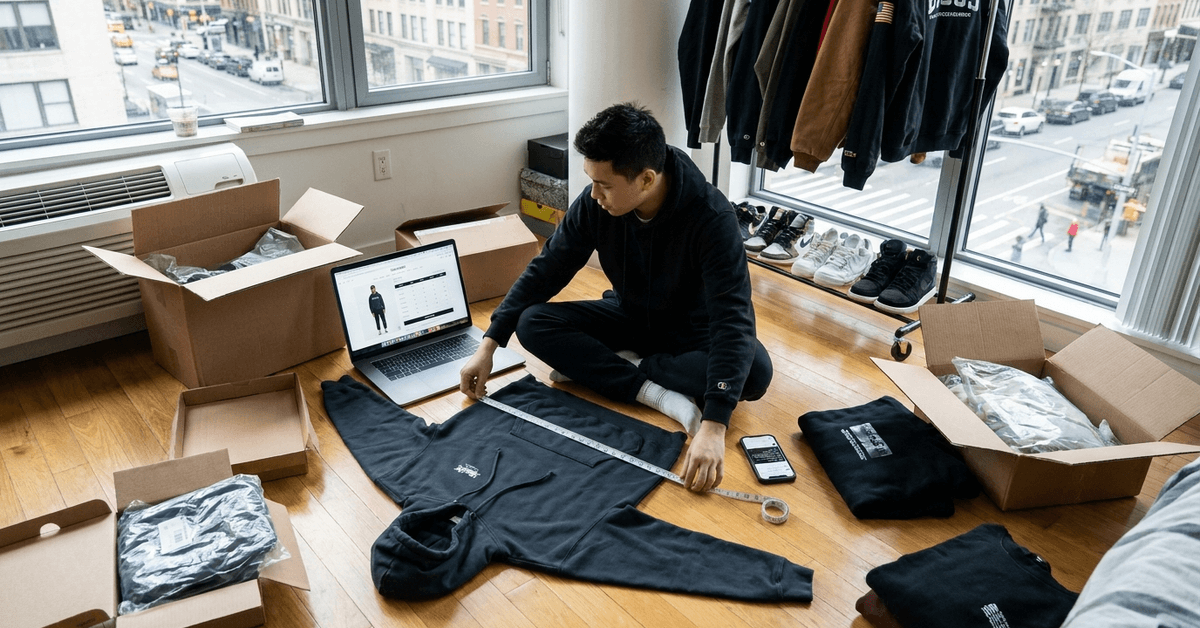
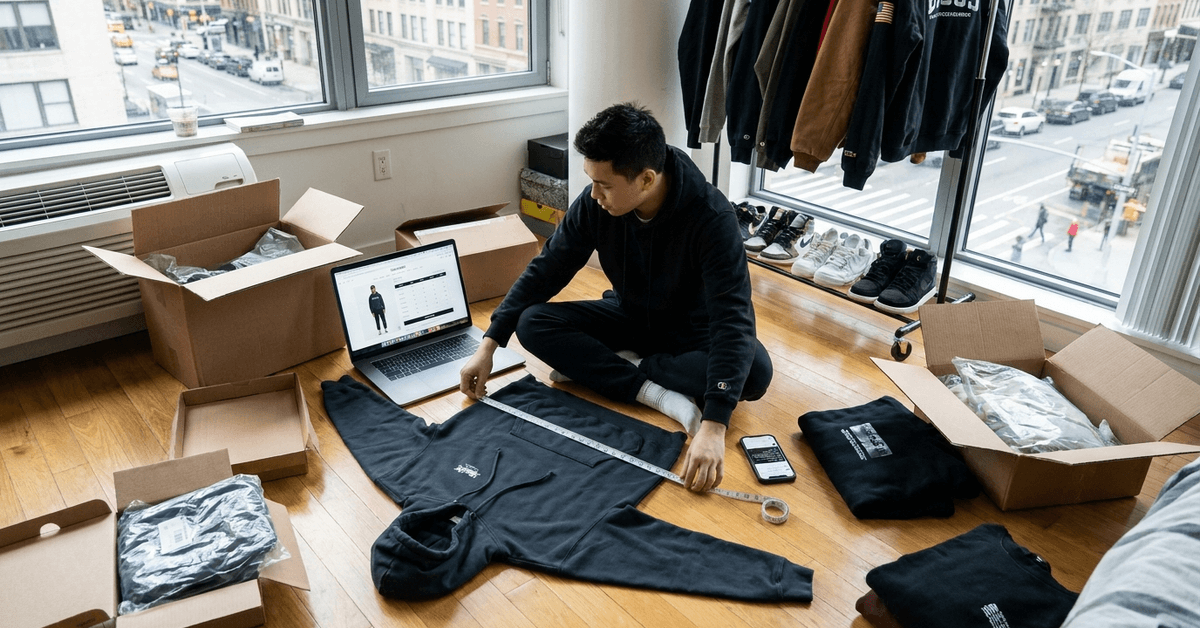
A better starting point: grab the best-fitting piece you already own. Lay it flat on a table. Measure it. Those numbers are your baseline garment measurements, and they translate directly to any brand’s size chart without the guesswork of converting body measurements to fabric dimensions.
The Four Measurements That Decide Your Fit
A soft tape measure and any flat surface are all you need. Take these four numbers from a garment you already like:
- Chest width: Lay the shirt flat, measure straight across from armpit seam to armpit seam, then double it
- Shoulder width: Seam to seam across the top, following the natural shoulder line
- Back length: Base of the collar straight down to the bottom hem
- Sleeve length: Shoulder seam down to the cuff, measured on the flat garment
For pants, the three numbers are waistband (laid flat, doubled), inseam (crotch seam to hem), and rise (crotch seam to top of waistband).
Chest and shoulder measurements carry the most weight for streetwear tops because that’s where the biggest variation between brands shows up.
Why Flat-Lay Beats a Body Tape
A garment laid flat removes all the variables that make body measurements unreliable: posture, breathing, where exactly you hold the tape.
Two people measuring the same person’s chest can get results 3-4 cm apart. Two people measuring the same laid-flat hoodie will land within a centimeter of each other.
Once you have your baseline numbers written down, comparison shopping across BAPE, Palace, Cav Empt, and any other label becomes arithmetic instead of guessing.
Streetwear Brands and Their Sizing Reputations
Some brands earn a reputation for sizing surprises. Knowing which direction a label leans saves the trouble of a return.
| Brand | Based In | Sizing Tendency | Fit Notes |
|---|---|---|---|
| A Bathing Ape (BAPE) | Tokyo | Runs at least one full size small | Size up for international buyers |
| Palace | London | Boxier than US skate brands | Generous width, shorter body length |
| Cav Empt | Tokyo | Cropped and wide | Built for layering, shorter torso |
| Aimé Leon Dore | New York | Mixed within collections | Check per-item measurements, not brand defaults |
The pattern here: Tokyo brands tend to run smaller overall, London labels lean boxy, and NYC brands can be a coin flip depending on the specific piece.
Cities Where Sizing Catches Buyers Off Guard
Tokyo shops stock smaller base fits. Anyone above a US Large will struggle to find options in physical stores, and online drops follow the same patterns.
Berlin complicates things differently. Boutiques there mix vintage deadstock with modern releases on the same rack. Vintage European sizing from the 1990s runs completely different from 2026 streetwear cuts, so a “Large” on a vintage rack tells you almost nothing.
New York hype drops create time pressure. Limited stock and countdown timers push buyers to skip the size chart entirely, which explains why NYC-based resale platforms see higher return rates on drop-day purchases.
Community Sizing Intel and Apps Worth Downloading
The best sizing information often lives outside the brand’s own website. Other buyers who already own the piece, and who have a similar build, are a better resource than any official chart.
Three places where sizing conversations happen in real time:
- Reddit’s r/streetwear carries detailed try-on posts with measurements and photos. Search the brand name plus “fit” or “sizing” and sort by recent.
- Instagram fit pics tagged with the brand name and city give a visual reference. A tagged photo from someone in Seoul wearing the same Cav Empt jacket tells you more than a flat product shot on the brand’s site.
- Discord servers for streetwear communities allow direct sizing questions. Servers tied to specific brands or regions (like r/streetwear on Reddit) tend to have the fastest, most specific answers.
Sizing Apps That Speed Up the Process
Size.ly lets you save measurements and compare them side by side across different brands. It’s especially useful for someone shopping from multiple labels in one session.
ASOS Fit Assistant pulls recommendation data from other buyers and cross-references it against return patterns. The suggestions lean more accurate for European and UK brands than for Japanese streetwear, so keep that gap in mind.
Grailed’s mobile app offers photo-heavy listings where sellers often include flat-lay measurements. Sorting by your size and scanning seller photos beats relying on the original brand’s chart, especially for sold-out or limited pieces.
Keeping a note on your phone with your baseline flat-lay measurements makes all of these tools faster to use. Pull up the note, compare the numbers, and move on.
A Smarter Ordering Strategy for Online Streetwear
Even after doing the measurement work, some purchases still land wrong. A few ordering habits reduce the damage:
- Prioritize retailers offering free returns or exchanges. Paying $15-20 for return shipping on a $60 tee erases any deal.
- Contact customer service before ordering. Ask specifically about the fit for the item, not just the brand’s general sizing. Some online streetwear retailers have chat support that can pull flat-lay measurements on request.
- If you’re between sizes, think about layering. A slightly larger hoodie works fine over a base layer. A too-small hoodie just sits in the closet.
- Check YouTube try-on videos for the specific piece you’re buying. Search the brand, the item name, and “try on” to find someone wearing it on camera.
I think skipping the “when in doubt, size up” advice is smarter than following it, specifically because BAPE and Cav Empt size so differently that “sizing up” on a Cav Empt piece (already cut wide) gives you a completely different problem than sizing up on a slim-fit BAPE tee.
The garment’s intended silhouette matters more than a generic rule.
Questions People Ask About Streetwear Sizing Online
These come up constantly in forums and group chats, and the answers are less obvious than they look.
- Q: Should I always size up when buying Japanese streetwear online? Sizing up works for brands like BAPE that run uniformly small. But labels like Cav Empt already cut wide and cropped, so going up a size adds width you don’t need. Check the specific item’s flat-lay dimensions before defaulting to size up.
- Q: Are streetwear size charts accurate? They’re accurate to the garment’s intended measurements, but they don’t tell you how the piece will drape or fit your proportions. A chart might say 54 cm chest width, but it won’t mention the drop shoulder or boxy cut that changes how those centimeters sit on your frame.
- Q: Do streetwear brands change sizing between drops? Some do, and they rarely announce it. Supreme and Aimé Leon Dore have both shifted fits between seasonal collections without updating their general size guide. Treat each drop as a separate sizing exercise.
- Q: Can I trust Instagram fit pics for sizing? They’re useful as a visual reference, but body composition varies so much that someone your height could carry the same piece completely differently. Flat-lay measurements are still the most transferable data point.
- Q: What’s the fastest way to check sizing on a limited drop? Save your flat-lay baseline on your phone, pull it up the second the product page goes live, and compare it against the listed garment measurements. Skip body charts entirely during time-sensitive drops.
Conclusion
Streetwear sizing across global brands follows no single standard, and that gap widens every season. Flat-lay measurements from a garment you already love give you a universal reference point.
Community forums, sizing apps, and a willingness to contact sellers directly fill the remaining gaps. The buyer who treats each piece as its own sizing puzzle ends up with a closet full of clothes that fit.