A bucket hat stuffed into a tote bag after a sweaty subway ride smells terrible within 48 hours. That sour, damp funk is harder to fix than any coffee stain or sidewalk dust.
Most cleaning guides skip the part that does the real damage. The stain is the visible problem, but the shape loss and mold risk from bad drying and storage ruin more hats than dirt ever will.
This guide is for the person rotating two or three bucket hats through a city wardrobe. Street style regulars in Tokyo, Berlin, Brooklyn, or Madrid who treat their hats like daily accessories, not seasonal novelties.
Why City Grime Hits Bucket Hats Differently
Urban air carries a cocktail that clean suburban porches never see. Exhaust particulates, secondhand smoke, fine construction dust, and humid underground transit systems all coat fabric in a film that plain water barely touches.
Light Colors Show Everything Faster
A white or pastel bucket hat worn on public transport picks up a visible gray ring along the inner brim within a few wears.
That ring is a mix of sweat salts and airborne grime baked in by body heat. Cotton and canvas absorb this faster than synthetics because their fiber structure is more porous.
The surprise is how quickly this happens during warmer months. A hat worn to a summer street market or outdoor festival in Barcelona can look noticeably dingy by the end of a single day.
And once that grime sets into stitching and seam lines, spot cleaning alone won’t pull it out.
Spot Cleaning a Bucket Hat After a Day Out
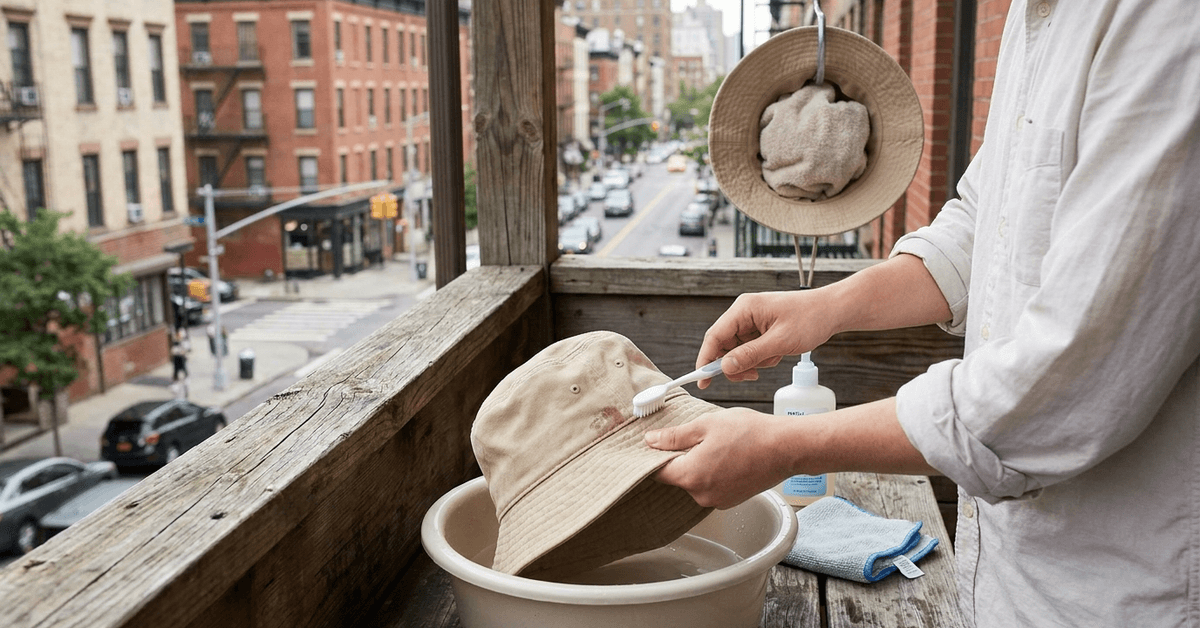
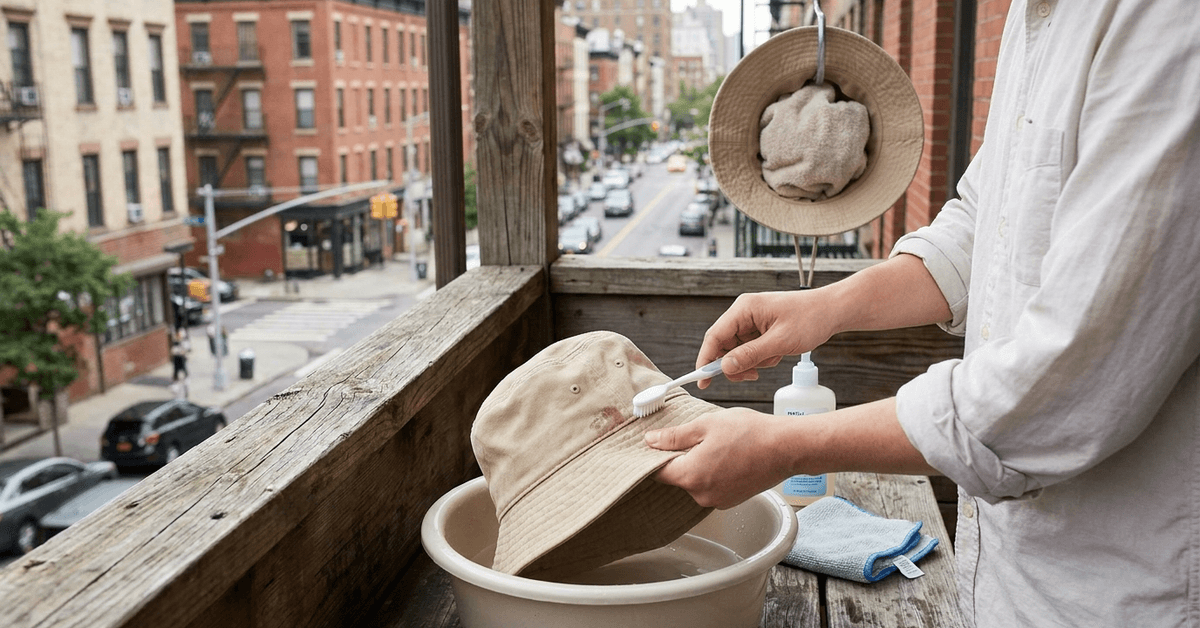
Spot cleaning is the first line of defense, and it handles most day-to-day issues. A coffee splash, a streak of sidewalk dust, a smear from street food: these all respond to a targeted approach without soaking the entire hat.
The Three Tools That Do the Job
A quick clean needs only a few things:
- Color-safe mild detergent like Woolite or Soak, diluted in cool water
- A soft-bristle toothbrush for working dirt out of seams and brim stitching
- A microfiber cloth to blot excess moisture after cleaning
Dampen the toothbrush, apply a tiny amount of detergent, and work the stained area in small circles. Then blot dry immediately.
The goal is to lift the stain without saturating the surrounding fabric, because water rings on cotton bucket hats are a real problem if the dampness spreads unevenly.
Timing Matters More Than Technique
A stain treated within the first hour lifts far more easily than one left overnight. I’d argue this single habit, cleaning stains the same day they happen, matters more than any specific product or method.
Dried-in stains on cotton or canvas often need a full soak to remove, which puts the hat’s shape at risk.
Full Wash: Hand Soak vs. Machine on Delicate
Sometimes spot cleaning isn’t enough. A hat that’s been through a week of daily wear, an outdoor workout in Central Park, or a music festival needs a proper wash.
The Hand Wash Method
The standard approach works like this:
- Fill a basin with cool or lukewarm water (never hot, which shrinks cotton fast)
- Add a small amount of neutral pH detergent, especially for hats with printed graphics or patchwork
- Submerge the hat and gently swirl it around for 30 seconds
- Let it soak for 5 to 10 minutes
- Rinse under a gentle stream of cool water until no soap remains
- Pat dry along seams and stitching with a clean towel
| Hand Wash | Machine Wash (Delicate) | |
|---|---|---|
| Shape Risk | Low, if handled gently | Moderate, even on no-spin |
| Cleaning Depth | Good for surface grime | Better for embedded sweat |
| Time Required | 15-20 minutes active | 5 minutes setup, 30+ minutes cycle |
| Best For | Structured hats, printed designs | Plain cotton or canvas beaters |
I think machine washing on delicate mode inside a mesh laundry bag gets an unfairly bad reputation for cotton and canvas bucket hats.
The common advice says hand wash only, always. But a no-spin delicate cycle with cold water and a mesh bag puts less mechanical stress on a hat than aggressive hand scrubbing, and it pulls embedded sweat salts out of the inner band more thoroughly.
I would skip the machine for anything with a stiff internal brim wire or glued-on patches, though. Those elements can’t handle even gentle tumbling.
Drying a Bucket Hat Without Warping the Crown
The wash is the easy part. Drying is where most people destroy their hats, especially in apartments where space and airflow are limited.
Radiators and Hair Dryers Are the Enemy
High heat warps the crown, flares the brim unevenly, and can pucker seams on synthetic fabrics. A polyester hat left on a radiator for an hour often comes out with a permanent wave in the brim that no amount of reshaping fixes.
The safe method takes patience. Towel-press the hat gently to remove surface water, then stuff the crown lightly with a dry, soft cloth (an old t-shirt works perfectly) to hold the dome shape.
Set the hat on a flat surface in a shaded, ventilated area. Direct sunlight causes uneven fading, particularly noticeable on darker colors.
Never Hang a Bucket Hat to Dry
Hanging a wet bucket hat by the brim creates a crease line that stays permanently on cotton and canvas. Draping it over a clothesline pinches the crown.
Flat drying on a towel, crown stuffed, is the only method that consistently preserves the original silhouette.
Drying time depends on humidity and airflow. A well-ventilated room in a drier climate might need 6 to 8 hours. A small apartment in London or Amsterdam during winter could take a full day. Avoid the temptation to speed things up with heat.
Cotton vs. Polyester: The Fabric Changes Everything
Not all bucket hats respond to the same treatment, and this is where a lot of generic guides fall short. The fabric dictates water temperature, detergent type, and drying time.
Cotton and Canvas Care
Cotton and canvas are the most common bucket hat materials for streetwear. They absorb moisture well, feel comfortable, and take dye beautifully. But they also shrink in hot water, absorb odors deeply, and take longer to dry than synthetics.
Cool water only. If a machine cycle is used, select delicate mode, cold water, and no spin. The mesh laundry bag protects the brim from folding against the drum wall.
Polyester and Nylon Care
Synthetic bucket hats, common in athletic and outdoor styles, resist moisture absorption and dry faster.
But they need a sports-specific detergent to break down sweat oils that standard soap leaves behind. Brands marketed for gym clothes work well here.
Even with synthetics, air drying is non-negotiable. High-heat dryers in shared city laundry rooms pucker seams and change the fit permanently. A polyester hat that went in as a medium can feel noticeably tighter after 20 minutes in a commercial dryer.
Storing Bucket Hats in a Small Apartment
Cleaning is only half the equation. Bad storage between wears undoes all that careful washing and drying work.
The biggest mistakes are predictable:
- Stuffing a damp hat into a gym bag or tote, which breeds mold and creates a permanent musty smell
- Stacking hats under heavy items on a shelf, which crushes the crown flat
- Twisting or wringing a hat after washing, which breaks the inner brim structure
A shelf with enough clearance to sit the hat upright works well. Some people use an upright paper towel roll inside the crown to hold the shape during storage.
Magnetic hooks or pegs on the back of a door give vertical storage without taking up shelf space, and they keep the hat’s shape intact by supporting it from the inner band.
Dealing With Odor Between Washes
A hat that smells a bit stale but isn’t visibly dirty doesn’t need a full soak. Setting it in an open, ventilated spot overnight usually clears mild odor.
For stubborn smells, a light sprinkle of baking soda inside the crown, left for a few hours and then shaken out, works well. This extends the time between full washes and reduces wear on the fabric.
Finding Hat-Friendly Services in Cities
Maintaining a bucket hat doesn’t always mean doing everything at home. Apps like LaundroMap help find fabric-sensitive laundromats in cities like London and New York.
For hats with custom embroidery, patchwork, or unusual materials, searching Google Maps for “eco dry cleaning” or “specialty garment care” near a specific neighborhood often turns up small shops that handle delicate items individually rather than running everything through an industrial cycle.
These services typically cost more than a home wash, but for a hat worth $60 or $80, a $10 professional clean once a season is reasonable insurance.
Questions People Ask About Cleaning Bucket Hats
A few things come up repeatedly when city hat owners look for care advice. These answers fill in gaps the guide above touches on but doesn’t fully cover.
- Q: Can I put a bucket hat in the dishwasher to clean it?
The dishwasher trick circulates online for baseball caps, but bucket hats have a softer, less rigid structure. Dishwasher heat and harsh detergent tablets can melt adhesives, warp brims, and strip color. Stick to a hand soak or a mesh-bag machine cycle on cold. - Q: How often should I wash a bucket hat I wear daily?
A full wash every two to three weeks is a reasonable pace for daily wear. Spot clean stains as they appear, and air the hat out overnight after each wear. Overwashing breaks down fabric and fading happens faster than most people expect on cotton. - Q: My bucket hat has a cardboard brim insert. Can it get wet?
Cardboard stiffeners are common in cheaper bucket hats and they dissolve when soaked. Spot cleaning only for these hats. If the brim feels soft and papery when pressed, assume it has a cardboard insert and avoid full submersion entirely. - Q: Does freezing a bucket hat kill bacteria and odor?
Freezing pauses bacterial growth but doesn’t kill most odor-causing bacteria. Once the hat thaws, the smell returns. A baking soda treatment or a proper wash is more effective for lasting freshness. - Q: Can I iron a bucket hat to remove wrinkles after washing?
A low-heat iron on cotton or canvas can smooth minor wrinkles, but always place a thin cloth between the iron and the hat fabric. Never iron directly on printed graphics, patches, or synthetic materials. Steam works better than direct contact for most wrinkle issues.
Conclusion
A clean bucket hat lasts longer and looks better than one rescued after months of neglect. City grime builds gradually, so consistent small efforts beat occasional deep interventions every time.
The fabric and the shape both reward careful drying more than aggressive scrubbing. Treat the drying step as the most important part of the process, and the rest falls into place.