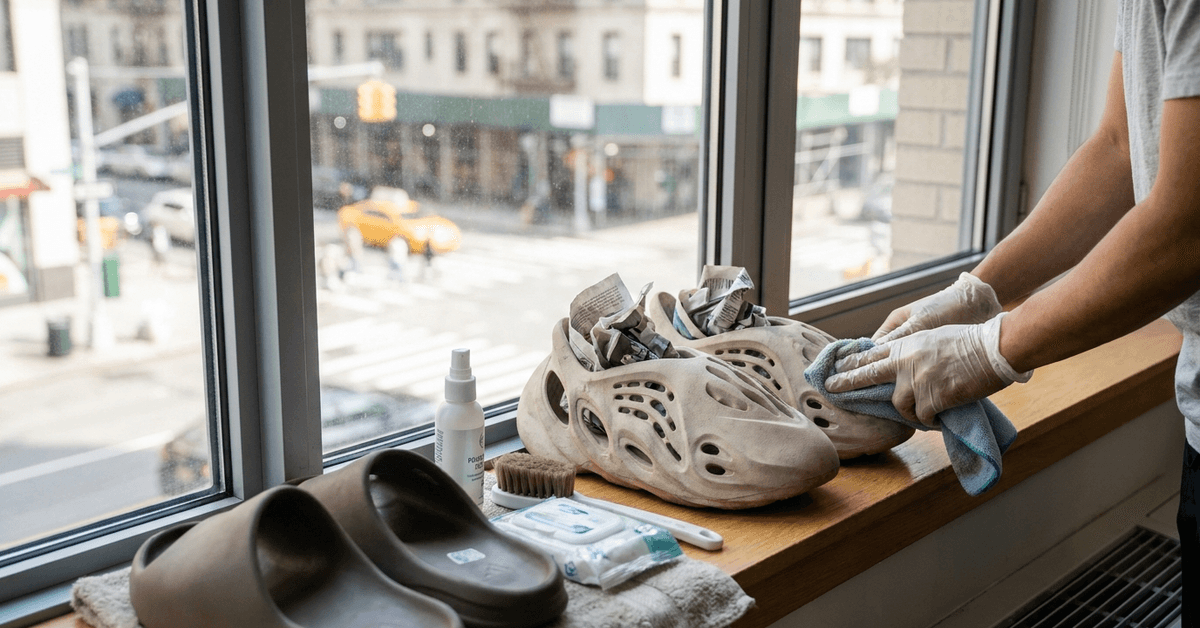
EVA foam is porous. That single material fact explains why your foam runners look trashed after one week of city commuting. Most cleaning guides throw a dozen specialty products at you.
A $15 sneaker spray here, a $20 cleaning kit there. Plain dish soap and a microfiber cloth do the same job for about forty cents per wash.
This piece is for the daily commuter stuffing slides into a backpack between the train and the office. Small apartment, no yard, limited time. If that sounds like your situation, the cleaning method matters less than the drying method, and almost nobody talks about that part.
Why EVA Foam Picks Up City Grime So Fast
The material that makes foam runners lightweight and comfortable is the same material that turns them into dirt magnets.
EVA foam (ethylene-vinyl acetate) has a closed-cell structure filled with tiny air pockets. Those pockets sit at the surface, creating micro-grooves that trap dust, oil, and moisture on contact.
Subway Dust and Street Oil Hit Differently
A foam runner worn through a city park picks up loose soil that brushes off easily. A foam runner worn through a subway station picks up a mix of metal dust, brake particulate, and human oil that bonds to the surface.
The cleaning approach has to match the type of grime, not just the amount of it. Slide sandals have an even bigger problem. Open-toe designs expose the entire footbed to direct contact with whatever the wearer steps through.
Puddle water in cities like London or São Paulo carries road oil and dissolved grime that soaks into an unprotected footbed within seconds.
The Stain Timeline Nobody Mentions
Fresh grime on EVA foam wipes off in under a minute. Grime that sits for 48 hours bonds with the foam’s surface and needs soap and scrubbing.
Grime that sits for a week or longer can permanently discolor lighter-colored foam. I’d argue that cleaning frequency matters more than cleaning intensity for anyone wearing Crocs or YEEZY Foam Runners daily.
A 30-second wipe every other day beats a 20-minute deep clean once a month.
The Two-Minute Wipe-Down for Daily Commuters
The fastest cleaning method uses two things already in most apartments: a damp microfiber cloth and a drop of fragrance-free dish soap. That combination handles about 90% of daily city grime on both foam runners and slide sandals.
How a Quick Wipe-Down Works
Tap the shoes together over a trash can or against an outdoor ledge to knock loose particles free. Dampen a microfiber cloth with lukewarm water and add one small drop of mild soap.
Rub in small circles over the stained areas, letting the soap solution lift the grime rather than pressing hard enough to push it deeper into the foam. A second pass with a clean, damp cloth removes soap residue.
The whole process takes less time than brushing your teeth. And for commuters juggling tight morning routines, that speed difference between a wipe-down and a full wash makes the difference between doing it and skipping it.
Portable Cleaning for Transit Days
Packs of sneaker-specific wipes from brands like Sneaker LAB fit inside a jacket pocket or backpack pouch. They work well for mid-day touch-ups, especially after walking through rain or stepping in something unexpected.
I would keep one pack of Sneaker LAB wipes in a bag during rainy seasons, but I wouldn’t replace the dish soap wipe-down at home. The wipes handle surface marks. They don’t cut through oil-based grime the way soap does.
Deep Cleaning Foam Runners and Slides at Home
Sometimes a wipe-down isn’t enough. Rain-soaked foam, coffee spills, and muddy shortcuts through city parks leave stains that need a proper wash.
The Soapy Soak Method
Fill a sink or basin with lukewarm water (never hot) and add a small amount of mild dish soap. Dip a soft sponge or cloth into the solution, wring out most of the water, and blot the dirty areas rather than scrubbing aggressively.
Pay extra attention to the textured surfaces on foam runners where grime collects in the pattern grooves.
Rinse by wiping the shoe down with a clean, damp cloth. Repeat until no soap residue remains. Then pat dry with a towel before moving to the drying step.
For slide sandals, focus the cleaning effort on two zones:
- The footbed, where sweat and skin oils accumulate and cause odor
- The strap crevices, where street dust packs in tightly and resists light wiping
- The bottom tread, where embedded stones or grit can scratch indoor floors if not removed
Cleaning Products Worth the Money (and Ones That Aren’t)
A quick comparison of common cleaning approaches for foam footwear:
| Method | Cost Per Clean | Best For | Limitation |
|---|---|---|---|
| Dish soap + microfiber cloth | ~$0.40 | Daily grime, oil stains | Requires sink access |
| Sneaker wipes (Sneaker LAB) | ~$1.50 per wipe | On-the-go touch-ups | Surface cleaning only |
| Cleaning spray (Jason Markk) | ~$0.80 per use | Mid-level stains, quick refresh | Doesn’t cut deep oil stains |
| Professional app service | $15-$30 per pair | Heavy staining, restoration | Turnaround time of 2-5 days |
Dish soap wins on cost and effectiveness for routine cleaning. Professional services through apps like Reshoevn8r or city-specific options like Kickswrap in Tokyo make sense for expensive pairs or heavy restoration jobs, but not for weekly upkeep.
Drying Foam the Right Way
I think the biggest mistake foam runner owners make has nothing to do with cleaning. It happens during drying.
Heat warps EVA foam permanently, and the damage is irreversible once the shoe loses its shape. I’ve seen YEEZY Foam Runners listed on resale sites at half price because someone left them on a radiator overnight.
What Wrecks Foam During Drying
Three common drying errors destroy foam footwear:
- Placing shoes on a radiator or heating vent (temperatures above 40°C/104°F soften EVA foam and cause warping)
- Leaving shoes in direct sunlight on a windowsill during summer (UV exposure fades color and heat softens the structure)
- Using a hair dryer on high heat to speed things up (concentrated heat causes localized deformation)
The Safe Drying Setup for Small Apartments
Stuff each shoe with newspaper or a dry microfiber towel to absorb internal moisture and help the shoe hold its shape.
Place the shoes on a flat surface indoors, away from heat sources, where air circulates freely. A small portable fan pointed at the shoes cuts drying time significantly without adding any heat.
A breezy windowsill works during cooler months as long as the window doesn’t face direct afternoon sun. The goal is airflow, not warmth. Foam dries fine at room temperature. Forcing heat onto it to save an hour of drying time can cost you the entire shoe.
Keeping Foam Footwear Clean Between Washes
Prevention does more for foam longevity than any cleaning product. A few small habits reduce how often deep cleaning becomes necessary.
A foam-safe protector spray applied once a week creates a thin barrier against water and light stains. Crep Protect is one of the more widely available options, and a single can lasts roughly 12 applications on a pair of foam runners.
Storing foam runners and slides in a dust bag or a clean shoe bag between wears keeps loose particles from settling into the foam while the shoes sit in a gym bag or locker. This sounds like a small thing, but foam sitting loose inside a dusty backpack for eight hours picks up as much grime as a short walk outside.
Rotating between two pairs of daily foam footwear also gives each pair time to air out and dry fully between wears. Trapped moisture breeds bacteria and causes odor faster than external dirt does. Even one extra pair in the rotation makes a measurable difference.
City-Specific Cleaning App Services
Several cities now offer app-based shoe cleaning pickup and drop-off. Tokyo has Kickswrap.
NYC has Mint Condition. Reshoevn8r covers most major US cities. These services run between $15 and $30 per pair for a full cleaning and are worth considering for seasonal deep cleans or high-value pairs that need careful treatment.
Questions People Ask About Cleaning Foam Runners and Slides
A few questions come up constantly when talking about foam footwear care in city environments.
- Q: Can I put foam runners in the washing machine? Most manufacturers advise against it. The agitation cycle can warp the foam, and hot water settings accelerate the damage. A hand wash in lukewarm soapy water takes about five minutes and carries zero risk of deforming the shoe.
- Q: How often should I clean foam runners if I wear them daily? A quick wipe-down every two or three days keeps surface grime from bonding with the foam. A deeper soapy wash once every two weeks handles accumulated oil and sweat stains. That schedule works for most city commuters without eating into free time.
- Q: Do sneaker cleaning sprays work better than dish soap? For everyday cleaning, dish soap performs identically to most $12-$18 sneaker sprays. The sprays add convenience for on-the-go cleaning, but they don’t cut through oil-based city grime any better than a basic soap solution.
Conclusion
Clean foam runners and slide sandals don’t need expensive kits or complicated routines to stay fresh. Dish soap, a microfiber cloth, and smart drying habits handle the job for under a dollar per wash.
The real threat to foam footwear isn’t the dirt you walk through but the heat you dry them with. Treat drying as the most important step, and your city shoes stay in rotation much longer.