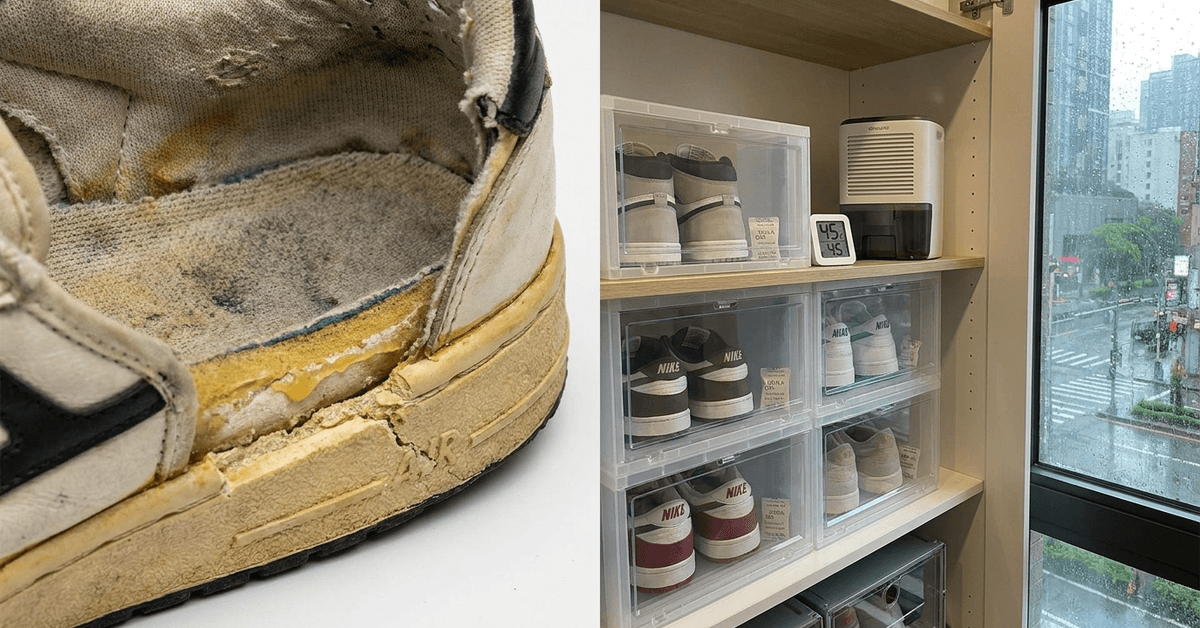
A pair of unworn Air Max sitting in a sealed shoebox for two years can crack apart the moment they hit pavement. The soles don’t wear out. They disintegrate.
Polyurethane foam, the material in most sneaker midsoles, breaks down through a chemical reaction with moisture and oxygen, and a sealed box in a humid apartment is the perfect environment for that reaction.
Most sneaker care advice focuses on cleaning routines and rotation schedules. Almost none of it addresses the specific conditions inside a city apartment closet, where poor ventilation and temperature swings create humidity pockets that sit against foam and glue for months at a time.
This one is for the urban sneaker collector living in a compact apartment, stacking shoeboxes in a closet or under a bed, trusting that “stored” means “safe.” If that sounds familiar, some of these details might save a pair or two.
Polyurethane Foam and the Chemistry of Sneaker Crumbling
The soles on most modern sneakers are made of polyurethane (PU) foam. This material has a built-in expiration date that few sneaker buyers think about.
PU foam degrades through a process called hydrolysis: water molecules in the air attack the chemical bonds holding the foam together. Over time, the foam hardens, cracks, and eventually turns to powder.
Why Unworn Sneakers Crumble Faster
A pair worn regularly gets flexed, aired out, and exposed to varying conditions that slow the hydrolysis process. A pair sitting still in a sealed box does the opposite. Stagnant air traps moisture against the foam.
No flexing means the material stiffens in one position. The process accelerates in storage, which is why vintage pairs crumble at far higher rates than daily wearers.
I would argue that the common advice to “keep your rare pairs boxed and stored” is one of the most damaging recommendations in sneaker culture. PU foam breaks down faster in a sealed box sitting in a closet above 60% humidity than on a pair worn once every two weeks.
The evidence sits in every sneaker forum thread showing deadstock pairs from 2015 crumbling at first wear. Rotation and airflow do more for longevity than any amount of careful boxing.
Glue and Stitching Break Down Too
Humidity doesn’t stop at foam. The adhesives bonding uppers to midsoles weaken when exposed to sustained moisture and heat. Stitching absorbs water and can rot over months of improper storage.
If a pair smells musty or the glue along the sole edge feels tacky when pressed, the damage has already started.
Which Cities Put Sneaker Collections at Risk
Apartment living compounds the humidity problem. A ground-floor unit with no cross-ventilation in a subtropical city creates conditions that a shoe stored in a dry garage in Colorado would never face. Some cities make this worse than others.
Singapore sits above 70% relative humidity for most of the year. Miami spikes dangerously after summer storms, especially in older buildings without modern HVAC.
Tokyo’s rainy season pushes indoor moisture levels high enough to fog windows, and open shoe racks in small apartments offer zero protection. New Orleans pairs humidity with flood risk, making under-bed and basement storage a gamble.
Temperate Cities Are Not Safe Either
This problem doesn’t belong exclusively to the tropics. New York summers push indoor humidity past comfortable levels in buildings without central air.
Northern European cities like London and Amsterdam deliver months of damp, drizzly weather that slowly raises closet moisture levels.
A small apartment with radiator heat can swing between bone-dry winter air and muggy summer conditions, and those temperature fluctuations stress PU foam and adhesives in cycles.
How to Spot Humidity Damage on Sneakers Early
Catching damage early is the difference between a simple fix and a pair headed for the trash. A seasonal check, maybe four times a year, takes five minutes per pair and can flag problems months before they become irreversible.
Signs to look for during a seasonal inspection:
- Cracking along the midsole: flex the sole gently by hand and check for tiny fissures, especially near the heel and toe
- Yellowing or fogging on clear or translucent sole components, a sign of oxidation accelerated by moisture
- Soft, tacky patches on rubber or foam surfaces that should feel firm and dry
- Musty odors or visible mildew on insoles, inside the toe box, or along interior seams
Spotting any one of these on a pair that’s been sitting in storage for six months or longer means the conditions in that storage area need to change immediately.
Preventing Sneaker Crumbling in a City Apartment
Prevention splits into two categories: what to do with pairs worn regularly and what to do with pairs stored for longer stretches. Both matter, but the long-term storage decisions tend to cause the most damage when done wrong.
Short-Term Storage Between Wears
A few low-cost habits go a long way between wears:
- Toss a silica gel packet into each shoe after wearing. A single sachet absorbs ambient moisture inside the shoe overnight.
- Rotate the collection. Wearing each pair at least once every couple of weeks keeps materials flexible and releases trapped moisture.
- Air sneakers out after wearing, but keep them away from direct sunlight and radiators. High heat accelerates PU breakdown just as fast as humidity does.
Long-Term Storage for Rare or Seasonal Pairs
Storing sneakers for months at a time demands more than a shoebox on a shelf. The raw material science makes this clear: sealed environments plus moisture equals hydrolysis.
| Storage Method | Humidity Control | Airflow | Cost |
|---|---|---|---|
| Original shoebox (sealed) | None | Minimal | Free |
| Breathable cotton dust bag | Passive absorption | Good | ~$3–$5 per bag |
| Acid-free tissue + silica in container | Active absorption | Moderate | ~$10–$15 setup |
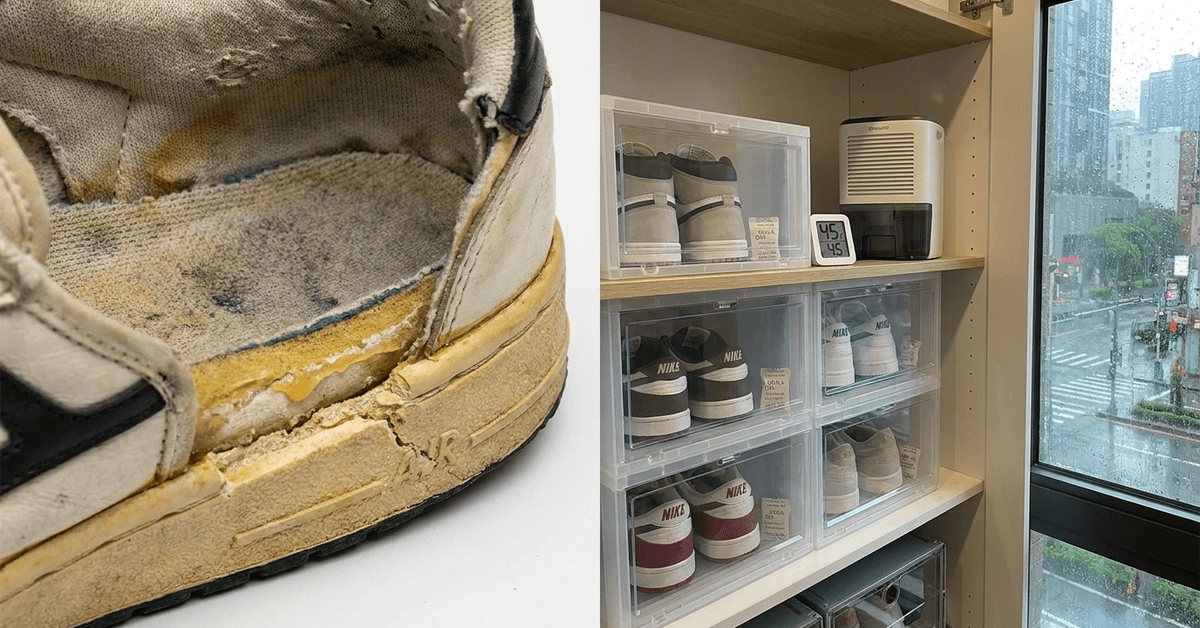
| Closet dehumidifier (Eva-Dry, Pro Breeze) | Active removal | Depends on placement | ~$25–$50 |
The original shoebox, the default storage method for most collectors, offers the least protection.
I think spending $25 on a compact closet dehumidifier from Eva-Dry gives a better return than any sneaker cleaning product on the market. A dehumidifier changes the entire environment. A cleaning kit fixes one pair at a time.
Cotton bags beat plastic containers every time. Plastic traps moisture inside with the shoe. Cotton allows airflow while keeping dust out. For high-value or limited pairs, wrapping them in acid-free tissue paper adds a moisture buffer without sealing them off.
Monitoring Humidity Levels at Home
A basic hygrometer costs under $15 and tells the whole story. The target range for sneaker storage is 40% to 60% relative humidity. Above 60%, PU foam degradation accelerates. Below 40%, leather can dry out and crack.
Check the hygrometer reading every two weeks during humid months. If the closet consistently reads above 60%, a dehumidifier or a change in storage location is the fix.
Apps like AccuWeather provide real-time outdoor humidity data, which helps predict when indoor levels will spike. Smart humidistats from brands like Xiaomi can trigger alerts when room conditions cross a threshold.
Cleaning Sneakers After Humidity Exposure
Regular cleaning after humid-weather wear prevents moisture from settling into materials and starting the damage cycle.
A dry microfiber cloth wipe after each wear removes surface moisture and city grime. Let the pair air-dry completely before putting them back in any enclosed storage.
Deep Cleaning Every Few Months
Products like Jason Markk and Crep Protect clean surface grime and add a thin moisture barrier.
Avoid soaking sneakers or running them through a washing machine. Water trapped inside foam after a deep soak does the exact thing this entire article warns against. Apply cleaning solutions with a brush, wipe off, and dry thoroughly.
Professional Sneaker Restoration
Advanced crumbling or sole separation may need professional attention.
Cobblers in cities like Los Angeles and London now specialize in sneaker restoration, offering re-gluing, sole reconditioning, and full rebuilds. Restoration runs expensive, but for sentimental or limited-edition pairs, it can be worth the cost.
Vetting a restorer through review platforms like Yelp or through Reshoevn8r’s network helps avoid a botched job on a pair that already needs saving.
Questions People Ask About Humidity and Sneaker Crumbling
These come up repeatedly in sneaker forums and search results, and a few of them get incomplete answers elsewhere.
- Q: Does wearing sneakers more often prevent sole crumbling? Regular wear slows the process because flexing the foam and exposing it to open air interrupts the stagnant moisture conditions that accelerate hydrolysis. A pair worn once every two weeks holds up better than a pair boxed for a full year.
- Q: Are certain sneaker brands more resistant to humidity damage? Brands using rubber or EVA foam soles instead of polyurethane tend to resist hydrolysis better. EVA doesn’t undergo the same chemical breakdown. Checking sole material before buying stored or vintage pairs can save a lot of frustration.
- Q: Should I insure my sneaker collection against humidity damage? Renters and homeowners insurance riders can cover high-value collections, though specific coverage varies. Apps like Lemonade offer policies that may apply, but reading the fine print on what counts as “damage” versus “wear” is worth doing before filing a claim.
Conclusion
Sneaker crumbling has a clear cause, and most of the damage happens during storage, not during wear. The cheapest fix is also the most effective: airflow, rotation, and a $15 hygrometer.
Collectors who treat storage conditions as seriously as cleaning routines will keep pairs lasting years longer. A closet that stays below 60% humidity does more for a sneaker collection than any single product ever could.