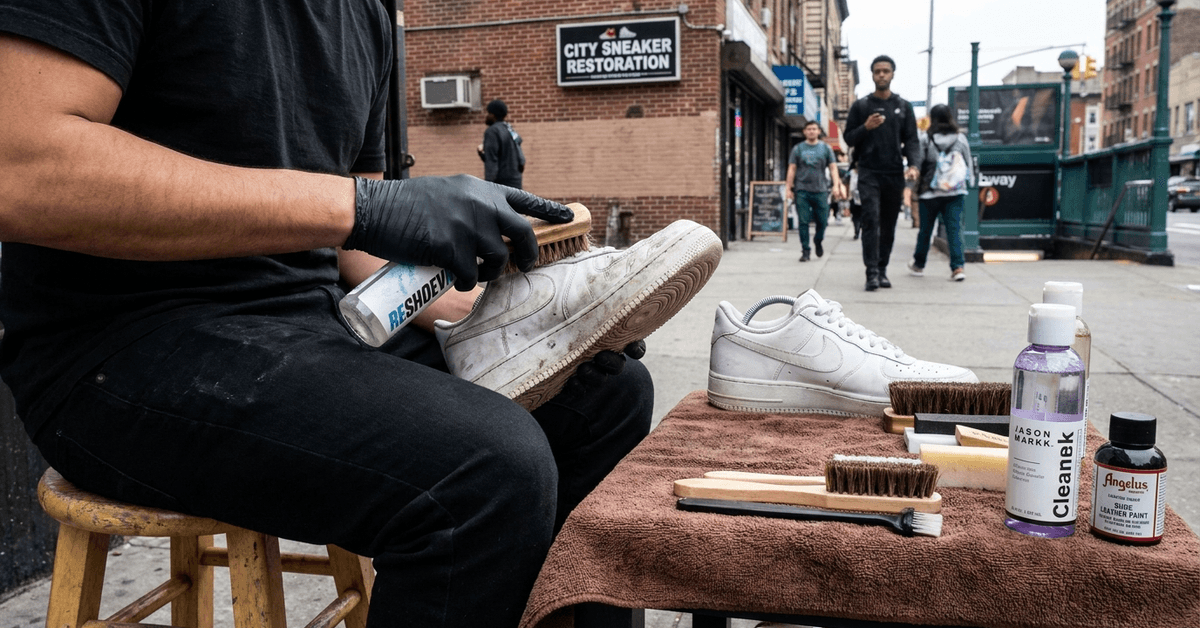
A pair of Nike Flyknits survived three months of Berlin U-Bahn floors and came out looking close to new. The trick had nothing to do with the $35 cleaning kit collecting dust under the sink.
Most sneaker cleaning advice starts and ends at “buy the right products.” That framing skips the part that does 80% of the work: matching a specific brush type to a specific material before any liquid touches the shoe.
This guide is for the person wearing $150+ sneakers on daily commutes, through rain-soaked sidewalks and subway platforms, who wants those shoes to last a full year instead of four months. City grime is a different animal than trail mud or gym floor scuffs, and the cleaning approach should match.
Why Brush Selection Matters More Than Cleaning Solution
Every sneaker care article lists the same five or six products. And sure, the products matter.
But the gap between a trashed pair and a restored pair usually comes down to one decision made before the scrubbing starts: which bristle type hits which panel of the shoe.
A hard-bristle brush on Adidas Ultra Boost Primeknit will shred the fabric. A soft-bristle brush on a rubber outsole caked in subway platform grit will just push the dirt around.
Soft-Bristle Brushes and Where They Belong
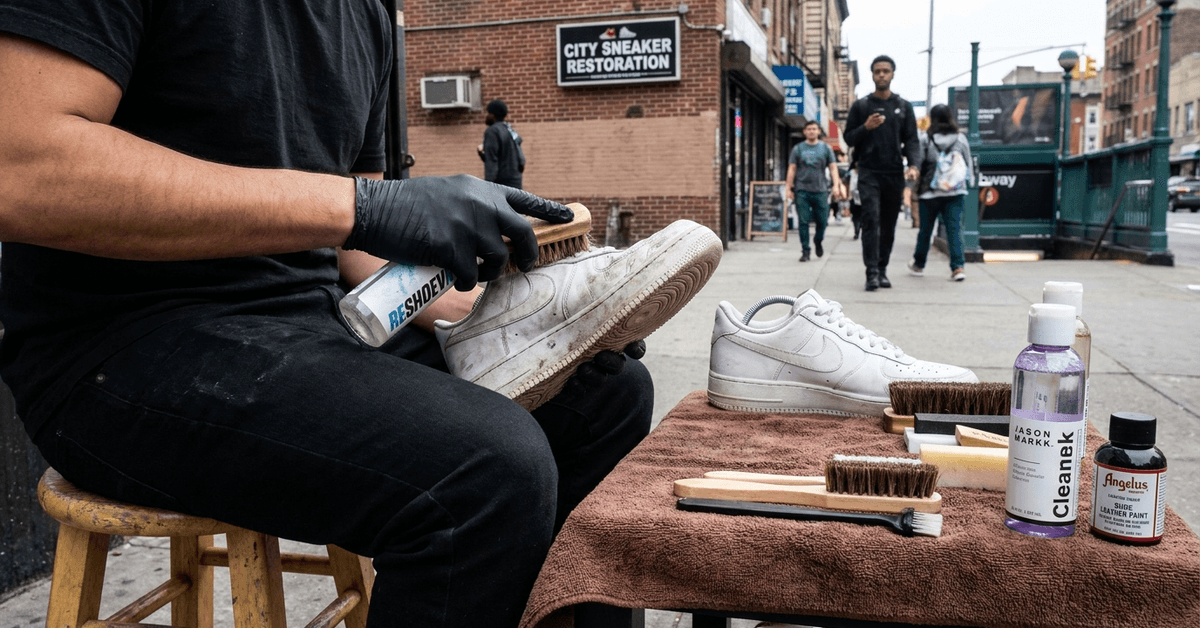
Soft bristles work on mesh, knit uppers, and premium suede. The Reshoevn8r Soft Brush handles Nike Flyknit and similar woven uppers without pulling threads or pilling the surface. Anything labeled “delicate” on the care tag falls into this category.
The pressure matters as much as the bristle type. Light circular motions across mesh panels lift embedded dust without forcing particles deeper into the weave. Pressing hard defeats the purpose of choosing a soft brush in the first place.
Medium and Hard Bristles: Canvas, Leather, and Outsoles
Canvas and standard leather respond to medium-bristle brushes. Toe boxes and side panels collect the most visible city dust, and a medium brush clears that layer in two or three passes per section.
Hard bristles are for outsoles only. The treads on a pair of Air Force 1s after a week of London sidewalks will have tar, gum residue, and compacted grit wedged into every groove.
Jason Markk’s Hard Brush handles rubber outsoles well, but keep it away from anything above the midsole.
The City Sneaker Cleaning Process That Saves Time
Breaking the process into short steps makes it easier to fit into a weeknight. The sequence matters more than the speed, and skipping even one step changes the result.
Prep the Shoe Before Any Liquid
Pull the laces out completely and remove the insoles. Both hold odor and stains from subway commutes that go unnoticed when they stay inside the shoe.
Insert shoe trees to hold the sneaker’s shape while scrubbing. A crumpled newspaper works as a backup if shoe trees are not available.
Dry brush the entire shoe before adding any solution. This step removes loose dust and surface debris so the wet brush does not trap particles into the fabric. Skipping the dry brush is the fastest way to push city grime deeper into mesh.
Scrub, Rinse, and Dry the Right Way
Mix a small amount of sneaker-safe cleaning solution with water. Reshoevn8r and Jason Markk Premium Shoe Cleaner both work across common materials without harsh chemical smells. A homemade mix of mild dish soap and water is a decent fallback for leather and canvas when the name-brand stuff runs out.
Dip the right brush (soft for knit, medium for leather or canvas) into the solution and scrub in small circles. Focus on the areas that catch the most street exposure: toe caps, heel counters, and the stitching along the sole.
Pat the shoe with a microfiber cloth after each section instead of dunking the whole sneaker. Air dry in a shaded spot. Direct sunlight fades color and cracks glue bonds on the sole, which is a mistake that shows up two weeks later when the outsole starts peeling.
I would pick Reshoevn8r’s solution over Jason Markk for knit uppers specifically because the foam consistency clings to vertical mesh panels without dripping off mid-scrub.
Advanced Restoration: Paint, Sole Whitening, and Protection
Sometimes city wear goes past what a brush and soap can fix. Yellowed midsoles, scuffed leather, and oxidized soles need a second tier of tools.
Sneaker Paint for Faded or Scuffed Leather
Angelus Leather Paint covers scuffs and restores color on smooth leather. The application needs a steady hand and thin coats. Thick layers crack and peel within a week, especially on flex points like the toe crease.
Color matching is tricky. The paint comes in dozens of shades, but sneaker colorways rarely match a single paint pot perfectly. Testing on a hidden spot (inside the tongue or under the insole flap) prevents a visible color mismatch on the toe box.
Sole Whitening and Oxidation Reversal
Oxidation turns white soles yellow over time, and city air pollution speeds up the process. Salon Care 40 (a hair developer cream, oddly enough) applied under plastic wrap and UV light can reverse yellowing on rubber and icy soles.
This process carries risk. Too much UV exposure warps the rubber. Too little does nothing. The window between “perfectly white” and “slightly warped” is narrow, so testing on a beater pair first is a smart move.
Protective Sprays After Restoration
A water-repellent spray locks in the work after a full restoration. Crep Protect and Sneaker Shields are the two most common options for unpredictable weather cities like London and Amsterdam.
One coat after every deep clean builds a barrier against daily splashes and light rain. The spray does not make sneakers waterproof, though. A heavy downpour still soaks through, and wearing restored sneakers in a storm undoes hours of effort.
Here is a comparison of the three brush types and their best uses:
| Brush Type | Best Material | Avoid Using On | Price Range |
|---|---|---|---|
| Soft-bristle | Mesh, knit, suede | Rubber outsoles (ineffective) | $8-$15 |
| Medium-bristle | Canvas, smooth leather | Delicate knit uppers | $8-$12 |
| Hard-bristle | Rubber outsoles, treads | Mesh, suede, knit (damages fabric) | $7-$12 |
The price difference between these brushes is minimal. The material mismatch risk is not.
Mistakes That Ruin City Sneakers During Cleaning
A few recurring errors show up in sneaker communities online, and they all trace back to rushing the process or using the wrong tool.
Common mistakes to watch for:
- Scrubbing mesh with a hard brush destroys the weave and creates visible fuzz that cannot be reversed
- Skipping the dry brush step traps loose grit under wet solution, grinding it into fabric fibers
- Drying sneakers in direct sunlight fades color and weakens sole adhesive within days
- Over-applying cleaning solution leaves white residue lines after drying, especially on dark suede
- Ignoring laces and insoles allows odor buildup that no amount of exterior cleaning fixes
Every one of these mistakes costs more to fix than to prevent. A $3 pair of replacement laces and a five-minute dry brush session solve the two cheapest problems on the list.
Keeping Restored Sneakers Clean on City Streets
Restoration only sticks if the daily habits match. City environments work against clean sneakers constantly, so small adjustments extend the time between full cleaning sessions.
A few maintenance habits that work for daily commuters:
- Carry a pocket-sized microfiber cloth for quick wipe-downs on public transit or at the office
- Rotate pairs during wet weather weeks instead of wearing restored sneakers through rain
- Reapply protective spray after every full cleaning session, not just the first one
- Avoid the grimiest sidewalk stretches after rainstorms when puddles carry oil and street runoff
I think the single biggest oversight in sneaker care content is the rotation strategy. A $180 pair worn seven days a week in a city like New York hits end-of-life in four months.
The same pair rotated with a second option lasts twice as long, and the total spend on two pairs over a year drops below buying three replacements of one.
Digital Communities for Sneaker Restoration Tips
Online communities fill the gap between a packaged cleaning kit and real city-tested technique. The crowd-sourced advice is often more specific than brand-produced guides.
Reddit’s r/Sneakers has active restoration threads with before-and-after photos from people cleaning shoes in specific cities. The advice skews practical because users share failures alongside successes, which branded content never does.
Instagram accounts like @shoefluent and @sneakerheaduniversity post material-specific video tutorials. YouTube channels such as TheSneakerLaundry run full-length guides covering less common materials like nubuck and patent leather.
The platform matters less than the specificity. A five-minute video showing how to clean a Jordan 1 mid after a rainy London commute beats a generic “how to clean sneakers” post every time.
Questions People Ask About Sneaker Restoration
These come up constantly in forums, comment sections, and search results. A few quick answers that add to what the guide covers above.
- Q: Can I put sneakers in the washing machine instead of hand cleaning? Machine washing works for canvas shoes like Converse Chuck Taylors, but the agitation destroys glue bonds on most performance sneakers. Knit uppers lose their shape after a single machine cycle, and no amount of shoe trees will fix a warped Flyknit toe box.
- Q: How often should I deep clean city sneakers? Once every two to three weeks for daily-wear pairs in a major city. Light wipe-downs with a microfiber cloth between sessions keep surface grime from setting into the material permanently.
- Q: Is sneaker restoration worth it for shoes under $100? The math depends on the shoe. A $90 pair that lasts an extra six months through regular cleaning saves more than the $20 spent on supplies. The break-even point is roughly two extra months of wear.
Conclusion
Sneaker restoration in a city comes down to technique, not expensive products or complicated kits. The brush-to-material match and the dry-brush-first sequence do more than any $40 cleaning set ever will.
Rotation and protective spray stretch each restoration job across months instead of weeks. Every commuter with a decent pair of sneakers already owns half the tools needed to keep them looking sharp.