One careless scrub across a Nike Flyknit upper, and a single thread starts pulling loose. That tiny snag spreads into a visible run within days.
Knit running shoes are built from interlocking yarns, and that structure punishes cleaning mistakes fast. A bristle brush or a washing machine cycle can do permanent damage to adidas Primeknit or New Balance knits.
This guide is for the urban commuter wearing knit runners as everyday shoes. Subway platforms, coffee spills, street dust, and rain all hit the same pair.
The method for cleaning knit fabric is different from every other sneaker material, and the small details are easy to get wrong.
Why Knit Fabric Snags Faster Than Other Sneaker Materials
The reason knit uppers feel so comfortable is the same reason they fall apart under rough handling.
The fabric is a network of interlocking loops, similar to a sweater. Each loop holds onto the one next to it. One caught yarn can unravel an entire visible section.
Leather or canvas sneakers handle friction well because their material is woven tightly or bonded in layers. Knit has open gaps between loops for breathability, and those gaps are exactly where fingers, brushes, and rough surfaces catch.
How One Snag Becomes a Bigger Problem
A pulled thread in knit doesn’t sit still. Tension from walking redistributes across nearby loops, and within a few days of normal wear, that single pull becomes a loosened patch.
Trimming the thread with scissors can stop the run, but the area stays structurally weaker than the surrounding fabric.
This makes the cleaning approach for knit shoes fundamentally different from leather sneakers. Pressure, water temperature, and the direction of your brush strokes all affect whether a cleaning session helps or causes damage.
Hand-Cleaning Knit Uppers Step by Step
The whole process takes about five minutes per shoe once prepped. That’s faster than waiting for a machine cycle and far less risky for the knit.
Pull out the laces and insoles first. Both collect separate grime and should be cleaned on their own. Tap the soles together outdoors to knock off dried dirt or sand. A soft shoe brush or old toothbrush handles the remaining dry debris.
Mixing the Right Cleaning Solution
A small amount of mild dish soap mixed into a bowl of cold water is the standard. Hot water weakens the adhesive bonds between the sole and upper, and it can cause synthetic yarns to warp or shrink.
Too much soap creates residue that attracts more dirt after the shoes dry. A teaspoon per bowl of cold water is enough for both shoes.
Section Cleaning: Small Circles, One Inch at a Time
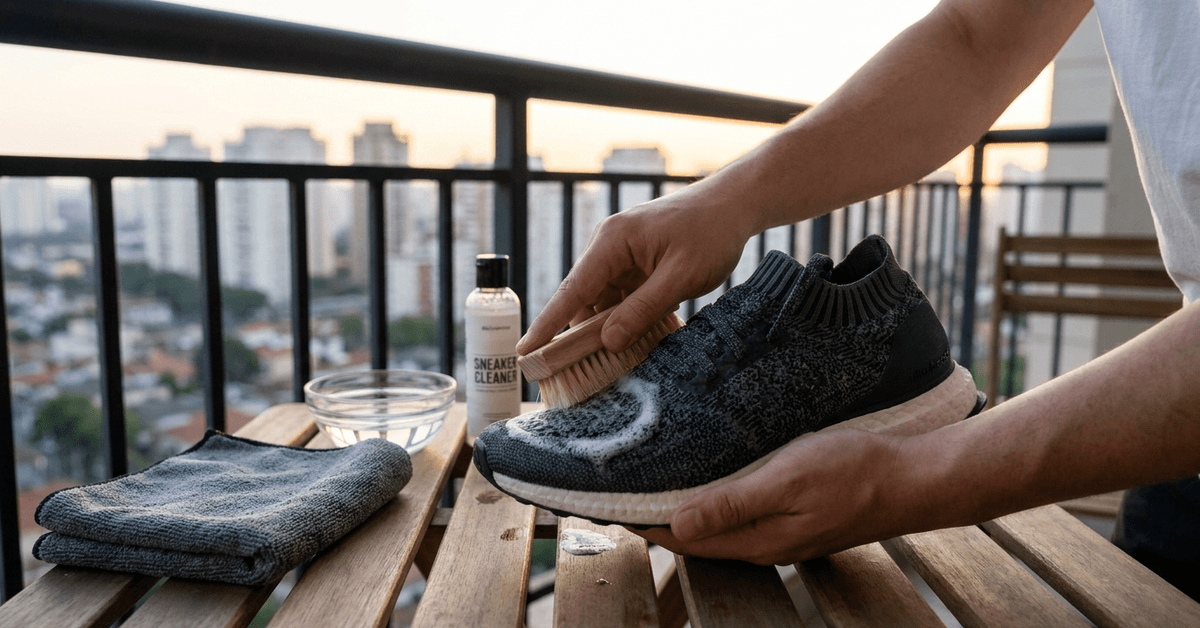
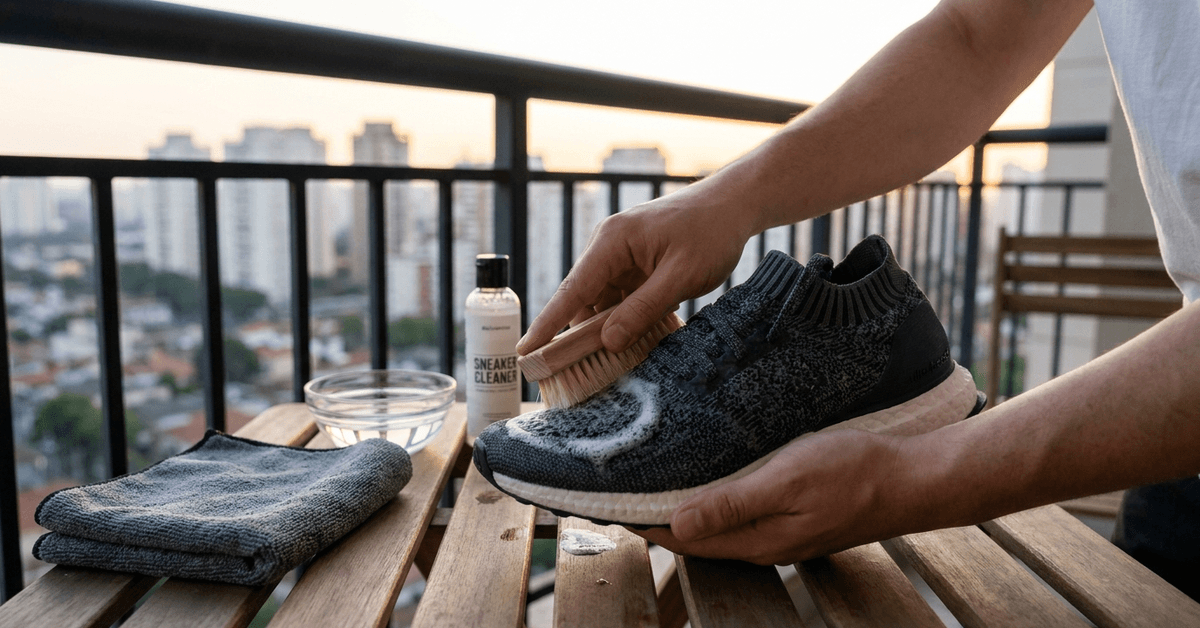
Dip the soft brush into the solution and shake off the excess. The brush should be damp, not dripping.
Move in small circular motions across one-inch sections of the knit. Do not press hard. After each section, wipe away suds with a damp microfiber towel. A soaked towel pushes water into the glue layer beneath the knit and loosens the bond.
This section-by-section approach prevents saturation and keeps thread tension even across the upper. It works well in tight spaces: bathroom sinks, kitchen counters, or apartment balconies.
Drying Knit Shoes Without Heat Damage
After cleaning, stuff each shoe with crumpled newspaper or a dry microfiber towel to absorb moisture and hold shape. Let them air dry at room temperature.
Direct heaters, sunny windowsills, and hair dryers are all problems for synthetic knit. Heat causes the yarn to lose elasticity and makes existing thread pulls worse.
Room temperature drying takes longer. But it preserves the structure in a way no shortcut can match.
Dish Soap vs. Specialized Sneaker Cleaners for Knit Shoes
The standard recommendation across sneaker communities is to buy a dedicated cleaning product like Jason Markk or Sneaker LAB. I would skip Jason Markk for routine knit cleaning and stick with unscented dish soap in cold water.
The active cleaning agent in most sneaker solutions is a mild surfactant: the same thing that makes dish soap work. On pure knit uppers dealing with everyday city grime, the cleaning results are difficult to tell apart.
Specialized cleaners earn their price on mixed-material shoes where suede panels, leather accents, or textured overlays need a pH-balanced formula. Pure knit uppers, though, respond well to basic soap.
| Feature | Mild Dish Soap | Specialized Sneaker Cleaner |
|---|---|---|
| Cost per clean | Fractions of a cent | $1–2 per use on average |
| Safe for knit uppers | Yes, with cold water | Yes |
| Residue risk | Low if diluted properly | Low |
| Mixed-material cleaning | Limited | Better for suede and leather panels |
Dish soap handles routine knit cleaning. The specialty bottle makes more sense when suede or leather enters the picture.
When a Specialty Product Earns Its Price
Stubborn stains from grease, wine, or paint sometimes need a targeted formula. Products built for sneaker cleaning break down oil-based stains more effectively than dish soap alone.
Sneaker LAB and Reshoevn8r both have stain-specific products that work on knit without the harsh chemicals found in household spot removers like bleach or rubbing alcohol.
If a stain survives the dish soap method after two passes, a specialty cleaner is worth trying before sending the shoes to a professional service.
Thread Pulls Happen More During Commuting Than Cleaning
Sneaker care guides focus almost entirely on the washing process. But a large share of thread damage on knit uppers happens outside of cleaning altogether.
Bag zippers catch on ankle collars. Keys in jacket pockets brush against toe boxes. Bike pedals with metal grips scrape the medial side of the shoe on every rotation.
I was surprised how many thread pulls I traced back to commuting friction when looking at Nike Flyknit and adidas Primeknit damage patterns across sneaker forums. The cleaning obsession misses the more constant, daily source of snags.
Storage Fixes for City Apartments
Small living spaces force shoes into tight spots where snag risks multiply. A few changes cut the problem down:
- Stack knit shoes on open racks or cubbies, away from hooks and hanging bags with metal hardware
- Keep a lint roller near the door for a quick surface pass before heading out
- Use sticky tape after park runs to lift debris before it works deeper into the yarn
- Carry a travel-size soft brush if you use shared office gyms or coworking spaces
These storage habits prevent more thread damage than any cleaning technique.
Urban Stains That Call for a Different Approach
City dirt behaves differently from trail mud. Coffee splashes, street dust, rain-soaked grime, and transit floor residue each interact with knit yarn in their own way.
The blotting motion matters more than the product for liquid stains, since rubbing pushes the stain deeper into the yarn loops and stretches the fabric sideways.
A few stain-specific notes for commuters:
- Coffee and tea: Blot immediately with a dry cloth, then spot-clean with the dish soap solution within 24 hours
- Street dust and soot: Dry-brush first with a soft bristle, then damp-wipe in one direction only
- Rain and puddle splashes: Let dry naturally, then brush off the residue. Never scrub wet knit.
- Grease or oil: Apply a drop of dish soap directly to the spot, let it sit for two minutes, then blot clean
A protective spray like Crep Protect applied once a month creates a barrier against most liquid-based stains. The spray is invisible and does not change the texture of the knit. It reduces how deeply liquids penetrate, which means lighter cleaning sessions later.
Letting any stain sit for more than a day makes removal significantly harder. Acting fast beats using a stronger product every time.
When Professional Sneaker Cleaning Makes Sense
Sometimes the mess goes beyond a home clean. Spilled drinks at a bar, construction dust after a street festival, or mud from a rain-soaked commute can saturate knit fabric in ways that hand-cleaning cannot fully fix.
Several cities now have sneaker cleaning services that specialize in delicate fabrics. The Sneaker Laundry in Melbourne and Dropwash in New York both offer app-based pickup and delivery for shoes that need deeper treatment. Ask any service specifically about their process for knit uppers before handing over a pair. A service using machine methods or heavy brushes defeats the purpose.
Questions People Ask About Cleaning Knit Running Shoes
These are the searches that come up most when people are trying to keep their knit sneakers from falling apart.
- Q: Can I put knit running shoes in the washing machine? No. Machine agitation pulls threads, and the spin cycle can deform the knit structure permanently. Prolonged water exposure also weakens the adhesive between the sole and upper. Hand-cleaning with cold water and a soft brush is the only method that protects knit fabric.
- Q: How often should I clean knit sneakers if I wear them daily? A light wipe-down after each outing prevents buildup, and a full hand-clean every one to two weeks is enough for daily city wear. The goal is to clean before dirt bonds into the yarn loops, not after it has set.
- Q: Does trimming a pulled thread fix the problem? Trimming stops the run from spreading, but the area around the pull stays weaker than the rest of the fabric. Trim close to the surface with sharp scissors and avoid pulling the thread further. Prevention through gentle cleaning and smart storage does more long-term than any repair.
Conclusion
Knit running shoes hold up longer when the cleaning method matches the delicate structure of the fabric. Cold water, mild dish soap, and a soft brush in small circles handle most city grime without pulling threads.
Storage and daily commuting cause more thread damage than the cleaning process itself for most wearers. A five-minute hand-clean routine every week or two keeps city knit sneakers looking sharp and structurally intact.