A packed rush-hour subway car is the wrong place to realize your sneakers smell. That odor is coming from the removable sock liner, a thin piece of foam and fabric soaking up sweat and bacteria all day long.
Millions of commuters clean their shoes on the outside and never touch the liner. The part pressing directly against skin picks up the most grime, and it gets ignored because it sits out of sight.
This one is for the daily walker, the bike commuter, the person logging 10,000+ steps on concrete before lunch. If your sneakers have started to develop a personality of their own, the fix takes about ten minutes and costs almost nothing.
Why Sneaker Sock Liners Turn Foul So Fast in Cities
City walking is different from a weekend jog around a park trail. Concrete holds heat. Metro stations trap humidity. Sidewalks collect dust, oil, and everything else a few million people leave behind each day.
All of that gets pulled into the shoe through the upper mesh, and the sock liner sits at the bottom, absorbing it. A single commute across New York or London during summer can leave liners visibly darker at the heel and ball of the foot.
Odor and Skin Problems Start Here
Sweat alone does not create the smell. Bacteria feeding on trapped moisture do. Liners left unwashed for weeks become a warm, damp environment where fungal problems and skin irritation take root.
The difference shows up on hot public transit rides or during long afternoons on your feet. A fresh liner against clean skin eliminates most of that discomfort, and the cleaning process is simpler than people assume.
Cushioning Breaks Down Faster When Liners Are Dirty
Grime works its way into foam material and breaks down the structure over time.
Dirty liners lose their spring and flatten unevenly, which changes how the shoe supports your foot during all-day city walking. Regular cleaning keeps that cushioning intact for months longer than neglect allows.
How to Tell If a Sneaker Liner Is Removable
Almost every modern sneaker from Nike, Adidas, New Balance, Puma, and Vans ships with a removable sock liner. Gently lift from the heel end and it should come out in one piece.
Checking the Brand’s Own App
If a liner resists when pulled, it may be glued in. The Nike app and Adidas Confirmed app both include care guides for specific models.
The New Balance website also lists liner details by shoe model, so checking before pulling hard avoids tearing anything.
Older Shoes Need a Softer Hand
Liners in well-worn sneakers can bond to the footbed over time if they have never been removed.
A slow, even pull from the heel works better than yanking from one corner. Once it is out, the liner may show a visible outline of grime that makes the case for cleaning it on the spot.
Hand-Washing Sneaker Sock Liners: The Ten-Minute Method
This process fits into a lunch break or a weeknight routine. No special equipment needed.
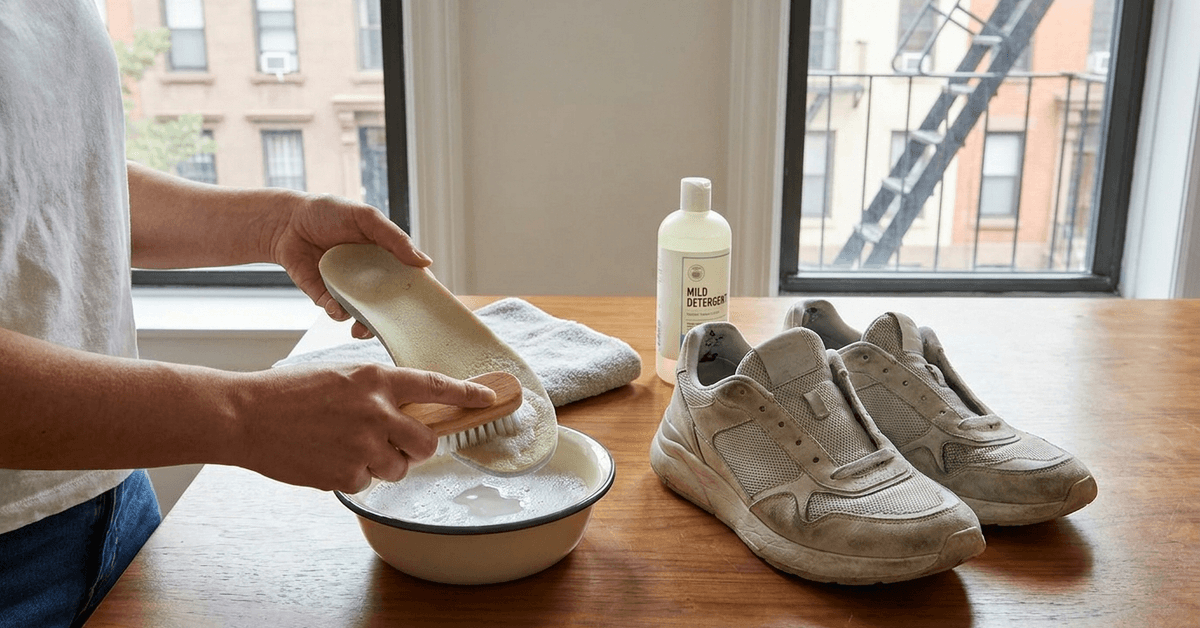
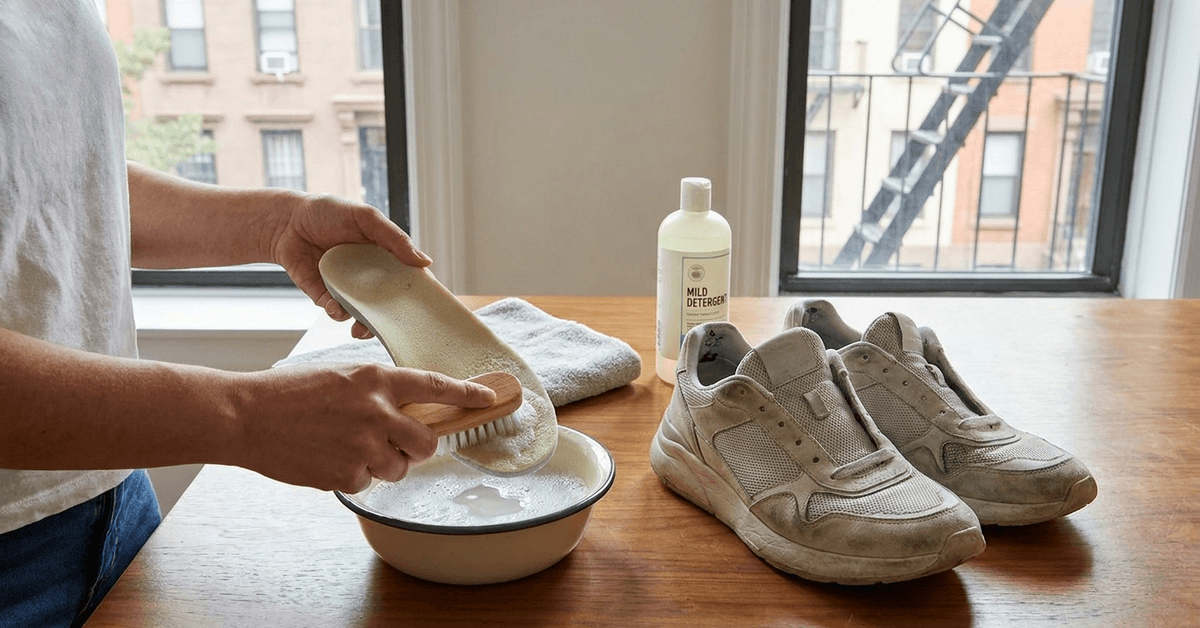
Start by shaking the liner outdoors to knock off loose dirt. Then dab a small amount of mild, unscented liquid detergent mixed with water onto any visible stains, especially at the heel and ball. Those two spots collect the most buildup.
The Wash Itself
Fill a medium bowl with warm water (never hot, which warps foam) and add two to three drops of detergent.
Submerge the liners and scrub both sides with a soft brush. An old toothbrush does the job. Move in circular motions across the arch and heel.
A couple of things to keep in mind during this step:
- Rinse twice under fresh running water to remove all soap residue
- Avoid twisting or wringing the liner, which warps its shape permanently
- Pat dry with a clean towel instead of squeezing
- Lay flat overnight in a well-ventilated indoor spot, away from direct sunlight
Cities with hard water (Los Angeles and Rome are two common examples) can leave mineral deposits on fabric. A foam cleaner like Jason Markk cuts through that buildup better than detergent alone.
Never Reinsert a Damp Liner
This is the step most people skip because they are in a rush.
A liner that goes back into a shoe while still damp creates the same bacteria-friendly environment the wash was supposed to fix. Overnight drying is the minimum. Humid climates may need a full 24 hours.
I would keep a second pair of liners on hand for shoes worn daily, so one pair dries while the other gets used. A replacement set from most brands costs less than $15.
Machine Washing Sneaker Liners: I Think It Does More Harm Than Good
The common suggestion is that tossing liners into a washing machine on a gentle cycle saves time. I think that advice backfires for liners with foam-backed construction, because the heat and agitation can melt adhesive layers and cause shrinkage that no amount of reshaping fixes.
The raw content on machine washing even includes the warning: dryers risk shrinkage or melted glue.
If the dryer is off-limits because of heat damage, why would the washer’s warm cycle be safe? The temperature range overlaps more than people realize.
When Machine Washing Might Be Acceptable
Thin fabric liners without foam backing can handle a cold gentle cycle inside a mesh laundry bag. Limit detergent to a few drops of liquid. Powdered detergent leaves residue that can irritate skin during a long walk.
But if the liner has any foam padding, cushioning layer, or glued construction, hand washing takes ten minutes and removes the risk entirely. The time saved by using a machine is maybe five minutes. The cost of a ruined liner is a full replacement.
| Method | Time Required | Risk to Liner | Cleaning Quality |
|---|---|---|---|
| Hand wash with mild detergent | 10 minutes + overnight dry | Very low | High (targets stains directly) |
| Machine wash, cold gentle | 30-45 minutes cycle + air dry | Moderate (foam/glue damage) | Medium (no spot treatment) |
| Quick freshening spray | 2 minutes + air time | None | Low (odor mask, not a clean) |
Hand washing wins on every measure except the illusion of convenience.
Freshening Liners Between Full Washes
A full wash after every wear is overkill unless the liners are visibly soiled. A few quick habits keep things fresh between deeper cleans:
- Spritz lightly with a fabric-safe odor neutralizer like Sneaker LAB Sneaker Fresh
- Pull liners out overnight and let them air near an open window or on a balcony
- Place a small breathable bag of baking soda against the liner for a couple of hours to absorb residual odor
The baking soda trick is the cheapest option and works surprisingly well in humid apartment conditions. Leaving liners inside the shoe overnight, though, is the single habit that accelerates odor buildup faster than anything else.
Mistakes That Ruin Sneaker Liners Faster Than Dirt Does
Cleaning the wrong way can cause more damage than not cleaning at all. A few errors show up repeatedly.
Bleach and Harsh Chemical Cleaners
Bleach breaks down foam cell structure and strips fabric coatings. One bleach soak can undo months of careful maintenance. Stick to mild detergent or a dedicated sneaker cleaner.
Skipping the Rinse
Soap residue left on a liner absorbs moisture faster than clean fabric does. That means more sweat retention, more bacteria, and a liner that smells worse after washing than before. A double rinse under running water takes thirty seconds.
Ignoring the Replacement Timeline
Even well-maintained liners wear out. Signs include visibly thinned padding, tears along the heel, or a persistent smell that survives a thorough wash.
At that point, cleaning just delays the obvious. Replacement liners are available from brand stores, Zappos, and directly from manufacturer websites.
Third-party orthotic insoles are another option for commuters who walk significant distances daily and want more arch support than a stock liner provides.
Questions People Ask About Cleaning Sneaker Sock Liners
Liner care is one of those topics that seems simple until the details start piling up. A few common searches come up again and again.
- Q: How often should I wash removable sneaker liners? Once every two weeks works for daily-wear sneakers in warm weather. During cooler months with less sweat, once a month is usually enough. Pull them out to air overnight after every wear regardless of the wash schedule.
- Q: Do aftermarket insoles last longer than stock sock liners? They can. Brands like Superfeet and Spenco use denser materials that hold shape through more wash cycles. The tradeoff is a higher upfront cost, usually $25 to $45, compared to $10 to $15 for stock replacements.
- Q: Are scented insole sprays safe for all liner materials? Most fabric-safe sprays work fine, but alcohol-based formulas can dry out leather-topped liners or degrade adhesive over time. Test on a small area first, and stick to products labeled specifically for sneaker use.
Conclusion
Sock liners collect more bacteria and sweat than any other part of a sneaker. A ten-minute hand wash every couple of weeks keeps odor, skin irritation, and foam breakdown under control.
Machine washing looks like a shortcut, but the risk to foam and glue makes it a gamble most liners lose. Pull your liners out tonight, give them some air, and decide if they need a wash or a replacement.