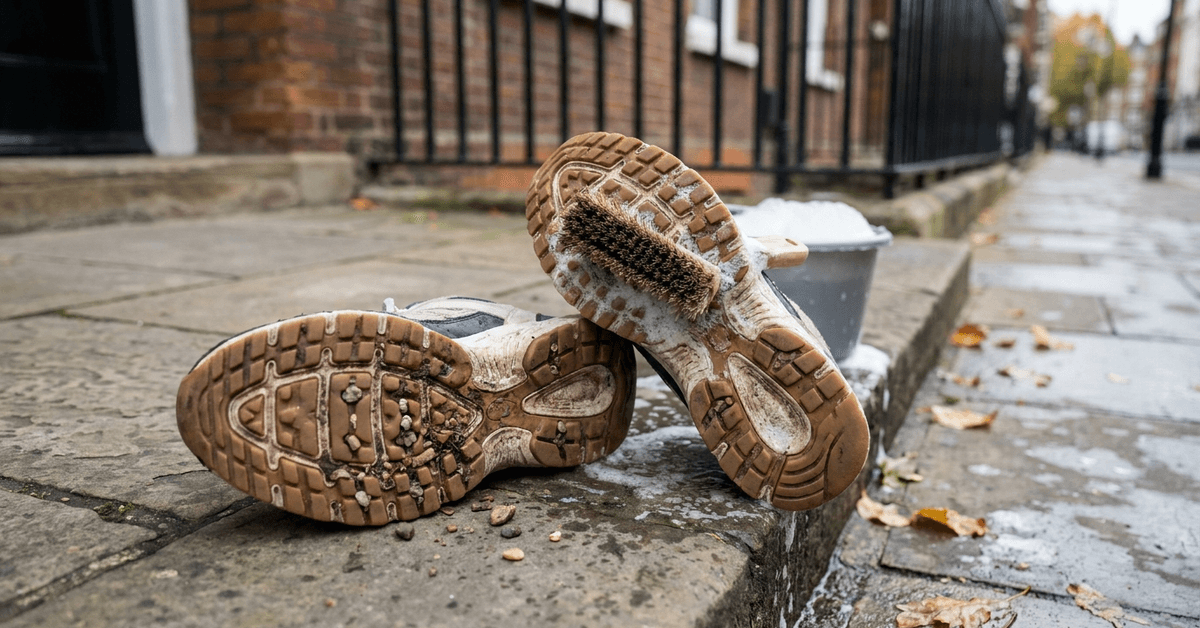
Grime builds fast on rubber outsoles in any city. A single rainy commute through subway stations and oily crosswalks can fill every tread groove with residue that cuts grip by half.
Most cleaning guides treat outsole care like sneaker aesthetics. The friction loss that causes slips on wet metro tiles or polished lobby floors gets buried under product recommendations and brand deals.
This one is for daily urban walkers and transit commuters putting 30-plus minutes on foot each day. The kind of person who has caught a shoe sliding on a slick station platform and wondered what went wrong.
Why Rubber Outsoles Lose Grip on City Streets
The rubber compound on a walking shoe or sneaker is designed to flex against pavement and grip through micro-contact. That contact depends entirely on clean tread surfaces. Once grime, oil, or salt fills those grooves, the rubber can’t do its job.
Street Dust and Exhaust Particles
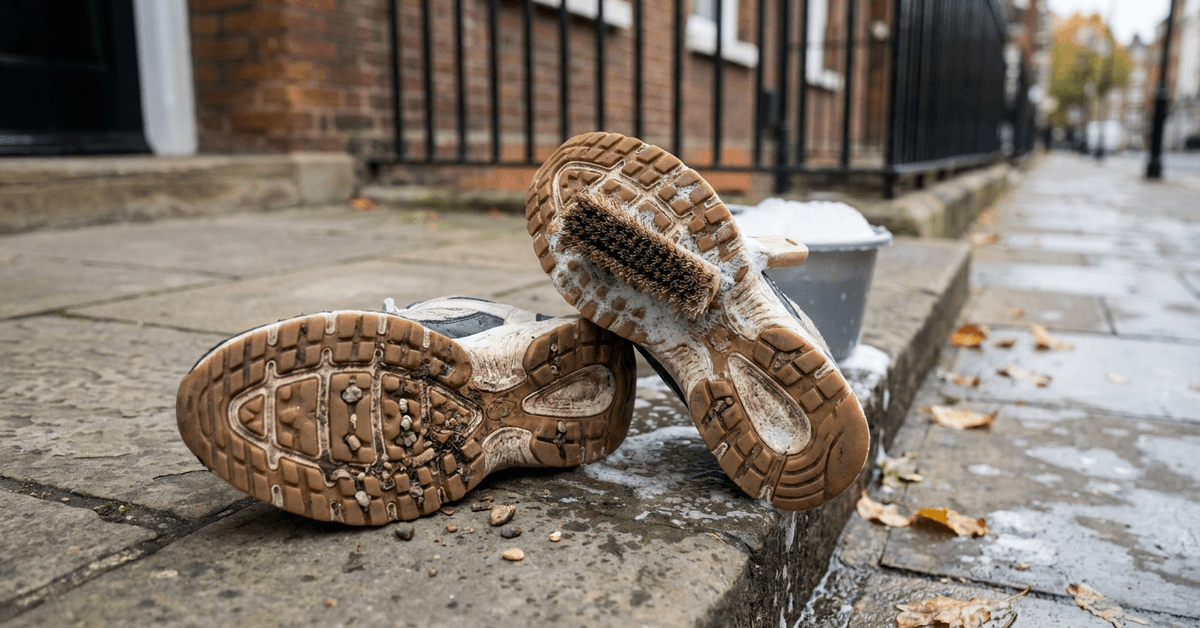
City dust is different from trail dirt. It contains fine particles from vehicle exhaust, brake dust, and construction debris. These particles are finer than sand, and they pack into tread grooves tightly.
A shoe worn on the same city route five days a week develops a thin, compressed layer of this material.
It smooths out the tread surface, making rubber behave more like a flat, worn tire. Dry brushing after each wear slows this process down considerably.
Oil, Gum, and Food Truck Residue
Restaurant grease and ground-in chewing gum are the worst offenders for sticky buildup. Oil residue near food truck areas or loading docks coats rubber and creates a slippery film.
Gum bonds to rubber at a molecular level when heated by hot pavement, and scraping it off after it cools is a chore most people skip. Metro station floors and escalator treads collect a cocktail of these substances.
I would rank subway platform residue as the single fastest way outsoles lose traction, based on how quickly it accumulates during a typical rush-hour commute in stations like those in New York or Tokyo.
The 10-Minute Outsole Cleaning Method
A full outsole cleaning does not require 30 minutes or an expensive setup. The process takes about 10 minutes with supplies most people already own, and the difference in grip is noticeable on the first walk afterward.
Supplies That Do the Job
The gear list is short:
- A stiff-bristle brush (an old toothbrush works, or a dedicated sneaker brush)
- Mild dish soap mixed with lukewarm water in a small container
- A clean sponge or microfiber cloth
- An old towel for drying
I would skip the $16-to-$22 specialized sneaker cleaners like Jason Markk or Crep Protect for outsole-only cleaning.
Those products make sense for delicate uppers and suede, but on rubber tread, a two-dollar bottle of dish soap and a stiff brush produce the same result.
The surfactants in dish soap break down street grease just as effectively as purpose-made formulas when applied to vulcanized rubber.
Spending more on a branded cleaner for the bottom of a shoe is one of those recommendations that sounds smart but falls apart under any cost comparison.
The Scrub Technique
Start by knocking shoes together over a bin or tapping them on concrete to shake off loose debris. This step alone removes a surprising amount of surface grime.
Dip the brush in the soapy water and scrub in small circles, working along each tread groove. Focus extra time on the heel and ball areas, where city residue collects the most. For stubborn spots like dried gum or tar, let the soapy water sit on the affected area for two to three minutes before scrubbing again.
Rinsing and Drying the Right Way
Wipe with a sponge or cloth dipped in clean water. Use multiple passes rather than one heavy rinse, because a single swipe just pushes grime around. Keep wiping until the cloth comes away clean.
Air dry shoes away from direct heat. Radiators and space heaters crack rubber over time, and a cracked outsole loses traction permanently. An old towel pressed between the treads speeds up drying without heat damage.
Quick Traction Fixes for Commuters
Not every cleaning session can be a full 10-minute scrub. Sometimes the outsole needs a fast reset between the office and the train.
Portable Wipes and Pocket Kits
Sneaky Wipes are pre-moistened cloths designed for quick shoe cleanups. They fit in a jacket pocket or laptop bag and handle light dust and surface grime in about 30 seconds.
Brands like Reshoevn8r sell compact cleaning kits sized for travel. Foot Locker also carries portable wipe packs. These are useful for day trips or conference travel when shoes get dirty between events.
A newer option showing up in cities like London and Tokyo: shoe cleaning vending machines in high-traffic malls. They charge around $2 for a quick automated clean.
City-Specific Cleaning Habits
Different cities create different outsole problems. Matching the cleaning habit to the climate saves time.
| City Type | Main Outsole Problem | Best Daily Habit |
|---|---|---|
| Rainy cities (Seattle, London) | Water-borne pollutants in tread pores | Wipe soles with a microfiber cloth after every outdoor trip |
| Hot, dusty cities (Los Angeles, Madrid) | Fine sand and dust embedding in rubber | Dry brush outsoles each evening |
| Subway-heavy cities (New York, Tokyo) | Sticky platform and escalator residue | Damp-wipe soles after each subway journey |
The rainy-city habit is the most time-consuming, but also the most effective at preventing long-term tread damage from chemical residue.
Long-Term Outsole Traction Habits
Single cleanings help, but consistent maintenance is what keeps rubber outsoles gripping reliably over months. A few recurring habits make a measurable difference.
Rotating Shoes and Inspecting Treads
Wearing the same pair every day gives rubber no recovery time. Rotating between two or three pairs lets each sole air out and shed moisture between wears. This alone extends outsole life.
Regular tread inspection catches problems early. Small pebbles, metal fragments, and compressed gum lodge in narrow grooves and stay there for weeks if nobody checks.
A quick glance at the sole every few days prevents these from becoming permanent grip killers.
Protective sprays designed for shoe surfaces can also reduce how much grime sticks to rubber. These create a thin barrier layer that makes the next cleaning faster. Reshoevn8r’s shoe care guide breaks down which protectant types pair well with specific rubber compounds.
Mistakes That Ruin Rubber Outsoles
Some cleaning habits cause more damage than dirty treads ever would:
- Bleach or strong chemical cleaners break down rubber polymers and cause premature cracking
- Heat drying near radiators warps the outsole shape and creates micro-cracks in the tread
- Ignoring the narrow grooves between tread blocks, where the hardest-to-reach debris does the most long-term damage
These mistakes are common enough that the American Cleaning Institute includes rubber care in its material-specific cleaning guidance. Harsh chemicals top the list of things to avoid.
Traction and Daily Safety on Urban Pavement
Clean outsoles reduce slip risk on the surfaces city walkers encounter most: wet subway steps, polished tile lobbies, painted crosswalks, and rain-slicked metal grates.
Commuters who build a simple post-walk wipe into their routine report fewer of those small stumbles that seem minor until they happen near traffic or on stairs.
Grip loss is gradual. No single day of grime makes a shoe dangerous. But a month of ignored buildup on a pair of daily-wear sneakers changes the traction profile enough to feel unstable on a rainy sidewalk.
The fix is not expensive gear or complicated routines. A brush, some soap, and five minutes of attention once or twice a week keep rubber doing exactly what it was made to do.
Questions People Ask About Cleaning Rubber Outsoles
These come up a lot, and the answers tend to be shorter than most guides make them.
- Q: How often should I clean my shoe outsoles if I walk in a city daily? A light wipe after each wet commute and a full scrub once a week is a solid baseline. Dry-climate walkers can stretch the full scrub to every two weeks if they dry-brush daily.
- Q: Do outsole cleaning products work better than dish soap on rubber? On rubber specifically, dish soap performs comparably to branded cleaners. The premium products earn their price on delicate materials like nubuck or mesh uppers, not on vulcanized rubber tread.
- Q: Does outsole tread pattern matter for city walking grip? Herringbone and lug patterns grip better on wet surfaces than flat, smooth rubber. Cleaning these patterned soles matters more, though, because their deeper grooves trap more debris.
Conclusion
A clean rubber outsole is one of the cheapest safety upgrades available to any city walker. Dish soap costs almost nothing, and a stiff brush lasts for years of regular use.
The habit matters more than the product, and five minutes a week is the difference between confident footing and a sidewalk surprise. Keep the treads clear, and the rubber does the rest.