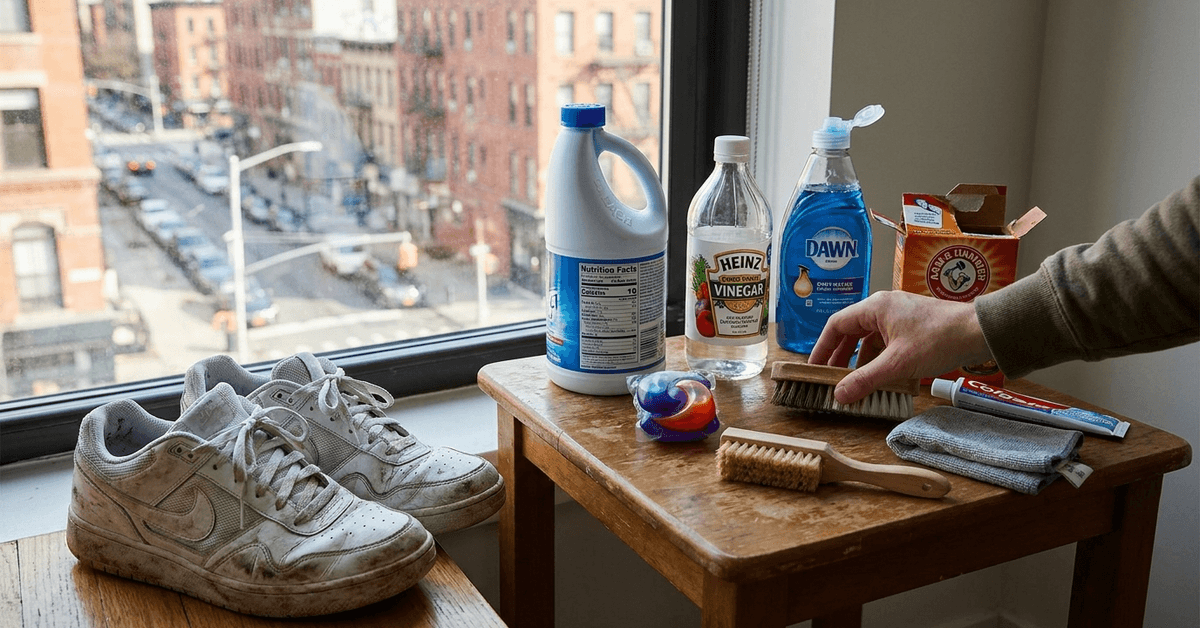
A $150 pair of sneakers can yellow permanently in under five minutes. All it takes is a capful of bleach and a well-meaning scrub on a Saturday afternoon.
The damage rarely looks dramatic right away. Stitching weakens, rubber starts cracking, adhesive softens. And by the time the problem shows, there’s no reversing it.
Most sneaker cleaning advice skips the why behind the damage. Knowing which chemical reaction is eating your shoe matters far more than memorizing a list of “don’t use this” products.
This one is for apartment dwellers who own two or three pairs in steady rotation and want to stop ruining them during weekend cleanups.
Why Household Cleaners React Differently to Sneaker Materials
Sneakers are multi-material products. A single shoe might combine mesh uppers, leather panels, rubber soles, synthetic knit, foam insoles, and adhesive bonds holding everything together. Each material responds to chemicals differently.
A cleaner that works fine on a ceramic countertop can dissolve the protective finish on leather. A degreaser built for cast iron pans can strip color from knit fabric in seconds.
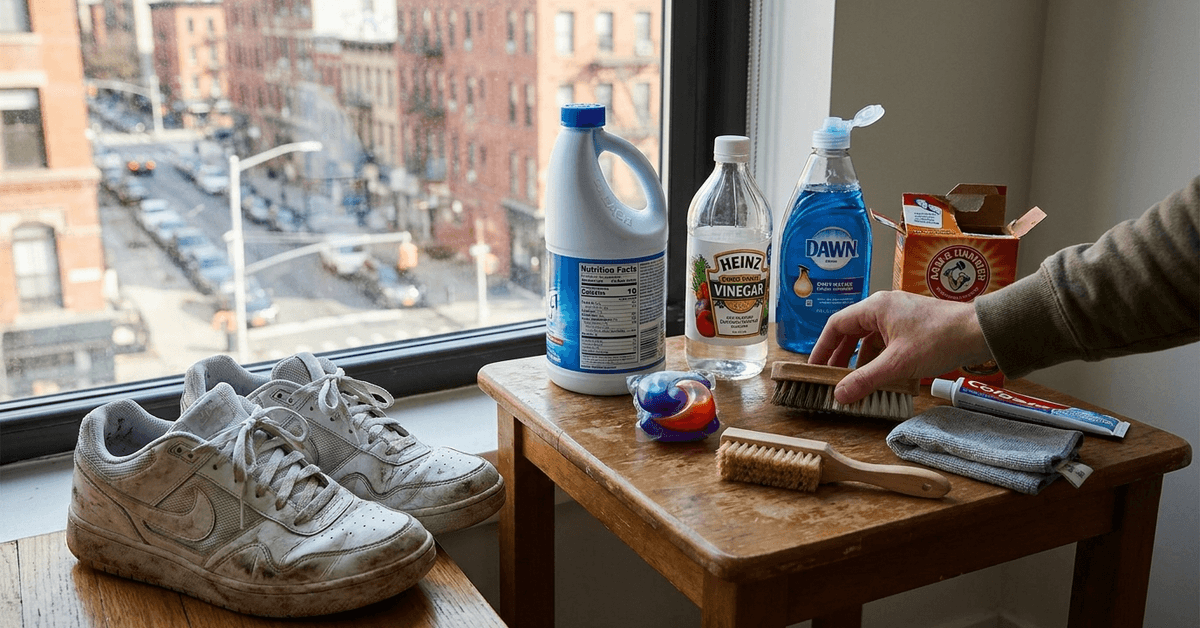
The issue is never that the cleaner is “bad.” The issue is that sneakers are built from materials that were never designed to withstand those chemicals.
pH Levels and Material Breakdown
Bleach sits at roughly pH 11 to 13. Vinegar lands around pH 2 to 3. Both extremes attack organic materials like leather and cotton stitching.
Sneaker-safe cleaners tend to sit in the pH 5 to 8 range, which is mild enough to lift dirt without degrading fibers or finishes.
This is the detail that separates a cleaning session that works from one that leaves permanent marks. The product’s pH matters more than its brand name.
Adhesive Sensitivity
Most sneaker soles are bonded with heat-activated adhesive. Concentrated detergents and high-heat wash cycles soften that bond. The sole doesn’t fall off immediately. It peels slowly over weeks, starting at the toe box where flex stress is highest.
The 5 Products to Keep Away From Sneakers
Each of these sits in most kitchens and bathrooms. Each one causes a different type of damage depending on the sneaker material it contacts.
Bleach on White Soles and Canvas
Bleach seems logical for white shoes. But bleach is highly reactive and rarely gentle on footwear. It turns mesh and canvas yellow over time. On leather panels, it strips protective finishes and leaves blotchy stains.
Colored sneakers fare worse. Bleach causes permanent discoloration on dyed fabrics, and the effect accelerates in humid climates.
Rubber soles exposed to repeated bleach applications crack faster because the oxidizing agent breaks down the polymer chains.
Vinegar on Leather and Suede
The “natural alternative” reputation of vinegar makes it a popular grab for eco-conscious cleaners. On sneakers, vinegar’s acidity breaks down leather and suede finishes.
The smell also tends to linger longer than most people expect. On mesh and technical fabrics, vinegar doesn’t always rinse out fully. Residue builds up inside the fibers.
Cities with hard water make this worse: white mineral streaks appear after the shoe dries, and they’re stubborn to remove without rewetting the entire upper.
Laundry Detergent Pods in the Washing Machine
Tossing sneakers into the washer with a detergent pod feels efficient. The problem is concentration. Pods are formulated for full loads of clothing, and the detergent-to-fabric ratio on a single pair of sneakers is way too high.
Pods take time to dissolve, which means clumps of concentrated detergent sit against shoe linings and leave residue stains. Pair that with a hot water cycle, common in apartment building machines without adjustable temperature, and the heat warps soles and weakens adhesive bonds.
I would pick hand-washing with diluted liquid detergent over a machine cycle every time, specifically because the adhesive damage from hot water in shared laundry machines is hard to predict and impossible to undo.
Dish Soap on Premium Materials
Dish soap strips grease. That’s exactly what makes it dangerous for leather sneakers: it removes the natural oils that keep leather supple. After two or three washes with dish soap, leather panels start to dry, stiffen, and crack.
The dyes in many dish soaps are another issue. Colored soap residue can settle into knit uppers and foam insoles, and standard rinsing won’t always flush it out.
Fragrance-free, dye-free formulas are less risky, but they’re still harsher than what sneaker materials need.
Baking Soda and Toothpaste on Knit and Mesh
Baking soda and toothpaste show up in countless “sneaker hack” posts. Both are abrasive. Baking soda’s gritty texture roughs up delicate knit fibers, and toothpaste gels contain whitening agents that leave bright-colored residue on fabric.
Repeated use causes micro-tears in mesh and accelerates the breakdown of glue seams.
Some toothpaste gels even dye laces and ankle cuffs, especially when applied in damp conditions and left to sit. The damage is subtle at first and cumulative over months.
Sneaker Cleaning Products: Do Expensive Kits Pay Off?
The sneaker care industry has grown into a serious market. Brands like Jason Markk sell cleaning kits in the $15 to $20 range, and sneaker boutiques push them hard.
I’d push back on the default advice to buy a dedicated sneaker cleaning kit. A $2 bar of fragrance-free soap and a soft-bristle brush handle about 90% of routine cleaning on mixed-material sneakers.
The reason is simple: most sneaker dirt is surface-level grit, sweat residue, and light staining. A pH-neutral bar soap lifts all of that without the concentration risks of liquid products.
Dedicated kits make sense for rare or high-value pairs where resale condition matters. For daily rotation sneakers that hit subway platforms and sidewalks every week, the economics don’t add up.
Soft-Bristle Brushes Over Rags
A soft-bristle brush gets into textured knit patterns and sole grooves better than a rag or paper towel.
An old toothbrush works for smaller details around lace eyelets and midsole edges. Avoid stiff brushes sold for suede, as those same bristles tear mesh and knit fabrics.
The Microfiber Towel Step Most People Skip
Blotting with a clean microfiber towel after washing pulls moisture out of foam and padding layers.
Air drying alone can leave moisture trapped inside insoles, which creates the musty smell that sends people reaching for vinegar or baking soda in the first place. Blotting breaks that cycle.
The Apartment-Friendly Cleaning Method
No hose, no yard, no garage needed. This method works in a kitchen or bathroom.
The full process runs about 15 minutes per pair:
- Remove laces and insoles. Clean each separately in soapy water and lay flat to dry.
- Brush dry dirt off the uppers and soles with a soft brush before applying any liquid.
- Mix a small amount of mild, fragrance-free soap with warm water in a bowl. Never use hot water, as heat above 40°C can shrink synthetic fabrics and soften adhesive.
- Dip the brush into the solution and scrub uppers in small circular motions. Avoid soaking the shoe.
- Blot the surface with a microfiber towel to pull out excess moisture.
- Air dry at room temperature, away from windows. UV exposure from direct sunlight fades colors and degrades rubber, a common mistake in apartments with south-facing glass.
| Method | Cost | Risk to Materials | Best For |
|---|---|---|---|
| Fragrance-free bar soap + brush | ~$2 | Low | Daily rotation sneakers |
| Dedicated sneaker cleaning kit | $15–$20 | Low | Rare or resale-value pairs |
| Washing machine with pod | ~$1 per load | High (heat + concentration) | Not recommended |
The soap-and-brush method costs less and carries less risk for sneakers that get worn regularly.
Damage Control After a Cleaning Mistake
If bleach staining or adhesive separation has already happened, a local cobbler can re-glue soles and treat minor discoloration.
Professional sneaker cleaning services in larger cities handle deeper restoration work, including sole repainting and fabric re-dyeing.
Community apps like Nextdoor often surface cobbler recommendations specific to each neighborhood. Checking there before searching Google tends to turn up smaller shops with better pricing.
Questions People Ask About Cleaning Sneakers at Home
These come up constantly in sneaker forums and search results, and the answers are usually too vague to be useful.
- Q: Does rubbing alcohol work on sneaker stains? Rubbing alcohol can remove ink and certain dye transfer stains on rubber soles. On fabric uppers, it can strip dye and leave lighter patches. Test on a hidden area first, like the inside of the tongue.
- Q: How often should sneakers be cleaned? For daily-wear pairs, a light brush-off after each wear and a full wash every two to three weeks keeps buildup manageable. Cleaning too frequently with any product, even mild soap, accelerates wear on surface coatings.
- Q: Is it safe to use a hair dryer to speed up drying? Heat from a hair dryer can warp thermoplastic heel counters and shrink synthetic uppers. Room temperature air drying takes longer but preserves the shoe’s shape and adhesive bonds.
Conclusion
Sneaker damage from household cleaners is almost always permanent and rarely worth the five minutes saved. The safest cleaning setup costs less than a coffee and fits in a bathroom cabinet.
A soft brush, a bar of mild soap, and a microfiber towel cover every material most sneakers use. Treat cleaning as maintenance, not a rescue mission, and the shoes last longer than any product promises.