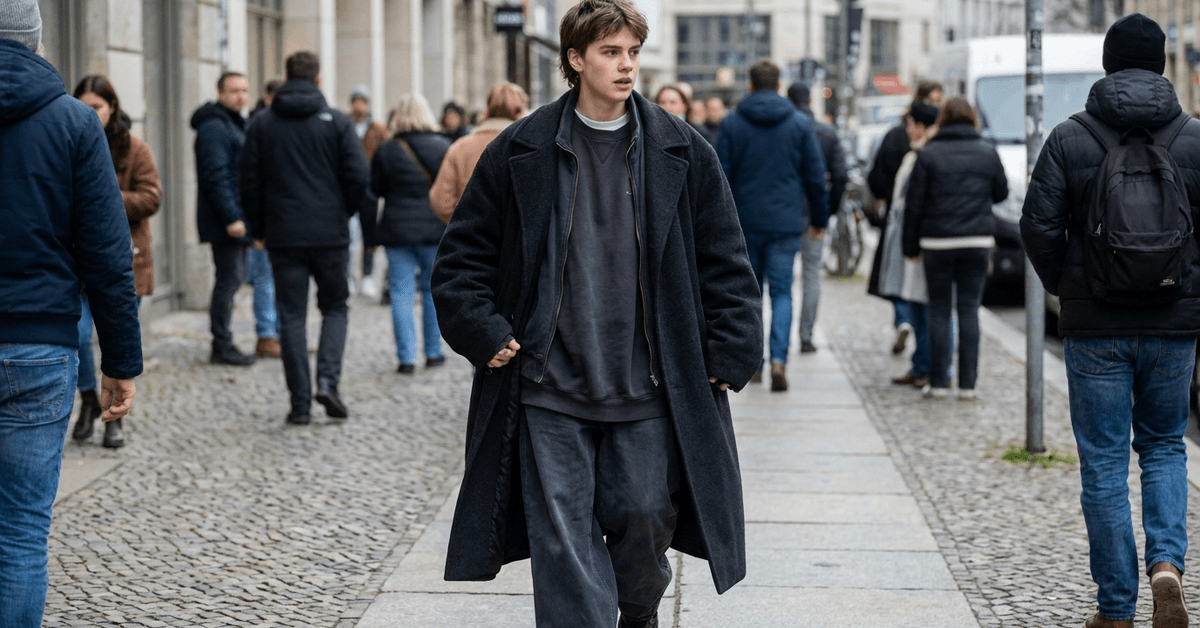
A baggy sweater layered over wide-leg jeans sounds like a mood. On a crowded Berlin U-Bahn platform, it looks like laundry day.
The “balance your proportions” rule gets repeated in every oversized styling guide on the internet. But few of those guides explain what proportion balance looks like when the mirror is in your 400-square-foot apartment and the test is a 20-minute walk through rain.
This one is for the urban commuter, the remote worker who sometimes leaves the house, the day-tripper bouncing between coffee shops and transit systems across cities like Tokyo, London, and New York.
The Proportion Rule Everyone Quotes But Nobody Explains
Proportion talk in oversized fashion sounds simple: pair something loose on top with something fitted on the bottom, or the reverse. The advice fills Pinterest boards and TikTok carousels.
And yet, the most common oversized outfit mistake on any city street is still two oversized pieces stacked on each other.
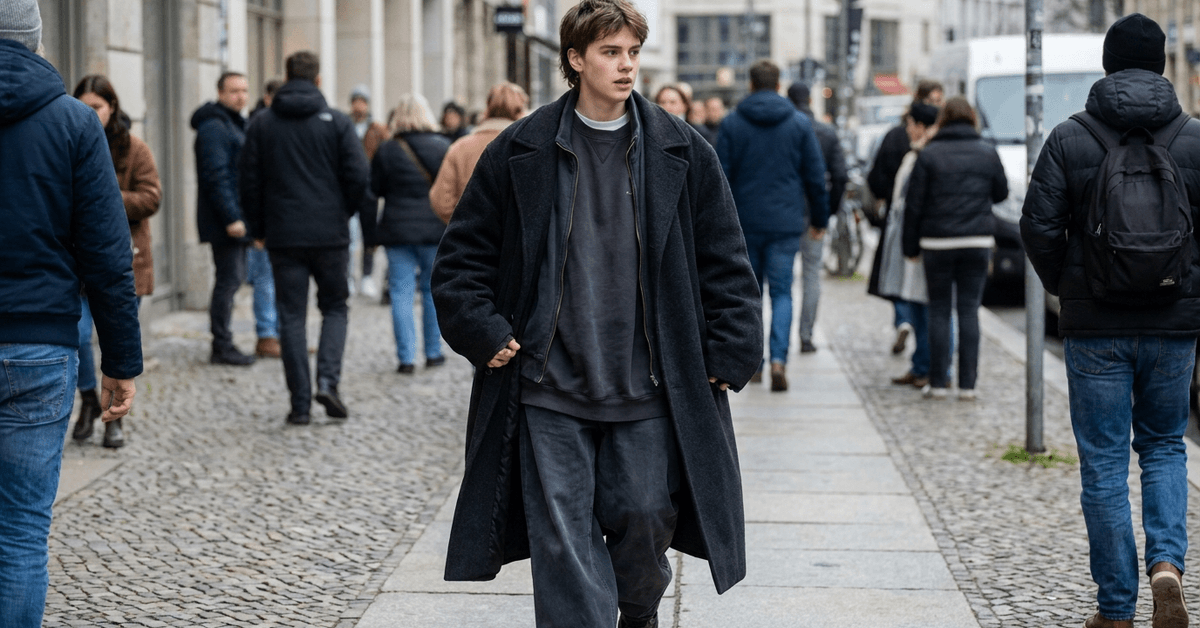
The problem is that “fitted” is doing a lot of heavy lifting in that rule. A slim trouser under a chunky knit works. But a skinny jean under the same knit? That can look like a lollipop. The gap between “fitted” and “tight” trips people up constantly.
How Parisian Proportions Differ from Tokyo Proportions
I’d push back on the idea that one proportion formula works across cities. Parisian oversized style tends toward a single volume piece (a coat, a blazer) over otherwise structured clothing.
Tokyo street fashion runs full volume more often and gets away with it, partly because the fabrics are softer and the layering is more deliberate.
So the real question becomes: what does the rest of your outfit do when one piece goes big? If the answer is “also goes big,” you need the fabric to justify it. Which brings up the mistake that matters more than proportion.
Fabric Weight Decides More Than Fit
Stiff, heavy fabrics and oversized cuts are a bad combination. A thick denim jacket two sizes up sits on the shoulders like armor plating. Rigid twill pants in a relaxed cut bunch at the knee and hold every awkward fold.
Softer materials drape. They follow the body enough to suggest a shape underneath, even when the cut is generous. That drape is the difference between looking like you chose oversized and looking like you grabbed someone else’s clothes.
The Fabrics That Work Season by Season
The right fabric depends on what month it is and what city you’re walking through. A quick breakdown of what holds up:
- Light cotton blends: breathable, move well, suited for summer day trips and warm commutes
- Soft wool knits: a roll-neck in merino wool sits close enough to avoid bulk while still feeling relaxed
- Linen and linen blends: ideal for heat, though wrinkle-prone (which can read as intentional or messy depending on the piece)
- Jersey and modal blends: good year-round layering weight, low bulk, easy to pack for travel
| Fabric | Best For | Watch Out For |
|---|---|---|
| Light cotton blend | Summer walking, transit | Can look shapeless if too thin |
| Soft wool knit | Fall and winter layering | Cheap wool pills fast |
| Linen | Hot climate day trips | Wrinkles within an hour |
| Jersey/modal | Year-round base layers | Stretches out after repeated wear |
The takeaway: if you’re spending more than £40 on an oversized piece, check the fabric composition tag before anything else.
I think the standard advice to always counter an oversized top with a slim bottom misses the point. A relaxed linen co-ord set in a lightweight fabric can look more intentional than a baggy hoodie tucked into skinny jeans.
Fabric determines whether full volume reads as styled or sloppy. Proportion rules are secondary.
Small Details That Separate “Oversized” from “Wrong Size”
Details are where oversized outfits either land or fall apart. Cuffs, collars, hemlines, and how a shirt sits at the waist: these small decisions communicate whether the size was a choice.
Sleeve Rolling and the Half-Tuck
Rolling your sleeves on an oversized button-down or shirt jacket does two things. It shortens the visual line of the arm, and it adds a point of structure to an otherwise loose silhouette. Two to three rolls, stopping below the elbow, tends to work better than a single fold.
The half-tuck gets overused, but it still works on longer oversized tees and lightweight shirts. Tucking the front center of a shirt into pants while leaving the sides loose creates an asymmetry that suggests a waistline without defining it.
Shoe Choice Changes the Entire Outfit
A chunky sneaker under wide-leg trousers grounds the silhouette. A slim leather boot under the same trousers sharpens it. The shoe is doing more work than most people give it credit for.
Seoul street style leans hard into this. Oversized blazers paired with platform loafers or chunky trainers show up constantly, and the reason they work is that the shoe weight matches the garment weight.
A delicate sandal under a heavy oversized coat creates a visual mismatch that reads as accidental.
City Commutes Break Most Oversized Outfits
A floor-length oversized trench looks incredible in a photo. On the London Underground escalator, the hem drags on the metal treads. Flowing wide sleeves catch on subway poles in New York. Super-wide pants snag on bike pedals in Amsterdam.
Transit-Proofing an Oversized Look
Practicality should filter every oversized choice for anyone who commutes. A few things to check before leaving the house:
- Pant length: anything that touches the ground will pick up grime within a single commute. Cropped or cuffed hems stay cleaner.
- Sleeve width: if the sleeve opening is wider than the handlebar grip on a rental bike or scooter, it will catch. Rolled or elasticized cuffs solve this.
- Jacket length: mid-thigh hits the sweet spot for most transit situations. Past the knee, sitting down becomes a fabric management problem.
Apps like Google Maps can estimate walking distances for your daily route, which helps test whether a longer or looser piece will hold up over 15-minute stretches on foot.
The Rental Scooter Test
This might sound oddly specific, but it is a good filter. If your outfit would be dangerous or awkward on a Lime scooter in Paris or Berlin, the proportions are too extreme for a city environment.
Oversized works in cities when it accounts for movement. Standing-still fashion is a different category entirely.
Copying Trends Instead of Building a Wardrobe
Instagram and TikTok move fast. A specific oversized silhouette blows up for three weeks, fills every fast-fashion site, then disappears. Buying into each wave produces a closet full of pieces that felt urgent and now feel dated.
Color Palettes That Outlast Trends
The oversized pieces that last tend to sit in neutral and muted tones: charcoal, navy, olive, off-white, tan. These work across seasons and across cities.
A bright oversized neon hoodie has a shelf life of about one season. A well-cut oversized navy blazer in soft wool? That piece stays relevant for years.
Lighter tones work better in suburban or coastal settings. Darker palettes blend into the visual noise of dense urban environments, which is why they dominate street style in places like London, Berlin, and New York.
Building a Capsule Oversized Wardrobe
Apps like Whering let you photograph and catalog your existing clothes, then mix and match digitally. This is useful for oversized pieces specifically because the fit is harder to predict from a hanger.
I’d recommend starting any oversized capsule wardrobe with three pieces: one structured oversized outer layer (blazer or shirt jacket), one soft oversized knit, and one pair of relaxed-fit trousers in a drapey fabric.
Those three cover most weather and most occasions without the “I own 14 baggy hoodies” problem.
Questions People Ask About Oversized Clothing Mistakes
Oversized fashion raises a lot of specific styling questions. These come up often and deserve direct answers.
- Q: Can short people wear oversized clothing? Absolutely. The proportion rule matters more at shorter heights, though. A single oversized piece (like a blazer) over a fitted base keeps the silhouette readable. Cropped oversized tops also work well because they avoid swallowing the frame entirely.
- Q: How do I know if something is oversized or just too big? Check the shoulder seam. On a purposefully oversized garment, the shoulder seam usually drops one to three inches below your natural shoulder. If it drops past your upper arm, the garment is probably just too large for your frame.
- Q: Are oversized outfits appropriate for a casual office? They can be, but fabric does the heavy lifting here. An oversized linen blazer over a tucked tee and tailored pants reads as intentional. An oversized graphic hoodie over joggers reads as weekend wear, regardless of the office dress code.
- Q: Does oversized clothing work in hot weather? Loose fits allow airflow, which helps. Stick to linen, cotton, or modal blends and avoid layering. A single oversized linen shirt over shorts is one of the most comfortable hot-weather combinations for city walking.
- Q: How do I transition an oversized outfit from day to night? Swap the shoes and adjust one detail. Trading sneakers for a heeled boot and rolling the sleeves differently can shift the same oversized outfit from a daytime coffee run to an evening out.
Conclusion
Oversized clothing works in cities when fabric, proportion, and practicality line up together. The best-dressed people on urban streets rarely follow a single proportion formula.
Copying a trend without testing it against your commute, your climate, and your body creates outfits that photograph well but live badly. Start with soft fabrics, check your hemlines against your daily route, and let the details do the talking.