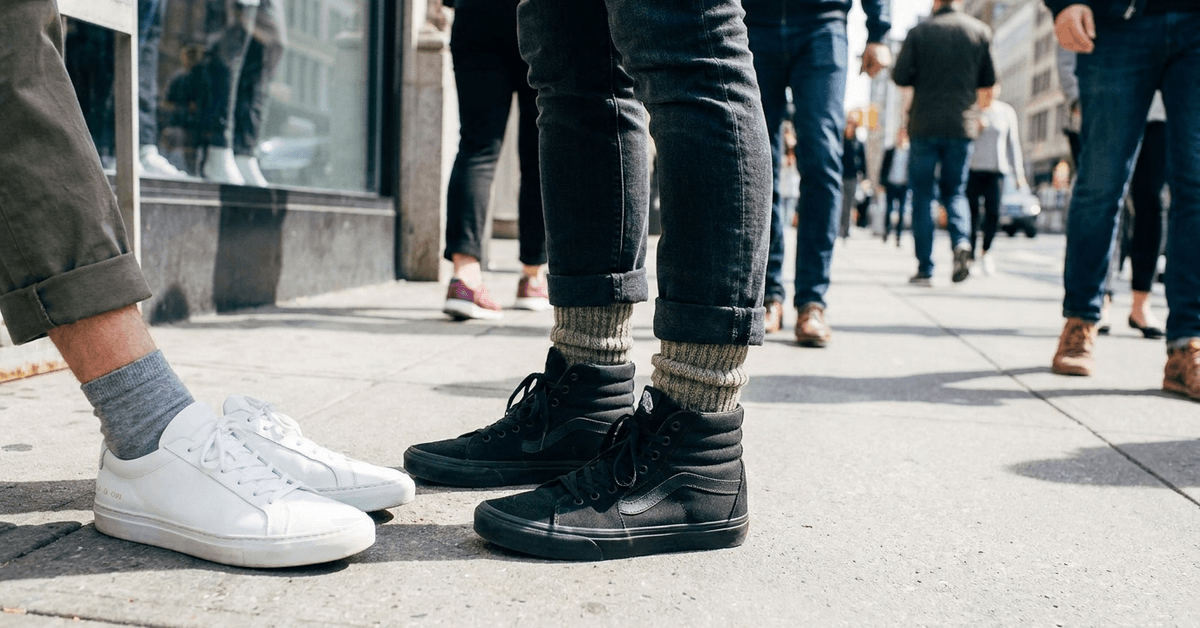
Three blocks into a walking tour, an invisible sock bunches under your heel inside a white low-top. That tiny fold turns every step into a friction point. The sock was supposed to disappear. Instead, it became the only thing on your mind.
Most sock-and-sneaker guides treat this topic like a fashion-only decision. But the sneaker cut on your foot dictates how much support, moisture control, and blister protection your sock needs to deliver across a full day of city walking.
This one is for the urban commuter or city traveler logging serious mileage on pavement. If a typical day means 10,000 steps between transit, errands, and exploring a new neighborhood, sock choice stops being cosmetic.
Why Invisible Socks Fail Heavy City Walkers
The default advice across every style blog is the same: grab invisible socks for low-tops, always. Clean lines, bare ankle, done.
I’d skip invisible socks for any city walk expecting more than 8,000 steps and reach for quarter-length socks instead, because the ankle coverage prevents the heel-slip and bunching that invisible socks are notorious for once sweat enters the equation.
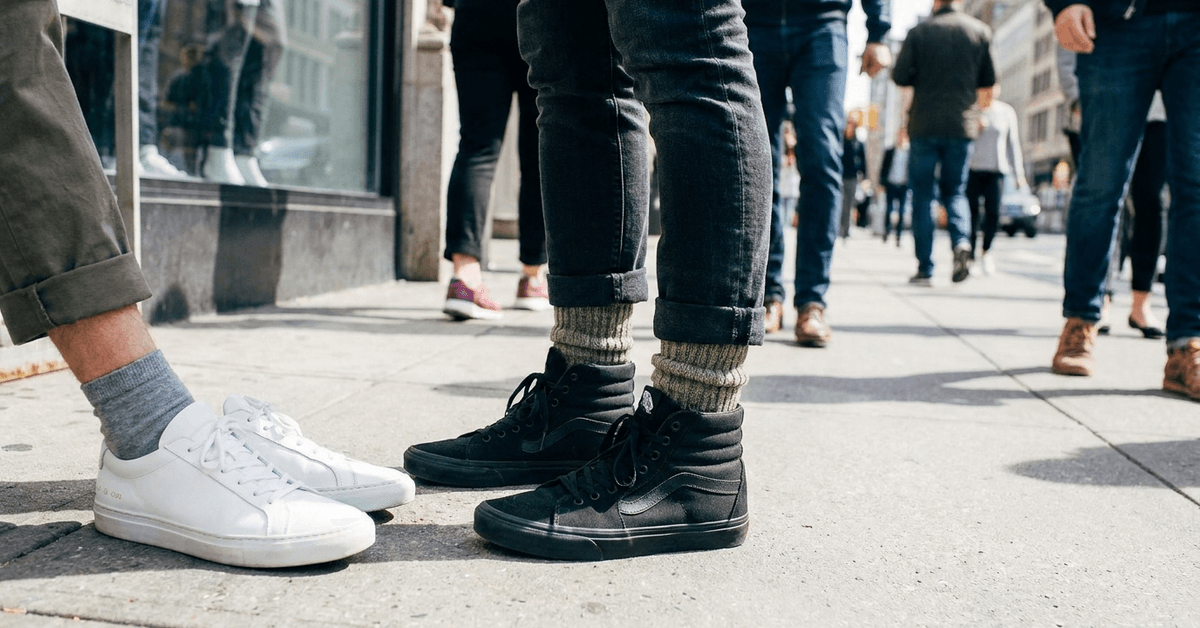
That sounds like a minor gripe until it turns into a blister on day two of a trip. Invisible socks rely on a silicone grip strip along the heel to stay in place.
After a few hours of walking in humid conditions (think Rome in July or a packed subway in Tokyo), that grip loosens.
The sock migrates forward, folds under the ball of your foot, and the bare heel starts rubbing raw against the shoe’s interior lining.
Quarter Socks and Low-Tops for Long Walking Days
Quarter socks sit just above the shoe line. They cover the ankle bone and stay put because the elastic band wraps around a wider part of the leg.
A cotton-blend quarter sock paired with a classic low-top sneaker looks almost as clean as the invisible sock look, but it handles an eight-hour city day without adjustment.
The trick is color matching. A white quarter sock with a white low-top creates a seamless line. Gray quarter socks under gray or off-white sneakers do the same thing. The sock disappears visually but stays functional.
I think Falke’s cotton quarter socks hit the sweet spot between slim profile and cushioned sole, particularly for anyone doing mixed walking and transit days.
For anyone packing for a trip, three pairs of quarter socks rotate better than five pairs of invisible socks. They dry faster overnight, hold their shape through more washes, and take up the same luggage space.
How to Match Sock Length to Each Sneaker Cut
Sneaker cuts fall into four categories, and each one changes the math on sock length, thickness, and material. The pairing is less about fashion rules and more about how the shoe’s collar height interacts with your ankle and lower calf.
Mid-Top Sneakers and Crew Socks
Crew socks rise to mid-calf and pair naturally with mid-top sneakers. The sock height matches or just exceeds the shoe collar, so there’s no awkward gap of exposed skin between sock and shoe.
Cities where biking and walking alternate throughout the day (Amsterdam is the obvious one) reward this pairing.
A ribbed crew sock adds subtle texture under cropped trousers or cuffed jeans. Look for moisture-wicking blends rather than pure cotton. Pure cotton absorbs sweat and holds it, which leads to cold, clammy feet by late afternoon.
High-Tops and Cushioned Socks
High-top sneakers cover the ankle completely. The sock’s job shifts from ankle protection to cushioning and temperature regulation. A thicker sock with a cushioned sole absorbs impact across long museum days or winter street walks.
Coordinating sock color with lace color is an underrated styling move that high-top wearers in fashion-forward neighborhoods (Shibuya, Kreuzberg, Williamsburg) use to tie an outfit together without being loud about it.
But the functional priority is padding. A thin dress sock inside a high-top defeats the purpose of the shoe’s built-in ankle support. The shoe needs a sock thick enough to fill the interior snugly without creating pressure points.
Slip-On Sneakers and Ultra-Low Socks
Slip-ons have no laces, no collar height, and minimal structure. The sock needs to vanish. Ultra-low hidden socks with a non-slip heel grip are the right call here, and this is the one sneaker cut where invisible socks make sense.
The shoe is designed for quick on-and-off, and the foot stays relatively stationary inside the shoe because there’s no heel counter to create friction. Ankle socks work too, especially on days when the slip-on rubs against the Achilles tendon.
A plain white or black ankle sock solves the rubbing without clashing visually. Avoid any sock with visible logos or branding poking above the shoe line. It breaks the minimalist silhouette that makes slip-ons work.
Sock Material Matters More Than Sock Style
Every article about socks and sneakers focuses on length. Almost none of them talk about fabric composition, which has a bigger effect on comfort during a full day of city walking than whether the sock sits above or below the ankle.
Summer City Fabrics
Hot-weather walking demands socks that pull moisture away from the skin. Bamboo fiber and Coolmax blends do this effectively. Bamboo has natural antibacterial properties that reduce odor across a long, sweaty day.
Pure cotton, which is what most cheap sock packs contain, does the opposite: it soaks up sweat and holds it against the skin.
A travel packing list for summer cities should prioritize sock material over sock quantity:
- Bamboo blend socks for days over 28°C (82°F) where sweat and odor build fast
- Coolmax or synthetic moisture-wicking socks for mixed walking and transit days
- Merino wool liner socks for surprisingly cool mornings that warm up by noon (a common pattern in coastal cities like San Francisco or Lisbon)
Cold Weather Sock Layering
Winter city walking calls for merino wool socks as the baseline. Merino regulates temperature in both directions: it insulates when cold and breathes when your feet warm up from walking pace.
Thermal blends work for standing-heavy days (outdoor markets, waiting for transit) but can overheat during sustained walking.
The mistake cold-weather walkers make is going too thick. A bulky thermal sock inside a low-top sneaker compresses the toe box and restricts blood flow. Toes get colder, not warmer. A mid-weight merino sock fits most sneaker cuts without cramping the interior.
| Sneaker Cut | Recommended Sock Type | Best Material for City Walking |
|---|---|---|
| Low-Top | Quarter sock | Cotton blend or bamboo |
| Mid-Top | Crew sock | Moisture-wicking synthetic |
| High-Top | Thick cushioned sock | Merino wool or layered weave |
| Slip-On | Ultra-low hidden sock | Bamboo or Coolmax |
The pattern: sock length follows shoe collar height, and sock material follows the season.
Sock and Sneaker Mistakes That Cost Comfort
Some combinations look fine in a mirror but fall apart after 2,000 steps. These are the ones that trip up city walkers most often:
- Thick socks inside slim low-tops create bunching around the toe box and turn a comfortable sneaker into a pressure point factory
- No socks at all inside slip-ons saves five seconds in the morning and costs a blister by lunch, plus the shoe’s interior lining absorbs foot sweat with no way to wash it out
- Flashy patterned socks with tailored outfits pull visual attention downward when the outfit is designed to draw the eye to the upper half
- Cotton socks in humid cities hold moisture against skin and increase friction, which is the direct cause of most walking blisters
That last point is the one most city walkers miss. The blister that forms on day two of a trip usually has nothing to do with the shoe. It comes from a cotton sock that stayed wet for six hours.
For sock shopping, Bombas has strong options for quarter and crew lengths with built-in arch support. European travelers might prefer SockShop for wider brand selection and reliable shipping across the continent.
Questions People Ask About Matching Socks and Sneakers
A few questions that come up constantly when people start paying attention to this pairing.
- Q: Can I wear no-show socks with high-top sneakers? There’s no rule against it, but the sock won’t do anything useful. High-tops need cushioning around the ankle, and a no-show sock leaves that entire zone unprotected. A thin crew sock is the minimum for high-tops.
- Q: Do black socks go with white sneakers? They can, but the contrast is a deliberate style choice. If the rest of the outfit doesn’t support that contrast (dark jeans, dark top), black socks under white sneakers look accidental. Gray or off-white socks bridge the gap more naturally.
- Q: How many pairs of socks should I pack for a city trip? Three to four pairs of the right socks beat seven pairs of the wrong ones. Pack based on the sneaker cuts coming along and the climate. One bamboo pair, one merino pair, and two cotton-blend quarter socks cover most five-day urban trips.
- Q: Are compression socks worth it for city walking? Compression socks reduce leg fatigue on days exceeding 15,000 steps, and they fit inside most mid-top and high-top sneakers. They’re overkill for casual strolling but can be a legitimate recovery tool after heavy sightseeing days.
- Q: Should socks always match sneaker color? Matching is the safe route, and it works. But a deliberate color pop (burnt orange socks under navy sneakers, for example) adds personality when the rest of the outfit stays neutral. The word to remember is deliberate. Accidental color clashes read as carelessness.
Conclusion
The right sock and sneaker pairing turns a painful city walk into something comfortable and sharp-looking. Material choice, especially in summer heat, matters more than most style guides admit.
Packing fewer pairs of better socks beats stuffing a bag with cheap cotton no-shows. And once the combination clicks, every city block feels a little shorter.