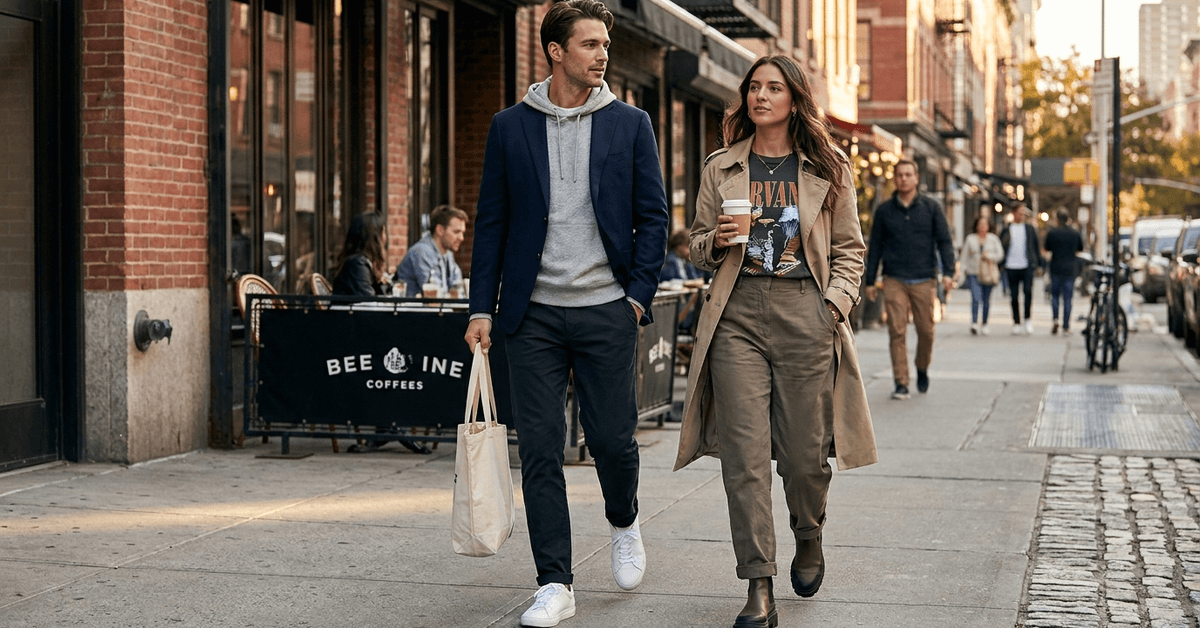
A client meeting at 10 AM and a gallery opening at 8 PM, all on the same Tuesday. That two-outfit problem eats closet space, commute time, and mental energy most European city professionals can’t spare.
The standard advice says to “add one smart piece” to a streetwear outfit when the day gets serious. That sounds logical on paper. But the execution almost always looks like a blazer awkwardly tossed over a graphic hoodie.
This guide is built for professionals aged 25 to 35 in cities like Berlin, Paris, and Barcelona. The ones who ride metro lines, sit through afternoon meetings, and end up at rooftop bars without a wardrobe pit stop in between.
Why “Elevate Streetwear” Is the Wrong Direction
Most city style advice follows a specific formula: start casual, then add a blazer or structured jacket to dress things up. The logic feels clean. A hoodie plus a sport coat equals smart casual, right?
I would argue the reverse approach works better after comparing outfits built both ways across brands like COS, Uniqlo, and Arket.
Starting with a smart casual base and adding one streetwear piece to dress it down produces a more natural look than the other direction.
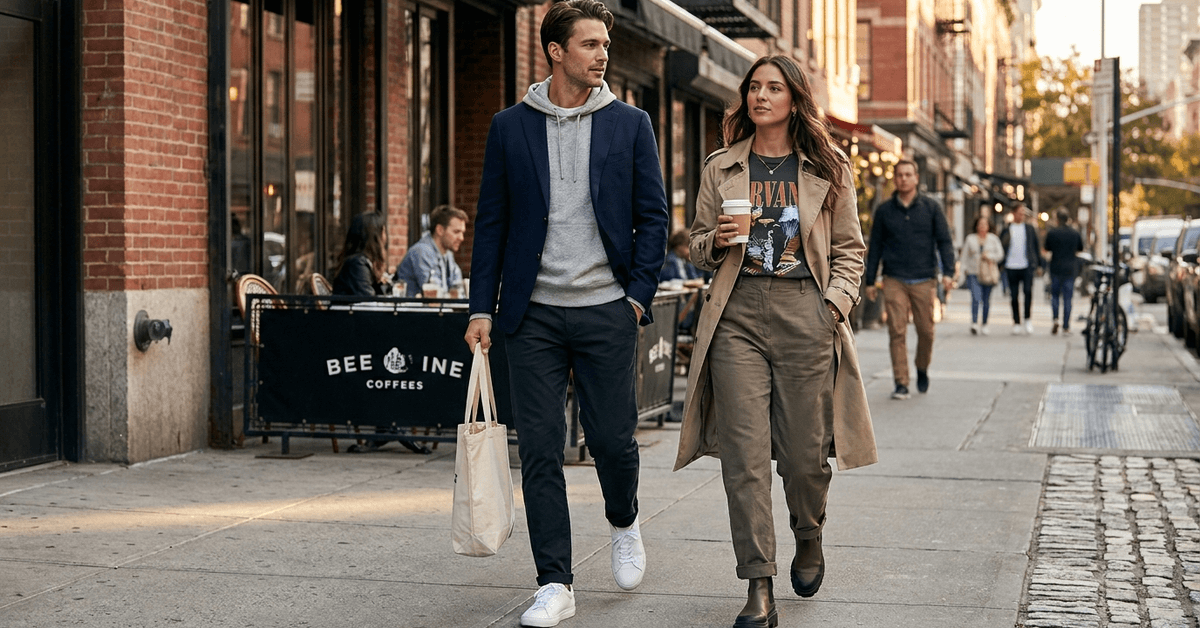
A tailored pair of chinos and a clean button-up, then swapped with relaxed sneakers instead of leather shoes: that reads intentional. A hoodie with a blazer thrown over it reads like damage control.
Dressing Down Reads Better Than Dressing Up
The reason comes down to proportion. Structured garments are designed to sit on the body a certain way. Layering relaxed pieces over them disrupts the silhouette. But sliding one relaxed element under or beside a structured piece keeps the lines intact.
A slim overshirt with joggers underneath works. A graphic tee tucked loosely into pressed trousers works. The structured piece does the visual heavy lifting, and the streetwear element adds personality without breaking the frame.
The Expensive Basics Trap That Costs City Commuters
Every style guide aimed at urban professionals pushes the same line: invest in fewer, higher-quality basics. A $350 navy blazer. A $200 pair of wool trousers. The pitch is that these pieces “last longer” and “look better over time.”
I think that advice falls apart for anyone commuting daily on public transit in cities like London or Paris. A $350 blazer gets pressed against metro doors, absorbs rain on uncovered platforms, and collects coffee splashes at standing-room cafés.
After six months of that treatment, it looks the same as a $90 blazer from COS that can be replaced without guilt.
Mid-Price Rotation Beats Single Expensive Pieces
The smarter play for city professionals is owning three mid-price blazers instead of one expensive one.
Rotate them through the week, let each rest between wears, and replace one per season when it starts showing transit damage. The per-wear cost ends up lower, and the variety keeps outfits from looking repetitive.
This same logic applies to trousers. Two pairs of $80 chinos rotated daily will outlast a single $220 pair worn four days a week. Fabric recovery time between wears matters more than thread count.
Streetwear Smart Casual Combinations for European Cities
The “hybrid outfit” concept sounds universal, but climate, culture, and transit systems shape what works city by city. A combination that feels right in Barcelona’s October heat will look absurd on a rainy Tuesday in Amsterdam.
Berlin: Kreuzberg to Mitte Without Changing
Berlin’s dress code leans relaxed across most professional settings. A neutral hoodie under an unstructured blazer handles the U-Bahn commute and a co-working meeting in the same afternoon.
Pair that with straight-leg dark jeans and minimal white sneakers. The hoodie handles warmth during Berlin’s unpredictable shoulder seasons, and removing the blazer at a Neukölln bar keeps the look from feeling stiff.
Paris: Marais District Day-to-Night
Parisian smart casual tilts sharper than Berlin’s version. Tailored slim trousers paired with minimalist sneakers cover the gap between gallery visits and bistro dinners in the Marais.
A crew-neck sweatshirt in navy or charcoal replaces the button-up for a softer streetwear feel. The silhouette stays clean enough for client-facing moments.
Barcelona: Warm Climate Layering
Barcelona’s mild climate changes the layering math entirely. A light bomber jacket over a plain crew-neck tee, combined with chinos, moves from a morning café in El Born to an evening terrace without overheating.
Swap the bomber for an overshirt on cooler evenings. Keep footwear minimal: white leather sneakers or canvas low-tops.
| Element | Berlin Approach | Paris Approach | Barcelona Approach |
|---|---|---|---|
| Top Layer | Unstructured blazer | Tailored sport coat | Light bomber or overshirt |
| Base Layer | Neutral hoodie | Crew-neck sweatshirt | Plain crew-neck tee |
| Trousers | Straight-leg dark jeans | Slim tailored trousers | Relaxed chinos |
| Footwear | Minimal white sneakers | Low-profile leather sneakers | Canvas low-tops |
| Day-to-night swap | Remove blazer | Swap tee under coat | Swap bomber for overshirt |
Barcelona demands the least layering, while Paris pushes the sharpest silhouette.
Footwear and Layering for Hybrid City Wardrobes
Getting the clothes right matters less than people assume if the shoes and layers are wrong.
A perfectly assembled smart casual outfit collapses the moment chunky running shoes enter the frame. And a single static layer fails the temperature swings of a twelve-hour city day.
Sneaker Selection for the Office-to-Bar Range
Classic silhouettes hold up better across settings than trendy chunky models. Brands like Adidas (the Stan Smith and Samba lines) and Veja produce sneakers that read clean enough for a meeting room and casual enough for a late-night bar.
The details to watch when picking a hybrid sneaker:
- Sole color matters: white or gum soles pair across outfits, while colored soles limit combinations
- Leather or suede uppers read smarter than mesh or knit
- Low-top designs work with both trousers and jeans, while mid-tops restrict trouser breaks
- Avoid visible branding larger than a thumbnail: oversized logos push the shoe into full streetwear territory
The Overshirt as the One Layer That Does Everything
Blazers get the press, but the cotton or wool overshirt may be the single most useful garment for the streetwear-smart casual crossover.
Worn open over a tee, it reads casual. Buttoned up with chinos, it passes for smart casual in most creative and tech offices.
An overshirt also folds flat into a backpack or messenger bag, which no blazer can do without wrinkling. For professionals who bike or scooter to work, that packability makes it the more practical choice.
Mistakes That Kill the Streetwear Smart Casual Mix
Getting this style wrong usually comes down to proportion and restraint. These are the errors that show up most often:
- Stacking statement pieces: one graphic tee or one bold sneaker per outfit, never both at the same time. Two competing visual anchors cancel each other out.
- Ignoring the commute test: if an outfit can’t survive a thirty-minute metro ride and a walk in light rain, it belongs in a different wardrobe. Structure that wrinkles on contact is the wrong structure.
- Over-branding everything: visible logos on shoes, jacket, and hat simultaneously turns the outfit into a sponsorship deal. One visible brand element per outfit is the upper limit.
- Copying a different city’s rules: the loose, layered Berlin look that works in co-working spaces reads sloppy in a Milanese office. Match the local dress code first, then introduce streetwear elements within that frame.
Caring for Clothes That Live on City Streets
Urban wear takes punishment that suburban closets never see. Metro seats, bike grease, rain, and repeated washing cycles break down fabric faster. A few maintenance habits extend the life of hybrid wardrobe pieces significantly.
Rotation is the single biggest factor. Wearing the same sneakers five days straight compresses the foam and wears the sole unevenly. Two pairs alternated daily can each last twice as long.
- Machine wash smart casual pieces on cold, gentle cycles to preserve color and prevent shrinkage in cotton blends
- Steam overshirts and blazers between dry-cleaning sessions: a handheld steamer removes wrinkles in two minutes without the chemical wear of repeated cleaning
- Store sneakers with cedar shoe trees or crumpled newspaper to absorb moisture and hold shape between wears
Questions People Ask About Mixing Streetwear and Smart Casual
These are the questions that come up most when people start building a hybrid city wardrobe.
- Q: Can sneakers work in a business casual office?
Most creative, tech, and media offices in European cities accept clean leather or suede sneakers without issue. The test is sole thickness: if the sole is thicker than about 3 cm, it probably reads too athletic. Stick to minimal designs and your footwear blends in. - Q: Does this style work for women the same way?
The structural logic is identical. Swap chinos for tailored wide-leg trousers, swap the overshirt for a cropped blazer, and the sneaker-plus-structured-top formula holds. Midi skirts paired with minimal sneakers follow the same high-low mixing principle and move well across city settings. - Q: What is the biggest mistake beginners make?
Buying too many “statement” pieces and not enough quiet basics. A wardrobe full of bold graphic tees and loud sneakers gives no room for the structured elements that make the hybrid work. Start with the neutral base, then add personality one piece at a time.
Conclusion
A streetwear smart casual wardrobe built for European city life saves time, closet space, and daily decision fatigue. The approach works best when the structured piece leads and the casual piece adds character.
Mid-price rotation beats a single expensive uniform that transit systems will eventually destroy. Start with ten core pieces, match the local dress code, and let one streetwear element do the talking.