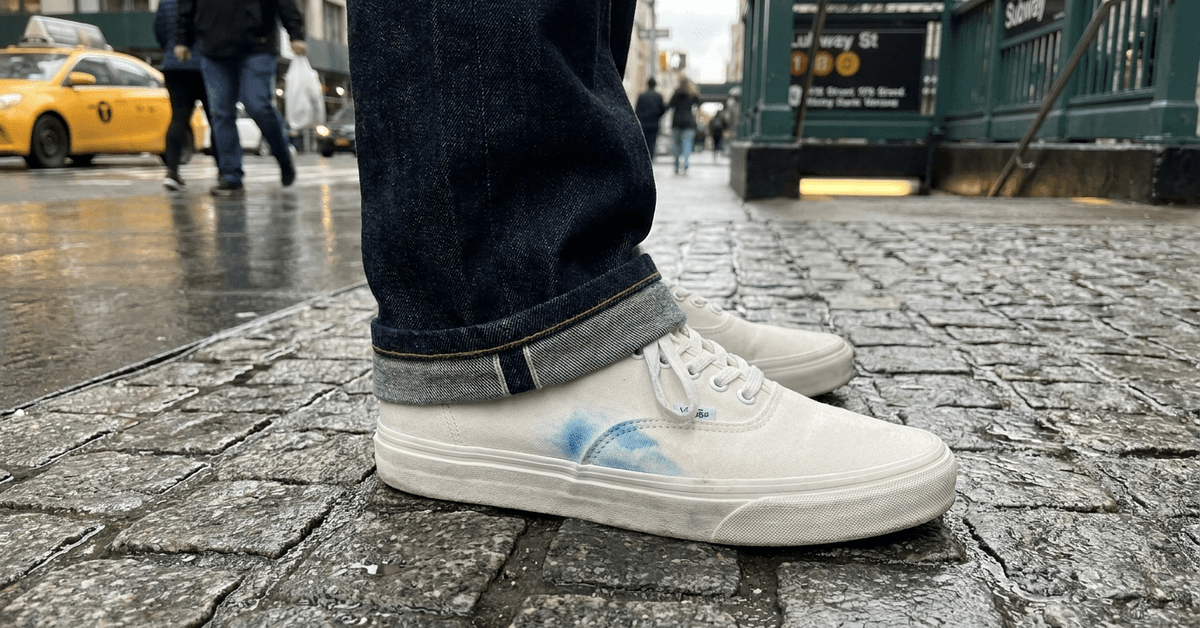
Blue streaks on a pair of white sneakers show up fast. One afternoon in raw denim, one humid commute, and the sides of those clean kicks look like they lost a fight with a Smurf.
The stain itself isn’t complicated. But the advice floating around online treats every shoe material the same way, which is how people ruin good leather trying to save it from a dye mark.
This guide is for the person who wears light-colored shoes in a city, commutes in jeans, and needs a method that matches the shoe they own. Not a generic cleaning list. A material-specific plan that accounts for how denim dye bonds to different surfaces.
Why Raw Denim Bleeds Onto Shoes More Than Washed Denim
Denim dye transfer comes down to one thing: how much unfixed indigo sits on the fabric surface. And the amount varies wildly depending on the jeans.
Raw Denim vs. Pre-Washed Jeans
Raw denim (also called dry denim) has never been washed after dyeing. The indigo sits loosely on the cotton fibers, waiting for friction, moisture, or heat to pull it off.
A pair of Naked & Famous or APC raw jeans will bleed significantly more dye than a pair of pre-washed Levi’s 501s. That difference matters when choosing what to wear with white shoes.
Pre-washed and distressed denim has already lost most of its excess dye during manufacturing. The transfer risk drops substantially after about five to six home washes.
So a brand-new pair of dark jeans from Zara or H&M, which often skip heavy wash cycles to keep costs low, can bleed almost as much as raw denim during the first few wears.
Humidity and Sweat Make It Worse
Moisture accelerates dye transfer. Rainy commutes, humid summer days, and sweaty ankles all push indigo off denim faster.
The stain bonds harder too, because wet dye penetrates fibers and pores instead of sitting on the surface where a quick wipe could catch it.
This is why the same jeans that seem fine on a dry winter day suddenly leave marks all over canvas sneakers during a July walk. The denim hasn’t changed. The moisture level has.
The First 10 Minutes After a Dye Stain Matter Most
A fresh dye transfer sits on top of the shoe material for a short window. Once it dries and sets, the indigo bonds with the fibers or fills the pores of leather, and removal gets significantly harder.
Blot, Don’t Rub
Grab a dry white cloth. Press it against the stain and lift. Repeat. Rubbing pushes the dye deeper into the material and spreads the stain outward.
A white cloth also lets you see how much pigment you are pulling up, so you know when to stop or switch methods.
I’d recommend keeping a small pack of white microfiber cloths in a bag or desk drawer if light shoes are part of your regular rotation. A baby wipe works in a pinch, but the moisture can sometimes set the stain on certain leathers rather than lift it.
Cleaning Methods That Match the Shoe Material
The cleaning method depends entirely on what the shoe is made of. A baking soda paste that works on canvas can destroy suede.
A vinegar solution safe for smooth leather can leave water spots on nubuck. Matching the method to the material is the step most cleaning guides gloss over.
Canvas and Fabric Shoes
Canvas is the most forgiving material for dye removal. Mix a small amount of mild dish soap with cool water, dip a soft cloth, and dab the stain. Rinse the cloth, wipe the area clean, and let the shoe air dry away from direct sunlight.
For stubborn marks that survive soap and water, a baking soda paste (two parts baking soda, one part water) can pull deeper stains out of canvas weave.
Apply it, let it sit for 10 minutes, then brush it off gently with a soft-bristled brush. A couple of precautions worth noting:
- Do not soak the entire shoe. Water lines form on canvas when it dries unevenly, and they are harder to remove than the original dye stain.
- Test the paste on a hidden area first. Some colored canvas shoes lose their own dye when exposed to baking soda.
- Air dry only. Heat from a dryer or radiator can shrink canvas and permanently set any remaining dye.
Leather and Faux Leather Shoes
The standard advice for leather shoes is a 50/50 white vinegar and water solution. I think that advice is risky for anything beyond a quick surface wipe, especially on finished leather like the kind on Common Projects or Stan Smiths.
Vinegar is acidic enough to strip the protective finish on leather over time, and repeated use dulls the surface. A dedicated leather cleaner in the $10 to $15 range, like the one from Jason Markk, is safer for repeated cleaning and won’t degrade the finish the way vinegar can.
If vinegar is all that’s available, dilute it well, apply it sparingly with a damp cloth, and follow immediately with a leather conditioner to restore moisture. But for regular denim dye removal on leather sneakers, a purpose-built cleaner pays for itself after two or three uses.
Suede and Nubuck
Suede is the trickiest material for dye transfer because the open nap traps pigment below the surface. Liquid cleaners can leave water stains that look worse than the dye mark.
The best first step is a soft rubber eraser (a clean pencil eraser or a dedicated suede eraser). Rub gently over the stain in one direction. This lifts surface-level dye without introducing moisture.
For deeper marks, apply a small amount of white vinegar to the stain with a cotton swab, blot immediately, and let the shoe dry completely. Once dry, brush the nap back into shape with a suede brush. Three things to keep in mind:
- Never use a wire brush on suede. It tears the nap permanently.
- Suede brushes are cheap and available at most shoe repair shops. Cities like Madrid and Los Angeles have specialty stores that carry them for under $8.
- Colored suede hides dye transfer better than light suede. This is worth considering before buying cream or white suede shoes to pair with denim.
| Method | Best For | Avoid On | Cost |
|---|---|---|---|
| Soap and water | Canvas, rubber soles | Suede, nubuck | Free |
| Leather cleaner | Smooth leather, faux leather | Suede, unfinished leather | $10-$15 |
| Baking soda paste | Canvas, fabric | Leather, suede | Under $2 |
| Suede eraser | Suede, nubuck surface stains | Smooth leather, canvas | $5-$8 |
The table above covers the four main approaches. If a stain survives all of these, a professional shoe cleaner is the next step, not a stronger chemical.
Stopping Denim Dye Transfer Before It Starts
Cleaning stains works. Preventing them is less tedious. A few habits reduce dye transfer to almost zero on most shoes.
Pre-Treat Shoes and Jeans Separately
Protective sprays like Crep Protect create a hydrophobic barrier on shoes that repels liquid and pigment. One application lasts through several wears before reapplying.
Spray before the first wear, let it dry for 24 hours, and reapply every two to three weeks if the shoes see daily use. On the denim side, soaking new jeans in cold water with a cup of white vinegar for 30 minutes before the first wear helps set the dye.
This reduces (but does not eliminate) bleeding. Some raw denim purists skip this step because they want the natural fade patterns, but anyone wearing white shoes with raw denim should do it.
Cuff Height and Shoe Choice
Higher cuffs reduce contact between the hem and the shoe. A rolled cuff that sits above the ankle eliminates the friction zone entirely on high-top sneakers. On low-tops, a single roll usually creates enough clearance.
Shoe color also matters more than people admit. Off-white and cream shoes hide minor dye transfer far better than bright white ones. My take on this: the Instagram-ready all-white sneaker paired with dark raw denim is one of the worst practical combinations in men’s and women’s streetwear, even though it photographs well.
Bone, sail, or ecru colorways give the same clean look while hiding minor staining that would ruin a pure white shoe.
When Professional Help Makes Sense
Some stains sit too deep for home methods. Shoe repair shops in most mid-to-large cities offer cleaning services, and some dry cleaners handle shoes too.
The cost typically runs between $15 and $30 depending on the material and severity.
Cobbler apps and on-demand shoe care services exist in cities like London and Paris, though availability varies. Check local listings before assuming an app covers your area.
Questions People Ask About Removing Denim Dye From Shoes
A few questions come up repeatedly about this topic, and the answers add context to the methods above.
- Q: Can I machine wash sneakers to remove denim dye stains? Canvas sneakers can sometimes survive a gentle cycle in a mesh laundry bag. Remove the insoles and laces first. But machine washing rarely targets the stain specifically, and it can weaken glue bonds on cemented soles. Hand cleaning gives more control and less risk.
- Q: Do dark socks prevent dye transfer to shoes? Dark socks can absorb some dye before it reaches the shoe, especially around the ankle and tongue area. They are not a complete barrier, though. Friction between the hem and the outer shoe upper happens regardless of sock color.
- Q: Is denim dye transfer permanent on white leather? Not always, but the longer it sits, the harder it gets to remove fully. On unfinished or lightly finished leather, deep-set indigo stains can become permanent within 24 to 48 hours. Quick action and a proper leather cleaner give the best odds.
Conclusion
Denim dye on white shoes is annoying, but it is almost always fixable when caught early. The combination of material-matched cleaning and a protective spray covers most situations a city commuter runs into.
Skipping the vinegar shortcut on leather and investing in a real cleaner saves both the shoes and the finish underneath.
And if raw denim is a regular part of the rotation, cuffing higher and choosing off-white over pure white makes the whole problem smaller before it starts.