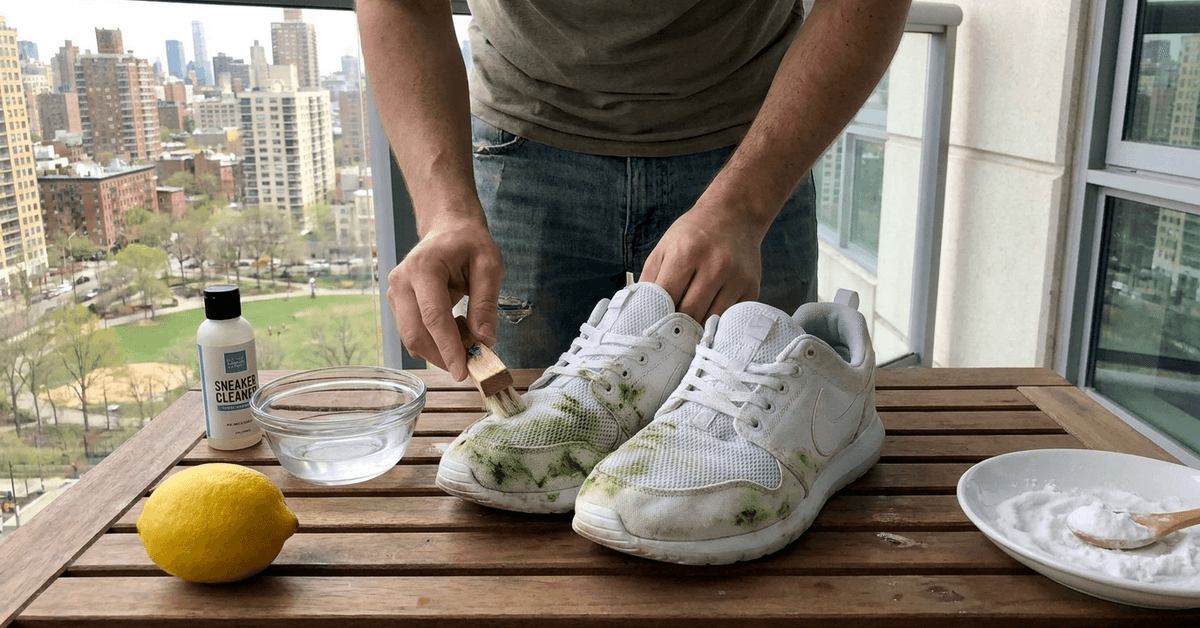
A single blast of hot water can permanently lock a grass stain into mesh fabric. Most people reach for the faucet on instinct, and that ten-second decision turns a removable mark into a permanent green shadow on a $150 sneaker.
The usual cleaning advice skips the reason grass is different from mud or scuff marks. Chlorophyll and plant proteins bond to shoe fibers on contact, and that bonding accelerates on absorbent materials like knit and mesh uppers.
This guide is for the person who plays pickup soccer on Saturday, grabs brunch after, and refuses to let a park session wreck their rotation.
Why Grass Stains Bond to Sneaker Fabric Faster Than Dirt
A grass stain is a dye, not a surface deposit. Mud sits on top of fibers. Chlorophyll sinks into them. The green pigment in grass contains both chlorophyll and proteins that react with textile fibers on a chemical level.
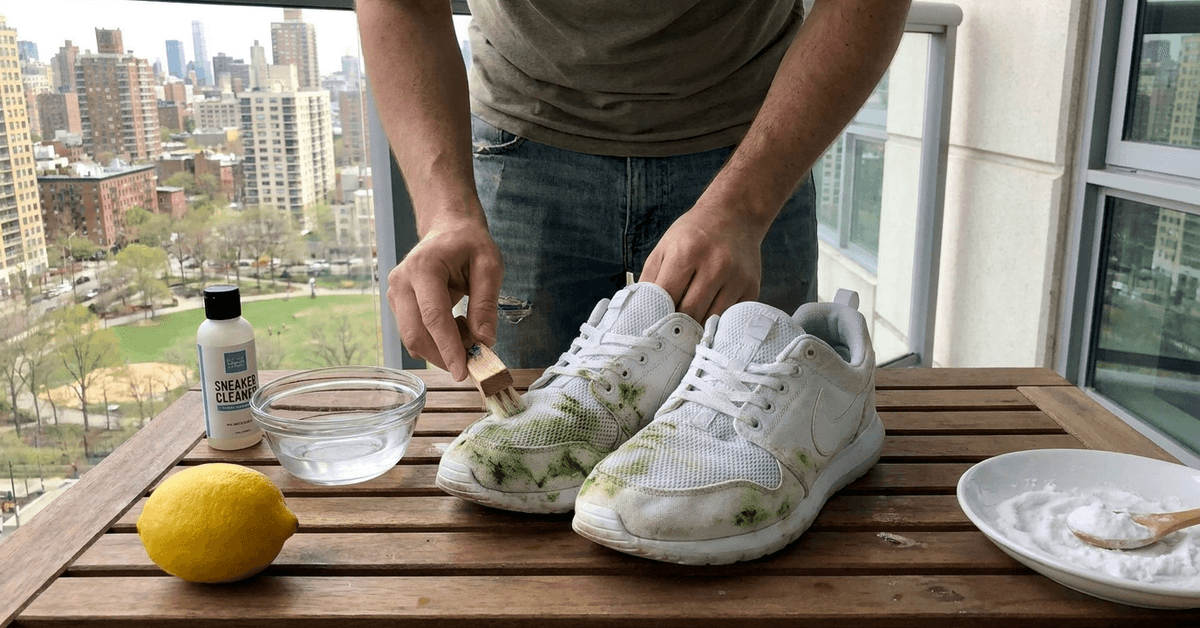
Cotton, mesh, and knit uppers are the worst offenders because their woven structure gives chlorophyll more surface area to latch onto. Synthetic leather holds up better since it is less porous, but stains still show on lighter colorways.
Toe Box and Outsole: Where Stains Hit Hardest
Stain placement on the shoe matters as much as the cleaning method. The toe box catches the most grass contact during any sport involving a ball, while the lateral midsole picks up stains from side-to-side movement.
Knowing where your shoes collect green marks tells you where to focus pre-treatment instead of scrubbing the entire shoe and risking unnecessary wear.
The Hot Water Mistake That Sets Stains Permanently
Heat activates the protein component of grass stains, essentially cooking them into the fiber the same way hot water sets a blood stain. Cold water keeps the proteins loose and easier to lift.
I would say this single detail about cold water vs. hot water matters more than which cleaning product sits on the shelf, because even the best remover can’t undo a heat-set chlorophyll bond.
Sneaker-Specific Cleaners vs. Kitchen Staples for Grass Stains
The cleaning product aisle at any sporting goods store pushes sneaker cleaning kits hard. Brands like Jason Markk and Crep Protect have built entire businesses around shoe care. And for dirt, scuffs, and general grime, they do a solid job.
Grass stains are a different animal. Sneaker cleaners are formulated primarily for surface-level dirt and oxidation.
Chlorophyll is an organic pigment that responds to acidity and oxidation, which is why a simple baking soda and vinegar paste often outperforms a $16 specialty bottle on green marks specifically.
Baking Soda and White Vinegar Paste
Mix one part baking soda with two parts white vinegar. The fizzing reaction helps lift chlorophyll from fibers. Spread the paste on the stain, let it sit for 30 minutes, then rinse with cold water. Total cost per use: a few cents.
OxiClean for Deep-Set Stains
When a stain has been sitting for a day or longer, oxygen-based cleaners like OxiClean can break down the remaining pigment.
Follow the label instructions, test a small hidden area first, and avoid leaving it on colored fabrics for longer than recommended.
Lemon Juice on White Shoes Only
Citric acid breaks down grass pigments well, but it can bleach dyed fabrics. Squeeze lemon juice directly on the stain, let it sit 10 to 15 minutes, and rinse with cool water. This method works on white mesh and canvas. On anything with color, skip it.
I think the fixation on branded sneaker cleaning products for grass stains specifically misses the point.
A $2 box of baking soda paired with white vinegar handles chlorophyll better than a $16 Jason Markk kit, because grass is an organic dye problem, not a surface grime problem.
The specialty products have their place for general maintenance, but for green stains after a park session, kitchen chemistry wins.
Step-by-Step Grass Stain Removal for Mesh and Knit Sneakers
A cleaning routine that works in a city apartment takes about 45 minutes of mostly passive time. The scrubbing itself is five minutes.
- Pull laces and insoles out first. Stains hide underneath lace eyelets and along the insole edge. Cleaning these separately gives a better result.
- Apply baking soda and vinegar paste (or OxiClean solution) to each stain. Let it sit 15 to 30 minutes while doing something else.
- Scrub gently with a soft-bristle brush or old toothbrush. Circular motions on mesh, straight strokes on synthetic leather. Aggressive scrubbing damages knit fibers.
- Rinse each treated area with cold water. Targeted rinsing avoids soaking the shoe’s foam midsole, which takes forever to dry in a small apartment.
- Air dry in a shaded, ventilated spot. Direct sunlight speeds drying but fades colors. A windowsill with airflow and no direct sun is the move.
This process handles most grass stains caught within the first 24 hours. Stains that have been sitting longer may need a second round of OxiClean treatment.
| Method | Best For | Approximate Cost | Time Needed |
|---|---|---|---|
| Baking soda + vinegar | Fresh stains on mesh, knit, canvas | Under $1 per use | 30–35 minutes |
| OxiClean soak | Deep-set or day-old stains | ~$8 per container (many uses) | 30–60 minutes |
| Lemon juice | White shoes only | Under $1 | 15–20 minutes |
| Sneaker cleaning kit | General maintenance, scuffs, dirt | $12–$18 per kit | 10–15 minutes |
The takeaway: branded kits clean shoes, but baking soda and vinegar target chlorophyll at a fraction of the price.
Mistakes That Turn a Grass Stain Into a Permanent Mark
Cleaning mistakes cause more lasting damage than the stain itself. A few common errors are worth isolating because they come up repeatedly in sneaker communities.
- Rubbing the stain hard right after it happens. Blotting lifts pigment off fibers. Rubbing pushes it deeper. A dry paper towel pressed gently on a fresh stain does more than aggressive wiping.
- Throwing stained sneakers in the washing machine on a warm cycle. The heat sets the stain, and the agitation can warp midsole foam and separate glued panels.
- Spraying bleach-based cleaners on colored sneakers. Bleach removes the stain and the dye. The result is a clean but discolored shoe, which looks worse than the original mark.
Each of these mistakes is permanent or semi-permanent. The stain itself, treated correctly, is almost always temporary.
Preventing Grass Stains on Sneakers: The 60-Second Pre-Game Step
Prevention takes less effort than cleaning. A water-repellent spray applied after every deep clean creates a barrier between grass and fabric. Most sporting goods stores carry these, and a single can lasts months.
A few more things that help:
- Rotating pairs keeps any single shoe from absorbing repeated grass contact. Two pairs alternated through park sessions last longer than one pair used every time.
- Avoiding wet grass sounds obvious, but morning dew and post-rain patches transfer chlorophyll much faster than dry grass. A patch of dry ground saves cleanup time later.
- Carrying wet wipes in a bag or backpack gives a first-response option. A quick blot on a fresh stain within the first few minutes removes most of the surface pigment before it bonds.
Sneaker cleaning services have also popped up across major cities. Shops in London charge roughly £15 to £25 per pair with next-day turnaround, and similar services exist in Singapore, Toronto, and Tokyo.
For a rotation of high-value sneakers, occasional professional cleaning can be worth the cost.
Questions People Ask About Removing Grass Stains from Shoes
These come up a lot in sneaker forums and search results, so quick answers below.
- Q: Can grass stains be removed from suede sneakers? Suede is tricky because water can leave its own marks. A suede-specific eraser or brush used on a dry stain sometimes lifts the pigment. Liquid cleaners and pastes should be avoided on suede unless the product label specifically says suede-safe.
- Q: How long do grass stains take to become permanent? There is no exact cutoff, but stains treated within the first 24 hours come out significantly easier than those left for a week. Heat exposure at any point during that window is the bigger permanence factor than time alone.
- Q: Do protective sprays stop grass stains completely? Not completely. A water-repellent spray reduces absorption and gives more time to blot the stain, but heavy grass contact during a full game will still leave marks. The spray makes cleanup faster, not unnecessary.
Conclusion
Grass stains on sneakers are a chemistry problem, and fixing them starts with cold water, not hot. The best cleaning tool for chlorophyll sits in most kitchen cabinets, not behind a sporting goods counter.
A 60-second pre-treatment after every park session saves hours of scrubbing later. And the shoes that survive the longest are the ones worn in rotation, not the ones cleaned the hardest.