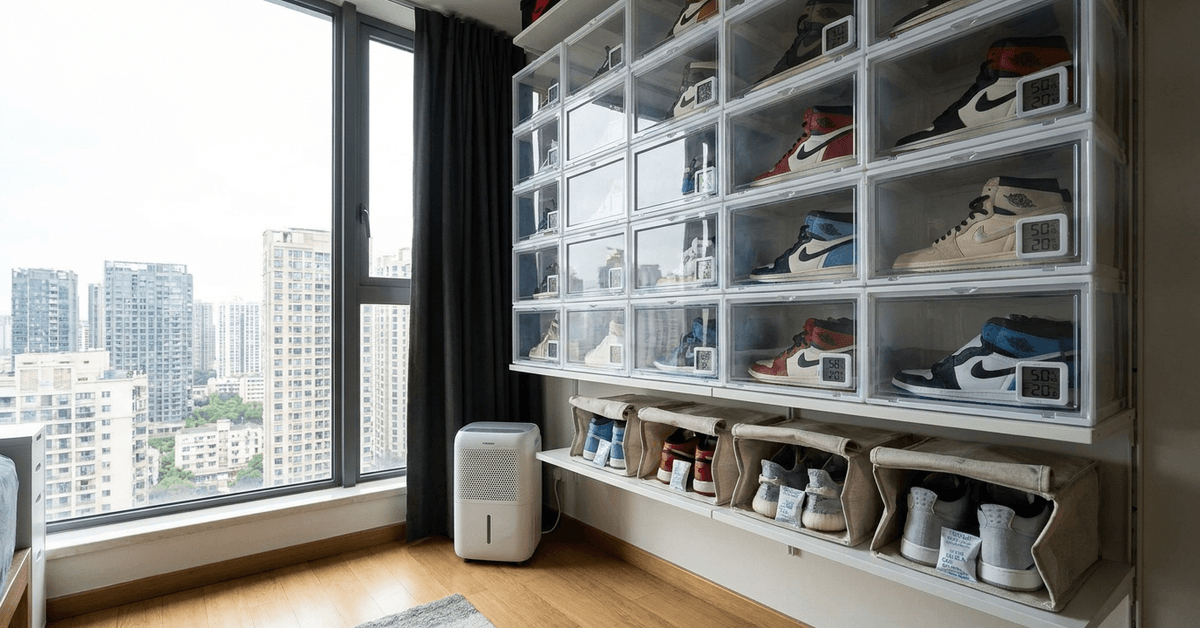
The glue holding your sneaker soles together starts weakening the moment temperature inside your apartment drifts above 22°C. That number is lower than most people assume.
Sole separation is the single most common way expensive sneakers die in storage. The cause is rarely wear. It is almost always a combination of heat, humidity swings, and zero airflow inside a closed box sitting in a cramped closet.
This piece is for the urban collector sitting on a dozen or more pairs in a one-bedroom apartment.
If your sneakers share space with a radiator, a window that catches afternoon sun, or a hallway that traps damp air, every storage decision either extends their life or quietly shortens it.
Why Sneaker Adhesives Break Down Faster in City Apartments
Most sneaker care articles treat storage like an organizational project. Bins, shelves, labels. That framing misses the real problem: adhesive chemistry.
The glues used in sneaker construction are thermoplastic. They soften in heat and become brittle in dry cold. City apartments cycle between both extremes, sometimes in the same day.
A building’s central heating can push a closet above 25°C during winter while pulling relative humidity below 30%. Come summer, that same closet swings to 28°C and 70% humidity if there is no climate control.
Those swings are more destructive to adhesive bonds than either extreme on its own.
The Temperature Range That Matters
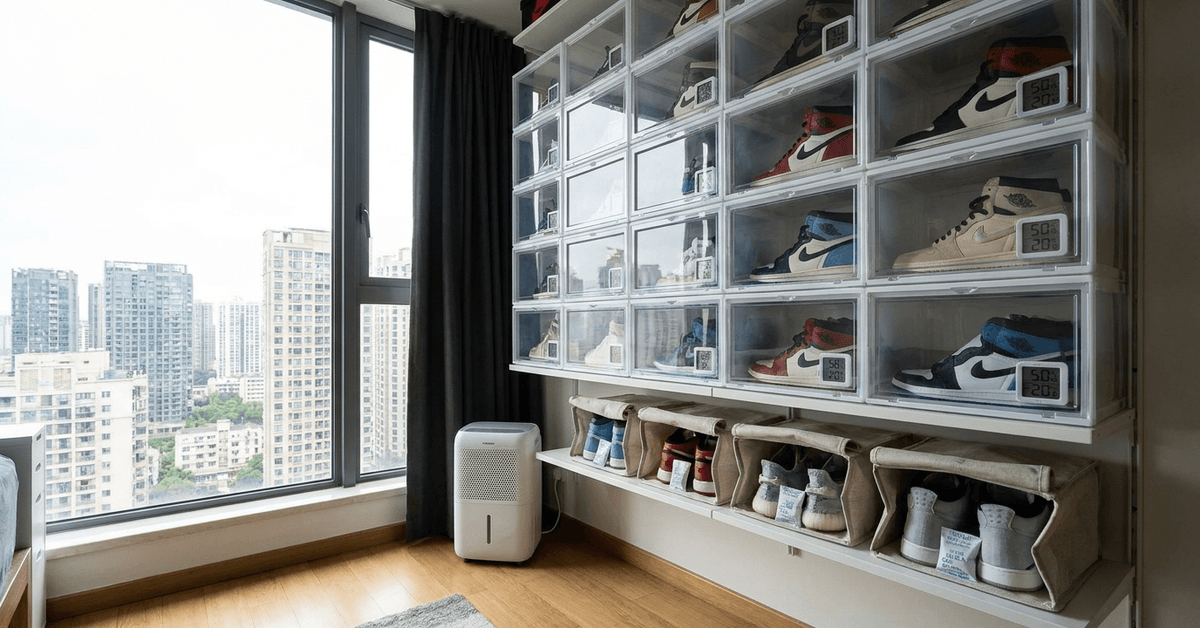
The 18–22°C window (roughly 65–72°F) is where sneaker adhesives stay most stable.
Going above 24°C does not cause instant damage, but sustained exposure over weeks softens thermoplastic bonds. The glue line between the midsole and outsole gets weaker each cycle.
I would pay closer attention to temperature consistency than to hitting an exact number. A closet that stays at 21°C all year does more for your collection than one that hits 19°C at night and 27°C during afternoon sun exposure.
Humidity: The Silent Destroyer
Relative humidity between 45% and 55% is the target range. Above 60%, mildew becomes a real risk on leather and textile uppers. Below 35%, adhesive compounds dry out and crack along stress lines.
Cities like London, Hong Kong, and Singapore sit well above 55% for most of the year without intervention. A small plug-in dehumidifier or even a handful of silica gel packs inside each container can pull a microenvironment down into the safe range.
Monitoring devices from Govee or ThermoPro cost less than a single mid-range sneaker and give Bluetooth humidity readings straight to a phone.
Sunlight Hits Adhesives and Colorways
UV exposure degrades both the adhesive bond and upper materials. A pair stored near an uncurtained window for six months can yellow on one side while the other stays clean.
The fix is dead simple: keep containers in a shaded, interior spot. If your only storage option is near glass, blackout curtains or an opaque shelf cover block enough UV to matter.
The Problem I Have With “Keep Them in the Original Box”
Every sneaker storage guide says the same thing: keep your kicks in the original shoebox. I think that advice costs collectors more damaged pairs than it saves, and the reason comes down to one material: uncoated cardboard.
Original shoeboxes are cardboard. Cardboard absorbs moisture from the air, holds it against the shoe, and provides zero ventilation.
A pair sitting in a closed cardboard box inside a humid apartment is soaking in trapped moisture for months at a time. That environment accelerates exactly the adhesive breakdown and mildew growth that storage is supposed to prevent.
Clear Drop-Front Containers Do the Job Better
Clear plastic drop-front boxes solve three problems at once. They do not absorb moisture. They allow visual checks without opening. And many models, like those from DropFront, include small vents that allow minimal airflow without letting dust in.
I would take a $8–$12 clear container with vents over a free cardboard shoebox for any pair worth more than $150. The economics are simple: one ruined pair of Jordans costs more than an entire shelf of plastic containers.
When Original Boxes Still Make Sense
There is one exception. If resale value depends on having the original box and packaging (and it does for many limited releases), store the box separately.
Put the shoes in a proper container and keep the empty box flat or nested to preserve it. The collector who stores shoes and the box together in unventilated cardboard is protecting the packaging at the expense of the product.
Sneaker Storage Setups by City Climate
Apartment size and local climate dictate storage strategy more than any universal tip. A setup that works in arid Phoenix will grow mold in New Orleans.
NYC Small Apartment Storage
Space is the constraint. Wall-mounted shelving above door frames and under-bed rolling drawers turn dead space into sneaker storage without eating floor area.
Avoid attic or top-shelf spots near the ceiling if your building runs aggressive heating: hot air rises, and those spots sit 3–5°C warmer than eye level.
A few practical moves for NYC apartments:
- Stack clear containers vertically near interior walls, away from radiators and windows
- Place a single silica gel pack per container and swap them out every 6–8 weeks
- Run a compact dehumidifier in the closet during summer months when humidity spikes above 60%
London Flats and Damp Hallways
London’s baseline humidity hovers around 70–80% for much of the year. Hallway storage, which is common in older flats, puts sneakers directly in the dampest part of the home.
Compact rechargeable dehumidifiers like the Pro Breeze pull moisture out of a closet-sized space for under £30.
The priority list for London-based collectors:
- Dehumidifier inside or next to the storage area, recharged on schedule
- Silica gel inside every container, not just the expensive pairs
- Monthly visual inspections for early mildew spots on suede and textile uppers
Tokyo Apartments and Dry Winter Heating
Tokyo’s problem flips during winter. Dry heating pulls moisture out of the air so aggressively that adhesives can crack from dehydration.
A small open bowl of water placed inside the storage closet adds enough ambient humidity to offset the dryness. It sounds low-tech because it is. It works.
During Tokyo’s humid summers (June through September), the opposite applies: silica gel and ventilation become the priority.
Tools Worth Adding to a Sneaker Storage Setup
The difference between a collector who loses pairs and one who does not often comes down to monitoring. A few tools sit at the intersection of useful and affordable.
| Tool | Purpose | Approximate Cost |
|---|---|---|
| Govee Bluetooth Hygrometer | Remote humidity and temperature tracking via app | $12–$15 |
| ThermoPro TP49 | Basic digital temp/humidity display for closets | $8–$10 |
| Silica Gel Packs (rechargeable) | Moisture absorption inside containers | $6–$10 per set |
| Pro Breeze Mini Dehumidifier | Small-space moisture removal for humid climates | $25–$35 |
| Clear Drop-Front Containers | Ventilated, stackable, visual access | $8–$12 each |
The Govee Home App pairs with Bluetooth sensors to send alerts when humidity drifts outside the 45–55% range. Setting that alert takes two minutes and catches problems before they become visible damage.
Seasonal Sneaker Maintenance Habits
Storage is not a set-and-forget task. Adhesives degrade on a timeline, and the only way to catch early damage is regular inspection.
A seasonal routine that takes maybe 20 minutes per quarter:
- Open each container for at least an hour to cycle air through
- Check glue lines along the midsole for cracks, gaps, or yellowing
- Wipe soles gently with a soft brush to remove grit that grinds into adhesive seams
- Replace silica gel packs that have changed color or feel heavy with absorbed moisture
- Rotate which pairs sit in active wear and which go back into storage
Moving Day and Travel Risks
Relocating during rainy seasons or monsoon months puts sneakers at risk from water contact. Waterproof duffel bags lined with towels create a moisture barrier during transit.
This applies during spring in cities like Barcelona and monsoon months in Mumbai, when a five-minute walk from the moving truck to the front door can soak through a cardboard box.
Security for High-Value Collections
Shared housing situations (roommates, dorms, communal hallways) create theft exposure for visible collections.
Compact locking safes or opaque storage bins keep high-value pairs out of sight. And a general rule: don’t post photos of your collection with location tags or identifiable apartment details.
Questions People Ask About Sneaker Storage in Apartments
These are the questions that come up most around urban sneaker care.
- Q: How long can sneakers last in storage without sole separation? Properly stored pairs at stable temperature and humidity can last 8–10 years before adhesive degradation becomes visible. Pairs stored in uncontrolled environments often show sole separation within 3–5 years, especially in humid cities.
- Q: Can freezing temperatures damage stored sneakers? Cold below 10°C makes adhesives brittle. A pair stored in an unheated garage through a Minnesota winter can crack at the glue line the first time it flexes at room temperature. The damage happens on the thaw, not the freeze.
- Q: Do I need to store sneakers with the toes up or down? Toes up, soles not touching each other. This position prevents the outsole’s weight from pressing adhesive lines flat over time. Acid-free tissue paper between soles adds a buffer in tight containers.
Conclusion
Sneaker storage in a city apartment is a chemistry problem disguised as an organization task. The collectors who keep pairs pristine for years are the ones managing temperature, humidity, and airflow.
Original shoeboxes quietly work against those three goals, and swapping them out is the single cheapest upgrade. Grab a hygrometer, set an alert at 55% humidity, and let the data protect your collection.