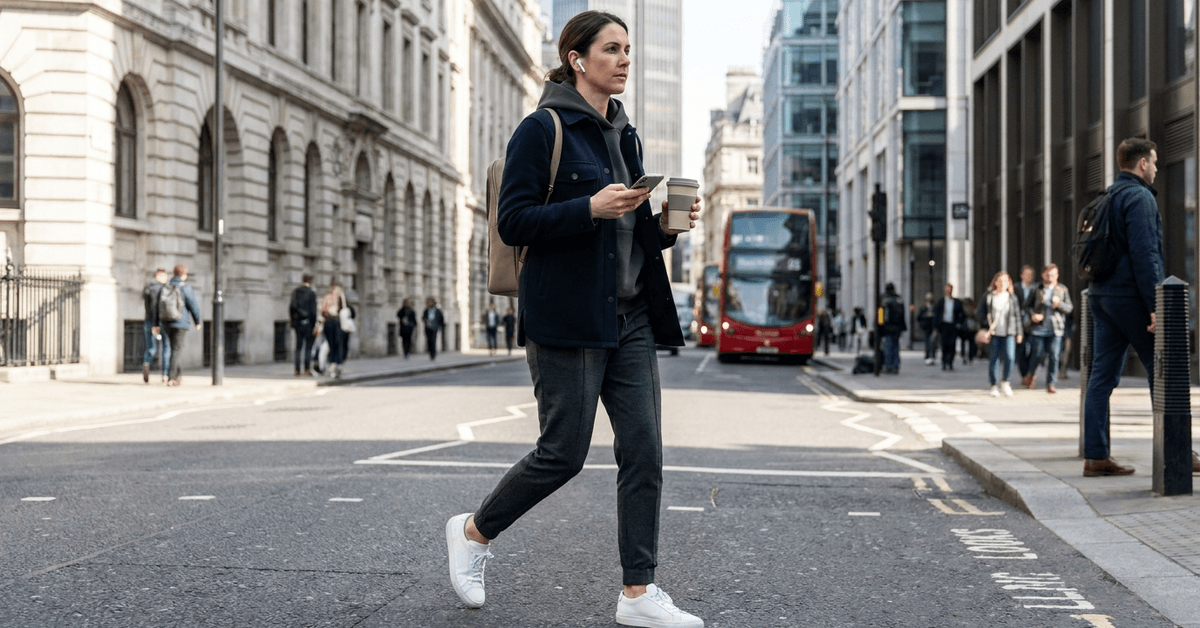
Tailored joggers cost about $60 to $90 from most mid-range brands. A pair of wool dress trousers runs $150 or more. And the joggers get worn three times a week while the trousers sit folded in a suitcase.
That math explains why so many freelancers and remote workers have quietly abandoned traditional business casual. The problem is that most “professional outfit” guides still treat streetwear like a weekend downgrade rather than a weekday default.
This piece is for the person booking co-working desks in different cities every month. The one who needs to look sharp at a client lunch in Berlin and still feel comfortable on a 6 PM flight to Barcelona.
Why the “Capsule Wardrobe” Advice Falls Apart for City Hoppers
The standard packing recommendation for work travel goes something like this: bring navy chinos, a button-down, leather shoes, and a blazer. Capsule wardrobe wisdom says those four items cover any professional setting.
That advice sounds logical until the third day of wearing the same rigid outfit in 28°C heat while walking between meetings.
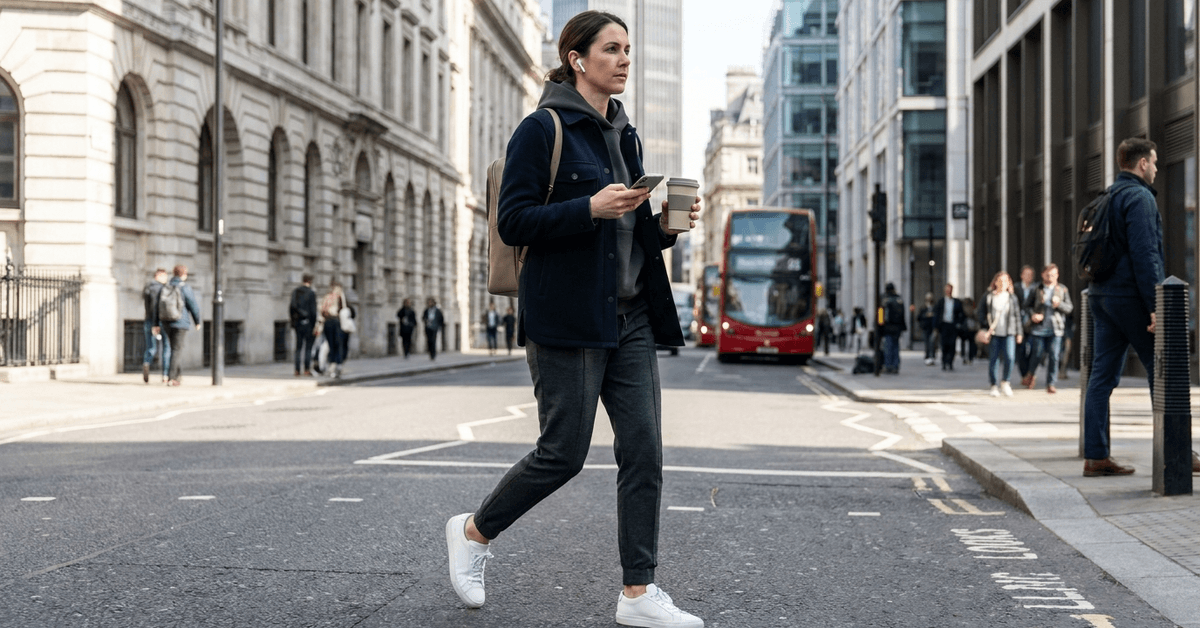
Capsule wardrobes assume a single climate, a single office culture, and a closet at home to rotate from. Freelancers working across London, Amsterdam, and Lisbon in a single month don’t have that luxury.
The Real Dress Code at Creative Agencies and Tech Offices
Walk into a creative agency in Shoreditch or a tech firm in Kreuzberg, and the person in a blazer is almost always the outside client, not the team. The people running the meeting are wearing layered tees, overshirts, and clean trainers.
I’d push back on the idea that chinos and a blazer are the “safe” professional default for city professionals in 2026.
A structured bomber jacket over dark denim reads sharper in coworking spaces from Brooklyn to Copenhagen than a wrinkled Oxford shirt ever will. The reason is simple: modern professional settings, especially in creative and tech industries, judge fit and intentionality over formality.
A well-fitted streetwear layer signals that someone thought about how they look. A rumpled blazer signals that someone packed in a hurry.
Climate Kills Formality Faster Than Dress Codes Do
Layering sits at the center of making streetwear work across cities. Amsterdam mornings start cool, then warm up by noon. Barcelona swings between mild shade and direct heat within a single block.
A cotton overshirt (sometimes called a shacket) handles this better than any suit jacket. It goes on indoors, comes off outdoors, and rolls into a bag without wrinkling.
Pair it with slim black trousers and patterned trainers, and the look works whether the next stop is a gallery meeting or a rooftop lunch.
Five Professional Streetwear Outfits Built for Real City Days
Each of these combinations solves a specific problem that business-casual defaults ignore: temperature shifts, long walking days, and the need to look put-together without ironing anything.
Tailored Joggers and Monochrome Layers
Tailored joggers have slimmer cuts and cleaner hems than gym sweats. Pair black joggers with a white crew-neck tee and a matching jacket in the same tone. Low-profile sneakers and a neutral leather backpack complete the look.
This combination works well for client-facing days in cities like London or Toronto where the office culture already leans casual.
The monochrome palette does heavy lifting: it reads as intentional without requiring a single piece of traditional business clothing.
Minimalist Hoodie, Chinos, and White Sneakers
A grey, navy, or charcoal minimalist hoodie paired with tapered chinos and classic white sneakers hits the sweet spot for open-plan office environments. A simple leather-strap watch adds just enough formality.
The trick is keeping logos invisible or extremely subtle. A hoodie with a two-inch chest logo reads like off-duty. A clean hoodie with no branding reads like a design choice. Paris freelancers figured this out years ago, and the rest of Europe followed.
Overshirt, Slim Trousers, and Statement Trainers
Amsterdam and Copenhagen are layering cities. An overshirt over a tucked plain tee, paired with slim black trousers and statement trainers (think color splashes or geometric patterns), creates enough visual interest to skip accessories entirely.
Add a nylon tote for carrying a laptop and notebook. The overshirt handles indoor-outdoor transitions without the bulk of a coat, and the trainers give the outfit a personality that dress shoes never could.
Structured Bomber, Black Denim, and Subtle Accessories
A structured bomber jacket is one of the most versatile outer layers for unpredictable weather days. Pair it with dark-wash black jeans and keep accessories muted: a metal cuff, a minimalist wallet, or a simple cap.
This outfit translates across New York, Milan, and most Northern European cities without adjustment.
The rule: avoid heavy prints on the bomber. A clean, solid-color bomber over dark denim reads polished. A graphic-heavy bomber over distressed jeans reads like a weekend at a music festival.
Utility Vest, Polo, and Tailored Shorts
Summer in Berlin calls for a different approach. A utility vest worn over a soft cotton polo and neat tailored shorts keeps things breathable but structured. City-appropriate slip-on shoes and a light messenger bag finish it off.
I wouldn’t recommend this combination for a first meeting with a conservative client. But for creative sessions, gallery visits, or co-working days above 30°C, it earns more respect than showing up in sweat-soaked chinos.
Comparing These Outfits by Setting and Season
Picking the right combination depends on where the meeting is and what month it is. A quick breakdown:
| Outfit | Best Season | Best Setting | Formality Level |
|---|---|---|---|
| Tailored Joggers + Monochrome Layers | Fall/Spring | Tech offices, co-working spaces | Medium |
| Minimalist Hoodie + Chinos | Year-round | Open-plan offices, casual client meetings | Medium |
| Overshirt + Statement Trainers | Spring/Fall | Creative agencies, studio visits | Medium-low |
| Structured Bomber + Black Denim | Fall/Winter | Networking events, city dinners | Medium-high |
| Utility Vest + Polo + Shorts | Summer | Co-working days, outdoor meetings | Low-medium |
The bomber-and-denim combination covers the widest range of professional situations, which makes it the strongest single option for a packed suitcase.
Accessories That Travel Well and Look Professional
The right accessories turn a basic streetwear outfit into something that feels considered. But overpacking accessories is a common mistake for frequent travelers.
Stick to a short list of pieces that earn their bag space:
- A minimalist watch in silver or black: pairs with every outfit above and adds structure to casual layers
- A slim messenger bag or small backpack in a neutral shade: carries a laptop without looking like a student bag
- An unbranded cap or beanie: handles bad hair days, sun, and cold ears across multiple climates
- A tech pouch: keeps cables and chargers organized at shared desks without dumping loose cords on the table
Noise-canceling earbuds double as a practical tool and a subtle style piece. A clean pair of white or matte black earbuds looks deliberate, especially in co-working environments.
Making Streetwear Work Trip After Trip
Maintaining these looks over repeated travel weeks takes a bit of planning. Wrinkle-resistant fabrics matter more than brand names when clothes spend three days in a carry-on.
A few habits that keep professional streetwear looking sharp on the road:
- Roll, don’t fold: rolling prevents creases in joggers, chinos, and overshirts better than flat-folding
- Limit each outfit to two colors: cohesion happens automatically when the palette stays tight
- Check care labels before buying: some structured bombers and overshirts require dry cleaning, which defeats the purpose of low-maintenance travel wear
- Carry a travel-size steamer: five minutes of steaming removes wrinkles faster than hunting for an iron at an Airbnb
Apps like Cladwell help build outfit combinations from a limited set of clothes, which is especially useful when packing light for multi-city trips.
And for checking weather conditions before deciding between the hoodie or the overshirt, AccuWeather gives hour-by-hour forecasts for most global cities.
Questions People Ask About Professional Streetwear
A few searches that come up again and again when people try to dress well for work without going full business casual.
- Q: Can I wear sneakers to a professional meeting?
Clean, low-profile sneakers in white or black pass in most creative and tech environments. The test: if the sneakers have visible wear, scuffing, or loud branding, swap them for a cleaner pair. Court-style sneakers tend to read the most professional. - Q: Are joggers appropriate for work in 2026?
Tailored joggers with a slim fit and no visible drawstring sit in professional territory now. The fabric matters more than the label. Cotton-blend joggers with a pressed finish look closer to trousers than to gym clothes. - Q: How do I know if my office is streetwear-friendly?
Look at what the senior people wear on a normal Tuesday, not on a Friday. If they’re in clean sneakers and unstructured jackets, streetwear fits. If suits dominate, save the bomber for after-hours. - Q: What is the biggest mistake people make with professional streetwear?
Wearing too many statement pieces at once. One bold item per outfit works. Two or more starts competing for attention and the whole look falls apart. Keep the rest of the outfit quiet, and let that single piece do the talking. - Q: Do these outfits work outside of Europe?
The principles transfer to most creative and tech hubs globally. Tokyo’s Ginza district, Brooklyn, Toronto’s Queen West, and Melbourne’s Fitzroy all share a similar standard. Conservative industries like banking and law still expect traditional dress, so read the room first.
Conclusion
Streetwear has earned its place in professional wardrobes because modern offices stopped caring about ties and started caring about intention.
The freelancer who shows up in a well-fitted bomber and clean trainers often looks more put-together than the consultant in a creased suit.
Packing fewer pieces that layer well beats packing a separate outfit for every possible scenario. The only rule that still holds across every city and every meeting room: fit matters more than formality.