A 7 AM subway platform in March sits around 8°C. Step onto a heated train, and it jumps past 22°C. That swing happens twice before lunch, and your outfit either handles it or falls apart.
Most spring wardrobe guides treat the season like one temperature. City living breaks that assumption fast, because a single commute can cross three or four microclimates before coffee.
This one is for the daily transit rider, the person walking 10,000 steps between meetings, errands, and crowded platforms. If dressing for spring means stuffing a coat into your lap on the train by 10 AM, the wardrobe plan failed.
Why Your Morning Outfit Falls Apart by Noon
The gap between outdoor spring air and indoor heating creates a specific problem that seasonal fashion advice tends to skip. A morning walk to the station calls for a warm layer. The train is blasting heat. The office runs cool.
An afternoon errand puts you back outside in sun. That is four temperature shifts, and each one demands a different configuration of the same clothes.
The Subway-to-Street Temperature Gap
Cities like New York, London, and Tokyo run transit systems that are notoriously warm, even in March and April. Wear a thick wool coat to beat the morning chill, and within ten minutes underground, it becomes a liability.
The fix is not owning more clothes. The fix is picking pieces that compress, roll, or tie without destroying the look.
This is where the standard “just layer” advice gets thin. Layering only works if each layer can be removed and stored easily while standing in a packed carriage. A bulky peacoat does not fold into a tote. A trench coat trailing off your arm on a crowded bus is annoying for everyone involved.
Microclimates Change the Rules
Outdoor café at noon, air-conditioned museum at 2 PM, windy bridge crossing at 4 PM. Each micro-environment demands something slightly different. The people who dress well through spring in cities are not buying more.
They are choosing pieces with dual functions: a scarf that works as a headwrap on a windy platform, a jacket that packs into its own pocket, shoes that survive puddles and still look clean at dinner.
Editing a City Closet for Spring Without Starting Over
Tearing out your entire winter wardrobe in March is a mistake. Spring arrives unevenly in most cities. Paris and Amsterdam can still throw near-freezing nights into late April. The smart move is a rotation, not a reset.
Store the Bulk, Keep the Midweights
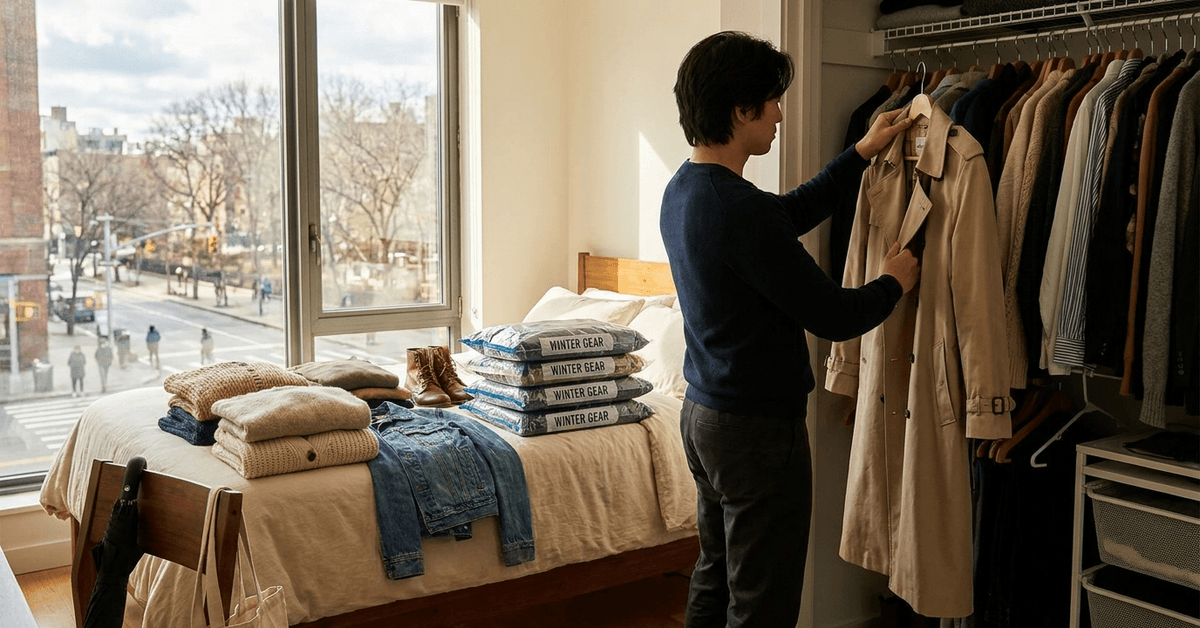
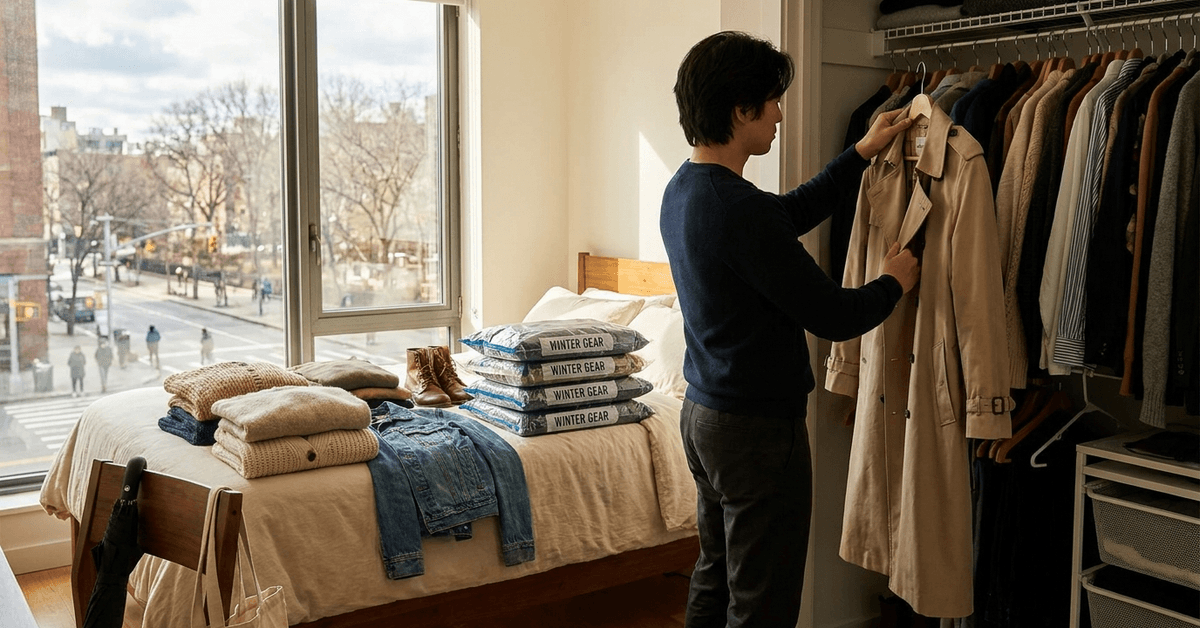
Heavy parkas, insulated boots, and thick wool sweaters can get packed away by late March in most Northern Hemisphere cities.
Vacuum-bagging these pieces saves real space, and that matters in a 40-square-meter apartment. Apps like Sortly let you photograph and tag items before storage, so October doesn’t become a guessing game.
But midweight knits, lighter wool layers, and lined jackets should stay accessible. They fill the gap between “too cold for just a shirt” and “too warm for a winter coat” that defines spring in cities.
Reassess the Basics Under Better Light
A grey crewneck that looked fine under November lamplight might look worn and pilled under April sun. Spring daylight is harsh on tired basics.
Check tees, jeans, and mid-layer sweaters for fading or loose seams. Replacing two or three staples at COS or Uniqlo costs less than one trendy jacket and does more for how your outfits read on the street.
Layering That Survives Crowded Transit
Layering is the word every spring style article uses. Few of them talk about what happens to those layers when you are packed shoulder-to-shoulder on a rush-hour train.
The Overshirt Beats the Trench for Most Commuters
I would pick an overshirt or shacket over a trench coat for daily city commuting after comparing how both perform on transit systems in cities like Toronto and Seoul.
The trench is the default recommendation for spring outerwear. It looks sharp. It photographs well. And for daily commuters, it is one of the least practical options.
A trench does not compress. It does not fold into a bag. It cannot be tied around the waist without looking awkward. And the water resistance on most trenches under $200 is cosmetic at best: fine for a light drizzle, useless in an actual spring downpour.
An overshirt or shacket does all the same warmth work in the 10°C to 18°C range, rolls into a backpack, and weighs about a third as much.
I think the trench coat’s dominance as the go-to spring jacket is mostly aesthetic tradition rather than practicality, especially after checking how brands like Uniqlo price their water-resistant overshirts at roughly half the cost of a comparable trench.
Mixing Textures for Real Temperature Swings
A single-fabric outfit locks you into one comfort zone. A merino wool tee under a cotton sweater under a nylon shell gives three adjustment points.
Pull the shell. Still warm? Tie the sweater. The merino tee handles both the heated office and the breezy walk.
This combination specifically targets the 8°C morning, 20°C afternoon swing that dominates April in cities like Berlin and Chicago. Match textures to temperature tiers, and the same three pieces cover a 12-degree range without a fourth layer.
Spring Footwear for All-Day City Walking
Shoes make or break a spring transition faster than any jacket. The wrong pair means blisters by lunch, wet socks by 3 PM, or a look that clashes with everything above the ankle.
Shoes for Unpredictable Weather
Classic white sneakers are the safe pick, and they work for most mild, dry days. But spring in Seoul, London, and Toronto means rain without warning.
A pair of waterproof leather ankle boots handles the wet crosswalks and puddle-heavy curbs that sneakers cannot. Owning both and checking a weather app before leaving the house is the simplest footwear strategy for spring.
The specific thing to avoid: suede anything. Spring puddles and city grime ruin suede in one outing. It is a fall fabric pretending to be a spring option.
The Sock Swap That Changes Everything
Heavy winter socks under spring shoes create heat, blisters, and sweat. Swapping to lightweight merino or bamboo blend socks fixes all three problems. Merino regulates temperature better than cotton, dries faster when damp, and holds up through 15,000-step city days.
Some commuters keep a spare pair in their work bag. A sock change at midday sounds odd until you have done it. Then it sounds obvious.
Accessories That Solve Spring-Specific City Problems
Accessories in spring are not decorative. They are problem-solvers. The right ones eliminate the small annoyances that stack up during a long day of walking and transit.
A compact umbrella is non-negotiable in cities like Chicago, Lisbon, and London. A full-size umbrella on a crowded train earns dirty looks. Get one that fits inside a backpack side pocket.
Pack the urban spring bag with these:
- Lightweight umbrella that weighs under 300 grams and fits a bag pocket
- SPF stick or small sunscreen tube for midday sun exposure between stops
- Reusable water bottle because heated transit dehydrates faster than walking
- Foldable tote for farmers market finds or impulse purchases that would otherwise go in a plastic bag
A light scarf might seem like a winter holdover, but on breezy spring evenings and exposed train platforms, it fills a gap that no jacket collar matches.
Sunglasses earn daily carry starting in March. Longer daylight means more glare, and UV exposure on city streets reflects off glass buildings and wet pavement. Look for UV400 protection as a baseline.
Mix-and-Match Outfit Formulas for Spring City Days
Building a spring city wardrobe around formulas rather than individual outfits reduces decision fatigue. Three combinations cover most situations:
- Jeans + merino tee + overshirt + white sneakers: gallery day, coffee meeting, weekend errands
- Chinos + cardigan + slip-on loafers: indoor-outdoor events, coworking sessions, casual dinners
- Hoodie under a blazer + dark denim + ankle boots: creative office days, evening plans that start straight from work
Each formula uses pieces already discussed above. The trick is that every item works in at least two of the three combinations. A ten-piece spring capsule wardrobe built on this logic covers five days without repeating a full outfit.
Adapting to Local City Style and Weather Patterns
Street style shifts fast once spring hits. Milan goes bold with color accessories earlier than most cities. Copenhagen leans into soft pastels and oversized silhouettes.
The local cue matters because looking out of place in a new city is its own kind of discomfort.
Micro-forecast apps like AccuWeather or Tomorrow.io offer neighborhood-level predictions.
Checking the forecast for your specific route, not just the city-wide summary, prevents the “dressed for 18°C but it’s 11°C in the shade” problem that catches people off guard in April.
Questions People Ask About Spring Urban Wardrobes
Spring city dressing brings up a lot of practical questions that generic fashion advice tends to skip. These come up most often.
- Q: When should I fully switch from winter to spring clothes?
There is no single date. Track your city’s nighttime lows for a consistent streak above 8°C to 10°C before storing heavy coats. Most Northern Hemisphere cities reach that point somewhere between late March and mid-April, but freak cold snaps can push it later. - Q: Are trench coats worth it for spring commuting?
They look great in photos but are impractical for crowded transit. A water-resistant shacket or packable jacket does the same insulation job and fits inside a bag when removed. Trenches work best for car commuters or short outdoor walks. - Q: How many layers do I need for a spring city day?
Three layers handle most conditions: a breathable base (merino tee), a mid-layer (cotton sweater or hoodie), and a removable outer layer (overshirt or light jacket). Going beyond three usually means one layer sits unused all day. - Q: Do I need different shoes for spring vs. fall in the city?
Same rain risks, similar temperatures, but spring brings more standing water from snowmelt and sudden showers. Waterproof ankle boots pull double duty across both seasons. Avoid suede until consistent dry weather arrives. - Q: What is the easiest upgrade for a spring city wardrobe?
Swap socks and base layers first. Lightweight merino socks and breathable tees cost under $30 combined and change how every outfit feels. Outer layers get all the attention, but the pieces closest to skin control comfort.
Conclusion
Spring city dressing rewards precision over volume, and the commuters who get it right own fewer pieces, not more. A ten-item capsule built around layering formulas handles more weather scenarios than a full closet of single-purpose garments.
The real test of a spring wardrobe is not how it looks leaving the house at 8 AM. The test is whether it still works at 8 PM after a full day across four temperature zones