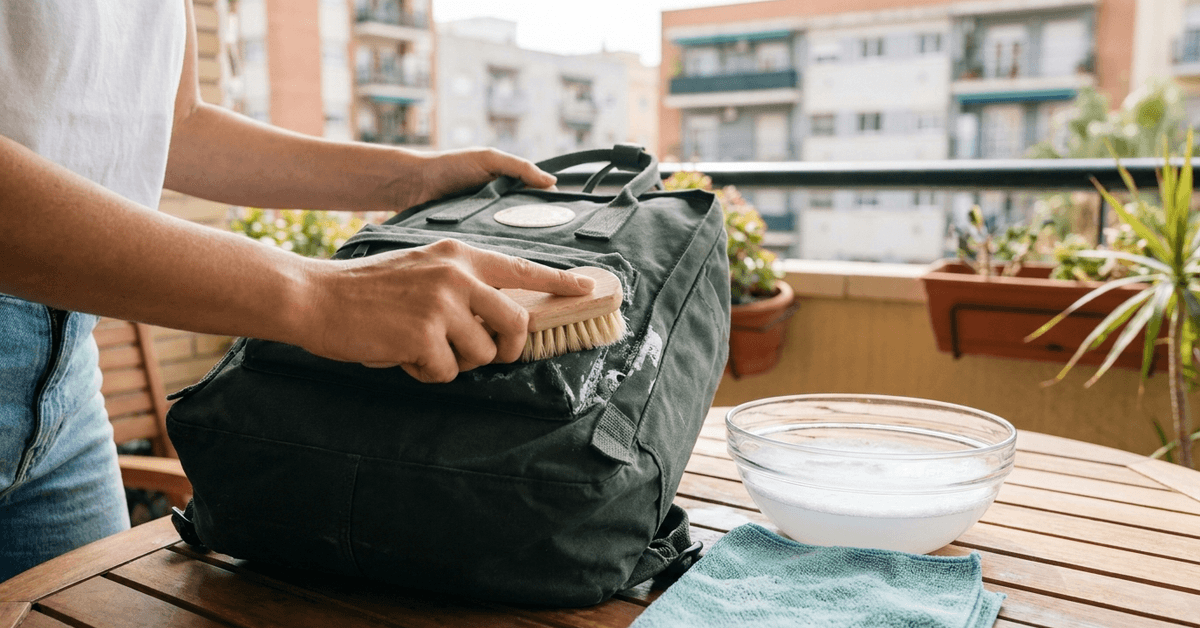
A canvas backpack that survived six months of subway floors, coffee spills, and rain-soaked commutes looks rough. The instinct is to throw it in the washing machine and hope for the best.
That machine cycle is the single fastest way to destroy a canvas bag. The dense weave loses its shape when fully soaked, zippers corrode, and colors bleed into each other.
This article is for the city commuter who carries one good canvas backpack every day and needs it to last without looking like it was dragged through a gutter.
Why Canvas Bags Can’t Handle the Same Cleaning as Nylon or Polyester
Canvas and synthetic backpack fabrics sit on opposite ends of the water tolerance spectrum. Nylon dries fast, holds its shape when wet, and shrugs off a machine cycle. Canvas does none of those things.
The dense cotton weave absorbs water and holds it. That absorbed moisture relaxes the fibers, and a bag that went in stiff and structured comes out soft and saggy.
Worse, once canvas fibers stretch from over-soaking, they rarely return to their original tension. The damage is permanent.
Color Bleeding and Hardware Corrosion
Two other problems hit during machine washing. Dyed canvas can bleed when agitated in warm water, leaving the bag patchy and faded.
Metal hardware like zippers, buckles, and D-rings trap moisture in the drum and begin to oxidize. Rust stains on canvas are nearly impossible to remove.
I’d argue that hand washing is always the right call for canvas, even when forums and product tags say “machine wash cold, gentle cycle.” A gentle cycle still means full submersion and mechanical agitation. Canvas doesn’t need either.
The Real Problem: Urban Grime Layers
City backpacks collect a specific type of dirt that rural or suburban bags don’t. Subway dust, exhaust residue, oil splatter from street food stalls, and coffee drips all layer on top of each other over weeks.
This layered grime bonds with canvas fibers more stubbornly than simple mud or sand.
A quick wipe won’t break through those layers. But a full soak is overkill for 90% of the stains city commuters deal with. The sweet spot is targeted spot cleaning backed by regular dry brushing.
The Cleaning Kit That Fits in a Studio Apartment Drawer
Most canvas care guides list supplies like they’re outfitting a workshop. The reality for someone in a 400-square-foot apartment is different. Everything needed fits in a single ziplock bag.
A quick gear list for small-space living:
- Soft-bristled brush (a shoe brush from Muji or Miniso works perfectly and costs under $5)
- Castile soap or mild dish liquid, a few drops per cleaning session
- Microfiber cloth or clean sponge
- Cold water in a sink or small basin
- Baking soda for odor and stain paste
- Old towel for blotting and reshaping during drying
Skip the specialty canvas cleaners unless you’ve already spot-tested them on a hidden seam. Some of those products contain solvents that strip wax coatings on treated canvas.
Dry Brushing: The Step That Replaces Most Full Washes
I think the biggest mistake canvas backpack owners make is jumping straight to soap and water. Regular dry brushing handles about 80% of the maintenance a city bag needs.
Grab the soft-bristled brush and sweep dust, dried mud, and surface grit off the entire bag. Focus on seams, bottom creases, and the area around zipper tracks where particles collect. Slow circular motions work better than back-and-forth scrubbing.
How Often to Brush
A weekly brushing session takes about two minutes and prevents grime from bonding with the canvas fibers. Once that bond forms, soap and scrubbing become the only options. Brushing before the bond sets is cheaper and faster.
Spot Cleaning Specific Stains
Mix a few drops of Castile soap into cold water. Dampen the microfiber cloth (not dripping, just damp) and dab at the stain. Light circular motions. No heavy pressure, no rubbing.
Cold water matters here. Warm or hot water can set protein-based stains like coffee and sweat into the fibers permanently. Cold water keeps the stain loose enough to lift.
For tougher urban stains, the approach changes depending on the substance:
- Coffee or tea: Blot immediately with a damp cloth, then apply a paste of baking soda and cold water. Let it sit 15 minutes, brush off the dried paste, and wipe clean.
- Ink or marker: A tiny drop of rubbing alcohol on a cotton swab, dabbed (never rubbed) onto the mark. Always spot-test rubbing alcohol on a hidden seam first, because it can strip dye from some canvas colors.
- Grease or oil from food stalls: Sprinkle cornstarch or baby powder on the stain, let it absorb for 10 minutes, brush off, then spot wipe with soapy cold water.
Hand Washing a Canvas Backpack the Right Way
Sometimes spot cleaning won’t cut it. After a rainy season, a camping trip, or a semester of daily subway commuting, the whole bag needs a wash. Hand washing is the safest method.
Empty every compartment. Old receipts, transit cards, loose change, and crumbs hide in pockets that haven’t been opened in months. Shake the bag out over a trash can or bathtub.
The Partial Submersion Method
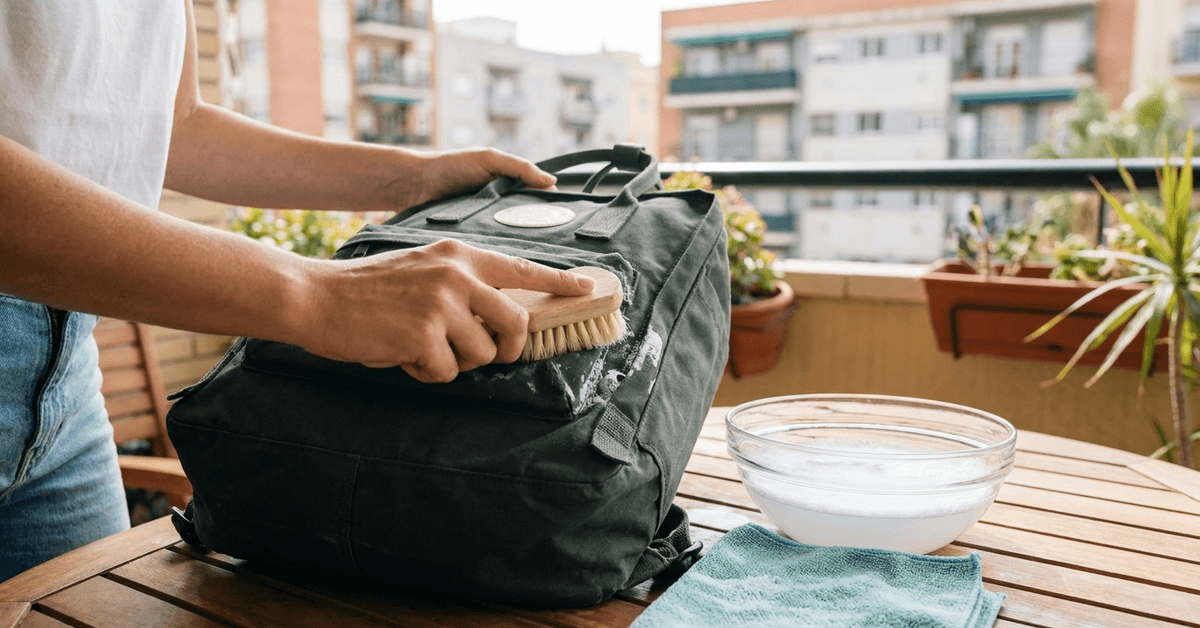
Fill a basin or bathtub with cold water and add a small amount of Castile soap. Submerge one section of the bag at a time rather than dunking the whole thing.
Use a sponge to gently sweep soapy water across the fabric, then blot excess moisture immediately with a towel.
| Step | Action | Time |
|---|---|---|
| Prep | Empty all pockets, open all zippers, undo straps | 3 min |
| Brush | Dry brush entire surface, focus on seams and bottom | 2 min |
| Wash | Partial submersion with cold soapy water, one section at a time | 10 min |
| Rinse | Wipe with clean damp cloth to remove soap residue | 5 min |
| Dry | Stuff with towels, stand upright in shaded ventilated spot | 12-24 hrs |
The partial submersion method prevents excess water from relaxing canvas fibers across the entire bag at once.
Take extra care around leather trim, labels, and metal hardware. Leather absorbs soap differently than canvas and can stiffen or discolor. Metal parts should be wiped dry immediately after contact with water.
Rinsing Without Watermarks
Dampen a clean cloth with plain cold water and wipe away soapy residue. Pat evenly across the surface rather than letting wet patches dry on their own. Uneven drying is what creates those light rings and water stains on canvas.
Drying Is Where Most People Destroy Their Canvas Bags
This is the step that gets the least attention in cleaning guides, and it causes the most damage. How a canvas backpack dries determines whether it keeps its shape or goes permanently limp.
Stuff the bag loosely with dry towels or old t-shirts immediately after washing. This internal support holds the bag’s structure while the fibers contract during drying.
Stand the bag upright or lay it flat in a shaded spot with airflow. An open windowsill in an apartment works well. Rotate the bag every few hours so all sides dry evenly.
Two things to avoid completely:
- Direct sunlight: UV rays fade canvas dye unevenly and can overheat metal zippers, warping their tracks
- Dryers or radiators: Concentrated heat shrinks canvas fibers and can melt adhesive on seam tape
High-humidity cities like London, Toronto, or Houston add a complication. Drying can take 24 hours or longer in humid conditions. Check for dampness in interior pockets and along bottom seams before using the bag again. Mildew starts growing on damp canvas within 48 hours.
When to Hand Off to a Professional Cleaner
Some stains and odors won’t respond to home methods. Mildew that has already set into the fibers, deep oil penetration, or persistent smoke odor may need professional treatment.
Look for dry cleaners that specifically list canvas or specialty fabrics on their service menu. Standard dry cleaners that only handle suits and dress shirts may use chemicals that are too harsh for canvas weave.
The American Cleaning Institute has a directory of specialty fabric care providers searchable by location.
A fabric protector spray designed for canvas can extend the time between deep cleans. Spray it on a clean, dry bag and let it cure according to the label. Test any new spray on an inside seam first. Nikwax makes a cotton-proof waterproofing treatment that works on most canvas bags without altering the texture.
Preventing Damage Between Cleanings
Regular maintenance prevents the need for aggressive cleaning later. A few quick habits make a noticeable difference over months of daily city use.
- Never set the bag on damp ground. Train station floors, cafe patios, and wet sidewalks introduce moisture that wicks into the fabric and starts mildew growth.
- Dry the bag promptly after rain exposure. Even a short commute in wet weather can leave hidden moisture in interior pockets. Open all zippers and let air circulate when you get home.
- Store the bag stuffed. A collapsed canvas bag sitting in a closet develops creases that become permanent fold lines over time. Stuff it with a towel or pillowcase to hold its shape.
Questions People Ask About Cleaning Canvas Backpacks
A few common questions come up around canvas backpack care that the steps above don’t fully cover.
- Q: Can I put a canvas backpack in the washing machine on a delicate cycle?
A delicate cycle still fully submerges the bag and agitates it mechanically. Canvas fibers stretch when saturated, and the spinning can warp zipper tracks. Hand washing gives the same level of clean with far less structural risk. - Q: How do I get mildew smell out of a canvas backpack?
A paste of baking soda and water applied to affected areas, left for 30 minutes, then brushed off and wiped clean handles mild mildew. For deep mildew that has discolored the fabric, a professional cleaner with canvas experience is the safer bet. - Q: Does canvas need to be waterproofed after cleaning?
Cleaning strips any existing water-resistant coating. A canvas-safe waterproofing spray applied after the bag is fully dry restores some protection. Nikwax Cotton Proof is one option that doesn’t change the fabric’s feel or breathability. - Q: How often should I deep clean my canvas backpack?
For daily city commuters, a full hand wash every two to three months is enough if dry brushing and spot cleaning happen regularly. Over-washing weakens canvas fibers faster than normal wear does. - Q: Can I use bleach on white or light-colored canvas?
Bleach degrades cotton fibers and weakens the weave structure. Oxygen-based cleaners like OxiClean are gentler alternatives for whitening, but even those should be spot-tested on a hidden area first.
Conclusion
A clean canvas backpack lasts years longer than one that gets neglected or machine-washed into submission. Dry brushing once a week takes two minutes and prevents most stains from setting.
The partial submersion hand wash method protects the bag’s structure when a full cleaning becomes unavoidable. Treat the drying step with as much care as the washing, because that is where shape loss happens.