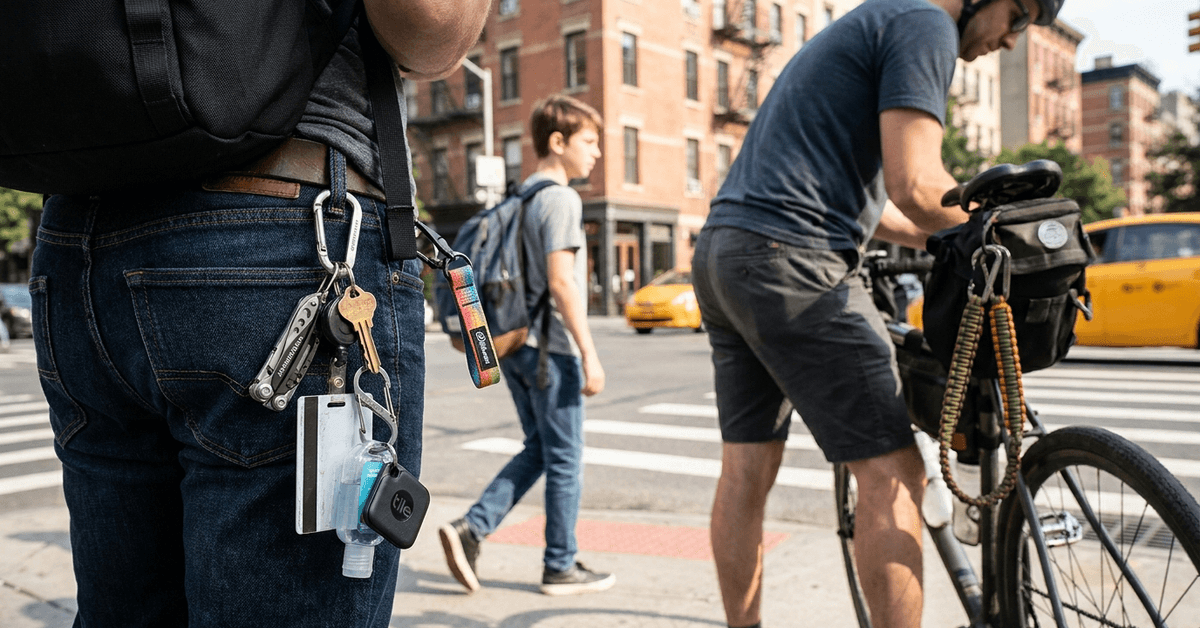
A chrome carabiner looks sharp on day one. After seven days of subway commutes, it looks like it lost a fight with a parking garage. That single material detail separates the urban clips that last from the ones collecting dust in a junk drawer by month two.
Most keychain reviews treat this topic like a fashion segment. They skip the part where a fumbled clip at a turnstile costs you a train and ten minutes of your morning. The friction is real, and it’s physical.
This one is for the daily commuter: bus, metro, bike lock, apartment fob, office badge. If that sounds like your morning routine, the right clip setup saves cumulative hours across a year. The wrong one creates a daily annoyance you stop noticing until it breaks.
Why the Carabiner Deserves Its Reputation
Every “best keychain” list leads with the carabiner. That recommendation is correct. But the reason most lists give (versatility, style) misses the part that matters during a 7:45 a.m. platform sprint.
Gate Direction Changes Everything
The Nite Ize S-Biner shows up in almost every recommendation for good reason: the dual-gate design means items clip to both ends independently.
One side holds apartment keys. The other holds a transit card or office fob. Switching between them takes one hand, not two.
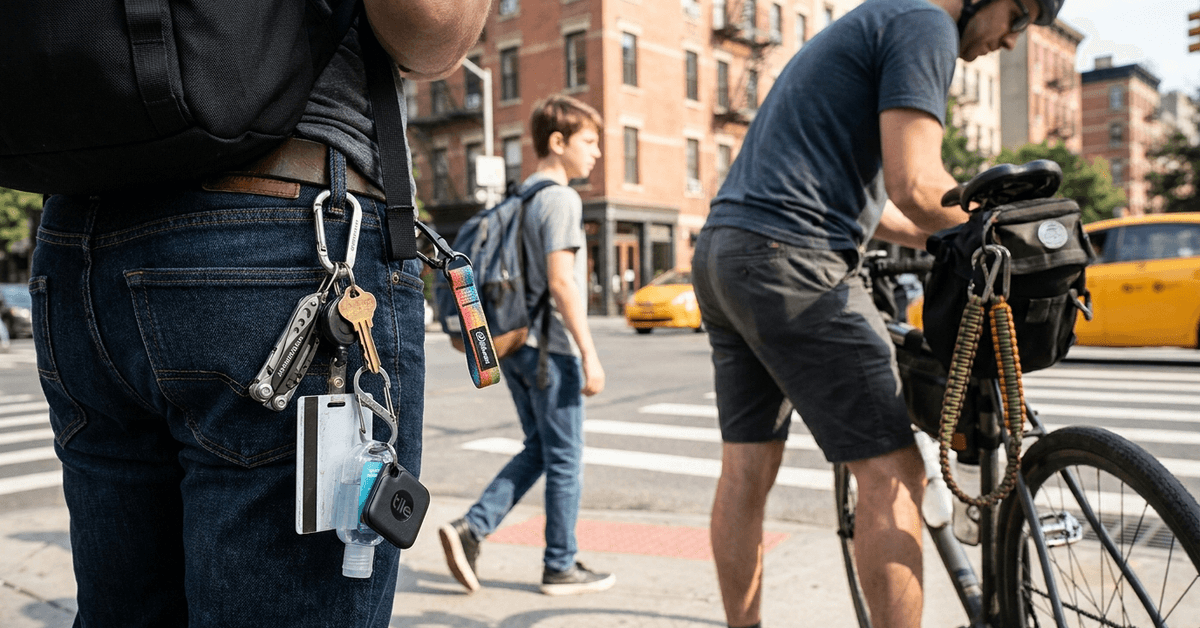
A detail I never see covered anywhere: the direction a carabiner gate opens determines whether your keys stay put when you bend over, crouch, or sit on a crowded bus.
A gate that swings downward under gravity will release items at the worst possible time. A spring-loaded gate that opens inward (toward your body when clipped to a belt loop) keeps everything locked even during movement.
Spend thirty seconds testing gate direction in a store. It’s the cheapest insurance against losing a key on a platform.
Locking Carabiners for High-Traffic Routes
Standard carabiners work fine in low-stress situations. For anyone regularly pushing through rush-hour crowds at stations like Shibuya, Penn Station, or Berlin Hauptbahnhof, a locking carabiner adds a manual twist-to-open step.
That extra second to unlock the gate is the difference between keeping and losing a set of keys in a packed train car.
Materials That Survive a Real City Commute
Picking the wrong material is the fastest way to replace a clip every few months. The gap between what looks good online and what holds up after daily contact with bag zippers, pocket coins, and rain is wider than most product descriptions suggest.
Stainless Steel vs. Plastic vs. Fabric: an Honest Comparison
| Material | Weight | Durability | Best Use Case |
|---|---|---|---|
| Stainless steel | Heavier | Survives years of daily carry | Transit keys, heavy fobs, multi-item setups |
| Plastic | Lightest | Cracks under repeated stress | Temporary badge holders, light single-key use |
| Fabric/nylon | Light | Frays at clip points over months | Lightweight lanyard setups, festival wristbands |
Steel wins for anyone carrying more than two items on a single clip. Plastic has a place for ultralight, temporary setups.
But I would skip fabric clips for anything heavier than a single ID badge: the stitching at the attachment point wears faster than the clip itself, and failure usually happens without warning.
Coatings and Finishes That Hide Daily Abuse
Matte and powder-coated finishes resist visible scratching far better than polished chrome or mirror-finish steel.
Chrome picks up micro-scratches within days of regular pocket or bag contact. Powder coating adds a textured layer that absorbs minor impacts without showing marks.
For anyone who cares about appearance after a few weeks of use, matte black or gunmetal powder coat outlasts every shiny alternative. The tradeoff is a slightly rougher texture, which some people prefer for grip anyway.
Multitool Keychains: the Recommendation I Disagree With
The Leatherman Style CS and similar multitool keychains appear on every “best EDC” list for city dwellers. I think recommending a knife-equipped multitool for daily urban carry in 2026 is bad advice for a simple reason: most major cities ban or restrict carrying bladed tools on public transit and in public spaces.
London’s laws cap legal carry at a non-locking blade under 3 inches, but transit security and police regularly confiscate even compliant knives. Tokyo has a near-total ban on carrying blades in public without a stated purpose.
New York City’s gravity knife enforcement has loosened, but MTA rules still prohibit visible blades. A $30 multitool confiscated at a random bag check is $30 wasted, plus the hassle of replacing every key on the ring they took with it.
The bottle opener and screwdriver on these tools get used maybe twice a month. The blade creates legal risk every single day. A bladeless multitool (several exist from Leatherman and Gerber) keeps the useful bits without the liability. Or just carry a standalone carabiner and skip the multitool entirely.
That said, multitool keychains can work for people in cities without blade restrictions, or for those who drive rather than take public transit. The advice to default to a bladed multitool for urban commuters specifically is the part that breaks down.
Belt Loop Clips vs. Bag Attachments
The clip location matters as much as the clip itself. Two people can own the same carabiner and have completely different experiences based on where they attach it.
Belt Loop Carry for Night Transit
Clipping to a belt loop keeps keys against the body. At night, in poorly lit stations or crowded bars, this position makes theft or accidental loss much harder.
The tradeoff: belt-loop clips can dig into the hip when sitting, and the jangling sound is obvious in quiet spaces.
A low-profile split ring paired with a quick-release hook solves both problems. The split ring sits flat against the belt, and the quick-release lets you detach everything in one motion when sitting down. This setup works especially well in nightlife settings where pockets are already full.
Bag Clip-Ons and the Tangle Problem
Clipping a loaded carabiner to the outside of a backpack or tote signals a relaxed, visible style. But stacking more than two or three items on an external bag clip creates tangling. Keys wrap around straps. Charms catch on zippers.
The fix is simple: limit external bag clips to two items maximum per carabiner. Everything else goes inside the bag on a separate ring. This keeps the look clean and prevents the rattling keychain sound that announces your arrival from half a block away.
Putting Together a Street-Ready Key Setup
Building a daily carry setup comes down to matching the clip to the commute. A few decisions made once save daily irritation for years.
The components that matter most for a city commuter:
- One locking carabiner (steel, matte finish) as the primary clip for apartment and office keys
- One retractable badge reel with a reinforced cord for transit cards or office badges that need frequent swiping
- One Bluetooth tracker like Tile or Apple AirTag attached to the primary key ring for loss recovery in crowded spaces
- A bladeless mini-tool if screwdriver or bottle opener access matters on the go
That four-piece setup covers 95% of daily urban carry needs. Adding more creates bulk and noise without adding function.
Tracking and Digital Backup
The KeySmart app lets users log every key on a ring with photos and notes, so replacing a lost set doesn’t mean guessing which key opened which lock. Pairing a Bluetooth tracker with a key ring is standard practice now, but the photo-inventory step is the part most people skip.
A two-minute photo session after building the setup saves hours of locksmith calls if the ring disappears.
Cleaning and Inspection Habits
Rubbing alcohol on a cotton pad removes grime and sanitizes metal clips after public transit contact.
Monthly spring checks on carabiners catch weakened gates before they fail. A gate that doesn’t snap shut firmly needs replacement, not bending back into shape.
Paracord lanyards need attention too. The cord material absorbs sweat and rain, and a fraying cord breaks under load without warning.
Inspect the weave at attachment points every few weeks, especially on setups clipped to messenger bags or denim loops that see daily friction.
How Keychains Show Up in City Subcultures
Clips and chains carry social signals in specific communities. Messenger cyclists in Amsterdam and skateboarders in Los Angeles favor heavy-duty steel carabiners with local shop logos or sponsor tags attached.
The clip is functional first (securing a U-lock key during a ride) and identity second.
Tokyo’s nightlife scene uses LED-lit keychains and UV-reactive clip-ons as both safety signals and crowd identifiers.
Festival crowds in Berlin and Barcelona lean toward hand-woven paracord lanyards and spray-painted clips that double as wearable art from local makers. The DIY angle gives these pieces a texture that mass-produced clips can’t replicate.
Questions People Ask About Urban Keychains and Utility Clips
These come up constantly when commuters start thinking about their daily carry setup.
- Q: Are carabiner keychains allowed on airplanes?
Non-locking, non-tool carabiners generally pass TSA and airport security without issue. Anything with a blade or sharp edge gets confiscated. Check the airline’s prohibited items list for the specific country before packing a multitool keychain in carry-on luggage. - Q: How many keys can a standard carabiner hold before it becomes impractical?
Most mid-size carabiners handle four to five keys comfortably. Past that number, the ring gets heavy enough to pull on belt loops and bulky enough to create pocket discomfort. Splitting into two smaller setups works better than overloading one. - Q: Do retractable badge reels break easily?
Cheap ones do. The internal spring wears out after a few months of constant pulling. Reels with reinforced nylon cords and metal spring housings last significantly longer. Spending a few extra dollars on a name-brand reel pays for itself within the first year. - Q: Can I attach a Bluetooth tracker to any keychain?
Tile, Apple AirTag, and Samsung SmartTag all come with attachment loops or cases designed for key rings. The tracker adds slight bulk, but the tradeoff for location tracking in a busy city is hard to argue against. Battery life runs about a year on most models before needing replacement. - Q: What is the best keychain material for rainy climates?
Stainless steel and powder-coated aluminum resist corrosion far better than uncoated carbon steel or chrome. Cities like London, Seattle, and Amsterdam demand water-resistant setups. Fabric lanyards absorb moisture and develop odor over time, so they need more frequent washing or replacement.
Conclusion
The right urban keychain setup is less about style and more about removing small daily frustrations. Commuters who match their clip material, gate style, and carry position to their actual routine stop losing time at turnstiles.
A ten-dollar locking carabiner and a five-dollar retractable reel solve problems that expensive multitools create. Start with function, and the street style part handles itself.