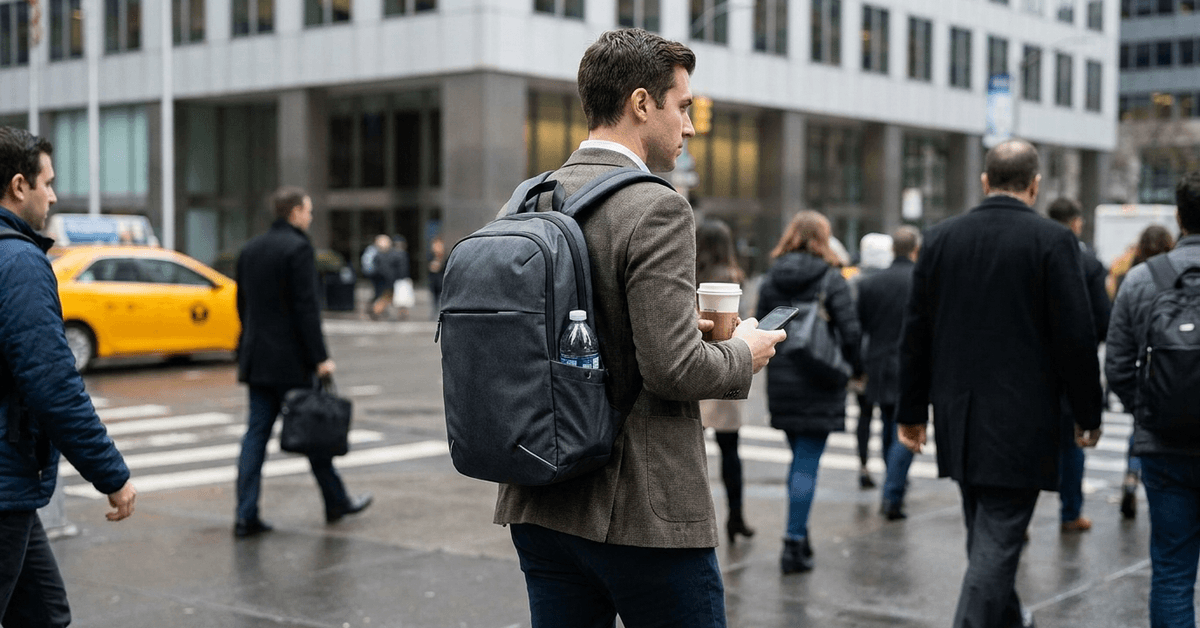
A 20-liter backpack that weighs 1.4 kilograms empty already eats 7% of a comfortable daily carry limit before a single item goes inside. Most shoppers never check this number.
The default buying advice skips this entirely. Reviews rank bags by capacity, pocket count, and fabric type. None of that tells a transit commuter how the bag performs at 7:45 a.m. on a packed platform.
This piece is for the professional who rides a metro, bus, or tram to work and carries a laptop plus the usual daily extras. If the commute involves standing, squeezing through doors, and switching shoulders every few stops, the standard backpack advice falls short.
Empty Bag Weight Changes a Commute More Than Capacity
The spec most backpack reviews gloss over is the weight of the bag itself. Two packs can both hold 22 liters, but if one weighs 800 grams and the other tips 1.5 kilograms, the heavier bag starts every morning at a disadvantage.
Load a laptop (roughly 1.5 kg), a water bottle (500 g), a charger, a lunch container, and maybe a light jacket. That collection lands around 3.5 kilograms before the bag’s own weight enters the picture.
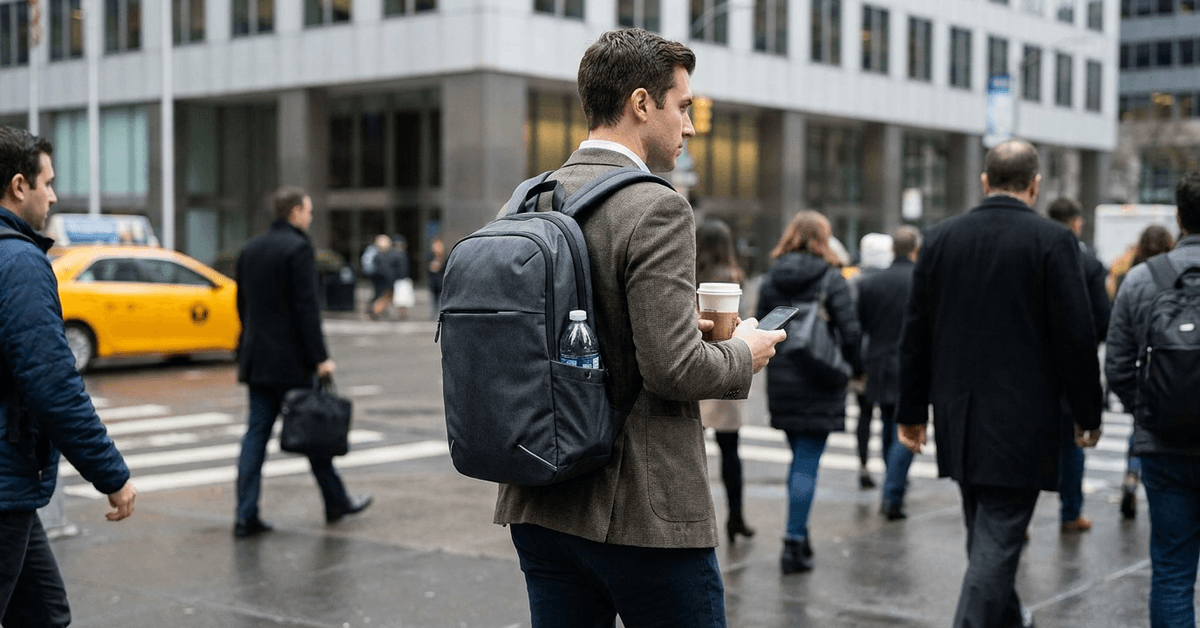
Add a 1.4 kg pack and the total passes 4.5 kg fast. Swap to an 800 g shell and the difference is felt across every block, staircase, and transfer.
Why Gram Counting Isn’t Just for Hikers
I’d take an 800-gram Bellroy Transit Workpack over a heavier competitor with fancier fabric every time, because the weight gap compounds across a 45-minute door-to-door commute. Hikers obsess over pack weight.
City commuters, who carry their bags five days a week across pavement and stairs, should too.
Shoulder fatigue at the end of a workday traces back to this one overlooked number. If a brand’s product page buries the empty weight or skips it altogether, that tells a careful shopper something about priorities.
Compartment Speed Beats Water Resistance on a Train
A popular piece of advice says water resistance should top the priority list. I disagree.
My take is that compartment access speed matters more for a daily transit rider than rain protection, because a commuter opens a bag 6 to 10 times per day but encounters rain maybe twice a month.
Think about a real morning. Pull out a transit card at the gate. Stash headphones at the platform. Grab a laptop at the office. Retrieve a phone charger after lunch. Each of those moments demands a specific pocket at a specific depth.
A badly organized bag with a DWR-coated shell still fails the rider who has to unzip, dig, and rezip while standing on a moving train.
Top-Load vs. Clamshell: The Transit Test
Top-loading packs make sense for hiking and travel. For city commuting, a clamshell opening (where the main compartment unzips flat like a suitcase) lets a rider lay the bag on a lap, access any item without unpacking others, and close it in one motion.
AER’s City Pack uses this layout. So does the Bellroy Transit. Brands that still default to top-loading designs force users into an awkward dig that blocks the aisle and slows boarding.
Front-Access Pockets and the 3-Second Rule
A good front-access pocket should let a commuter grab headphones, a metro card, or a phone in under three seconds without removing the bag from one shoulder. Test this at the store.
If the zipper sits too high or the pocket folds inward, the design fails the most common real-world use case.
Materials That Survive City Grime, Not Just Rain
Fabric choice matters, but the reason is less about downpours and more about daily contact with subway seats, café floors, and sidewalk edges. These surfaces leave marks on lighter fabrics fast.
Cordura nylon (especially 500D or higher) handles abrasion and resists scuffs better than recycled polyester blends or waxed canvas.
Recycled polyester has a sustainability appeal, but it pills and wears at stress points faster under daily friction. Canvas looks great for the first two months and then starts fraying at the bottom corners.
Zippers and Stitching: Where Cheap Bags Fail First
YKK zippers are the industry standard for a reason. Off-brand zippers save manufacturers a few cents per unit and cost the buyer a dead bag in 8 to 14 months.
Double-stitched seams at strap attachment points are the second thing to inspect. These joints absorb the most stress during daily carry.
A bag can have the best fabric on the market and still fall apart at a weak zipper or a single-stitched strap base.
| Feature | Bellroy Transit Workpack | AER City Pack 2 | Timbuk2 Authority Laptop Pack |
|---|---|---|---|
| Empty Weight | ~800 g | ~1,050 g | ~1,200 g |
| Capacity | 20 L | 24 L | 28 L |
| Opening Style | Clamshell | Clamshell | Top-load hybrid |
| Main Fabric | Recycled nylon | Cordura ballistic | Recycled polyester |
| Laptop Sleeve | Up to 16″ | Up to 16″ | Up to 15″ |
| Lockable Zippers | No | No | No |
The AER City Pack 2 hits a sweet spot between weight and capacity for most transit commuters who carry a full tech setup plus daily items.
Tech Pockets and RFID Shielding: Useful or Overkill?
Laptops and tablets need padded sleeves with a secure closure inside the bag. A floating laptop (one that sits on the bottom of the compartment instead of being suspended above it) takes shock damage every time the bag hits the ground.
Look for a sleeve that keeps the device raised at least a centimeter from the base.
Built-in USB pass-throughs sound appealing on paper. The reality: most commuters already carry a portable battery and a short cable, making the built-in port redundant. It adds a failure point and complicates cleaning.
RFID-Blocking Pockets: Worth It in Certain Cities
RFID-shielded pockets have real utility for commuters in cities like Barcelona, Rome, and London where contactless card skimming is a documented risk.
For commuters in lower-risk cities, it’s a nice extra but shouldn’t drive a purchase decision. A $5 RFID-blocking card sleeve does the same job inside any bag.
The practical features to prioritize for tech carry:
- Suspended laptop sleeve that prevents base impact on drops
- Cable pass-through between main and front compartments (more useful than external USB ports)
- Padded tablet pocket separate from the laptop sleeve to prevent screen-to-screen contact
- Quick-access phone stash on the shoulder strap or top panel for navigation use during transit
Testing a Backpack at the Store (Or Returning a Bad Online Buy)
Reading specs online misses half the picture. A bag that scores well on paper can fail the shoulder test, the zipper test, or the squeeze-through-a-turnstile test within five minutes of real handling.
Load a display bag with your actual daily carry: laptop, water bottle, charger, a book or planner, and a lunch container. Then try these checks:
- Switch shoulders repeatedly. City riders shift straps constantly. Padding that bunches or slides during a shoulder switch signals poor strap geometry.
- Zip every pocket under load. Zippers that glide when the bag is empty but catch under tension will fail within months.
- Hold the bag by the top handle only for 30 seconds. If the handle digs into a palm or the bag swings forward, the grab handle design is weak.
- Slide the bag under a chair or desk. If the pack doesn’t sit flat or topples sideways, it will be annoying in meetings and cafés.
Brands like Bellroy and Timbuk2 offer return windows long enough to test a bag across a full work week. That trial period is worth more than any product review.
The Color and Style Decision Nobody Overthinks Enough
Neutral tones like black, dark gray, and navy hide transit grime and scuff marks. A lighter bag shows every subway seat stain and coffee drip within a few weeks. This is a practical concern, not a style preference.
Subtle reflective accents matter for commuters who walk or cycle after dark. A thin reflective strip on the back panel or strap is enough to catch headlights without looking like safety equipment. Bags that skip this entirely miss a real use case for anyone who commutes during winter months.
Flashy logos and bright colors also draw attention in crowded transit, and not the good kind. A plain, unbranded exterior keeps a bag low-profile in cities where pickpocketing is a real concern.
Questions People Ask About Urban Commuter Backpacks
These come up constantly, and the answers depend more on commute style than any brand loyalty.
- Q: Is 20 liters enough for a daily commuter backpack? For a laptop, lunch, water bottle, and a few daily items, 20 liters works fine. Problems start when gym gear or groceries enter the mix. A 24-liter pack covers those edge cases without adding bulk.
- Q: Do backpack USB charging ports drain a battery pack faster? The port itself doesn’t drain anything. It’s just a pass-through cable. But routing a cable through the bag’s fabric channel can create kinks that slow charging speeds over time. A short cable in a side pocket works better.
- Q: How often should a commuter backpack be cleaned? A quick wipe-down with a damp cloth once a week keeps city grime from setting into the fabric. A deeper wash once a season (check the manufacturer’s tag first) prevents odor buildup, especially in warmer months.
- Q: Are anti-theft backpacks worth the price premium? Hidden zippers and lockable compartments add peace of mind in busy metros. But anti-theft branding on the outside sometimes defeats the purpose. A low-profile bag with smart pocket placement does the same job without advertising its security features.
- Q: Can a commuter backpack double as a weekend travel bag? A 22 to 25 liter clamshell pack fits as a personal item on most airlines. For anything beyond a two-day trip, the capacity limit shows fast. Separate bags for commuting and travel tend to last longer than one bag forced to do both.
Conclusion
Picking an urban backpack comes down to three things most reviews skip: empty weight, compartment speed, and fabric grit. The fanciest feature list means nothing if the bag fights a rider during rush hour.
Test it loaded, test it on transit, and test it across a full work week before deciding. That week of real use will tell more than any spec sheet or brand reputation ever could.