A single pump of hand sanitizer after the morning commute can do more damage to a silicone watch band than a week of sweat. Alcohol-based sanitizers break down silicone polymers over time, and most city commuters apply sanitizer several times a day without thinking twice about what sits on their wrist.
The usual advice treats cleaning a silicone band like washing a dish. Soap, water, scrub, done. But the bigger issue for daily wearers is what happens between cleanings: the lotions, the sanitizers, the sunscreen layered on in 30-second intervals between subway stops.
This guide is for the person who wears an Apple Watch or Garmin band 14 hours a day, rides transit, hits a gym or park run, and wonders why the band looks yellowed and sticky after three months.
The Stuff That Kills Silicone Bands Faster Than Dirt
Most guides list “sweat and dust” as the enemies of a silicone band. That list is incomplete.
The real accelerators of band damage in city environments are chemical, not physical. Sweat washes off. Alcohol-based hand sanitizer, perfume overspray, and DEET bug spray don’t just sit on the surface.
They penetrate the silicone and weaken its structure at the molecular level. A band that gets three sanitizer applications per day for six months will feel stiffer and look duller than one exposed only to sweat and rain.
Skin Oils and Commuter Sweat
Crowded trains and buses in cities like New York, Singapore, or Tokyo raise skin temperature fast.
The resulting sweat mixes with natural oils and settles into the micro-grooves of textured bands. Left for a few days, this combination forms a gummy residue that soap alone won’t fully remove.
Urban Dust and Construction Particles
City dust is not the same as household dust. It contains fine concrete particles, brake dust from traffic, and soot.
These abrasive particles embed into soft silicone more easily than they would on metal or leather. Cyclists and people who walk near construction zones see this buildup within two or three days.
Cosmetics and Sunscreen Transfer
Sunscreen, moisturizer, and foundation create a sticky film that traps everything else on top of it.
A layer of SPF 50 under a silicone watch band acts like adhesive tape for city grime. That’s why bands worn on sunscreen days look worse than bands worn during rainy weeks.
Daily Cleaning That Takes Two Minutes
Cleaning a silicone band does not require a kit or a special product. The process works best when it becomes as automatic as charging the watch.
Start by removing the band from the watch. Most smartwatches, including Apple Watch and Samsung Galaxy Watch, have quick-release pins or slide mechanisms. Detaching the band protects the watch sensor and charging contacts from moisture.
Run the band under lukewarm water. Apply a small drop of mild hand soap and rub with your fingers or a microfiber cloth.
Pay extra attention to the holes and the area around the buckle pin, where grime collects fastest. Rinse until no soap residue remains, then pat dry with a lint-free towel.
That’s it. Two minutes. The mistake most people make is skipping this step for a week, then needing a deep clean that takes ten times longer.
Deep Cleaning for Stains and Odor
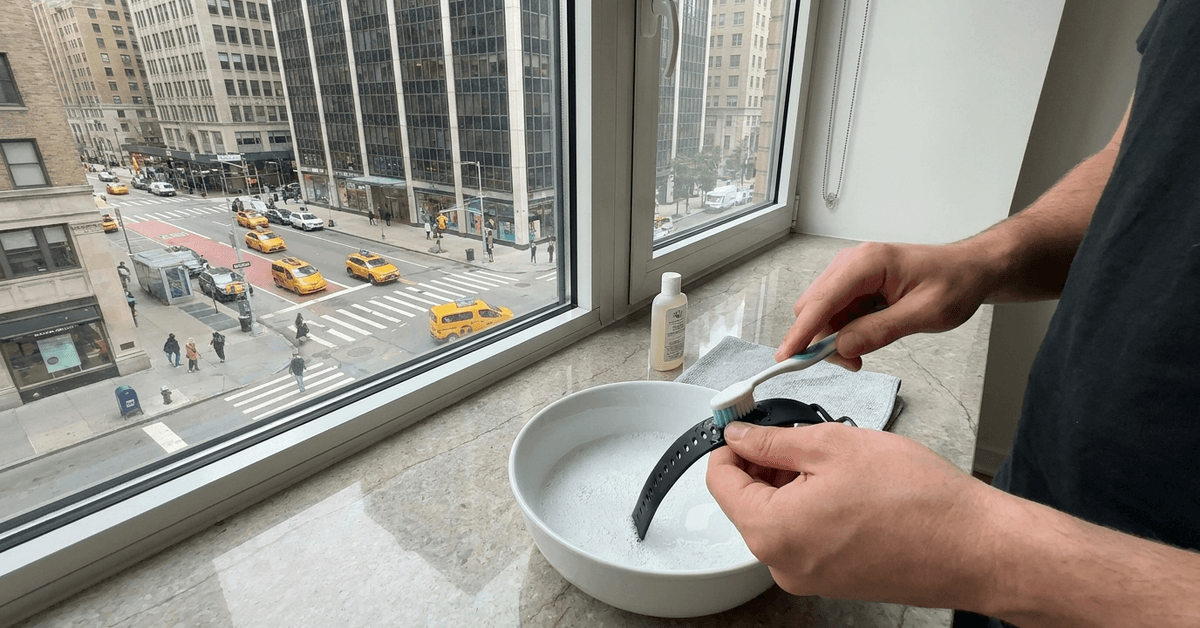
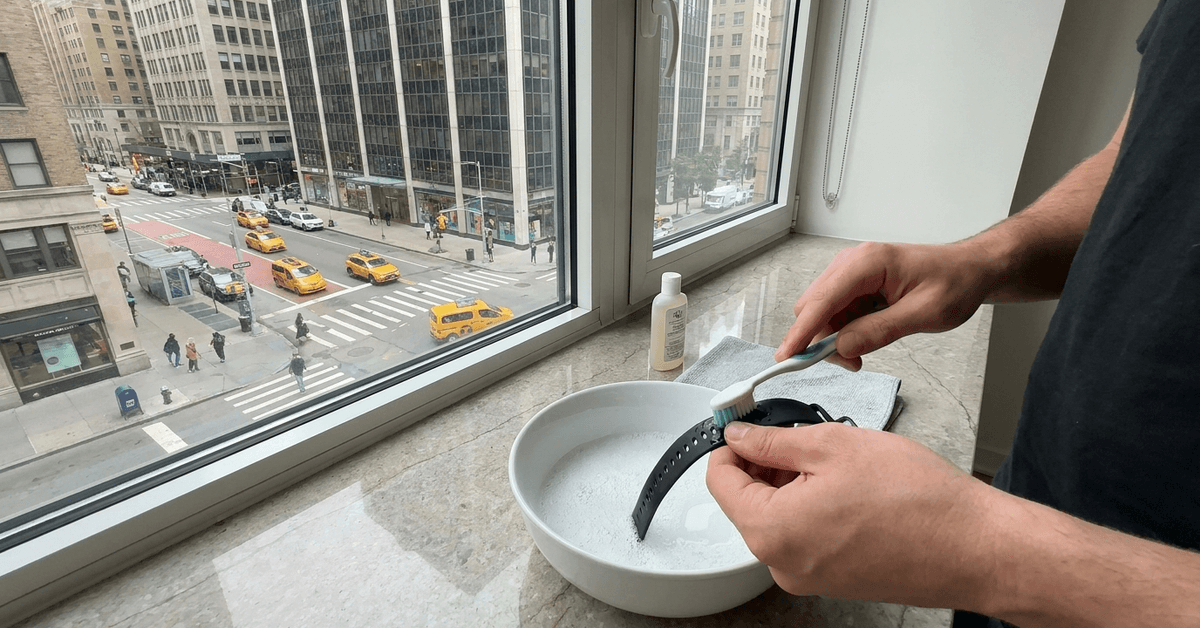
Stains that survive daily cleaning usually need a 10 to 15 minute soak. A bowl of warm water with a few drops of dish soap will loosen most embedded dirt. After soaking, use a soft-bristle toothbrush in small circular motions on the stained area.
I think the widely repeated advice to use white vinegar for odor removal is risky for regular use. Vinegar is acidic at a pH of around 2.5, and repeated exposure to acid can degrade silicone elastomers.
A single vinegar rinse for a strong odor is fine. But the guides recommending vinegar as a weekly routine are setting readers up for premature band failure. A thorough soap-and-water soak handles most odor if done consistently.
One precaution before any deep clean: test the cleaning agent on the underside of the band first. Some colored silicone bands react to certain soaps.
What Wrecks a Band Between Cleanings
The time between cleanings matters more than the cleaning itself. A band cleaned perfectly once a week but exposed to damaging chemicals daily will still deteriorate.
These are the common culprits city wearers should watch for:
- Alcohol-based hand sanitizer applied directly to the wrist or hands while wearing the band. The alcohol evaporates from skin but absorbs into silicone.
- Perfume and cologne sprayed on the wrist. The alcohol carrier and fragrance oils both attack silicone.
- DEET-based insect repellent, which is a known solvent that softens and distorts silicone surfaces.
- Harsh cleaning wipes used to wipe down hands and then touching the band before the residue dries.
The simplest fix: slide the band up your forearm or remove it before applying any of these products. Let your skin dry for 30 seconds before sliding the band back down.
| Factor | Damage Type | How Fast It Shows |
|---|---|---|
| Hand sanitizer (alcohol-based) | Stiffening, dullness | 2-3 months of daily use |
| Sunscreen under band | Discoloration, sticky film | 1-2 weeks in summer |
| Urban dust and brake particles | Surface scratching, embedded grit | 3-5 days without rinsing |
| Perfume or cologne on wrist | Color fading, material softening | 4-6 weeks |
The pattern is clear: chemical exposure causes faster and more permanent damage than dirt.
Keeping the Band Fresh Between Washes
A few small habits extend the life of a silicone band by months.
Rotate Between Two Bands
I’d suggest owning two silicone watch bands and alternating daily, especially during summer heat waves.
One band airs out while the other is worn. This alone cuts odor buildup roughly in half, because bacteria need sustained moisture to multiply. Replacement bands for Apple Watch and Garmin QuickFit cost between $8 and $25 for solid third-party options.
Store the Band Properly
A fabric pouch or a small watch box keeps the unworn band free of household dust. After a rainy commute or gym session, remove the band and let it dry separately from the metal buckle and watch body.
Trapped moisture between the band and buckle is a common source of that “mystery smell” people notice after a few weeks.
Set a Weekly Cleaning Reminder
Urban schedules are packed. Setting a recurring reminder through Google Keep or any task app takes five seconds and prevents the gradual slide from “I’ll clean it tomorrow” to “it’s been a month.”
A Friday evening reminder works well because most people are home and already winding down.
When a Silicone Watch Band Needs Replacing
No cleaning routine lasts forever. Silicone is a durable material, but it has a shelf life under daily city use.
The signs to look for:
- Visible cracking along the band’s surface, especially near the pin holes
- Permanent discoloration that doesn’t respond to baking soda or soap
- Loss of flexibility where the band feels rigid instead of pliable
- A persistent odor that returns within 24 hours of a deep clean
Most watch manufacturers, including Apple, suggest replacing silicone bands every 12 to 18 months under regular use. Heavy city use with daily transit, gym sessions, and outdoor exposure may shorten that window to 8 or 9 months.
A small amount of baking soda rubbed gently onto the band and rinsed off can brighten a dull band for a few more weeks.
But once cracking starts, no amount of cleaning will restore structural integrity. Wearing a cracked band during a run or bike ride is asking for a mid-activity snap.
Questions People Ask About Cleaning Silicone Watch Bands
These come up constantly for people who wear their bands through full city days.
- Q: Can silicone watch bands go in the shower every day?
Daily showers won’t harm a silicone band. But soap and shampoo residue builds up faster than plain water exposure. A quick rinse of the band after showering keeps that residue from becoming a long-term film. - Q: Do lighter colored silicone bands stain more easily?
All colors collect the same amount of grime. Lighter bands just show it sooner. A white or pastel band may look dirty in three days while a black band hides the same buildup for weeks. The cleaning frequency should be the same regardless of color. - Q: Is it safe to use rubbing alcohol to disinfect a silicone band?
Occasional use of isopropyl alcohol is unlikely to cause immediate damage. Repeated daily use will dry out and stiffen the silicone over weeks. Soap and water disinfect well enough for a watch band.
Conclusion
The daily beating a silicone watch band takes in a busy city adds up faster than most wearers expect. Two minutes of soap and water after a commute prevents the deep stains that no scrub can fix later.
Chemical exposure from sanitizers and sunscreen does more long-term harm than subway dust or gym sweat ever will. Keep two bands in rotation, skip the vinegar routine, and replace the band before it cracks mid-run.