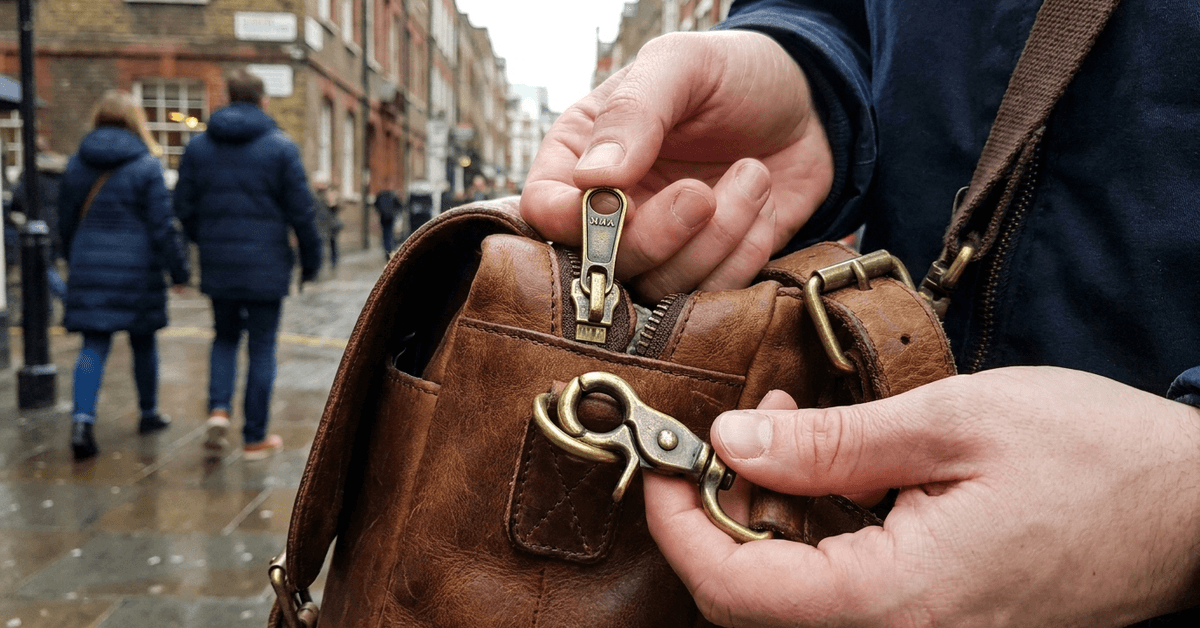
A buckle that peels after three months costs the same as one that lasts five years. The price tag on a bag tells you nothing about its hardware.
Most of that shiny metal on store shelves is plated zinc alloy coated in a thin layer of nickel or brass-tone finish. The coating wears off. The dull gray underneath shows. And by then, the return window closed weeks ago.
This article is for the person about to drop real money on a leather messenger bag or a moto jacket and who refuses to learn the hard way. If that sounds like your next purchase, keep reading.
Plated Metal Looks Identical to Solid Metal at the Register
The single biggest problem when buying bags and jackets is that cheap plated hardware and solid brass hardware look exactly the same under store lighting. Same shine. Same color. Same apparent weight, if you’re just glancing.
The difference only shows after weeks of friction against clothing, rain, and sweat.
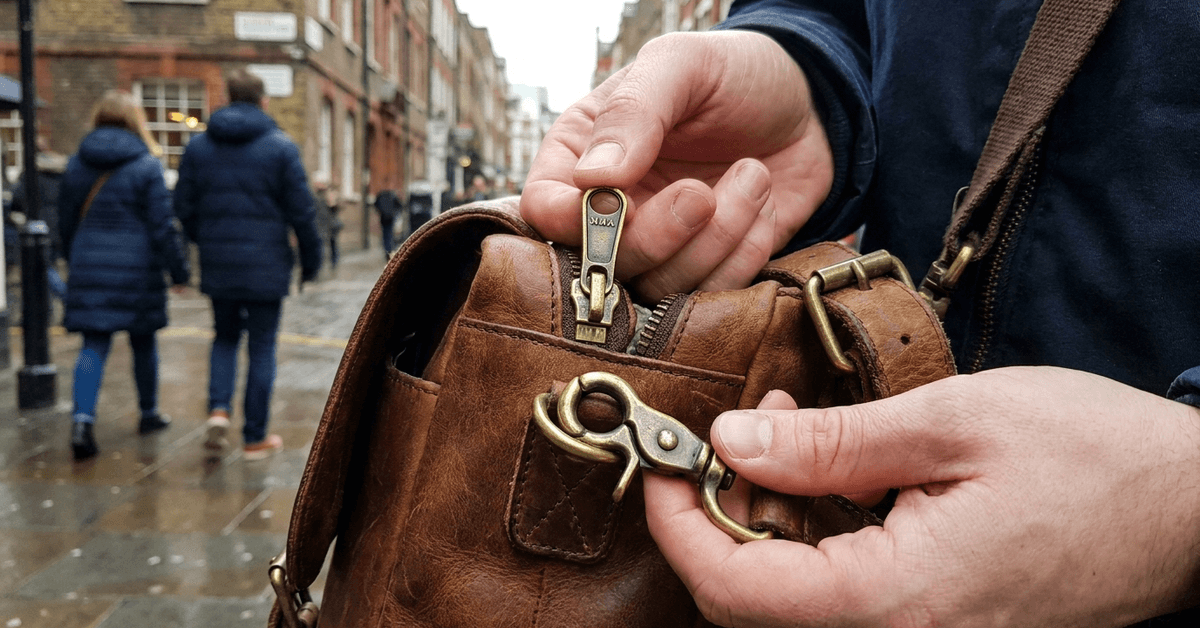
Solid brass and stainless steel hold their color because the metal goes all the way through.
Scratch a solid brass buckle and you see more brass. Scratch a zinc alloy buckle coated in brass-tone plating, and you see a dull silver-gray layer underneath. That exposure point then corrodes faster, spreading discoloration outward like a stain.
The Two-Second Weight Test
Lift the bag by its hardware. Grab the buckle, the D-ring, the zipper pull. Solid metal feels heavy and cold at room temperature.
Plated zinc alloy feels lighter and warms up quickly in your hand. This is the fastest test that exists, and it works on everything from $40 crossbody bags to $600 jackets.
A hollow, rattling sound when you flick a buckle is another giveaway. Solid metal produces a short, dense tap. Plated hardware has a tinny ring to it, almost plasticky. Once you hear the difference, you can’t un-hear it.
Zippers, Clasps, and Rivets: Where Corners Get Cut First
Hardware on bags and jackets breaks down into a few categories, and each one has its own failure pattern. Knowing where manufacturers save money tells you exactly where to look.
YKK Zippers and the Stamp Everyone Talks About
YKK is the most recognized zipper manufacturer in the world, and the small stamp on the pull tab is the easiest quality signal to spot.
A bag or jacket with YKK zippers is using hardware from a company that supplies to both fast-fashion brands and luxury houses. The zipper action should feel smooth, with no snagging or resistance when pulled quickly.
I would still trust the physical feel of a zipper over any stamp, including YKK. A stamped pull tab can be counterfeited.
A smooth, consistent zipper action across the full track cannot. Run the zipper back and forth five or six times at the store. If it catches even once, that catch will get worse over time, not better.
Lobster Clasps That Actually Hold
Messenger bags and crossbody styles rely on lobster clasps to attach straps. The spring mechanism inside the clasp is the weak point. Press it open and release.
Does it snap back firmly, or does it drift closed slowly? A slow return means a weak spring, and weak springs fail under load.
Clasps that flex or bend when you squeeze them sideways are another red flag. Solid hardware holds its shape under hand pressure. If a clasp bends at the store, it will bend under the weight of a loaded bag within a few weeks.
Studs, Rivets, and Eyelets: Small Parts, Big Failures
These tiny reinforcements hold strap connections, pocket flaps, and stress points together. Tap a rivet with your fingernail. A solid rivet gives a short, firm click.
A hollow rivet sounds thin and tinny. Hollow rivets tend to pop out under stress, and when they go, the strap or pocket they held goes with them.
Check the back side of each rivet or stud too. On well-made bags, the reverse side sits flush against the material with a clean finish. Rough edges, uneven pressing, or visible glue around the base all point to lower manufacturing standards.
Testing Hardware Quality at the Store: A Five-Point Check
Do all of this testing at the store, not at home. Returns on hardware failure are a hassle, and most retailers classify wear as “normal use” after even a few days.
The inspection takes about 90 seconds per bag or jacket. Run through these checks in order:
- Lift each strap by its hardware connection point and feel the weight. Heavy and cold beats light and warm.
- Run every zipper the full length of its track at least three times. Any catch or resistance is a disqualifier.
- Press each clasp open and release it. The snap-back should be immediate and firm.
- Flip the bag over and inspect rivet backs for flush, clean finishes. Rough or uneven pressing means lower quality control.
- Rub a fingernail lightly on the underside of a buckle or D-ring. If the finish scratches or shows a different color underneath, the hardware is plated and will degrade.
That last test is the one to pay attention to. The underside of hardware gets less finishing attention from manufacturers cutting corners. A buckle can look flawless on the front and show plating flaws on the back.
| Feature | Solid Metal Hardware | Plated/Coated Hardware |
|---|---|---|
| Weight | Heavy, dense feel | Lighter, sometimes hollow |
| Temperature | Cool at room temp | Warms quickly in hand |
| Scratch test | Same color underneath | Different color layer exposed |
| Sound when tapped | Short, firm click | Tinny, hollow ring |
| Aging pattern | Develops patina over time | Peels, flakes, or chips |
The table above is your cheat sheet. Print it on your phone notes if it helps.
Patina vs. Peeling: What a Year of Wear Tells You
Solid brass and copper hardware darkens over time, developing a patina that many people find more attractive than the original finish. This darkening is a chemical reaction between the metal and air, and it protects the surface underneath. A bag with patina is a bag with real metal.
Peeling, chipping, and flaking tell the opposite story. Paint-coated hardware chips at edges and contact points first. Plated hardware peels in patches, revealing the base metal underneath. These failures typically start within three to six months of regular use, and once they start, they accelerate.
I think most bag reviews online focus too much on leather quality and stitching while ignoring hardware entirely. A bag with gorgeous Italian leather and cheap plated zinc hardware will look worse after one year than a bag with decent leather and solid brass fittings.
The hardware is what the hand touches, the rain hits, and the friction wears. Leather can be conditioned and restored. Chipped plating cannot.
Riri and Lampo: The Names Beyond YKK
Two hardware manufacturers show up on premium bags and jackets more than any others: Riri and Lampo. Both are Swiss and Italian respectively, and both supply hardware to luxury fashion houses.
Riri zippers, in particular, have a noticeably smoother action than standard YKK pulls, and the teeth interlock with a precision that feels different the moment you zip.
The YKK Group still dominates the mid-to-upper range of bags and jackets, and a YKK zipper is a perfectly reliable component.
But for buyers spending above the $300 mark on a single piece, checking whether the hardware comes from Riri or Lampo can indicate a manufacturer who invested in every component, not just the visible materials.
Smaller brands sometimes note hardware origin on swing tags or care labels. A quick look at the tag before purchase tells you more than ten minutes of online reviews.
Keeping Good Hardware Alive After Purchase
Solid metal hardware lasts years longer with minimal maintenance. The effort takes less than five minutes per month.
A microfiber cloth and a quick wipe-down after rainy commutes removes salt, moisture, and grime before corrosion starts. This single habit extends hardware life more than any product or spray.
Zipper and Joint Lubrication
Zippers stiffen over time, especially on bags exposed to rain and dust. A thin layer of petroleum jelly or dry wax applied to the zipper teeth keeps the action smooth.
Apply it once every few months, or whenever the zipper starts catching. Avoid WD-40 and similar sprays, which attract dust and gum up the mechanism long-term.
Chemicals That Destroy Metal Finishes
Alcohol-based cleaners, vinegar, and abrasive scrubs strip protective finishes from both solid and plated metals. Stick to water and a soft cloth for routine cleaning.
If corrosion has already started on a solid brass piece, a brass-specific polish works. On plated hardware, once the finish is gone, no polish brings it back.
Three things to avoid entirely when cleaning hardware:
- Bleach or ammonia-based cleaners, which eat through plating and tarnish brass
- Rough scrubbing pads or steel wool, which scratch even solid metal surfaces
- Soaking hardware in water, which traps moisture in seams and accelerates rust on steel components
Questions People Ask About Metal Hardware on Bags and Jackets
A few of these come up constantly, and the answers are shorter than most people expect.
- Q: Can I replace hardware on a bag after it starts peeling?
A cobbler or leather repair shop can swap out clasps, rivets, and D-rings on most bags. Zipper replacement is trickier and costs between $25 and $75 depending on length. The labor cost sometimes exceeds what cheap bags are worth. - Q: Does magnetic hardware count as high quality?
Magnetic closures are a design choice, not a quality indicator. Premium bags use magnets, and so do budget bags. The magnet strength matters more than the magnet’s existence. A weak magnetic closure that pops open in a crowded subway is worse than a basic snap. - Q: Are matte-finish metals lower quality than polished ones?
No. Matte finishes are a surface treatment, not a material downgrade. Some of the best-built bags on the market use brushed stainless steel or matte brass. The tests remain the same: weight, temperature, scratch resistance. - Q: Does expensive always mean better hardware?
Not always. Some $200 bags use the same plated zinc alloy hardware found on $30 bags. The price reflects leather, branding, and margin, not necessarily hardware investment. Run the same physical checks regardless of the price tag. - Q: How long should good hardware last on a daily-use bag?
Solid brass or stainless steel hardware on a daily-carry bag should hold its finish for three to five years of normal use. Plated hardware in the same conditions often shows visible degradation within six months.
Conclusion
Good hardware is the difference between a bag that ages well and one that falls apart looking cheap.
Spending 90 seconds on a store inspection saves months of regret and replacement costs. The weight test, the scratch test, and a quick zipper check tell you everything the price tag hides. Trust the metal in your hand more than the brand name on the label.