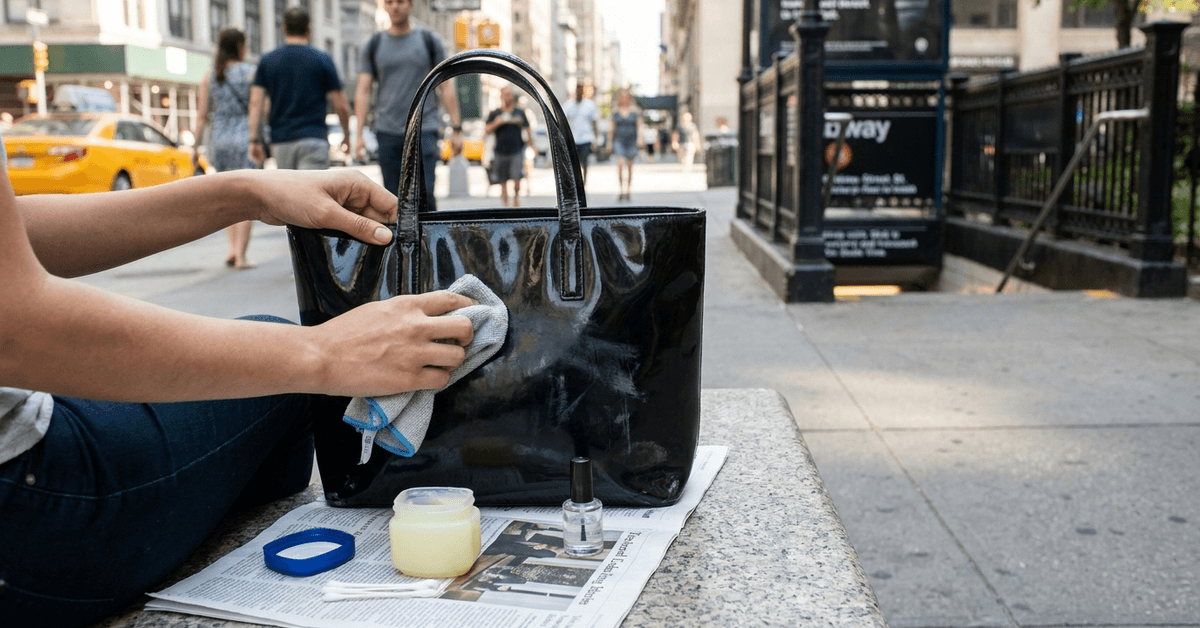
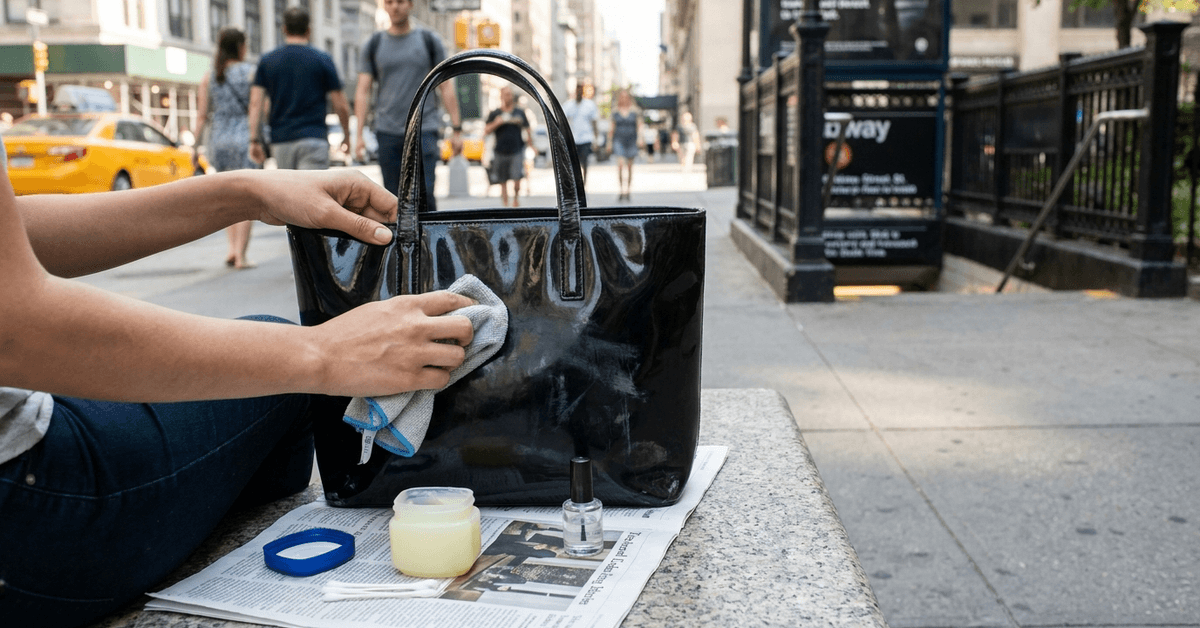
Patent leather picks up scuffs the way a white car picks up bird droppings. One subway ride, one crowded escalator, and that mirror finish looks like it survived a street fight.
The standard fix most cleaning guides repeat is petroleum jelly and a soft cloth. But the product choice matters far less than timing and technique, two things those guides barely mention.
This one is for the daily commuter: the person wearing patent leather oxfords to the office or carrying a patent leather crossbody through packed metro stations. If city grit is a daily opponent, the repair process needs to match that pace.
Why Patent Leather Scuffs Faster on City Streets
Regular leather absorbs minor contact. A light brush against a wall or a bump from a passing bag barely registers on a matte surface.
Patent leather has no such forgiveness because the high-gloss polyurethane or lacquer coating sits on top, exposed to every point of contact like a freshly waxed car hood.
City environments multiply the problem. Concrete sidewalks carry fine grit that acts like low-grade sandpaper against any smooth surface.
Escalator edges, bus seats, and the metal poles on commuter trains all create contact points that standard leather shrugs off but patent leather records instantly.
The Commute Factor
Think about a typical rush-hour train ride. A patent leather shoe touches the floor, the seat frame, maybe another passenger’s luggage. Each contact leaves a potential mark. The same shoe in a car or at a desk job might go weeks without a single scuff.
Cities like Amsterdam and Paris add cycling and scooter commuting to the equation. Pedal straps, scooter decks, and bike baskets all create friction zones that hit footwear and bags at predictable spots.
Why Color Makes a Difference
Darker patent leather, like deep navy or black, hides shallow surface marks better than lighter shades.
A pale blush or white patent surface shows every contact point. I’d pick black or deep burgundy patent leather for any accessory that faces a daily city commute, specifically because lighter colors demand twice the maintenance for half the visual payoff.
The Five-Minute Scuff Removal Process
Speed is the real variable in patent leather repair. A scuff treated within a few hours responds to gentle cleaning alone.
Leave that same mark for a week, and the coating begins absorbing the discoloration. The fix becomes harder, and sometimes the mark becomes permanent.
The process breaks into three stages: clean, soften, and buff. Each stage takes less than two minutes.
Clean the Surface First
Loose dirt sitting on top of a scuff makes it look worse than it is. A dry microfiber cloth removes that layer. Paper towels, napkins, or tissues leave fibers behind and can scratch the finish, so they should never touch patent leather.
If grime sticks, a fragrance-free baby wipe does the job. These are easy to carry in a commuter bag and work on patent surfaces without leaving residue. Light circular motions across the scuffed area, then a pat dry with a clean section of the cloth.
Soften the Mark and Buff It Out
Once the surface is clean, apply a small amount of mineral oil directly to the scuff. Rub gently with the cloth for about 30 seconds, using light circular pressure. The oil softens the displaced coating material and allows it to settle back into position.
Buff the area with a dry section of the cloth until the shine returns. Sometimes the scuff disappears entirely. Sometimes a faint shadow remains. That shadow usually fades over the next day or two as the coating re-levels.
I would skip petroleum jelly for this step, and I think the common advice to reach for Vaseline as a first-line patent leather fix deserves a hard second look.
Petroleum jelly leaves a tacky film on the surface that collects city dust, street grit, and fiber from bag linings within hours. Mineral oil absorbs cleaner and dries without that sticky residue.
What to Pack in a City Bag for Patent Leather First Aid
A small kit keeps patent leather looking sharp between full cleanings. The items take up less space than a phone charger.
These are the essentials worth carrying:
- Microfiber cloth (a single small square, folded): handles both cleaning and buffing without scratching the surface
- Fragrance-free baby wipes (two or three in a resealable pouch): quick surface cleaning in transit, no need for water
- Cotton swabs: reach into seams, creases, and detailed areas on shoes where a cloth can’t apply enough pressure
- A travel-size bottle of mineral oil: available at most city drugstores and pharmacies for under $5
That kit fits inside a zip pouch smaller than a wallet. The mineral oil bottle is the bulkiest piece, and even that fits inside most jacket pockets.
Stubborn Scuffs and the Limits of Home Fixes
Some marks go deeper than the surface coating. A scuff that exposes the base leather underneath, or one that cracks the patent finish, is past the point where household products can help.
Clear Nail Polish as a Targeted Repair
Clear nail polish works as a spot fix for medium-depth scuffs that don’t respond to mineral oil. Apply it with a cotton swab directly on the mark, staying within the damaged area only. Let it dry completely before wearing or storing the item.
The nail polish fills in minor surface cracks and restores a degree of gloss. But it changes the texture slightly.
The repaired spot may look marginally different from the surrounding area under direct light. On darker patent leather, this is rarely noticeable. On lighter shades, the difference can be visible.
Knowing When a Cobbler Is the Better Call
A scuff that splits the patent finish or peels the coating away needs professional attention. Neighborhood cobblers in areas like London’s Soho or Berlin’s Mitte specialize in this type of repair.
Department store shoe counters can also provide spot-cleaning guidance and point toward the right patent leather care products. Professional repair apps have started operating in urban centers, offering pickup and delivery for leather repair.
The cost runs higher than a DIY fix, but for a high-end patent leather bag or dress shoe, the investment in professional restoration is often worth the price difference.
Daily Habits That Reduce Patent Leather Scuffing
Repair is reactive. The bigger win for daily commuters is reducing how often scuffs happen.
Some prevention habits that make a measurable difference:
- Store shoes and bags in dust bags after each use, even for overnight storage, to block dust that dulls the finish over time
- Rotate patent leather items across the week instead of wearing the same pair daily, especially in damp climates like northwestern Europe
- Carry the item in a protective sleeve during transit if possible, particularly for bags that ride against body or seat surfaces during commutes
- Check contact points on regular commute routes: if a particular bag always brushes against a rough seat edge, shift how the bag sits
| Prevention Method | Effort Level | Scuff Reduction |
|---|---|---|
| Dust bag storage after each use | Low (30 seconds) | Reduces surface dulling and minor contact marks |
| Weekly rotation with other footwear | Low | Cuts wear-per-item roughly in half |
| Carrying sleeve during transit | Medium | Protects against the highest-friction commute moments |
| Choosing darker patent colors | One-time decision | Lighter scuffs stay invisible longer on dark surfaces |
The single most effective habit on this list is rotation. A pair of patent leather shoes worn three days per week instead of five accumulates roughly 40% fewer scuff events, simply because two days of rest also mean two fewer commutes of exposure.
Items to Keep Away from Patent Leather
A few common cleaning mistakes make scuffs worse or permanently damage the finish.
Colored shoe polish almost never matches patent leather’s gloss-coat color and leaves visible residue. Abrasive scouring pads tear through the coating in seconds. And leather sprays formulated for matte or nubuck surfaces contain solvents that dissolve patent leather’s topcoat.
Excessive moisture is another risk. Soaking patent leather, even briefly, lets water seep into seams and loosen the bond between the coating and the base material. A damp cloth is fine. A wet cloth, or rain without a protective cover, is not.
The Leather Care Guide from Saphir Médaille d’Or breaks down which products are safe for different leather types, including patent.
Questions People Ask About Removing Scuffs from Patent Leather
A few of these come up constantly among commuters trying to keep patent leather intact through daily city wear.
- Q: Can I use rubbing alcohol to remove scuffs from patent leather?
Rubbing alcohol can strip the glossy topcoat on patent leather, leaving a dull spot that looks worse than the original scuff. Stick with mineral oil or a product specifically labeled for patent surfaces. - Q: How long do scuff marks take to become permanent on patent leather?
Shallow surface scuffs can often be buffed out days later. Deeper marks that sit for more than a week start bonding with the coating, and the removal success rate drops sharply after that window. - Q: Does patent leather crack more easily in cold weather?
Cold temperatures make the polyurethane coating stiffer and less flexible. A patent leather shoe flexed repeatedly during a cold-weather walk is more prone to surface cracking than the same shoe at room temperature.
Conclusion
Patent leather holds up in city environments when the repair response is fast and the cleaning products stay simple.
The commuters who keep their patent finishes intact are the ones who treat scuffs the same day, not the same month.
Mineral oil, a microfiber cloth, and 30 seconds of buffing do more than any expensive specialty product sitting unused at home. Stepping out with that mirror-shine finish intact after a rough commute week feels like a small, satisfying victory.