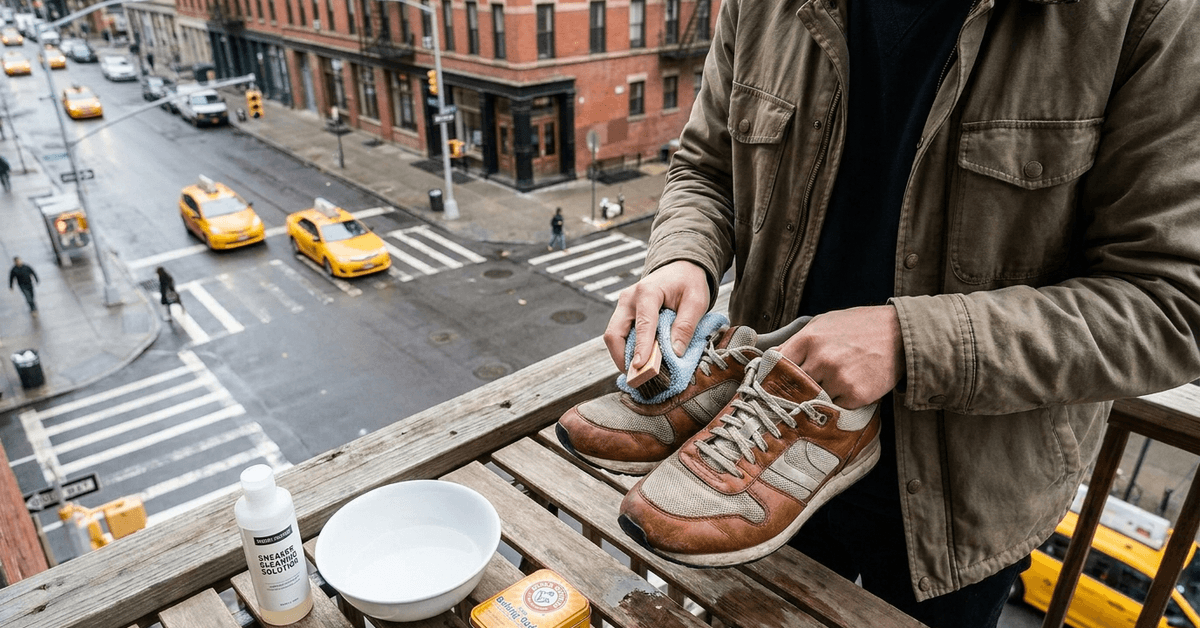
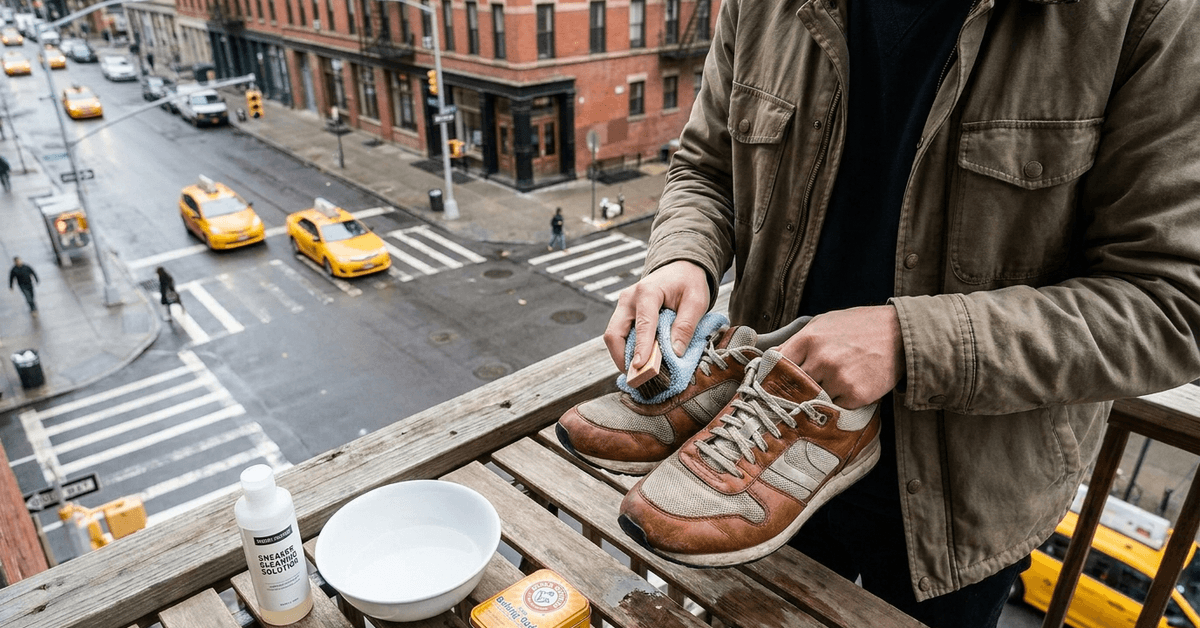
A pair of sneakers worn daily on city pavement loses about 30% of its tread depth in the first three months. That timeline shrinks even faster in rain-heavy cities like London or Vancouver.
The typical sneaker care guide throws a product list at you and calls it a day. But the fastest way to destroy a pair has nothing to do with cleaning frequency. It has everything to do with drying method, rotation, and the five minutes after you get home.
This one is for the daily commuter walking six-plus kilometers through concrete, subway platforms, and crowded sidewalks. If sneakers are your primary footwear and replacing them every few months feels wasteful, this routine changes that math.
Why City Pavement Eats Sneakers Faster Than Trails
Something odd happens when sneaker care articles talk about wear and tear. They treat every environment the same. A hiking trail, a gym floor, and a Tokyo sidewalk all get the same advice. That makes no sense.
Concrete and Asphalt Are Abrasive Surfaces
Concrete sidewalks in cities like New York or Paris grind rubber soles differently than packed dirt or even asphalt roads. The flat, hard surface creates consistent friction on the same contact points of the sole, wearing down tread in a predictable pattern.
Trail runners get uneven wear because terrain varies. City commuters get concentrated wear because the surface never changes.
Look at the bottom of a pair that’s done three months of city walking. The ball of the foot and outer heel will be noticeably smoother than the rest.
Rain, Puddles, and the Moisture Problem
Getting caught in a sudden rainstorm is part of city life in Vancouver, Singapore, and most of Northern Europe. The issue is not the water itself. The issue is what happens in the next 12 hours.
Sneakers left wet overnight develop a musty smell within 48 hours. The adhesive between the sole and upper weakens over repeated wet-dry cycles. Mold growth starts in warm, enclosed spaces faster than people expect.
The Nightly Two-Minute Routine That Keeps Sneakers Alive
A full deep-cleaning session once a month sounds reasonable on paper.
But I would bet on a two-minute nightly wipe over a monthly scrub every time, based on how dirt and moisture settle into mesh and canvas fibers overnight. The damage happens between wearings, not during them.
A Quick Wipe-Down After Each Wear
The simplest version of this: keep a microfiber cloth near the front door. Wipe the uppers and toe box when you take the sneakers off. That interrupts dirt from bonding with the material overnight.
Crep Protect Wipes are a popular portable option for this. A damp microfiber cloth does the same job at home for a fraction of the cost. The wipe takes about 30 seconds. The payoff compounds over weeks.
Spot-Treating Stains the Same Night
A stain that sits for 24 hours is ten times harder to remove than one treated immediately. That timeline matters for street food spills, coffee drips, and puddle splashes that happen during a normal city day.
The treatment is simple:
- Mild dish soap mixed with cold water in a spray bottle handles most stains on leather, canvas, and synthetic uppers
- A soft-bristled brush (an old toothbrush works) loosens grime from seams and textured surfaces
- Knit and mesh materials need a lighter touch: dab instead of scrub, and avoid hot water that can shrink the weave
Specialized cleaners like Jason Markk work well across multiple fabric types. But for daily spot treatment, the dish soap solution covers about 90% of cases.
Removing Insoles and Airing Out
After a full day of walking through markets, subway cars, and packed streets, the inside of a sneaker traps heat and moisture. Removing the insoles and leaving the sneaker open overnight lets both the footbed and the interior dry naturally.
Baking soda sprinkled inside overnight pulls moisture and neutralizes odor.
Sneaker Balls and similar deodorizer products are a more convenient version of the same idea. Either approach works. The step that matters is removing the insoles. Most people skip it.
Sneaker Cleaning Products: The $20 Kit Versus the $3 Fix
I think the common recommendation to buy a dedicated sneaker cleaning kit is overblown for daily maintenance. A $20 Jason Markk set or a $15 Crep Protect bundle makes sense for quarterly deep cleans.
For everyday upkeep, mild dish soap, cold water, a microfiber cloth, and a soft brush handle the job at roughly one-fifth the cost. That said, one product category earns its price tag: waterproofing spray.
A silicone-based or fluoropolymer spray applied to new sneakers adds a layer of water and stain resistance. The catch is reapplication frequency. A single coat lasts about two to four weeks of daily city use, not the “all-season protection” most labels promise.
| Product Type | Approximate Cost | Best Use Case | Reapplication Needed |
|---|---|---|---|
| Mild dish soap + cloth | $3 | Daily wipe-downs and spot cleaning | N/A |
| Sneaker cleaning kit (Jason Markk, Crep Protect) | $15–$20 | Deep cleaning every 4–6 weeks | N/A |
| Waterproofing spray | $10–$18 | Rain protection for mesh and canvas | Every 2–4 weeks with daily wear |
| Sneaker deodorizer (Sneaker Balls, baking soda) | $5–$8 | Odor and moisture control | After each heavy-use day |
Baking soda at $3 a box, replaced every few months, handles both deodorizing and mild stain treatment.
The marketing around sneaker care products treats every scuff like a crisis. A daily commuter who wipes down sneakers nightly and treats stains within hours does not need a specialized solution for routine grime.
Save the premium cleaner for suede, nubuck, or heavily stained knit uppers where dish soap might not cut it.
Drying Mistakes That Ruin Sneakers Faster Than Dirt
The single fastest way to destroy a pair of sneakers is tossing them near a heater or radiator after they get wet.
Heat warps adhesive bonds between the sole and upper. It also dries leather too quickly, causing cracks. Mesh and knit materials shrink under direct heat.
The Newspaper Method Still Works
Stuff wet sneakers with crumpled newspaper or clean rags. The paper absorbs moisture from inside while the sneaker maintains its shape. Replace the stuffing every few hours if the sneakers are soaked through.
Air drying in a shaded, ventilated area is the safest approach. A shoe rack near the front door, away from radiators and direct sunlight, gives sneakers the airflow they need. The drying process takes 12 to 24 hours for a fully soaked pair.
Rotation: The Maintenance Step Nobody Budgets For
Wearing the same pair of sneakers every single day never lets them fully dry between uses. The moisture from foot sweat alone (about half a pint per day for an average adult) saturates insoles and inner linings.
Rotating between two pairs gives each pair a full rest day. This extends the life of both pairs significantly.
Most sneaker care articles focus entirely on cleaning products and skip the rotation question. I’d argue rotation does more for sneaker longevity than any cleaning kit on the market.
Lace Maintenance and Small Details That Add Up
Dirty laces drag down the look of an otherwise clean sneaker. A weekly rinse under running water keeps them presentable. Badly frayed laces should be replaced rather than cleaned, and replacement laces cost less than a cup of coffee.
Re-lacing after washing also gives you a chance to check the eyelets and tongue for wear. Loose eyelets can create pressure points during long walks. The tongue slipping sideways is usually a sign the laces are threaded incorrectly or unevenly.
Tracking Wear and Finding Sneaker Services in 2026
A few apps help city commuters stay ahead of maintenance needs:
- Strava lets users tag specific footwear to each activity and tracks cumulative mileage per pair
- Apple Health and Google Fit log daily step counts, which can estimate total distance per sneaker pair over time
- Google Maps and Instagram searches for “sneaker cleaning” or “sneaker repair” in any major city turn up local specialists
Professional sneaker cleaning services exist in most cities with populations over 500,000. A full deep clean typically runs $15 to $40 depending on the city and the condition of the sneakers.
For a pair that costs $150 or more, the math on professional cleaning versus replacement makes sense at least once or twice a year.
The Strava app is especially useful for commuters who walk and run in the same pair. Tagging footwear to activities builds a log that tells you when a pair is approaching its mileage limit.
Packing Sneakers When Traveling Between Cities
A spontaneous trip to Berlin, Barcelona, or any city with cobblestone streets puts extra stress on sneaker soles. Packing matters more than people think.
- Reusable dust bags or a wrapped t-shirt prevent scratches and scuffs inside a bag
- Small silica gel packets tucked inside the sneaker control humidity during transit
- A travel-sized pack of wipes and a spare set of laces handle unexpected stains or breakage on the road
The silica gel trick is the most overlooked packing habit for sneaker care. Those packets, often thrown away from new shoe boxes, absorb moisture during flights and train rides where temperature changes cause condensation inside bags.
Questions People Ask About Urban Sneaker Care
These are the questions that come up most when sneaker maintenance gets specific to city life.
- Q: How often should I deep clean sneakers if I wear them daily in the city? A deep clean every four to six weeks is a reasonable schedule for daily city wear. The nightly wipe-down handles surface grime between those sessions. Waiting longer than six weeks lets embedded dirt permanently discolor lighter-colored fabrics.
- Q: Can I put sneakers in the washing machine instead of hand cleaning? Machine washing loosens adhesive and can deform the shoe structure, especially on pairs with foam midsoles. Hand cleaning with mild soap and cold water takes about five minutes per shoe and preserves the build quality.
- Q: Is baking soda safe to use inside all sneaker types? Baking soda works well inside synthetic and canvas interiors. For leather-lined sneakers, a sneaker-specific deodorizer is a better choice since baking soda can dry out leather over time.
Conclusion
City sneakers take a beating that no suburban pair ever experiences on a regular basis. The nightly two-minute wipe, proper drying away from heat, and rotating pairs matter more than any product.
Sneaker longevity in an urban setting comes down to daily habits done consistently over months. The best time to start protecting a pair is the same day they come out of the box.