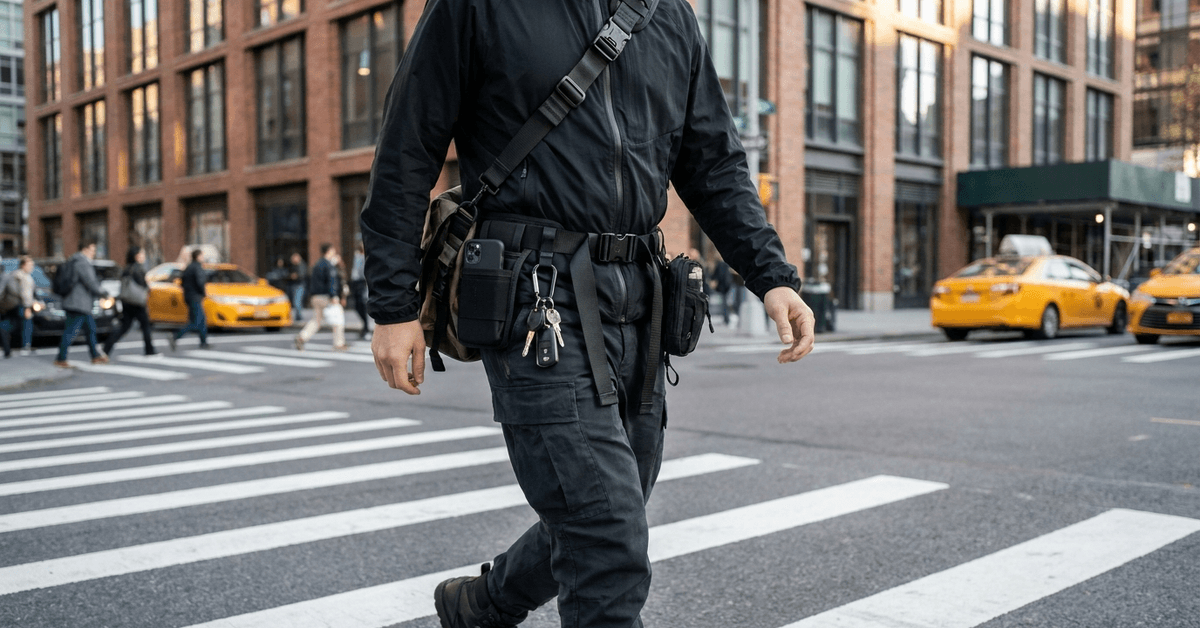
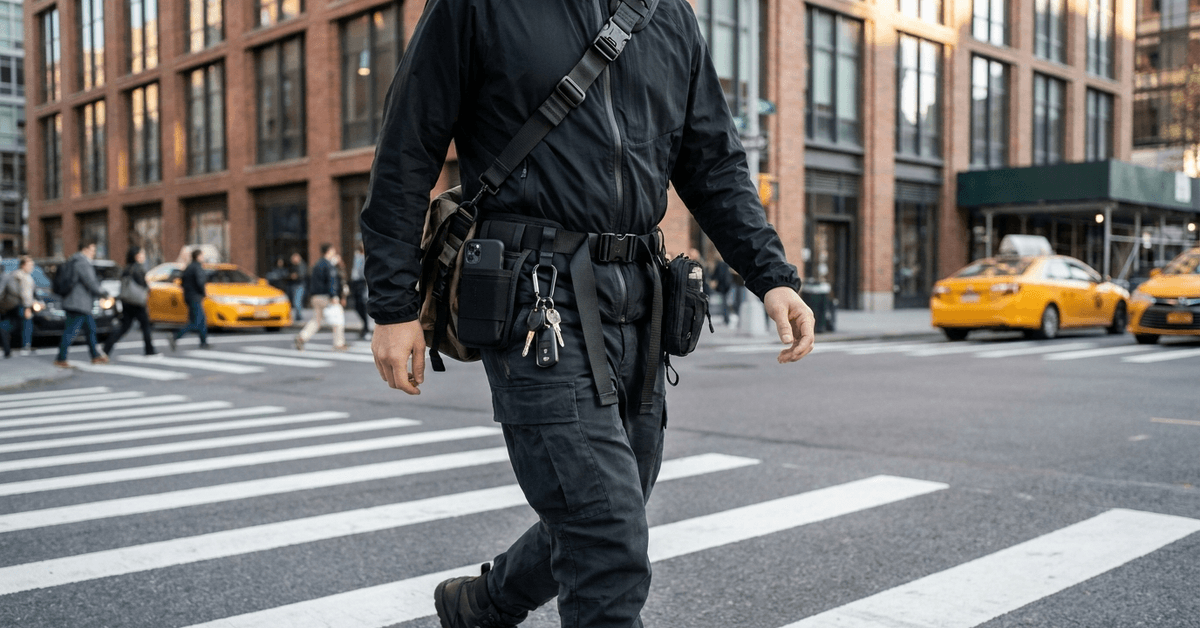
A plastic buckle on a cheap nylon belt will snap the first time it catches on a bike frame. That one failure turns a $12 accessory into garbage during rush hour.
The usual techwear advice sends people straight to ACRONYM® or Off-White for their first utility belt. A $200+ strap on a daily commuter who hasn’t tested buckle types is money lit on fire.
This article is for the person who rides, walks, or takes transit through a real city every day. The one who needs a belt that carries things, survives weather, and doesn’t look like a costume.
I wrote this piece for urban cyclists and transit commuters who want a functional utility belt they can wear to work, not to a cosplay convention.
Why Cheap Technical Belts Fail on City Bikes
The fastest way to lose trust in a utility belt is to buy one with the wrong buckle. A belt that holds up fine while walking can fall apart under the stress of cycling, bending, or catching on a bag strap during a crowded subway exit.
The failure usually comes down to two parts: the buckle mechanism and the webbing material. Getting these right matters more than the brand name printed on the strap.
Metal Cam Buckles vs Plastic Side-Release
Metal cam buckles, the same style used in climbing gear, grip webbing under tension and stay locked. They handle temperature swings without warping. A Helikon-Tex military web belt uses this style and costs under $15.
Plastic side-release buckles are lighter. But they crack in cold weather, and the teeth wear down after months of daily clipping and unclipping. If the commute includes a bike rack or a packed train, plastic buckles become a countdown timer to failure.
I’d take a $14 Helikon-Tex metal-buckle belt over a $90 fashion strap with plastic hardware for any commute that involves a bicycle. The fashion belt photographs better. The military belt survives better.
Nylon Webbing and Cordura: What Holds Up
High-denier nylon and Cordura webbing are the two materials worth paying attention to. Both resist abrasion from daily friction against bag straps, coat zippers, and bike frames.
Standard polyester webbing stretches over time and absorbs water. A belt that gains half an inch of slack after three months of rain commutes stops doing its job.
Look for water-resistant finishes or fast-dry treatments. London commuters and anyone in a rainy climate will notice the difference within a week. A soaked cotton or poly belt stays heavy and uncomfortable for hours. Cordura dries in minutes.
Styling Technical Belts Without Looking Tactical
A big gap in techwear content is the styling problem nobody wants to talk about. Most utility belts look aggressive. They carry associations with military surplus and survivalist culture that can feel out of place at a coffee shop or an office.
The trick is color matching and proportion. A technical belt styled wrong turns a normal outfit into an airsoft loadout.
Tonal Color Palettes and Slim Fits
Black-on-black is the easiest pairing. A slim nylon belt in matte black over black jeans or cargo joggers disappears into the outfit. The buckle becomes the only visible detail, and a clean metal buckle reads as jewelry, not equipment.
Tonal pairing works beyond black, too. Olive belts on olive cargo pants, grey on grey joggers. The belt stops screaming “tactical” when it matches the rest of the clothes. Streetwear communities in Tokyo and New York have been running this approach for years.
Pair the belt with a slim-fit tee or a tech windbreaker. Oversized tops with a chunky belt underneath create a bulky silhouette. The belt should sit flat against the body, not bunch up fabric around it.
The Belt-Over-Outerwear Trick
Wearing a utility belt over a coat or parka is the single most underrated cold-weather move in street fashion. It changes the coat’s shape and function at the same time.
A belt cinched over a parka at the waist creates a defined silhouette on a garment designed to hang loose. Attach a transit card holder or a slim pouch, and everything you need during a commute sits on the outside of the coat. No more unzipping layers to dig for a metro card.
Cities like Montreal and Amsterdam, where cycling continues through winter, are where this style shows up most. The belt keeps the coat from flapping open on a bike, and the pouches stay accessible while riding.
I think the belt-over-coat method works better than any crossbody bag for winter cycling commuters, specifically because a crossbody bag shifts and bounces on rough city roads, while a belted pouch sits locked against the torso.
Where to Find Technical Belts That Last
The brand landscape for utility belts splits into two camps: fashion-first and function-first. The price gap between them is massive, and the quality gap is smaller than the price suggests.
Budget Brands That Outperform Their Price
A few names keep coming back in EDC and techwear forums for good reason:
- Helikon-Tex makes military-spec web belts with metal hardware for under $20. The nylon is thick, the buckles are rated for load-bearing, and the sizing runs wide.
- 5.11 Tactical sits slightly higher in price but offers double-layer construction for heavier carry setups. These belts handle attached pouches without sagging.
- Generic climbing-style belts from outdoor retailers use the same cam buckle mechanism as $80 techwear brands at a fraction of the cost.
Premium Brands and When They Make Sense
The high end of the market includes names like ACRONYM® and Arc’teryx Veilance. These belts use proprietary materials, custom buckle designs, and cuts specifically shaped for layering over techwear jackets.
Off-White and Alyx Studio sit in the fashion-forward space. Their belts use signature roller-coaster buckles and oversized hardware. The function is secondary to the visual statement.
My take on the premium market: a $200 Alyx belt makes sense as a fashion piece for someone who already owns solid daily-use belts. As a first utility belt for commuting, it’s the wrong entry point. Start with function, add fashion later.
Second-Hand and Resale Apps Worth Checking
The resale market for technical accessories has exploded. Two apps stand out for belt hunting:
- Grailed is the strongest option for rare or discontinued techwear belts. Pieces from past ACRONYM® and Veilance seasons show up regularly at 40-60% off retail.
- Depop leans younger and carries more upcycled or niche-label utility straps. Sorting by seller ratings filters out the low-quality listings fast.
- Pinterest is less of a shopping tool and more of a styling reference. Curated boards from street photographers worldwide show real people wearing these belts in real cities.
Everyday Carry Safety on Crowded Transit
Utility belts create a visible carry system. That visibility is a double-edged sword on public transit.
Keeping Pouches Low-Profile
Over-stuffing a belt pouch turns a sleek accessory into a target. A phone-sized pouch bulging with a wallet, keys, and earbuds looks like it’s worth grabbing.
Spread items across the belt instead. Keys on a carabiner clip. Phone in a slim holster. Cards in a separate micro-wallet. The load stays balanced and no single attachment looks like a jackpot.
Secure loose strap ends with elastic keepers or tuck them into the belt channel. A dangling strap end catches on escalator rails, subway doors, and bike chains. That snag can yank the entire belt off center or, worse, pull the wearer off balance.
RFID Protection and Digital Pickpocketing
Small RFID-shielded pouches clipped to a belt strap add protection against contactless card skimming. Cities like Barcelona have seen enough reported cases to make this a practical addition rather than a paranoid one.
These pouches cost between $5 and $15 and fit inside most belt-mounted phone holsters. The shielding material is thin enough that it doesn’t add bulk.
| Feature | Budget Belt (Helikon-Tex) | Mid-Range (5.11 Tactical) | Premium (ACRONYM®) |
|---|---|---|---|
| Price Range | $10-$20 | $25-$50 | $150-$300+ |
| Buckle Type | Metal cam | Metal/polymer hybrid | Proprietary magnetic |
| Webbing Material | Mil-spec nylon | Double-layer nylon | Technical composite |
| Best For | Daily commuting, cycling | Heavy EDC loadouts | Fashion-forward layering |
| Durability | High | High | High |
The budget belt wins on function-per-dollar for transit commuters. The premium belt wins when the outfit is the point.
Questions People Ask About Technical Belts and Utility Straps
These are the questions that keep popping up in forums and comment sections about utility belts for city wear.
- Q: Can I wear a technical belt to a business casual office?
A slim, matte-black nylon belt with a flat metal buckle passes in most business casual environments. Skip anything with visible carabiner clips or oversized buckles. The goal is a belt that reads as modern rather than military. - Q: Do utility belt pouches replace a backpack for commuting?
For light carry days, yes. A phone holster, card holder, and key clip on a belt covers the essentials for a short commute. Anything involving a laptop, lunch, or gym clothes still needs a bag. - Q: Are technical belts one-size-fits-all?
Most webbing belts are adjustable and fit waist sizes up to 44 inches by trimming excess strap. Check the buckle width, though. A 1.5-inch buckle won’t thread through belt loops designed for 1-inch dress belts. - Q: How do I clean a nylon utility belt?
Hand wash with mild soap and cold water, then hang dry. Machine washing degrades the webbing coating and can warp plastic components. Metal buckles should be dried immediately to prevent surface oxidation. - Q: Is a magnetic clasp belt safe around electronics?
The magnets used in belt clasps are too weak to damage phones, credit cards, or transit passes. The magnetic force drops off sharply beyond a few millimeters. Hotels and military-spec gear have used magnetic closures for years without reported device issues.
Conclusion
A $14 military web belt outperforms most $100 fashion straps on a daily bike commute. Tonal color matching turns tactical gear into something that fits a coffee shop.
The belt-over-coat trick solves winter commuting storage better than any crossbody bag. Start with a metal-buckle belt from Helikon-Tex or 5.11, then add fashion pieces once the function is locked in.