Blog

  • How to Pick the Perfect Oversized Jacket for Your Body Type

    How to Pick the Perfect Oversized Jacket for Your Body Type

    An oversized jacket that feels perfect on the rack can turn into a wearable sleeping bag the moment two sweaters go underneath it. That single layering failure ruins more purchases than poor color choices or wrong fabric picks combined.

    Most styling guides match body shapes to jacket cuts and stop there. Nobody talks about what happens when that same jacket meets a crowded morning train, a bike lane, or a rainstorm that wasn’t in the forecast.

    This one is for the city commuter. The person who walks, cycles, or sardine-packs into public transit five days a week and still wants to look like they thought about getting dressed.

    The Layering Mistake That Kills Most Oversized Jacket Purchases

    A jacket tried on over a t-shirt in a climate-controlled fitting room tells you almost nothing about how it performs in real life. 

    That relaxed shoulder drop and roomy torso? Add a hoodie, a wool sweater, and a scarf, and the arms suddenly bind at the shoulder seam. The chest pulls. The zipper fights back.
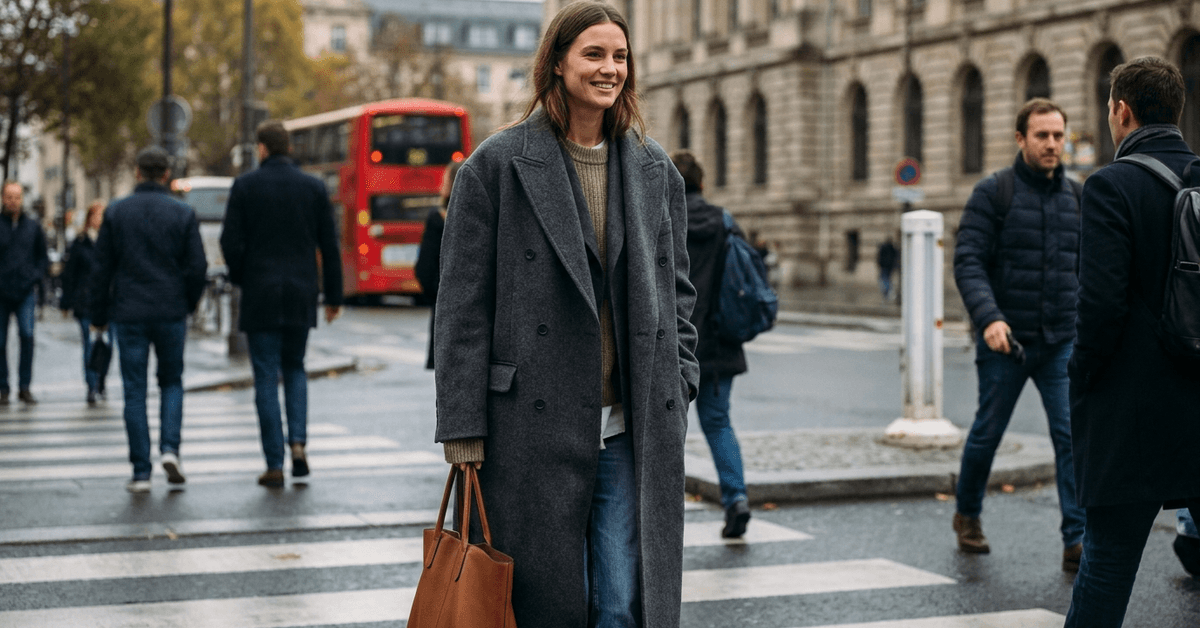
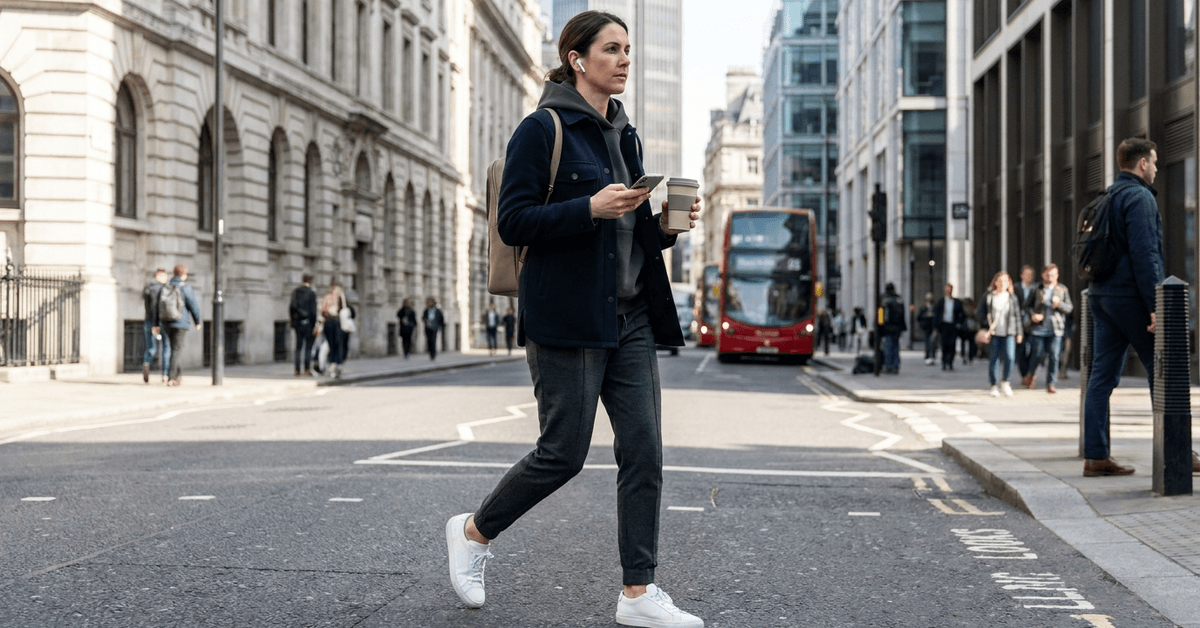
    Image 1

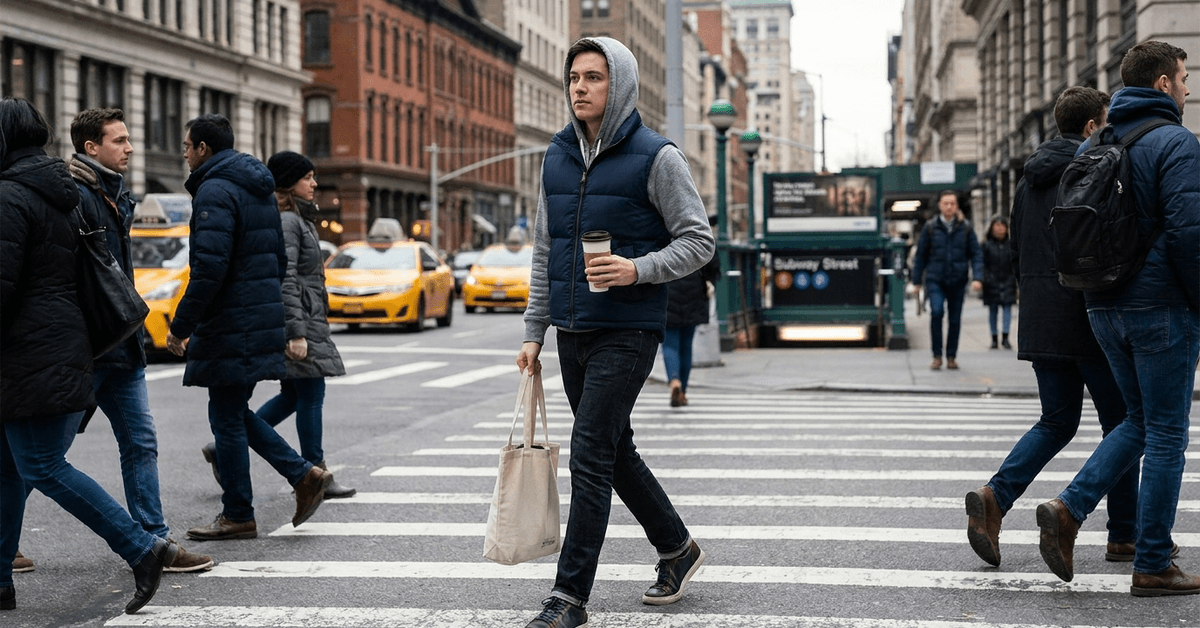
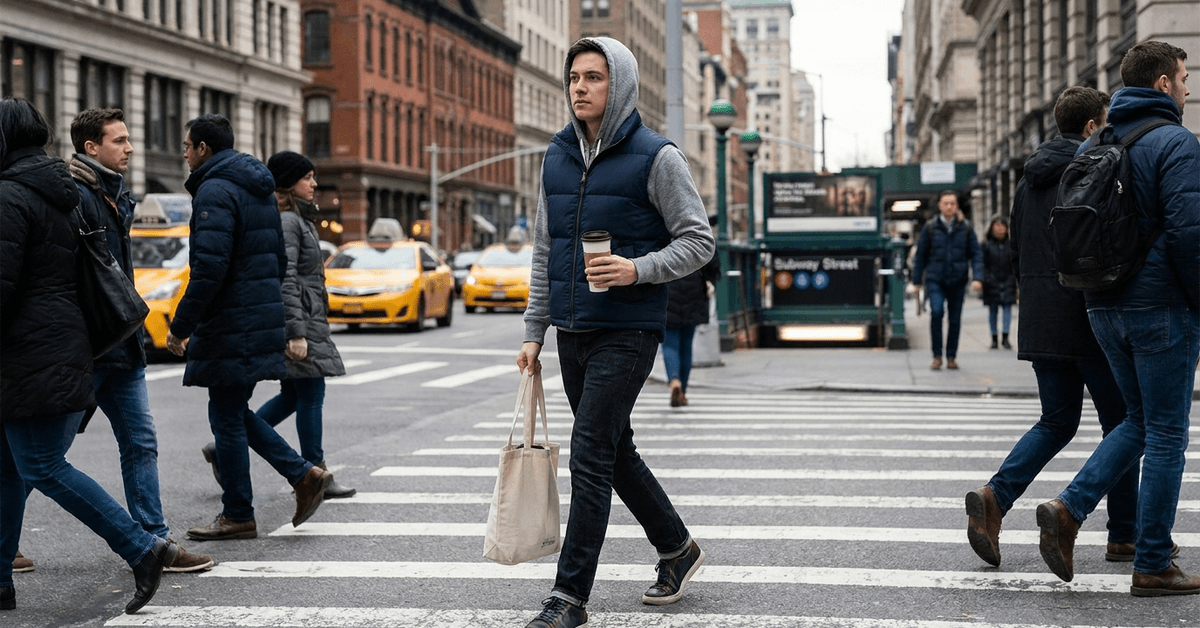
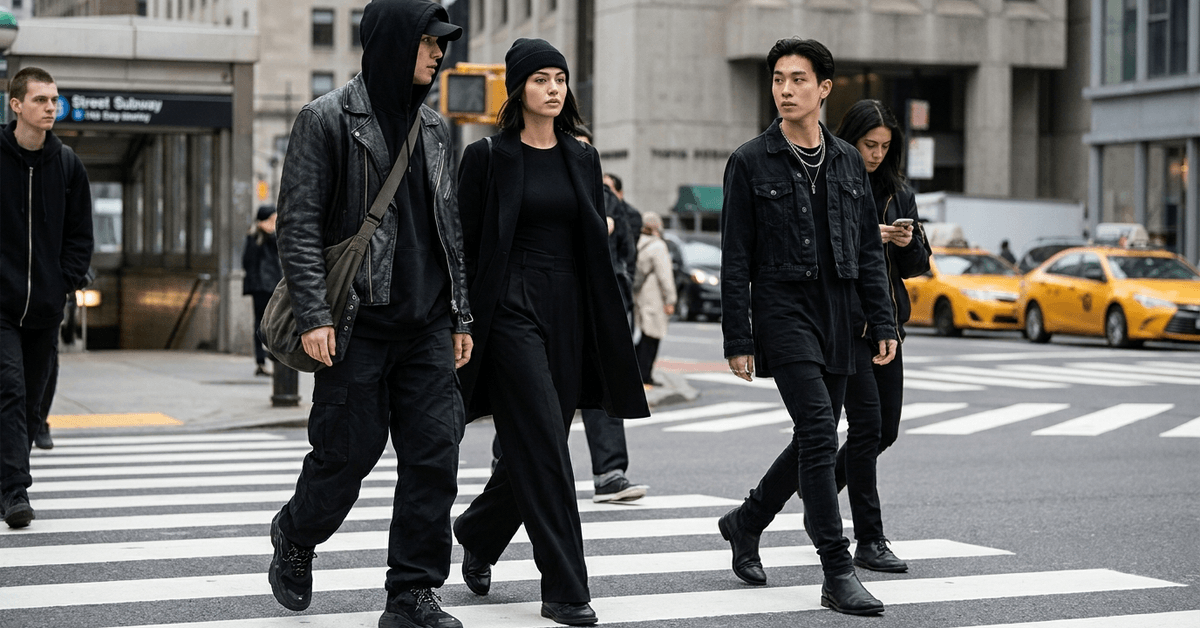
    I would skip any oversized jacket that doesn’t pass a three-layer test in the fitting room. Bring the hoodie. Bring the sweater. Raise both arms overhead. 

    If the jacket rides up past your belt line or the shoulders pinch, that “oversized” cut is just a regular jacket with extra length.

    Test mobility before you test the mirror

    This matters more for city dwellers than anyone else. Reaching for a subway handrail, locking a bike, shouldering a bag: these movements expose tight armholes and restrictive back panels that a mirror selfie won’t catch. Sit down in the jacket. 

    Twist at the waist. The range of motion check takes thirty seconds and saves a lot of regret.

    Matching Oversized Jackets to Body Shape Without Overcomplicating It

    Body type guides love categories. And categories can be useful starting points. But treating them as rigid rules leads to returns, not outfits. The goal is to know which proportions a jacket will change so you can decide if you want that change.

    Rectangle body shapes and the belt trap

    Rectangles have balanced shoulders, waist, and hips. The raw proportions are even, so most oversized silhouettes land cleanly. Some guides recommend cinching the waist with a belt to “add shape.”

    I think belting an oversized jacket is bad advice for rectangle shapes specifically because it turns a deliberate silhouette into something that looks like the wrong size pulled tight. 

    The whole appeal of an oversized jacket is the relaxed drape. A belt chops that line in half and creates a bunched, awkward fold above the waistband. Dropped-shoulder designs do a better job of adding visual interest without fighting the jacket’s own proportions.

    Hourglass shapes: cropped cuts keep definition

    A defined waist disappears inside a long, boxy oversized jacket. Cropped oversized jackets that hit just below the ribcage preserve the waist-to-hip ratio. Pairing with high-waisted pants reinforces that proportion line. 

    Adjustable drawstrings or internal waist tabs are better than external belts here because they shape the jacket without creating bulk.

    Pear shapes and the bomber advantage

    Broader hips with narrower shoulders benefit from jackets that add volume on top. 

    Bomber jackets and boxy blazers that end just above the hip bone balance the silhouette without adding width below. Longer oversized coats can work too, but anything that flares at the hip will exaggerate the proportion rather than balance it.

    Apple shapes: straight lines over double-breasted closures

    A straighter, single-breasted oversized jacket can lengthen the torso visually. Double-breasted styles add bulk through the midsection because the overlapping fabric creates a wider front panel exactly where an apple shape carries the most volume. 

    Stick to clean vertical lines and avoid jackets with horizontal chest pockets or wide lapels.

    Inverted triangle: simple shoulders, no embellishment

    Broad shoulders need jackets that don’t add more width. Epaulets, padded shoulders, and wide collars are all out. 

    Single-breasted trenches and minimalist car coats keep the shoulder line clean. A longer length can also draw the eye downward, which balances the proportions without needing any structural tricks.

    Which Jacket Types and Fabrics Survive City Wear

    Not all oversized jackets handle the same abuse. A nylon puffer and a wool overcoat live in two completely different maintenance universes, and the choice depends on what your commute throws at you.

    Feature Denim Jacket Wool Overcoat Nylon Puffer Cotton Gabardine Trench
    Rain resistance Low Low High Moderate
    Layering room Moderate High High Moderate
    Care difficulty Machine wash Dry clean Machine wash Dry clean or hand wash
    Best season Spring/Fall Winter Winter Spring/Fall
    Bike-friendly Yes No Yes Somewhat

    A denim jacket that survives a machine wash cycle beats a wool coat that needs a dry cleaner after every rain.

    Denim and nylon for daily commuters

    Denim oversized jackets are the low-maintenance workhorse. They pair with sneakers or boots, survive bike commutes, and develop a patina that looks better with wear. 

    Nylon and technical fabrics fill the wet-weather gap. Cities like London, Amsterdam, and Stockholm get enough drizzle to justify owning at least one water-repellent oversized layer.

    Wool and gabardine for office-adjacent days

    Wool oversized jackets look polished enough for office environments and layer well over sweaters without bunching. 

    Cotton gabardine works for trench coat styles that need some weather resistance without the weight of wool. Both fabrics demand more care, so they fit better as second-rotation pieces rather than everyday beaters.

    Colors and Patterns That Work Across Multiple Outfits

    Buying an oversized jacket in a loud print locks it into a narrow set of outfits. A neutral base color multiplies the jacket’s usefulness across a wardrobe.

    The colors that earn the most rotation tend to follow a simple pattern:

    • Camel, charcoal, and navy match almost everything already in a city wardrobe and don’t show urban grime as fast as lighter shades
    • Black works for every city and every occasion, but shows lint and pet hair instantly
    • Olive and rust split the difference between neutral and statement, and work particularly well with denim and earth-toned accessories

    Prints have their place. A checked oversized blazer or a color-blocked bomber can carry an entire outfit on its own. 

    But a printed jacket becomes the outfit, so it needs to be the piece you reach for on purpose rather than the jacket you grab on the way out the door.

    City-specific color tendencies

    Seoul and Berlin lean monochrome. Barcelona runs brighter. London leans into earth tones and vintage checks. These tendencies aren’t rules, but they can help narrow down choices if you want to blend with local style rather than stand out against it. 

    The outfit culture in your specific city can be a surprisingly useful filter for color selection.

    Keeping an Oversized Jacket Alive in a Dirty City

    City jackets absorb dust, pollen, coffee splashes, and bus-seat mystery stains. Maintenance isn’t optional.

    A few practices extend the life of any oversized jacket by a significant margin:

    • Wide wooden hangers prevent shoulder dimples that wire hangers create on oversized cuts
    • Garment bags keep city grime off jackets during storage and travel, especially on public transport
    • Spot-cleaning after each wear catches stains before they set, reducing the need for full washes that wear down fabric faster

    Apps like Sojo connect city residents with local tailors who pick up and deliver via bike courier. A ripped lining or a busted zipper doesn’t have to retire a jacket when a repair costs less than a replacement.

    For sourcing vintage or second-hand oversized jackets, platforms like Depop have enough listing volume and user reviews to filter by size, condition, and even specific cities. 

    Second-hand oversized jackets often have softer fabric and broken-in proportions that new off-the-rack pieces take months to develop.

    Questions People Ask About Oversized Jackets for Body Types

    A few of these come up constantly, so they’re worth answering directly.

    • Q: Can short people wear oversized jackets without looking swallowed?
      Absolutely. The trick is proportion, not avoidance. Cropped oversized jackets that hit at the waist work well for shorter frames. Pairing with slim or tapered pants below the jacket keeps the overall silhouette balanced rather than shapeless.
    • Q: Should an oversized jacket be one size up or two sizes up?
      One size up is the safer bet for a relaxed fit that still reads intentional. Two sizes up can work for specific styles like parkas or puffers, but on structured jackets like blazers, it tends to look like a hand-me-down rather than a choice.
    • Q: Are oversized jackets warm enough for winter commuting?
      That depends entirely on the fabric. A nylon puffer with synthetic insulation handles cold well. An unlined denim jacket does not. The oversized cut itself does allow more room for thermal layers underneath, which is an advantage over slim-fit outerwear.
    • Q: Do oversized jackets work for cycling in the city?
      Some do. Bombers and shorter puffers stay out of the way of pedals and handlebars. Long trench coats and wool overcoats can catch in wheels or restrict leg movement. Checking back hem length while seated is a useful test before buying.
    • Q: How do I keep an oversized jacket from looking sloppy?
      Rolling the sleeves to show a bit of wrist goes a long way. Pairing with fitted pants rather than baggy bottoms on both halves keeps the proportions readable. And a clean, structured jacket in a neutral color reads “intentional oversized” rather than “borrowed from someone bigger.”

    Conclusion

    The oversized jacket that works best is the one that handles your real daily routine. Fit guides are starting points, and your commute is the actual test. 

    Fabric choice matters as much as the cut when city weather is the variable. Spend more time in the fitting room with layers on than in front of the mirror without them.
  • The Guide to Wearing Earth Tones in Modern Street Fashion

    The Guide to Wearing Earth Tones in Modern Street Fashion

    Every city commuter has the same morning reflex: grab something black. Black tee, black jeans, black jacket. Safe, invisible, and identical to everyone else on the platform.

    Earth tones do everything black does for city dressing. They match almost anything, hide daily wear, and layer without clashing. The difference is that olive, tan, and clay look deliberate instead of default.

    Most fashion guides treat earth tones as a seasonal trend that peaks in autumn and disappears. That framing ignores the practical reason earth tones belong in cities permanently: urban architecture already runs on the same palette.

    This guide is for the 20-something city commuter who wants a wardrobe that runs on autopilot but never looks like a uniform.

    Why Earth Tones Beat the All-Black City Uniform

    Concrete, brick, sandstone, rusted steel. Stand on any metro platform or walk through any downtown corridor, and the built environment is already dressed in earth tones. An outfit in olive, taupe, or rust doesn’t compete with that backdrop. It settles into it.

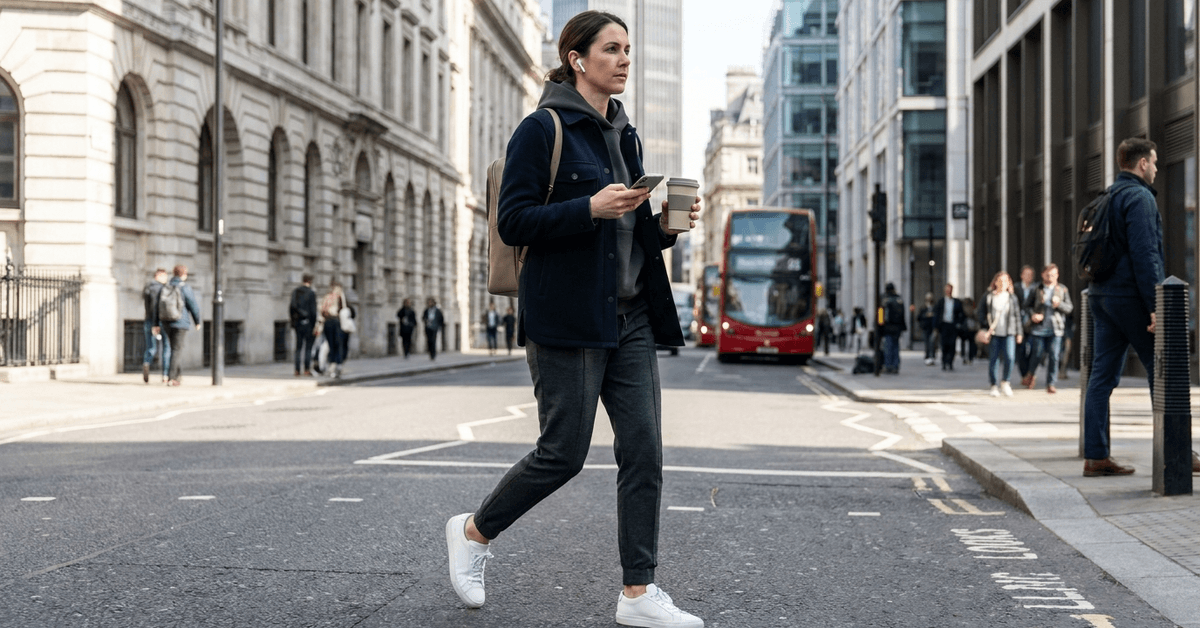
    Image 1

    Black fights city textures. It absorbs light and creates a flat silhouette against complex backgrounds. 

    A tan overshirt or clay-colored cargo pant catches light differently depending on the surface around it. That’s the visual advantage nobody talks about when recommending earth tones for street style.

    Earth Tones Photograph Better Against Urban Backdrops

    Anyone who has tried to snap an outfit photo against a concrete wall or a brick alley knows the problem. All-black outfits lose dimension in photos. 

    Earth tones keep their shape, especially in the golden-hour light that bounces off city buildings in late afternoon. Lighter shades like sand and beige pick up warmth from surrounding surfaces, and that makes even a basic outfit look richer on camera.

    The Seasonal Flexibility Nobody Mentions

    A common complaint about earth tones is that they “only work in fall.” That’s flat wrong. Lighter beiges and sand tones belong in spring and summer just as much as brown and olive belong in colder months. 

    The palette shifts warm and cool without ever needing a full wardrobe swap. One base set of earth tone pieces rotates across all four seasons, which is something an all-black wardrobe can do too, but without any visual variety.

    Earth Tone Staples That Work on City Streets

    A few pieces carry the entire weight of this wardrobe. Picking the right ones means less time thinking about outfits and more range from fewer items.

    Cargo Pants and Overshirts as the Foundation

    Cargo pants in olive or khaki handle walking-heavy days and unpredictable weather. The extra pockets become genuinely useful on commutes where carrying a bag feels like overkill. 

    Pair them with a cotton overshirt in a nut or sand shade, and the outfit covers everything from a morning coffee run to an after-work dinner without looking too casual or too dressed up.

    Seoul’s street style scene runs heavily on overshirts layered over plain tanks. That same combination works in any temperate city because the overshirt acts as both a light jacket and a standalone top.

    The Sneaker That Ties Everything Together

    Canvas sneakers in earthy shades are the one piece that makes or breaks an earth tone outfit. White sneakers pull attention downward and break the tonal flow. 

    Brown, tan, or grey canvas pairs blend into the look and stay clean-looking even after a full day on metro platforms and sidewalks.

    Building Earth Tone Outfits Layer by Layer

    Layering is where earth tones have a structural advantage over louder palettes. Because every piece sits in the same tonal family, adding or removing a layer doesn’t break the outfit’s color story. 

    A rust jacket over a sand tee over olive cargos reads as one complete look, not three competing colors.

    The approach breaks down into a simple stacking order:

    • Base layer: a lightweight tee or long-sleeve in sand, taupe, or olive. Cotton or linen blends work best for breathability in warmer subway tunnels
    • Mid-layer: a zip-up, lightweight sweater, or cardigan in brown, cream, or ecru. This layer handles the gap between outdoor cold and indoor heating
    • Outer layer: a weather-resistant shell, windbreaker, or trench in stone-grey or mud-green. Waterproof options in these colors exist at every price point and blend naturally after sudden rain

    That three-layer system means walking from a Copenhagen drizzle into a heated café requires only unzipping one piece, not rethinking the whole outfit.

    I’d Skip the “Add a Pop of Color” Advice

    I think the standard recommendation to throw in a bright accent piece, which shows up constantly on Depop listings and Instagram’s #earthtonestreetwear tag, misses the entire point of tonal dressing. 

    The strength of an earth tone outfit is its visual consistency across layers. A neon beanie or a cobalt crossbody bag doesn’t “break up monotony.” It fractures the one thing that makes the palette work.

    Mixing four or five earth shades (say olive, sand, rust, clay, and taupe together) creates more visual texture than any single bright accent could. The depth comes from subtle shifts between tones, not from contrast. 

    My take on the Grailed listings I’ve browsed: the best-selling earth tone outfits almost never include a bright color hit. Buyers respond to full tonal outfits, and that tells you something about what street style crowds prefer.

    Rainy Day Adjustments

    Mornings in cities like Melbourne or Boston bring sudden showers. A mud-green windbreaker over joggers or cargos keeps rain out without adding bulk. 

    Waterproof sneakers in brown or grey become invisible after a downpour while white sneakers start looking grimy within minutes.

    Where to Shop for Earth Tone Streetwear Without Overpaying

    Smart shopping matters because earth tone pieces tend to sit in two extremes: fast fashion dupes that fall apart in three washes, or designer pieces priced for collectors. The sweet spot lives in secondhand and curated marketplaces.

    Platform Best For Price Range Shipping
    Grailed Curated modern streetwear, designer earth tone pieces Mid to high Worldwide
    Vinted Pre-loved casual finds, budget earth tone basics Low to mid Europe-focused, expanding
    Depop Vintage streetwear, one-of-a-kind neutral pieces Low to mid UK/US/AU primarily

    Vinted tends to have the largest volume of everyday earth tone basics like plain tees and cargos, while Grailed stocks higher-end brands and curated collections.

    Local Markets and Independent Shops

    Districts like Le Marais in Paris and Daikanyama in Tokyo stock independent labels focused on neutral palettes. 

    The pieces cost more than online secondhand finds, but the materials tend to be heavier-weight cotton, linen, or wool blends that hold up longer. Rust, olive, and beige dominate the racks in these neighborhoods because the local style already leans earth-toned.

    Digital Tools for Outfit Planning

    A wardrobe planning app like Whering lets you photograph and catalog every earth tone piece you own, then mix and match digitally before getting dressed. 

    The time-savings become real after a few weeks of logging outfits, because repeating strong combinations gets easier when they’re saved visually.

    City-Specific Earth Tone Looks

    Different cities absorb earth tones differently. The outfit that blends perfectly in one neighborhood stands out in another, and that’s part of the appeal.

    San Francisco’s Mission District favors olive cargos with a sand-toned hoodie. The look adds personality without screaming for attention in a neighborhood full of murals and colorful storefronts. 

    Warsaw leans toward cappuccino-toned hoodies paired with minimalist outerwear, matching the city’s clean architectural lines. Lisbon calls for lighter beiges and tans that catch the coastal light bouncing off tiled facades.

    The common thread across all these cities: earth tones don’t fight the environment. They settle into it, and the wearer looks like they belong rather than like they’re performing an outfit.

    Dos and don’ts worth keeping in a pocket:

    • Do layer gradual shifts from dark to light neutrals within one outfit for visual depth
    • Do keep to one fabric texture per layer to avoid visual noise (canvas jacket, ribbed sweater, smooth tee)
    • Don’t pair earth tones with busy graphic prints. The clean tonal flow is the look, and patterns interrupt it
    • Don’t default to matching every piece exactly. Sand next to taupe next to olive reads more natural than three identical beige pieces

    Questions People Ask About Earth Tone Street Style

    These are the questions that come up most when people start shifting their wardrobes away from all-black and into neutral palettes.

    • Q: Can earth tones work for formal city events or just casual outfits?
      A camel blazer over a taupe turtleneck and brown trousers reads formal enough for gallery openings, dinners, and most smart-casual offices. The trick is upgrading fabric: swap cotton for wool or structured linen, and the same palette moves from street to event.
    • Q: How many earth tone pieces do I need to start?
      Five core pieces cover a full week of outfits: two tees (sand and olive), one overshirt (khaki or nut), one pair of cargo pants, and one pair of canvas sneakers. Start there and add layers as seasons change.
    • Q: Do earth tones work on all skin tones?
      Warm earth tones like rust and terracotta pair well with warm undertones, while cooler shades like taupe and grey-green suit cooler undertones. Most people find sand and olive flattering regardless of undertone, making those two the safest starting colors.
    • Q: Are earth tones going to go out of style soon?
      These colors have cycled in and out of trend coverage for decades, but they’ve never left city streets. Olive cargos and tan sneakers sold consistently through every trend cycle since the early 2000s. The base palette is permanent. Trend pieces built on top of it come and go.
    • Q: How do I keep earth tone outfits from looking too plain or washed out?
      Texture contrast does the heavy lifting. Pair a ribbed knit with a smooth canvas jacket. Add a corduroy hat or a suede crossbody bag. The color stays neutral, but the surface variation keeps the outfit visually active.

    Conclusion

    Earth tones give city wardrobes a permanent foundation that black never quite manages on its own. The palette runs through every season, every neighborhood, and every dress code without requiring a reset. 

    Starting with five earth tone pieces replaces the morning decision spiral with something closer to instinct. And the best part: the outfit that works on a Tokyo subway also works on a Montreal sidewalk.

  • How to Style a Puffer Vest Over Hoodies and Sweaters

    How to Style a Puffer Vest Over Hoodies and Sweaters

    A puffer vest over a hoodie should look effortless. Most of the time, it looks like a sleeping bag ate your torso.

    The problem is rarely the vest itself. It’s the mismatch between what goes underneath and how the vest sits on top of it, a detail that every “best puffer vests” roundup skips entirely.

    This one is for daily commuters and transit riders in their 20s and 30s who walk, bike, or squeeze onto packed trains. People who need a layering system that performs between 7 AM and 10 PM without looking like they forgot to take their jacket off.

    The Fit Problem Starts Under the Vest, Not on Top of It

    Most puffer vest guides start with which vest to buy. I’d argue that’s the wrong order entirely. The garment underneath the vest determines 80% of how the outfit looks and feels, and that’s where most people get it wrong.

    Hoodie Thickness Changes Everything

    A heavyweight cotton hoodie under a slim-profile puffer vest creates bunching around the shoulders and armpits. The sleeves twist. The collar folds awkwardly. 

    And the whole silhouette balloons outward, making you look like you’re wearing someone else’s clothes.

    Medium-weight cotton hoodies work better under vests because the fabric has enough structure to hold its shape but not enough bulk to fight the vest for space.

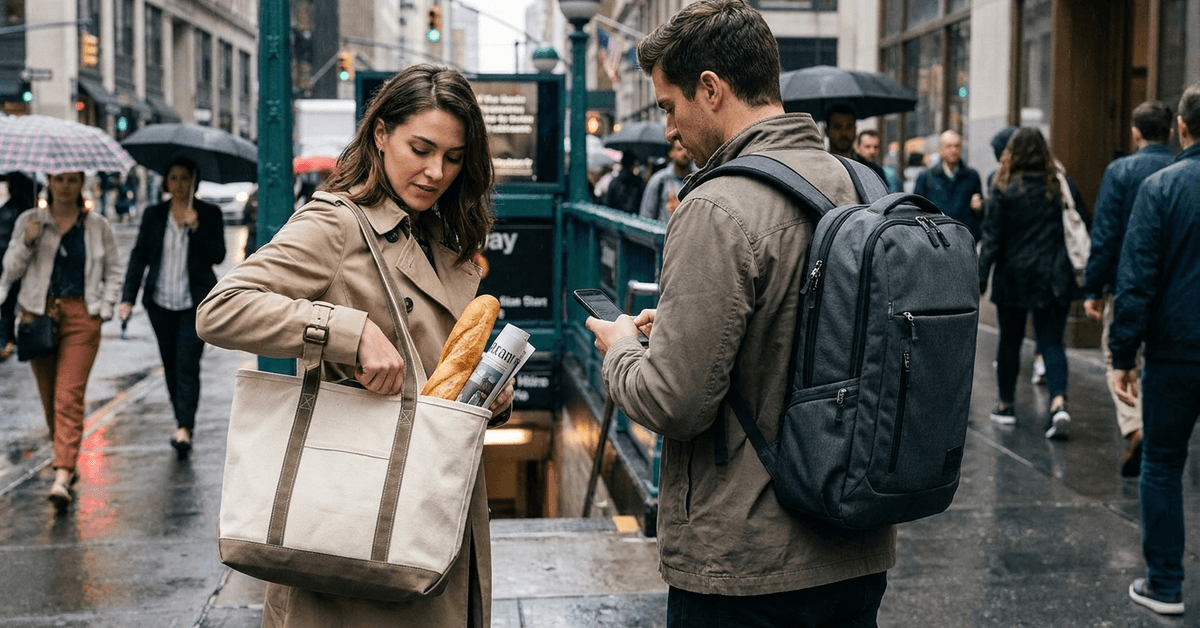
    Image 1

    Fitted cuts sit flatter against the body. The hood can drape naturally behind the collar or tuck under depending on the look.

    I would pick a mid-weight fitted hoodie over a premium heavyweight one for vest layering every time, specifically because brands like Uniqlo price their lightweight options between $20 and $40 and the proportions stay clean all day.

    Sweaters That Slide vs. Sweaters That Bunch

    Not every knit plays nice under a puffer vest. Chunky hand-knit sweaters, the kind with thick cable patterns and textured yarn, create lumps and pressure points under a quilted vest. The two layers compete instead of cooperating.

    Merino wool and cashmere blends slide under a puffer vest without resistance. The fabric is thin enough to layer flat but warm enough to justify the combination. 

    Crewneck and turtleneck cuts work better than V-necks here because the higher neckline fills the collar gap that most vests leave exposed.

    Pair a slim turtleneck under a matte-finish vest with skinny jeans and leather loafers, and the outfit shifts from weekend-casual to something appropriate for a gallery opening or rooftop bar.

    A Step-by-Step Layering Order That Prevents the Bunchy Look

    Getting the layers right is a sequence problem. The order matters, and so does how each piece sits before you add the next one.

    Start with a fitted base layer: a basic tee or a thermal, depending on temperature. This sits flat against the skin and prevents the hoodie or sweater from sticking.

    Pull on the hoodie or sweater next, smoothing the sleeves so they sit flat from shoulder to wrist. Twisted sleeves under a vest are one of the fastest ways to make an outfit look careless.

    Add the puffer vest last, adjusting the collar so the layer underneath is visible. If wearing a hoodie, letting the hood hang out behind the vest collar creates a relaxed silhouette. Tucking it in cleans up the profile for dressier settings.

    A lightweight scarf or beanie can add a final layer on cold mornings without adding bulk. Both compress into vest pockets when temperatures climb later in the day.

    Picking a Puffer Vest for City Weather

    Climate dictates vest choice more than personal style does. A vest that works for October in Berlin won’t perform the same way during January in Montreal, and the wrong pick creates either overheating on transit or freezing between stops.

    Wet Cities Need a Water-Resistant Shell

    Rain-heavy cities like Seattle, London, and Vancouver demand a vest with a water-resistant outer shell. A standard nylon puffer vest will soak through in light drizzle and take hours to dry, which defeats the point of wearing it during a commute.

    Quick-drying materials make a real difference for people who bike or walk in wet conditions. A soaked vest on a packed bus is uncomfortable for everyone involved.

    Cold Cities Need More Fill, Not More Layers

    I think the instinct to pile on extra layers in cold cities like Montreal or Toronto is a mistake when a higher-fill-power vest would solve the problem with a single garment. 

    Down-filled vests with 600+ fill power trap more heat per ounce than synthetic alternatives, meaning the vest can be thinner while keeping the same warmth.

    Pairing a high-fill vest with a medium-weight hoodie covers most urban winter conditions between 0°C and 10°C without the restricted movement that comes from stacking three or four layers.

    Feature Wet City Vest (Seattle, London) Cold City Vest (Montreal, Toronto)
    Shell Material Water-resistant nylon or polyester Standard nylon, windproof preferred
    Fill Type Synthetic (dries faster) Down (600+ fill power)
    Best Base Layer Moisture-wicking thermal Medium-weight cotton hoodie
    Priority Quick-dry, breathable Heat retention per ounce

    The takeaway: pick the vest for the weather pattern, not the temperature number alone.

    Color Pairing on City Streets

    Subdued palettes dominate urban vest styling for a reason. Black, navy, olive, and charcoal pair with almost anything and look appropriate on transit, at work, and out at night.

    But I’d push back on the idea that neutral-on-neutral is always the safest bet. After looking at street style coming out of Copenhagen and Seoul through 2025 and into 2026, the more memorable outfits use contrast color pairings: an olive vest over a cream sweater, a charcoal vest over a rust-colored hoodie. 

    Monochrome can look flat and washed out, especially in gray cities where everything around you is already concrete and overcast.

    A few pairing approaches that work across most city settings:

    • Tonal layering (same color family, different shades) creates depth without risk. Navy vest over a light blue hoodie is a good example.
    • Earth tone contrast (olive vest over cream or sand) reads polished without trying too hard. Popular in Amsterdam and Copenhagen street style.
    • Dark vest, bright hoodie (black or charcoal vest over a burnt orange or burgundy hoodie) adds personality without crossing into costume territory.

    Bold color under a dark vest lets the outfit have a focal point. All-dark layering looks fine, but it rarely looks interesting.

    Mistakes That Make Puffer Vest Outfits Fall Apart

    Even a good vest and a good hoodie can look wrong together. A few errors show up constantly on city streets:

    • Oversized padding on a small frame. A heavily padded vest overwhelms narrow shoulders and makes subway seating uncomfortable. Slim-profile vests with lighter fill work better for petite or lean builds.
    • Mismatched warmth levels. A down-filled vest over a thin summer-weight hoodie creates an unbalanced layer system where the torso overheats and the arms freeze. Match the insulation weight across both pieces.
    • Ignoring fit through the torso. A vest that gaps at the sides or rides up above the waistband looks like an afterthought. The hem should hit at or just below the hip bone for standard proportions, or at the waist for cropped styles.

    Each of these is fixable before buying. Try the vest on over the hoodie or sweater in the store, not over a t-shirt. The fitting room version needs to match the street version.

    Accessories That Make Sense for Commuters

    Pockets are a puffer vest’s biggest practical advantage over a sweater or cardigan on their own. Zip-closure pockets hold transit cards, keys, earbuds, and phones securely during a commute without needing a separate bag.

    For anything larger, a crossbody bag or belt bag keeps hands free during rush hour. This combination, vest pockets for essentials, crossbody for everything else, is common among daily commuters in Paris and Singapore for a reason.

    Weather apps like AccuWeather can help plan morning layer choices, particularly in cities where temperatures swing 10+ degrees between dawn and afternoon.

    Questions People Ask About Puffer Vest Layering

    These come up often when people start experimenting with vest-over-hoodie outfits in cities.

    • Q: Can puffer vests work in winter or are they only for fall?
      Puffer vests work through mild urban winters when paired with insulated base layers and warm accessories. Cities that stay above -5°C to 0°C are the sweet spot. Below that, a full jacket starts to make more sense.
    • Q: Do puffer vests look good on slim or petite body types?
      Slim-profile vests with minimal padding work well on smaller frames. The trick is keeping the layer underneath fitted so there’s a visible shape through the midsection instead of a shapeless column of fabric.
    • Q: How do I wash a puffer vest without ruining the fill?
      Most synthetic-fill vests are machine washable on a gentle cycle with cold water. Down-fill vests need a front-loading washer (top-loaders can damage baffles) and a low-heat tumble dry with tennis balls to redistribute the fill.
    • Q: Are cropped puffer vests still in style in 2026?
      Cropped vests remain popular in Copenhagen and Seoul street style heading into 2026, particularly over oversized hoodies and wide-leg pants. Standard-length vests are more versatile for commuters who need pocket access at hip level.
    • Q: What’s the best puffer vest color if I can only own one?
      Black is the safe answer, but matte olive is more interesting and pairs with just as many combinations. Olive reads less corporate than black and works across casual and semi-dressed-up settings.

    Conclusion

    The right puffer vest setup turns unpredictable city weather into a non-issue instead of a daily frustration. Getting the layers underneath right matters more than the brand name on the vest itself.

    A $30 Uniqlo vest over a well-fitted hoodie can outperform a $200 designer vest over the wrong sweater. Fit, fabric weight, and color contrast do the heavy lifting that logos never will.

    So try the vest on over what you plan to wear underneath it, not over a store mannequin’s idea of an outfit. That ten-second fitting room test saves every awkward mirror check on the platform later.

  • How to Transition Your Urban Wardrobe from Winter to Spring

    How to Transition Your Urban Wardrobe from Winter to Spring

    A 7 AM subway platform in March sits around 8°C. Step onto a heated train, and it jumps past 22°C. That swing happens twice before lunch, and your outfit either handles it or falls apart.

    Most spring wardrobe guides treat the season like one temperature. City living breaks that assumption fast, because a single commute can cross three or four microclimates before coffee.

    This one is for the daily transit rider, the person walking 10,000 steps between meetings, errands, and crowded platforms. If dressing for spring means stuffing a coat into your lap on the train by 10 AM, the wardrobe plan failed.

    Why Your Morning Outfit Falls Apart by Noon

    The gap between outdoor spring air and indoor heating creates a specific problem that seasonal fashion advice tends to skip. A morning walk to the station calls for a warm layer. The train is blasting heat. The office runs cool. 

    How to Transition Your Urban Wardrobe from Winter to Spring

    An afternoon errand puts you back outside in sun. That is four temperature shifts, and each one demands a different configuration of the same clothes.

    The Subway-to-Street Temperature Gap

    Cities like New York, London, and Tokyo run transit systems that are notoriously warm, even in March and April. Wear a thick wool coat to beat the morning chill, and within ten minutes underground, it becomes a liability. 

    The fix is not owning more clothes. The fix is picking pieces that compress, roll, or tie without destroying the look.

    This is where the standard “just layer” advice gets thin. Layering only works if each layer can be removed and stored easily while standing in a packed carriage. A bulky peacoat does not fold into a tote. A trench coat trailing off your arm on a crowded bus is annoying for everyone involved.

    Microclimates Change the Rules

    Outdoor café at noon, air-conditioned museum at 2 PM, windy bridge crossing at 4 PM. Each micro-environment demands something slightly different. The people who dress well through spring in cities are not buying more. 

    They are choosing pieces with dual functions: a scarf that works as a headwrap on a windy platform, a jacket that packs into its own pocket, shoes that survive puddles and still look clean at dinner.

    Editing a City Closet for Spring Without Starting Over

    Tearing out your entire winter wardrobe in March is a mistake. Spring arrives unevenly in most cities. Paris and Amsterdam can still throw near-freezing nights into late April. The smart move is a rotation, not a reset.

    Store the Bulk, Keep the Midweights

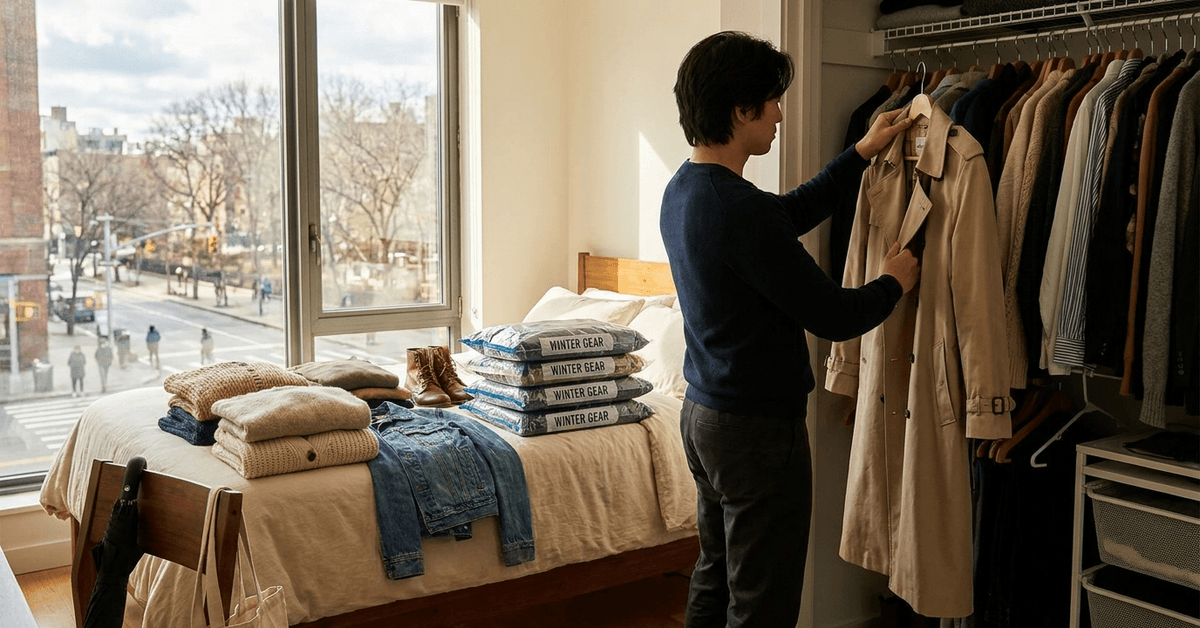
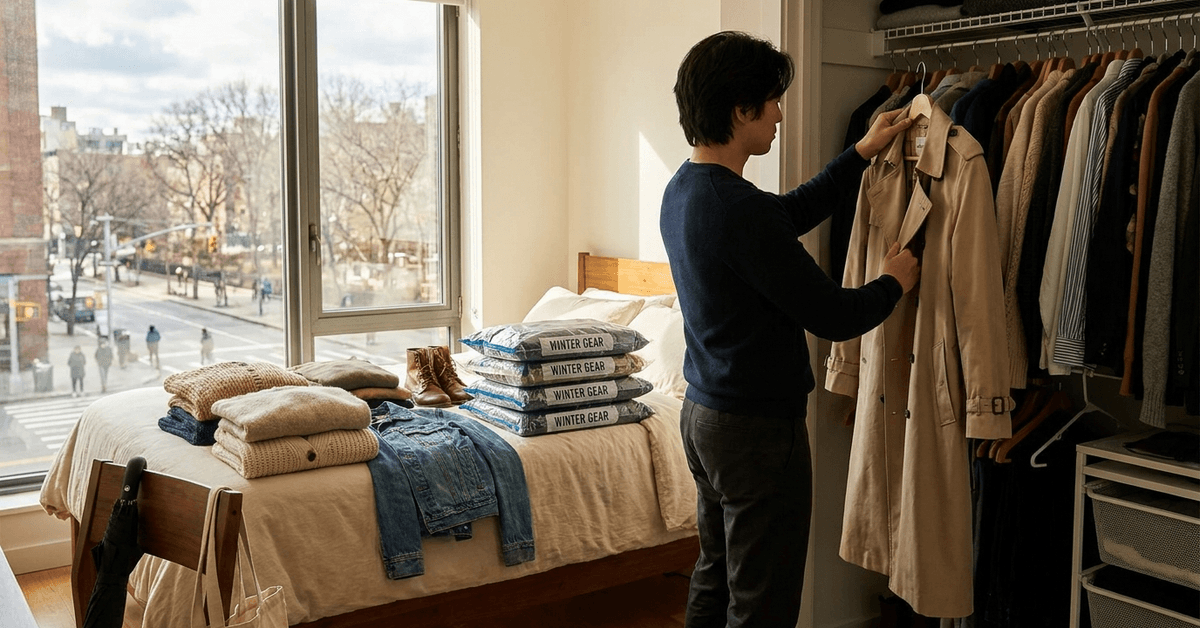
    Heavy parkas, insulated boots, and thick wool sweaters can get packed away by late March in most Northern Hemisphere cities. 

    Vacuum-bagging these pieces saves real space, and that matters in a 40-square-meter apartment. Apps like Sortly let you photograph and tag items before storage, so October doesn’t become a guessing game.

    But midweight knits, lighter wool layers, and lined jackets should stay accessible. They fill the gap between “too cold for just a shirt” and “too warm for a winter coat” that defines spring in cities.

    Reassess the Basics Under Better Light

    A grey crewneck that looked fine under November lamplight might look worn and pilled under April sun. Spring daylight is harsh on tired basics. 

    Check tees, jeans, and mid-layer sweaters for fading or loose seams. Replacing two or three staples at COS or Uniqlo costs less than one trendy jacket and does more for how your outfits read on the street.

    Layering That Survives Crowded Transit

    Layering is the word every spring style article uses. Few of them talk about what happens to those layers when you are packed shoulder-to-shoulder on a rush-hour train.

    The Overshirt Beats the Trench for Most Commuters

    I would pick an overshirt or shacket over a trench coat for daily city commuting after comparing how both perform on transit systems in cities like Toronto and Seoul. 

    The trench is the default recommendation for spring outerwear. It looks sharp. It photographs well. And for daily commuters, it is one of the least practical options.

    A trench does not compress. It does not fold into a bag. It cannot be tied around the waist without looking awkward. And the water resistance on most trenches under $200 is cosmetic at best: fine for a light drizzle, useless in an actual spring downpour.

    An overshirt or shacket does all the same warmth work in the 10°C to 18°C range, rolls into a backpack, and weighs about a third as much. 

    I think the trench coat’s dominance as the go-to spring jacket is mostly aesthetic tradition rather than practicality, especially after checking how brands like Uniqlo price their water-resistant overshirts at roughly half the cost of a comparable trench.

    Mixing Textures for Real Temperature Swings

    A single-fabric outfit locks you into one comfort zone. A merino wool tee under a cotton sweater under a nylon shell gives three adjustment points. 

    Pull the shell. Still warm? Tie the sweater. The merino tee handles both the heated office and the breezy walk.

    This combination specifically targets the 8°C morning, 20°C afternoon swing that dominates April in cities like Berlin and Chicago. Match textures to temperature tiers, and the same three pieces cover a 12-degree range without a fourth layer.

    Spring Footwear for All-Day City Walking

    Shoes make or break a spring transition faster than any jacket. The wrong pair means blisters by lunch, wet socks by 3 PM, or a look that clashes with everything above the ankle.

    Shoes for Unpredictable Weather

    Classic white sneakers are the safe pick, and they work for most mild, dry days. But spring in Seoul, London, and Toronto means rain without warning. 

    A pair of waterproof leather ankle boots handles the wet crosswalks and puddle-heavy curbs that sneakers cannot. Owning both and checking a weather app before leaving the house is the simplest footwear strategy for spring.

    The specific thing to avoid: suede anything. Spring puddles and city grime ruin suede in one outing. It is a fall fabric pretending to be a spring option.

    The Sock Swap That Changes Everything

    Heavy winter socks under spring shoes create heat, blisters, and sweat. Swapping to lightweight merino or bamboo blend socks fixes all three problems. Merino regulates temperature better than cotton, dries faster when damp, and holds up through 15,000-step city days.

    Some commuters keep a spare pair in their work bag. A sock change at midday sounds odd until you have done it. Then it sounds obvious.

    Accessories That Solve Spring-Specific City Problems

    Accessories in spring are not decorative. They are problem-solvers. The right ones eliminate the small annoyances that stack up during a long day of walking and transit.

    A compact umbrella is non-negotiable in cities like Chicago, Lisbon, and London. A full-size umbrella on a crowded train earns dirty looks. Get one that fits inside a backpack side pocket.

    Pack the urban spring bag with these:

    • Lightweight umbrella that weighs under 300 grams and fits a bag pocket
    • SPF stick or small sunscreen tube for midday sun exposure between stops
    • Reusable water bottle because heated transit dehydrates faster than walking
    • Foldable tote for farmers market finds or impulse purchases that would otherwise go in a plastic bag

    A light scarf might seem like a winter holdover, but on breezy spring evenings and exposed train platforms, it fills a gap that no jacket collar matches.

    Sunglasses earn daily carry starting in March. Longer daylight means more glare, and UV exposure on city streets reflects off glass buildings and wet pavement. Look for UV400 protection as a baseline.

    Mix-and-Match Outfit Formulas for Spring City Days

    Building a spring city wardrobe around formulas rather than individual outfits reduces decision fatigue. Three combinations cover most situations:

    • Jeans + merino tee + overshirt + white sneakers: gallery day, coffee meeting, weekend errands
    • Chinos + cardigan + slip-on loafers: indoor-outdoor events, coworking sessions, casual dinners
    • Hoodie under a blazer + dark denim + ankle boots: creative office days, evening plans that start straight from work

    Each formula uses pieces already discussed above. The trick is that every item works in at least two of the three combinations. A ten-piece spring capsule wardrobe built on this logic covers five days without repeating a full outfit.

    Adapting to Local City Style and Weather Patterns

    Street style shifts fast once spring hits. Milan goes bold with color accessories earlier than most cities. Copenhagen leans into soft pastels and oversized silhouettes. 

    The local cue matters because looking out of place in a new city is its own kind of discomfort.

    Micro-forecast apps like AccuWeather or Tomorrow.io offer neighborhood-level predictions.

    Checking the forecast for your specific route, not just the city-wide summary, prevents the “dressed for 18°C but it’s 11°C in the shade” problem that catches people off guard in April.

    Questions People Ask About Spring Urban Wardrobes

    Spring city dressing brings up a lot of practical questions that generic fashion advice tends to skip. These come up most often.

    • Q: When should I fully switch from winter to spring clothes?
      There is no single date. Track your city’s nighttime lows for a consistent streak above 8°C to 10°C before storing heavy coats. Most Northern Hemisphere cities reach that point somewhere between late March and mid-April, but freak cold snaps can push it later.
    • Q: Are trench coats worth it for spring commuting?
      They look great in photos but are impractical for crowded transit. A water-resistant shacket or packable jacket does the same insulation job and fits inside a bag when removed. Trenches work best for car commuters or short outdoor walks.
    • Q: How many layers do I need for a spring city day?
      Three layers handle most conditions: a breathable base (merino tee), a mid-layer (cotton sweater or hoodie), and a removable outer layer (overshirt or light jacket). Going beyond three usually means one layer sits unused all day.
    • Q: Do I need different shoes for spring vs. fall in the city?
      Same rain risks, similar temperatures, but spring brings more standing water from snowmelt and sudden showers. Waterproof ankle boots pull double duty across both seasons. Avoid suede until consistent dry weather arrives.
    • Q: What is the easiest upgrade for a spring city wardrobe?
      Swap socks and base layers first. Lightweight merino socks and breathable tees cost under $30 combined and change how every outfit feels. Outer layers get all the attention, but the pieces closest to skin control comfort.

    Conclusion

    Spring city dressing rewards precision over volume, and the commuters who get it right own fewer pieces, not more. A ten-item capsule built around layering formulas handles more weather scenarios than a full closet of single-purpose garments. 

    The real test of a spring wardrobe is not how it looks leaving the house at 8 AM. The test is whether it still works at 8 PM after a full day across four temperature zones

  • 5 Streetwear Outfits that Look Professional Yet Comfortable

    5 Streetwear Outfits that Look Professional Yet Comfortable

    Tailored joggers cost about $60 to $90 from most mid-range brands. A pair of wool dress trousers runs $150 or more. And the joggers get worn three times a week while the trousers sit folded in a suitcase.

    That math explains why so many freelancers and remote workers have quietly abandoned traditional business casual. The problem is that most “professional outfit” guides still treat streetwear like a weekend downgrade rather than a weekday default.

    This piece is for the person booking co-working desks in different cities every month. The one who needs to look sharp at a client lunch in Berlin and still feel comfortable on a 6 PM flight to Barcelona.

    Why the “Capsule Wardrobe” Advice Falls Apart for City Hoppers

    The standard packing recommendation for work travel goes something like this: bring navy chinos, a button-down, leather shoes, and a blazer. Capsule wardrobe wisdom says those four items cover any professional setting.

    That advice sounds logical until the third day of wearing the same rigid outfit in 28°C heat while walking between meetings.

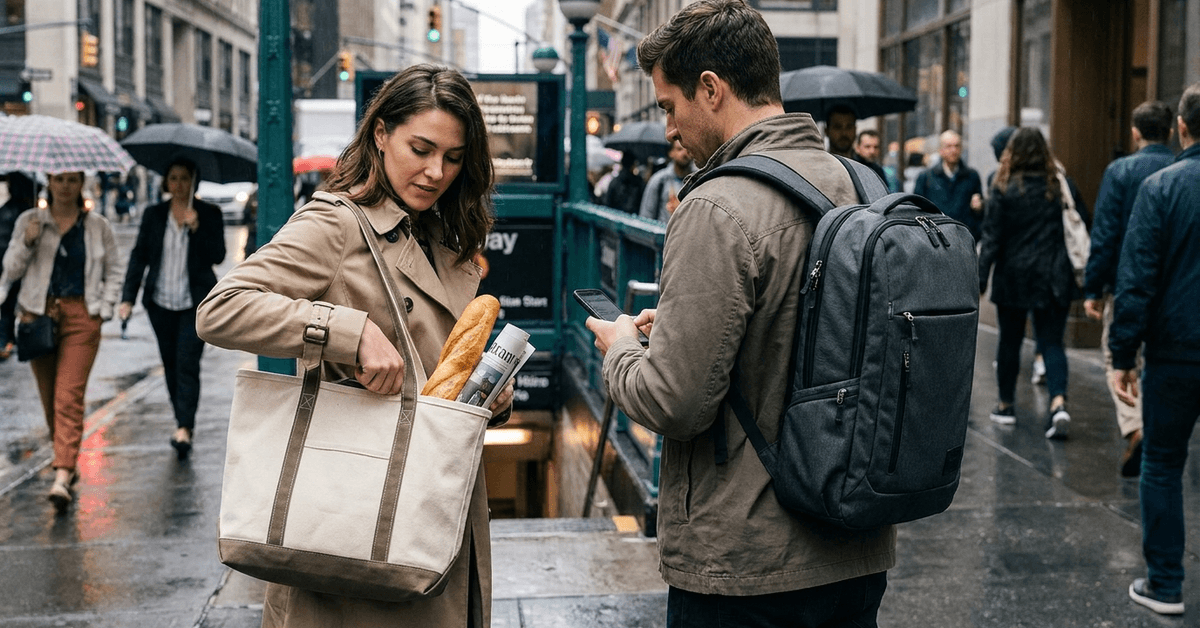
    Image 1

    Capsule wardrobes assume a single climate, a single office culture, and a closet at home to rotate from. Freelancers working across London, Amsterdam, and Lisbon in a single month don’t have that luxury.

    The Real Dress Code at Creative Agencies and Tech Offices

    Walk into a creative agency in Shoreditch or a tech firm in Kreuzberg, and the person in a blazer is almost always the outside client, not the team. The people running the meeting are wearing layered tees, overshirts, and clean trainers.

    I’d push back on the idea that chinos and a blazer are the “safe” professional default for city professionals in 2026. 

    A structured bomber jacket over dark denim reads sharper in coworking spaces from Brooklyn to Copenhagen than a wrinkled Oxford shirt ever will. The reason is simple: modern professional settings, especially in creative and tech industries, judge fit and intentionality over formality. 

    A well-fitted streetwear layer signals that someone thought about how they look. A rumpled blazer signals that someone packed in a hurry.

    Climate Kills Formality Faster Than Dress Codes Do

    Layering sits at the center of making streetwear work across cities. Amsterdam mornings start cool, then warm up by noon. Barcelona swings between mild shade and direct heat within a single block.

    A cotton overshirt (sometimes called a shacket) handles this better than any suit jacket. It goes on indoors, comes off outdoors, and rolls into a bag without wrinkling. 

    Pair it with slim black trousers and patterned trainers, and the look works whether the next stop is a gallery meeting or a rooftop lunch.

    Five Professional Streetwear Outfits Built for Real City Days

    Each of these combinations solves a specific problem that business-casual defaults ignore: temperature shifts, long walking days, and the need to look put-together without ironing anything.

    Tailored Joggers and Monochrome Layers

    Tailored joggers have slimmer cuts and cleaner hems than gym sweats. Pair black joggers with a white crew-neck tee and a matching jacket in the same tone. Low-profile sneakers and a neutral leather backpack complete the look.

    This combination works well for client-facing days in cities like London or Toronto where the office culture already leans casual. 

    The monochrome palette does heavy lifting: it reads as intentional without requiring a single piece of traditional business clothing.

    Minimalist Hoodie, Chinos, and White Sneakers

    A grey, navy, or charcoal minimalist hoodie paired with tapered chinos and classic white sneakers hits the sweet spot for open-plan office environments. A simple leather-strap watch adds just enough formality.

    The trick is keeping logos invisible or extremely subtle. A hoodie with a two-inch chest logo reads like off-duty. A clean hoodie with no branding reads like a design choice. Paris freelancers figured this out years ago, and the rest of Europe followed.

    Overshirt, Slim Trousers, and Statement Trainers

    Amsterdam and Copenhagen are layering cities. An overshirt over a tucked plain tee, paired with slim black trousers and statement trainers (think color splashes or geometric patterns), creates enough visual interest to skip accessories entirely.

    Add a nylon tote for carrying a laptop and notebook. The overshirt handles indoor-outdoor transitions without the bulk of a coat, and the trainers give the outfit a personality that dress shoes never could.

    Structured Bomber, Black Denim, and Subtle Accessories

    A structured bomber jacket is one of the most versatile outer layers for unpredictable weather days. Pair it with dark-wash black jeans and keep accessories muted: a metal cuff, a minimalist wallet, or a simple cap.

    This outfit translates across New York, Milan, and most Northern European cities without adjustment. 

    The rule: avoid heavy prints on the bomber. A clean, solid-color bomber over dark denim reads polished. A graphic-heavy bomber over distressed jeans reads like a weekend at a music festival.

    Utility Vest, Polo, and Tailored Shorts

    Summer in Berlin calls for a different approach. A utility vest worn over a soft cotton polo and neat tailored shorts keeps things breathable but structured. City-appropriate slip-on shoes and a light messenger bag finish it off.

    I wouldn’t recommend this combination for a first meeting with a conservative client. But for creative sessions, gallery visits, or co-working days above 30°C, it earns more respect than showing up in sweat-soaked chinos.

    Comparing These Outfits by Setting and Season

    Picking the right combination depends on where the meeting is and what month it is. A quick breakdown:

    Outfit Best Season Best Setting Formality Level
    Tailored Joggers + Monochrome Layers Fall/Spring Tech offices, co-working spaces Medium
    Minimalist Hoodie + Chinos Year-round Open-plan offices, casual client meetings Medium
    Overshirt + Statement Trainers Spring/Fall Creative agencies, studio visits Medium-low
    Structured Bomber + Black Denim Fall/Winter Networking events, city dinners Medium-high
    Utility Vest + Polo + Shorts Summer Co-working days, outdoor meetings Low-medium

    The bomber-and-denim combination covers the widest range of professional situations, which makes it the strongest single option for a packed suitcase.

    Accessories That Travel Well and Look Professional

    The right accessories turn a basic streetwear outfit into something that feels considered. But overpacking accessories is a common mistake for frequent travelers.

    Stick to a short list of pieces that earn their bag space:

    • A minimalist watch in silver or black: pairs with every outfit above and adds structure to casual layers
    • A slim messenger bag or small backpack in a neutral shade: carries a laptop without looking like a student bag
    • An unbranded cap or beanie: handles bad hair days, sun, and cold ears across multiple climates
    • A tech pouch: keeps cables and chargers organized at shared desks without dumping loose cords on the table

    Noise-canceling earbuds double as a practical tool and a subtle style piece. A clean pair of white or matte black earbuds looks deliberate, especially in co-working environments.

    Making Streetwear Work Trip After Trip

    Maintaining these looks over repeated travel weeks takes a bit of planning. Wrinkle-resistant fabrics matter more than brand names when clothes spend three days in a carry-on.

    A few habits that keep professional streetwear looking sharp on the road:

    • Roll, don’t fold: rolling prevents creases in joggers, chinos, and overshirts better than flat-folding
    • Limit each outfit to two colors: cohesion happens automatically when the palette stays tight
    • Check care labels before buying: some structured bombers and overshirts require dry cleaning, which defeats the purpose of low-maintenance travel wear
    • Carry a travel-size steamer: five minutes of steaming removes wrinkles faster than hunting for an iron at an Airbnb

    Apps like Cladwell help build outfit combinations from a limited set of clothes, which is especially useful when packing light for multi-city trips. 

    And for checking weather conditions before deciding between the hoodie or the overshirt, AccuWeather gives hour-by-hour forecasts for most global cities.

    Questions People Ask About Professional Streetwear

    A few searches that come up again and again when people try to dress well for work without going full business casual.

    • Q: Can I wear sneakers to a professional meeting?
      Clean, low-profile sneakers in white or black pass in most creative and tech environments. The test: if the sneakers have visible wear, scuffing, or loud branding, swap them for a cleaner pair. Court-style sneakers tend to read the most professional.
    • Q: Are joggers appropriate for work in 2026?
      Tailored joggers with a slim fit and no visible drawstring sit in professional territory now. The fabric matters more than the label. Cotton-blend joggers with a pressed finish look closer to trousers than to gym clothes.
    • Q: How do I know if my office is streetwear-friendly?
      Look at what the senior people wear on a normal Tuesday, not on a Friday. If they’re in clean sneakers and unstructured jackets, streetwear fits. If suits dominate, save the bomber for after-hours.
    • Q: What is the biggest mistake people make with professional streetwear?
      Wearing too many statement pieces at once. One bold item per outfit works. Two or more starts competing for attention and the whole look falls apart. Keep the rest of the outfit quiet, and let that single piece do the talking.
    • Q: Do these outfits work outside of Europe?
      The principles transfer to most creative and tech hubs globally. Tokyo’s Ginza district, Brooklyn, Toronto’s Queen West, and Melbourne’s Fitzroy all share a similar standard. Conservative industries like banking and law still expect traditional dress, so read the room first.

    Conclusion

    Streetwear has earned its place in professional wardrobes because modern offices stopped caring about ties and started caring about intention. 

    The freelancer who shows up in a well-fitted bomber and clean trainers often looks more put-together than the consultant in a creased suit. 

    Packing fewer pieces that layer well beats packing a separate outfit for every possible scenario. The only rule that still holds across every city and every meeting room: fit matters more than formality.

  • Tote Bags vs. Backpacks: Which is Better for Daily Urban Transit?

    Tote Bags vs. Backpacks: Which is Better for Daily Urban Transit?

    Rush hour on the Paris Metro at 8:30 a.m. packs bodies so tight that a bulky bag becomes everyone else’s problem. The bag strapped to your back or slung over your shoulder changes how those 40 minutes feel.

    Most tote-versus-backpack comparisons treat this like a fashion question. The deciding factor has nothing to do with aesthetics. It comes down to how many transfers your commute has and what the weather does when you’re between them.

    This one is for the daily transit rider, the person who spends 45 minutes or more on trains, buses, or bikes five days a week. If that sounds like your morning, the usual “just pick what looks good” advice falls apart fast.

    Your Commute Type Decides the Bag, Not Your Outfit

    The tote-versus-backpack debate gets framed around personal style so often that the real question gets buried. 

    A bag is a transit tool first. How it performs in a moving crowd, on a wet platform, or crammed between seats matters more than what it says about your wardrobe.

    Short Hops on a Single Line

    If your commute is one train and a five-minute walk, a tote bag works. Grabbing a transit card, phone, or water bottle takes one motion with an open-top tote. There’s zero fumbling with zippers. 

    Image 1

    Milan cyclists doing short rides to work carry totes for this exact reason: the commute is brief enough that shoulder fatigue and weather risk stay low.

    A 15-minute ride on the Central line in London? The tote handles it fine. But stretch that commute to 40 minutes across two transfers, and the single strap starts digging.

    Multi-Transfer Commutes and Long Rides

    A backpack distributes weight across both shoulders, and that difference compounds over time. 

    Carrying a laptop, charger, lunch, and a water bottle in a tote for an hour-long commute creates real discomfort by day three. The body notices uneven loading faster than most people expect.

    Tokyo commuters almost universally carry sleek black backpacks on their long train rides. 

    Toronto riders doing a mix of transit and walking lean toward streamlined packs with dedicated laptop sleeves. These aren’t style choices. They’re responses to commute length.

    Pickpocket Risk on Public Transit: Totes vs Backpacks

    Security on public transit is a physical problem, not an abstract one. Cities like Barcelona, Rome, and the New York subway system have well-documented pickpocketing patterns, and the type of bag you carry changes your exposure.

    The Open-Top Problem

    Tote bags have no closure. An open top on a crowded platform or a packed festival lets someone reach in without much difficulty. 

    Keeping a tote pulled to the front of the body in dense crowds helps, and a small zippered pouch inside for a wallet and phone adds a layer of separation. But the structural vulnerability stays.

    I’d argue that the standard advice to “just keep your tote in front” underestimates the problem. My take: if your daily commute runs through a station like Termini in Rome or Châtelet in Paris, a tote is a liability no matter how you hold it. 

    A zipped backpack worn on the chest through those specific stations is a measurably safer option.

    Backpack Security Has Its Own Gaps

    A backpack worn on the back in a crowded metro car isn’t safe either. The wearer can’t see what’s happening behind them. 

    Larger zipper pulls make a tempting target. Pacsafe makes anti-theft backpacks with lockable zippers and cut-resistant straps, and the brand is popular among riders on the Paris Metro and Prague trams.

    The security answer depends on the station, not the bag. High-traffic transfer hubs demand a bag that closes and sits where you can see it.

    Rain, Fabric and the Durability Gap

    Weather splits the tote-versus-backpack comparison faster than any other factor. And most comparisons treat this as a footnote when it should be the first filter for half the cities on the planet.

    Cotton Totes and Rain Don’t Mix

    A standard cotton tote soaks through in minutes during an unexpected shower. Everything inside gets wet: the laptop, the notebook, the phone. Leather or faux-leather totes resist water better but add weight and take hours to dry once saturated. 

    Los Angeles commuters get away with canvas totes because rain is rare. That same bag in Amsterdam or Copenhagen becomes a problem by October.

    Nylon Backpacks Dry Fast and Protect Tech

    Most urban backpacks use nylon or polyester, which dries quickly and sheds light rain. Padded laptop compartments add shock and moisture protection. Copenhagen cycling commuters choose waterproof backpacks almost year-round. 

    A brand like Fjällräven has built a following across northern Europe partly because their packs survive five or more years of daily use in those conditions.

    The durability gap here is real. A $15 cotton tote lasts a few months of heavy commuting. A $120 nylon backpack lasts years. The per-use cost flips the sticker price comparison.

    Tote Bag vs Backpack: Side-by-Side for Commuters

    The differences sharpen when compared across the same criteria. This table strips out the style conversation and focuses on the things that change your daily commute.

    Feature Tote Bag Backpack
    Weight distribution Single shoulder, uneven Two straps, even load
    Access speed Instant, open top Slower, zipped compartments
    Rain protection Poor (cotton), moderate (leather) Good (nylon/polyester standard)
    Pickpocket resistance Low, open design Moderate to high, zipped
    Organization One main compartment Multiple sections, side pockets
    Bulk on transit Slim profile, fits tight spaces Bulkier, bumps into passengers
    Laptop safety Minimal padding Dedicated padded sleeve
    Cost per year of use Higher (shorter lifespan) Lower (longer lifespan)

    The takeaway: backpacks win on function for commutes over 30 minutes. Totes win on access speed and slim fit for short, dry trips.

    Organization Tricks That Change the Experience

    Both bag types can be organized better than most people bother to do. The difference between a chaotic morning dig and a smooth grab comes down to internal structure.

    A tote’s single-compartment design turns into a junk drawer without help. Removable organizer inserts (Purseket makes a popular one) divide that open space into sections for a wallet, keys, charger, and lip balm. 

    The insert lifts out when switching between bags, which is a nice trick for people who alternate between a tote and a backpack depending on the day.

    Backpacks already have built-in separation. Side pouches hold water bottles or umbrellas. Internal zip pockets keep a charger cord from tangling with headphones. The organizational advantage grows with the number of items carried. 

    If your daily load includes a laptop, gym clothes, and lunch, a backpack’s structure prevents the pile-up that makes a tote feel heavier than it is.

    Posture and Comfort Over a Full Work Week

    One day with a loaded tote feels fine. Five days in a row tells a different story. Carrying 4 to 6 kilos on one shoulder creates an uneven pull that the body compensates for by shifting posture. 

    Over weeks and months, that compensation can lead to neck stiffness and shoulder tension.

    Backpacks spread the same load across both shoulders and the upper back. The effect on comfort is noticeable even within a single commute. 

    Orthopedic specialists in transit-heavy cities tend to recommend backpacks for anyone walking more than 20 minutes as part of their daily route.

    I think the popular advice that “a tote is fine if you pack light” misses the mark, because even a load under 3 kilos creates uneven strain when carried on one shoulder for 45 minutes on a packed Tube ride five days a week. 

    The threshold for “light enough” is lower than most people assume.

    Matching the Bag to the Day, Not Just the Commute

    A rigid one-bag-only rule ignores how city days shift. The smarter move for daily transit riders is to pick a primary bag based on the commute, then use the other for specific situations.

    The primary bag should match the majority of the commute:

    • Commutes over 30 minutes or involving rain-prone cities: backpack as the default
    • Commutes under 20 minutes on a single dry route: tote works as the daily option
    • Days involving a client meeting or gallery opening: a tote may fit the dress code better than a sporty pack
    • Days with gym gear, multiple stops, or changing weather: backpack handles the load and keeps things organized

    The Citymapper app handles real-time route planning across London, New York, and Berlin, and it can help determine whether a particular day’s transit plan is a short tote day or a long backpack day.

    Tile and AirTag trackers work inside either bag type for anyone prone to leaving things behind. Tuck one inside the laptop sleeve or the organizer insert, and the bag becomes findable.

    Questions People Ask About Tote Bags vs Backpacks for Commuting

    These come up constantly in transit and urban planning forums, so let me cover the ones that rarely get a straight answer.

    • Q: Can a tote bag work for a daily commute with a laptop? It can, but only if the commute is short and dry. A laptop bouncing around in an unpadded cotton tote on a 40-minute bus ride risks both the device and your shoulder. Padded laptop totes exist, but they start approaching backpack weight and price.
    • Q: Are anti-theft backpacks worth the higher price? For commuters riding through high-traffic stations daily, yes. Pacsafe’s lockable zippers and slash-resistant panels add $40 to $80 over a standard pack, and that gap pays for itself the first time it prevents a loss. For low-traffic suburban routes, a regular zipped backpack does the job.
    • Q: Do backpacks damage dress clothes on a formal commute? They can. Textured straps rub against suit jackets and blouses over repeated use. A smooth-strap design or placing a thin cloth between the strap and the fabric reduces this. Some professionals carry a garment bag separately and use the backpack for everything else.
    • Q: How often should a daily commuter replace their bag? Cotton totes used daily show wear within three to six months. Nylon backpacks from mid-range brands hold up for two to four years. Fjällräven and similar outdoor-grade packs stretch to five years or longer, even in wet climates.
    • Q: Is a convertible tote-backpack a good compromise? The hybrid designs sound appealing but usually sacrifice quality in both modes. Straps that convert from single to double tend to wear out faster, and the bag sits awkwardly in one of the two configurations. Owning a dedicated tote and a dedicated backpack gives better performance for roughly the same total cost.

    Conclusion

    Picking between a tote and a backpack depends on commute length, weather, and how many items travel daily. The bag that matches your specific transit pattern will outperform the one that matches your outfit. 

    Commuters covering long routes in rain-heavy cities get more from a structured, water-resistant backpack. Short dry hops in cities with minimal transfers leave plenty of room for the speed and slim profile of a tote.

  • How to Master the All-Black Streetwear Outfit Without Looking Boring

    How to Master the All-Black Streetwear Outfit Without Looking Boring

    An all-black outfit should be the easiest thing to pull off. Grab dark jeans, a black tee, black sneakers, done. So why do most people who dress head-to-toe black still look like they grabbed whatever was closest to the bed?

    The usual advice points to texture. “Mix leather and cotton.” “Add a nylon layer.” That answer sounds right, but it skips the thing that makes or breaks an all-black look before fabric even enters the picture: proportion.

    This one is for the city commuter who already owns fifteen black garments and still can’t figure out why the outfit reads “laundry day” instead of “intentional.” The fix is simpler and more specific than most style guides make it.

    Proportion Does More Work Than Texture Ever Will

    Every all-black streetwear guide opens on fabric mixing. Leather jacket over cotton hoodie, nylon shell over denim. 

    I would argue that proportion and silhouette control about 80% of the visual weight in a monochrome outfit, based on how drastically a tucked-in tee changes the same pair of wide-leg trousers.

    Image 1

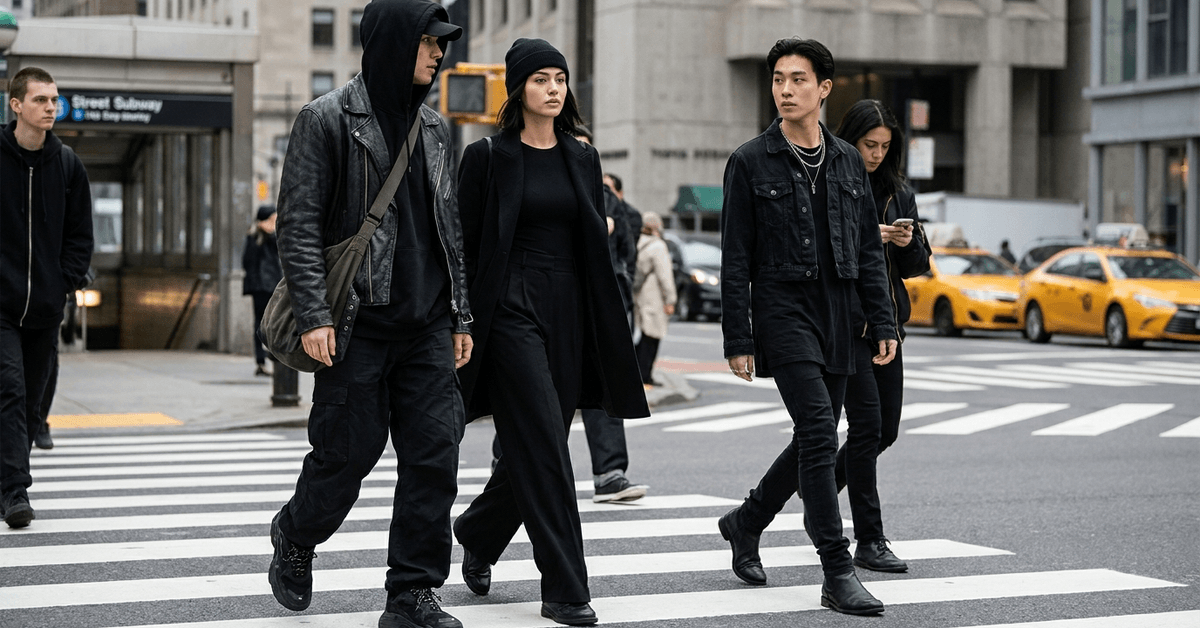
    Think about it. Two people wearing identical all-black outfits: same fabrics, same brands, same price point. One pairs slim black trousers with a boxy cropped jacket. 

    The other wears skinny jeans under an oversized hoodie that hits mid-thigh. Same color palette. Completely different energy.

    Color contrast does half the styling work for people who wear multiple shades. Remove that tool, and the only variables left are shape and volume. That’s why proportion runs the show in monochrome.

    Loose-on-Tight vs Tight-on-Loose

    The two proportion formulas that consistently work in all-black are simple. Pair a fitted top half with a relaxed bottom, or flip it: oversized top with tapered legs.

    A slim black tee tucked into wide-leg cargo pants reads relaxed and deliberate. A cropped black jacket over slim trousers reads sharp without trying too hard. Both work across genders and seasons.

    The combination that almost always falls flat? Loose on loose. An oversized hoodie with baggy joggers in the same shade just reads shapeless. There’s no tension, no visual anchor for the eye. Fit contrast is the replacement for color contrast.

    Texture Mixing That Earns Its Place

    Texture does matter. But it works as a supporting player, not the lead. Swapping cotton for leather means nothing if the silhouette is already dead.

    Once proportions are set, fabric differences add dimension within a shape that already reads well. The distinction matters: texture amplifies a good fit. It does not rescue a bad one.

    Fabrics That Create Real Contrast in Black

    Some fabric pairings create more visual separation than others when everything is the same shade. The ones worth reaching for:

    • Matte leather against ribbed cotton: a leather bomber over a ribbed tank top produces two distinct sheens that catch light differently
    • Heavyweight denim over smooth jersey: a black denim overshirt layered on a jersey tee creates a stiff-versus-soft dynamic
    • Technical nylon against brushed fleece: common in cities like London and Berlin where rain and cold hit in the same afternoon

    Shiny-on-matte creates the strongest visual separation. Two matte fabrics next to each other barely register as different in street-level lighting.

    Layering for Cities That Change Weather by the Hour

    Layering is where all-black streetwear picks up depth for free. Each layer adds a new line, a new edge where the eye can catch a transition.

    The approach that works best in cities like London, Tokyo, or Amsterdam follows a simple three-piece logic: a fitted base layer, a mid-weight piece that carries the silhouette, and an outer shell that handles weather. 

    Base, Mid, Shell: The Three-Piece Framework

    A slim black Airism tee from Uniqlo’s Airism line sits flat against the skin and wicks moisture in humid climates like Singapore or New York summers. That’s the base.

    Over it, a black denim overshirt or a lightweight black gilet adds the shape. This mid-layer is the piece people see. Choose it for structure.

    The outer shell is practical: a technical nylon jacket that packs down when the sun comes out. Don’t over-style this piece. It should disappear when you take it off and leave a complete outfit behind.

    Switching a Look Between Day and Night Without Changing Clothes

    Most style guides suggest swapping sneakers for boots or adding a blazer after dark. My take on the day-to-night shift is that the swap approach fails most commuters, because nobody carries spare boots through a twelve-hour day in Seoul or Paris.

    A simpler method: adjust how existing pieces sit. Roll jacket sleeves to expose a watch or bracelet. Untuck a shirt that was tucked all day. Swap a backpack to a crossbody sling. These micro-adjustments change the visual profile without requiring a second wardrobe in a tote bag.

    Even switching which layer sits on top changes an outfit. A hoodie under an open overshirt reads different from the same hoodie worn over a zipped jacket. Same two pieces, reversed order, new look.

    Accessories That Break Monotone Without Breaking the Palette

    All-black accessories risk blending into the outfit and adding zero visual interest. The trick is hardware: silver zippers, metal buckles, chrome watch faces, and chain-link jewelry break up the monotone through reflection, not color.

    A chunky silver chain over a plain black tee does more work than a $200 textured knit. Metallics catch city light: streetlamps, neon signs, subway fluorescents. That reflected light becomes the accent color.

    Hardware, Metallics, and What City Light Does for Free

    Accessories worth considering for an urban all-black rotation:

    • Chunky silver or gunmetal rings that catch light during hand gestures
    • A matte black crossbody sling bag with exposed metal hardware
    • High-top boots with visible eyelets or buckles, especially useful on city sidewalks where footwear takes the most abuse
    • A minimal black-dial watch with a steel bracelet: one of the few accessories that transitions from subway to rooftop bar without looking out of place

    The urban crowd in cities like Seoul and Tokyo tends to treat accessories as the individuality layer. Two people can wear the same Uniqlo base outfit and look nothing alike based on bag choice and jewelry alone.

    Brands like Grailed list vintage and limited-edition accessories that add personality without the full retail hit. Older Comme des Garçons pieces or discontinued Patta collaborations often carry subtle tonal logos that only register up close.

    Keeping Black Clothes Black: The Fading Problem Nobody Styles Around

    This is the part that quietly ruins all-black outfits faster than bad proportions or wrong fabrics. Black garments fade at different rates. 

    A cotton tee washed weekly fades faster than a denim jacket worn monthly. After two months, an “all-black” outfit becomes three slightly different shades of charcoal, grey-black, and true black.

    That shade mismatch reads as accidental. And accidental is the one thing a monochrome outfit cannot afford to look.

    Managing Fade So Pieces Still Match

    A few habits keep the color consistent across a wardrobe:

    • Wash black clothes inside-out on cold settings with a color-safe detergent: hot water accelerates dye loss
    • Air-dry instead of machine-drying whenever possible: dryer heat breaks down black dye faster than washing does
    • Rotate pieces evenly so no single garment fades ahead of the rest
    • Fabric-safe black dye is available at most hardware stores for a quick color refresh on faded favorites
    Care Factor Do This Avoid This
    Washing Cold water, inside-out, gentle cycle Hot water, heavy spin
    Drying Air-dry flat or on a hanger High-heat tumble dryer
    Storage Fold dark pieces away from direct sunlight Leaving on a sunny windowsill rack
    Refresh Black fabric dye every 3-4 months for heavy-rotation items Ignoring gradual fading until pieces look grey

    The quickest tell of a careless all-black wardrobe is two pieces next to each other in noticeably different shades of “black.”

    And a lint roller belongs in every commuter bag. Black fabric picks up dust, pet hair, and subway lint within an hour of leaving the house. A quick pass before walking into a meeting or a dinner keeps the look sharp.

    Questions People Ask About All-Black Streetwear Outfits

    These come up constantly when people try to build a monochrome city wardrobe.

    • Q: How do I make an all-black outfit look expensive on a budget?
      Fit and proportion do most of the heavy lifting. A $15 black tee that fits well looks more put-together than a $90 oversized one that drowns the frame. Spend more on outerwear and shoes, since those two categories get judged hardest at a glance.
    • Q: Does all-black work in hot weather?
      It can, as long as fabrics are lightweight and breathable. Airism-style moisture-wicking tees paired with linen-blend trousers keep the palette dark without turning a summer commute into a sauna. Stick to single layers when temperatures climb above 30°C.
    • Q: Are logos acceptable in an all-black streetwear outfit?
      Tonal logos and subtle prints work better than high-contrast branding. A black-on-black logo near the hem or sleeve reads intentional without shouting. Brands like Comme des Garçons and Patta specialize in this kind of understated graphic placement.
    • Q: How many black pieces do I need for a solid rotation?
      A working rotation needs around eight to ten pieces across tops, bottoms, and outerwear. That gives enough variety to avoid repeating the same combination within a week, and it spreads wash cycles so no single piece fades ahead of the others.
    • Q: Can all-black streetwear work in professional settings?
      Absolutely, with one adjustment. Swap casual pieces for structured ones: a tailored black blazer over slim trousers reads office-appropriate while keeping the streetwear silhouette. The trick is clean lines and minimal branding during work hours.

    Conclusion

    All-black streetwear works best when proportion, not fabric variety, sets the foundation for the whole outfit. Fading control is the invisible maintenance step that separates a sharp monochrome wardrobe from a dull one. 

    Accessories built around metal hardware give city light something to catch without introducing a single new color. The commuter who nails these three details owns the look without thinking about it.

  • How to Wear Shorts With Heavy-Knit Hoodies in Transitional Weather

    How to Wear Shorts With Heavy-Knit Hoodies in Transitional Weather

    A 15°C morning and a 26°C afternoon hit the same city block six hours apart. That swing turns a single outfit decision into a gamble most commuters lose by lunchtime.

    The default advice says match your layers: cold enough for a hoodie means cold enough for pants. But anyone who has overheated on a packed subway after dressing for the chill outside knows uniform layering fails in cities with aggressive temperature swings.

    This article is for the person who walks, bikes, or rides transit through San Francisco fog, Berlin park loops, or Toronto lakefront wind. The person who changes environments five times before noon and needs clothes that keep up.

    The Thermal Split That Makes Shorts and Hoodies Work

    Most layering guides treat the body as one temperature zone. Dress warm everywhere or dress light everywhere. That logic breaks down the moment legs start generating serious heat during a 20-minute walk to the office or a bike commute across town.

    How City Microclimates Punish Uniform Outfits

    A single commute through a city like New York passes through at least three distinct temperature zones. The subway platform runs hot. The street-level crosswalk catches full wind. The sunny side of a block can feel 8°C warmer than the shady side.

    Image 1

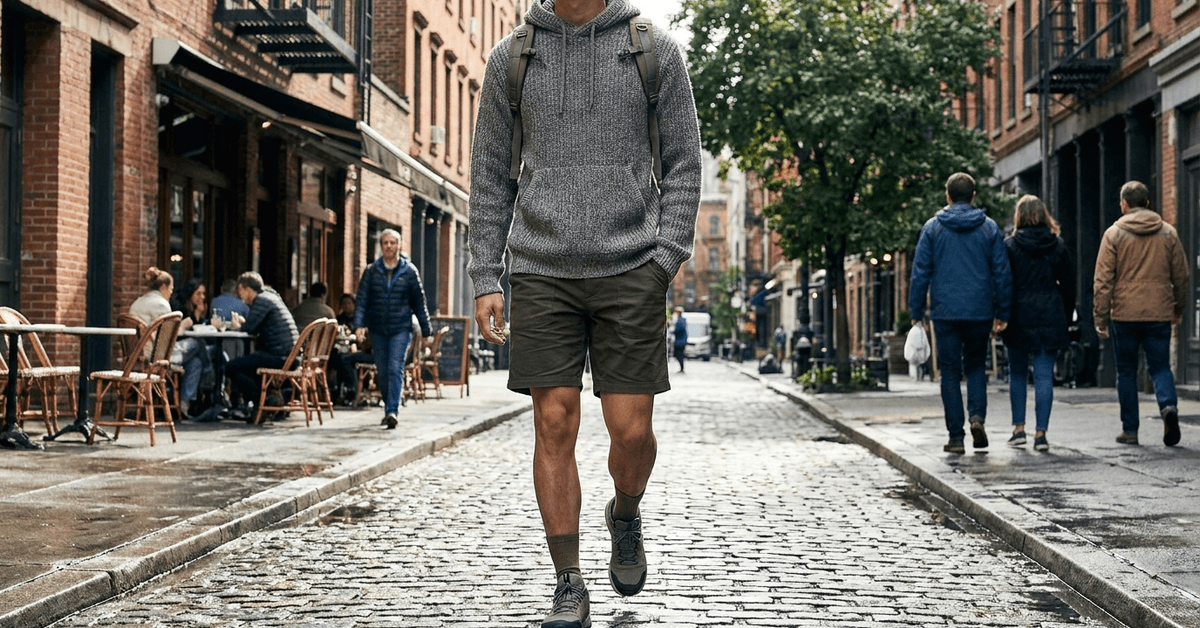
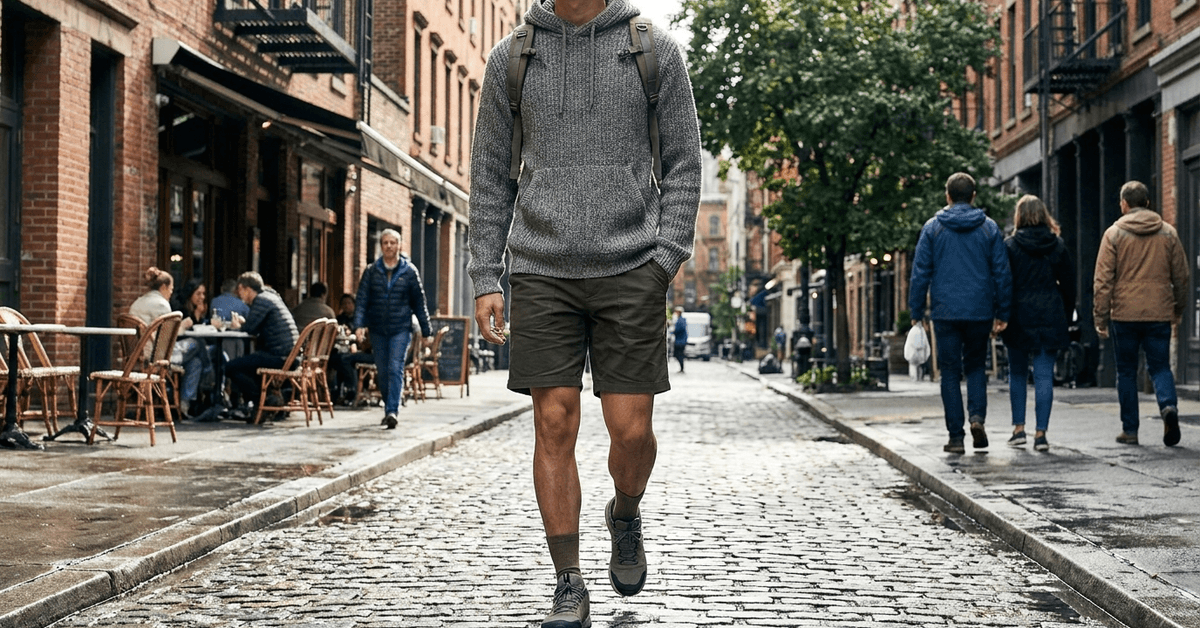
    Pants and a hoodie work fine in the first zone but turn suffocating in the second. Shorts and a t-shirt handle the heat but leave the torso exposed during a chilly wait at a crosswalk or bus stop. The split approach: heavy knit on top, shorts below, lets each half of the body regulate separately.

    I’d argue this split outperforms matched layering specifically for days above 12°C, because legs produce and dissipate heat faster during walking than the torso does while carrying a bag or sitting on transit. 

    The hoodie traps warmth where the body cools quickest. The shorts release heat where the body builds it.

    Picking a Heavy-Knit Hoodie That Survives a City Day

    The wrong hoodie ruins this whole approach. Too bulky and it becomes dead weight by afternoon. Too thin and it does nothing against a cold bridge crossing at 7 a.m.

    Fabric Choices and What They Cost

    Cotton blends with brushed fleece interiors stay breathable and soft. They absorb sweat, though, so a long walk on a warm afternoon can leave them damp and heavy.

    Wool blends add insulation without much bulk. These tend to cost more, but they handle early spring mornings and late autumn evenings in cities like London or Berlin better than cotton.

    Synthetic knits resist water and dry fast. For a city where rain starts without warning (looking at San Francisco and London here), synthetic fabric can save the outfit. The tradeoff: synthetics trap odor faster than natural fibers after a full day of walking.

    Fit That Works on Crowded Transit

    A slightly relaxed cut gives room to layer a t-shirt underneath without looking stuffed. Extra-long sleeves and oversized hoods get caught on handrails, bag straps, and other passengers. 

    A clean shoulder seam and ribbed cuffs that hold their shape matter more in a subway car than they do in a lookbook photo.

    Deep pockets big enough for a phone, transit card, and keys turn the hoodie into a functional piece instead of just an aesthetic one. A hood with adjustable drawstrings blocks wind or light drizzle during a walk between stations.

    Shorts That Hold Up Across Three Weather Zones

    Picking shorts for transitional weather is trickier than grabbing whatever is clean. The fabric and cut need to handle morning chill, midday sun, and the grime of public seating without falling apart visually by dinner.

    Material Picks for City Wear

    • Twill or chino shorts look polished enough for a co-working space or a casual restaurant. They hold structure through a full day and pair well with heavier knit textures on top.
    • Technical fabric shorts dry fast after a surprise rain shower and work for bike commuters who plan routes through apps like Citymapper. These tend to wrinkle less, too.
    • Thin athletic shorts should stay at the gym. They look cold, feel cold in morning shadows, and clash with the intentional streetwear feel of a heavy-knit hoodie.

    Length, Color, and the Stain Problem

    Shorts that hit just above the knee offer the best balance between coverage during wind gusts and ventilation during warm stretches. Anything shorter risks looking out of place at a museum entrance or a café terrace.

    Neutral colors like navy, olive, and grey pair easily with heavy knits and hide city grime. Lighter colors look great for about two hours. 

    Then a park bench, a subway seat, or a rain-splashed sidewalk leaves a mark. My take on white or cream shorts for a city walking day: skip them unless the route stays entirely above ground.

    Feature Chino Shorts Technical Shorts
    Drying speed Slow (cotton-heavy) Fast (synthetic blend)
    Style range Casual to semi-formal Sporty to casual
    Stain resistance Low Moderate to high
    Price range $30–$70 $40–$90

    Chino shorts win on versatility across occasions, while technical shorts handle weather better.

    Layering Moves for When the Forecast Flips Mid-Walk

    The hoodie-and-shorts combo handles a 10-degree range on its own. Past that, a single extra layer or accessory keeps things comfortable without requiring a full outfit change.

    Base Layer Tricks

    A lightweight quick-dry t-shirt under the hoodie lets the hoodie come off entirely during a warm stretch without looking underdressed. Merino crew necks serve the same purpose but add warmth for early mornings when the air still bites.

    The move that separates planned layering from random dressing: the hoodie slung over a shoulder or tied around the waist during warm windows, then back on the moment shade or wind hits. 

    That transition takes five seconds. Changing out of pants does not.

    Rain Backup Without a Full Jacket

    • A packable windbreaker stuffed into a sling bag adds rain protection without replacing the hoodie. It folds down to the size of a sandwich.
    • A compact umbrella protects the hoodie knit from getting waterlogged. Wet wool-blend hoodies gain weight fast.
    • Waterproof sneakers (brands like Vessi or treated Nike models) keep the feet dry when puddles form. This matters more in shorts than pants, because there is no fabric covering the shin to absorb the splash.

    Adjusting the Combo for Different City Scenarios

    The same two pieces shift context depending on color, accessories, and footwear. That flexibility is the entire reason this combination works better than people expect.

    Work Days and Study Sessions

    Structured chino shorts paired with a clean, heavy-knit hoodie and premium sneakers land in the middle ground between dressed up and dressed down. 

    Libraries, co-working spaces, and casual office Fridays all tolerate this look when the pieces are fitted well. A wrinkled oversized hoodie with gym shorts sends a different message entirely.

    Full Exploration Days

    Technical shorts with cargo-style pockets, a hoodie, and walking shoes turn the outfit into a functional uniform for hours of sightseeing. 

    The pockets carry everything a small daypack would, and the hoodie’s hood doubles as sun protection during long stretches through open plazas.

    Evening Plans

    Darker color palettes (black hoodie, charcoal shorts) dress the combo up enough for rooftop bars, casual bistros, and outdoor music events. A lightweight scarf or a structured cap adds a visual layer without any warmth penalty.

    One thing to check before heading to a sit-down dinner or a major museum: some venues in cities like Milan and Paris enforce dress codes that exclude shorts entirely. A quick look at the venue’s website saves an awkward redirect at the door.

    Weather Apps That Make This Outfit Strategy Practical

    The split-layer approach works best when the wearer checks conditions hour-by-hour rather than relying on a single morning forecast. Two apps make this easier than it sounds.

    AccuWeather provides hyperlocal hourly forecasts that break a day into manageable windows. Checking the next two hours of rain probability before leaving a café decides whether the hoodie stays on or the windbreaker comes out of the bag.

    Citymapper routes around weather by suggesting underground or sheltered paths when conditions turn. 

    Combining a weather forecast with a transit route creates a plan that keeps the outfit performing all day instead of fighting the elements after the first hour.

    Questions People Ask About Shorts and Hoodies for City Weather

    A few things tend to come up when people consider this outfit for real daily use rather than just weekend walks.

    • Q: Can shorts and a hoodie work below 10°C?
      Below 10°C, bare legs get uncomfortable fast, especially in wind. The combo performs best in the 12°C to 25°C range where the temperature swings hard enough to punish a single-layer outfit but stays warm enough that legs can self-regulate.
    • Q: Do heavy-knit hoodies work on planes or long train rides?
      They double as a travel pillow and temperature control in one piece. Airplane cabins and train cars run cold, so the hoodie stays useful while shorts keep legs from sticking to seats during longer trips.
    • Q: Are there cities where this combo looks out of place?
      Conservative business districts in Tokyo, Milan, and parts of London may read shorts as too casual regardless of the hoodie quality. Residential neighborhoods and creative districts in those same cities accept the look without a second glance.
    • Q: How do I wash a heavy-knit hoodie without ruining the shape?
      Cold water and a gentle cycle prevent the knit from shrinking or pilling. Lay it flat to dry instead of hanging it, because the weight of a wet heavy knit stretches the shoulders out permanently.
    • Q: What shoes ruin this outfit fastest?
      Sandals and flip-flops pull the look toward beach territory, which clashes with the urban intent of a heavy hoodie. Chunky boots swing too far formal. Clean sneakers keep the outfit in its lane.

    Conclusion

    The hoodie-and-shorts split works because cities throw multiple seasons at pedestrians within a single afternoon. Matching layers top and bottom ignores how differently the torso and legs regulate heat during active movement. 

    A good heavy knit paired with the right shorts handles more daily variation than most full outfits do. Try it on a day when the forecast shows a 10-degree swing and see which approach has you reaching for a change of clothes first.

  • 7 Casual Friday Outfits Inspired by Modern Urban Trends

    7 Casual Friday Outfits Inspired by Modern Urban Trends

    Casual Friday advice almost always stops at the office door. The outfit that performs at 9 AM in a conference room still needs to hold up at 7 PM on a bar patio.

    That gap between “office appropriate” and “city evening” is where outfit guides fall apart. They pick one version of the day and ignore the rest.

    This is for the hybrid worker who bikes or trains to the office and has plans lined up after. The person whose Friday outfit needs to cover six hours and three locations.

    An Unstructured Blazer Does More Than Any Other Piece

    A single layer piece carries more of the outfit’s weight than shoes, pants, or accessories combined. The unstructured blazer is that piece for casual Fridays, and it costs less mental energy than planning around a “statement” item.

    Soft Structure, Real Versatility

    The trick is to skip the boardroom blazer and go unstructured. A soft-shouldered navy or taupe blazer works over a graphic tee for lunch, a crewneck for the office, and a cotton button-up for dinner. Two outfits spring from one piece. Zero outfit changes required.

    Image 1

    Cities like Paris and Amsterdam have leaned hard into this approach. The preferred formula there is block colors, subtle prints, and relaxed fits that move well on a bike or a crowded metro car.

    Layering a Blazer for Weather Shifts

    A lightweight blazer doubles as a weather layer in spring and fall. Pair it with a moisture-wicking base underneath for the commute, and strip down to the blazer alone for indoor office hours. The blazer stays on all day while everything underneath adjusts.

    This is where a structured suit jacket fails. It traps heat, wrinkles when stuffed into a bag, and looks rigid next to relaxed Friday energy. The unstructured version handles all of that without complaint.

    Statement Sneakers Are the Wrong Place to Spend Casual Friday Energy

    Bold sneakers get a lot of attention in casual Friday recommendations. Zurich, Barcelona, and most Northern European offices have been sneaker-friendly for years. But the advice to build an outfit around a statement pair has a structural problem.

    The Focal Point Trap

    I’d push back on the idea that statement sneakers should anchor a casual Friday outfit. 

    A $200 pair of eye-catching sneakers narrows what works with them: neutral chinos, a plain shirt, and nothing else that competes for attention. That locks an outfit into a single formula every Friday.

    Compare that to spending the same budget on an unstructured blazer that pairs with sneakers, Chelsea boots, loafers, jeans, chinos, and joggers. The blazer multiplies outfit options. The statement sneaker reduces them.

    Shoes That Work Harder

    Low-profile sneakers in white, black, or grey pair with nearly anything. Chelsea boots transition cleanly from office to restaurant. City loafers handle the same range. These options open up the rest of the outfit instead of restricting it.

    The smart move is to spend shoe budget on two versatile pairs rather than one loud pair. A clean white sneaker and a dark Chelsea boot cover 90% of casual Friday situations.

    Outfit Formulas for Specific City Scenarios

    Different Fridays call for different combinations. A morning-only office day demands different clothes than a day ending at a rooftop bar or a gallery opening. These formulas break down by scenario, not by trend name.

    Denim That Reads as Polished

    A clean pair of indigo or black slim-fit jeans rarely feels wrong on city streets. The pairing matters more than the denim itself. 

    Tuck a cotton blouse or fine-knit sweater into the waist, throw on a lightweight trench or tailored overshirt, and the look reads polished without trying hard.

    Milan’s approach to casual denim adds a single accessory as punctuation: a sleek belt, a minimal ring, or a clean bracelet. One addition. Not three.

    How City Scenarios Change the Formula

    Scenario Bottom Top Layer Shoes
    Office only, no evening plans Tailored joggers or chinos Crewneck + unstructured blazer Low-profile sneakers
    Office + drinks after Slim-fit dark jeans Button-up + lightweight overshirt Chelsea boots
    Office + outdoor event Technical chinos Moisture-wicking polo + weather shell Clean running-inspired shoes
    All-day city errands + meeting Straight-leg chinos Cotton tee + bomber jacket City loafers

    The pattern across all four: dressier bottoms and shoes shift the same top layers from casual to sharp.

    Sport-Luxe for Active Commuters

    Cropped tailored pants or joggers with zip details paired with a casual blazer or zip-sweater work for the person who walks or bikes to work. Low-profile running-inspired shoes keep the look city-appropriate without screaming gym.

    A single pulled-together accessory, like a clean watch or structured bag, separates this from gym-adjacent territory. Los Angeles and Sydney have been running this formula for years, and it holds up in offices where nobody bats an eye at performance fabrics.

    Monochrome: The 90-Second Casual Friday Hack

    One of the least discussed casual Friday strategies has nothing to do with specific pieces. It has to do with color. Monochrome outfits take the matching problem off the table entirely, and that is exactly why it deserves more attention than it gets.

    Building a Monochrome Outfit

    Pick a color family: black, grey, or beige. Select pieces in that family and mix textures instead of colors. Cottons next to knits. Matte next to a hint of shine. Shoes in a matching shade.

    Copenhagen and Tokyo professionals lean heavily on this approach. I was surprised that an all-grey outfit: grey chinos, grey merino crewneck, grey suede Chelsea boots, pulled together in 90 seconds, read as more intentional than a coordinated multi-color look that took ten minutes to assemble. Speed and style rarely line up that neatly.

    A crossbody bag or structured tote in the same tone finishes the look without breaking the palette.

    Technical Fabrics for Unpredictable Weather

    Cities like Seoul and San Francisco swing between sunshine and rain inside a single afternoon. Technical fabrics handle that without forcing outfit changes or emergency shopping runs.

    The formula starts simple:

    • A moisture-wicking tee or polo as a base layer
    • A weather-resistant lightweight shell in a muted color like olive, charcoal, or navy
    • Technical chinos or slim joggers that dry fast and resist wrinkles
    • A minimalist backpack that fits a laptop and a change of shoes

    Brands like Outlier have built entire lines around this concept. Their pieces adapt to city microclimates without looking like hiking gear, and the price-per-wear math works in their favor for anyone commuting five days a week.

    Prints, Patterns, and the Small Moves That Matter

    Casual Fridays are where a patterned piece earns its spot in the rotation. The rest of the workweek rarely leaves room for micro-florals or geometric prints, but Friday does.

    Keeping Prints Grounded

    The rule that works across Lisbon, Toronto, and most mid-size cities: one patterned piece per outfit, everything else plain. A geometric-print shirt with solid chinos and a simple jacket reads confident. Two patterns on one body reads chaotic.

    Small details count too. Contrast socks or a patterned pocket square add personality without risk. These work for client meetings and city errands equally well.

    Wardrobe planning apps like Stylebook let users photograph their clothes and test print combinations digitally. That saves the “this looked better in my head” moment at 7:30 AM.

    Sustainability Ratings for Smarter Shopping

    Eco-conscious shoppers can compare clothing brands through Good On You, a platform that rates brands on labor practices, environmental record, and animal welfare. Buying fewer, better pieces fits the casual Friday philosophy of quality over volume.

    Quick Styling Moves That Take Zero Extra Time

    A few small adjustments make casual Friday outfits look sharper without adding effort:

    • Roll shirt sleeves to the mid-forearm. It reads relaxed and intentional at the same time.
    • Tuck the front of a shirt loosely (the “French tuck”) to define the waist without looking stiff.
    • Match belt color to shoe color. This one rule handles 80% of accessory coordination.
    • Check weather apps the night before. A surprise downpour can wreck an outfit built around suede shoes or cotton layers.

    Questions People Ask About Casual Friday Outfits

    People search these questions more often than expected. A few answers that go beyond the surface.

    • Q: Can I wear joggers to the office on casual Friday?
      Tailored joggers made from structured fabrics pass in most creative and tech offices. The fabric matters more than the silhouette. Cotton sweatpant-style joggers still read as weekend loungewear, so check the material tag before packing them in the bag.
    • Q: How do I know if my casual Friday outfit is too casual?
      Look at the shoes and collar. If both are soft (flip-flops and a hoodie), dial one of them up. A structured shoe or a collared shirt is usually enough to cross the line into office-appropriate territory.
    • Q: Are jeans appropriate for casual Friday in corporate offices?
      Dark, clean-fitting jeans work in most corporate settings in 2026. Distressed or light-wash pairs tend to read as too informal. Pairing jeans with a blazer or structured jacket shifts the look toward professional without overcomplicating it.
    • Q: Should I match my casual Friday outfit to my commute?
      Absolutely. Bike commuters benefit from technical fabrics and wrinkle-resistant pants. Public transit riders can get away with more structured pieces. The commute shapes the outfit as much as the office dress code does.
    • Q: How many casual Friday outfits do I need in rotation?
      Three to four combinations using interchangeable pieces cover a full month without exact repeats. A blazer, two pairs of pants, and four tops create enough variety. The math works better with neutral base colors that mix freely.

    Conclusion

    Casual Friday planning gets easier once the outfit serves the whole day, not a single hour. A reliable layer piece beats a flashy statement item when budget and versatility both matter. 

    Monochrome and technical fabrics solve the two biggest friction points: decision fatigue and weather surprises. The strongest Friday outfit is the one that still looks right at 9 PM.

  • The Ultimate Guide to Deep Cleaning Skate Shoes

    The Ultimate Guide to Deep Cleaning Skate Shoes

    Suede skate shoes pick up permanent water marks during cleaning, not during skating. The scrubbing itself does more damage than a month of city sidewalks.

    Most cleaning tutorials treat every skate shoe the same way. A canvas Vans Old Skool and a suede Nike SB Dunk need completely different methods, different amounts of water, and different drying times.

    This matters if you commute, skate, or just walk through cities like New York, Berlin, or London in shoes that cost $80 or more. The grime builds fast. The wrong cleaning method costs even faster.

    I’d aim this at the daily-wear skater spending five days a week on concrete and public transport, staring at shoes that looked fresh two weeks ago and now look like they survived a construction site.

    Suede Gets Damaged During Cleaning, Not Skating

    The single biggest mistake in skate shoe care happens when someone dunks a suede shoe into soapy water the same way they’d clean a canvas pair. 

    Suede fibers absorb moisture differently than woven fabric. Over-saturating suede during cleaning causes permanent discoloration, stiff patches, and tide lines that no amount of brushing removes.

    Canvas shoes can handle a damp cloth, a scrub brush, and a generous amount of mild detergent. Suede cannot. 

    The distinction sounds obvious when stated plainly, but most step-by-step guides online bury this detail three paragraphs into a generic “cleaning uppers” section, if they mention it at all.

    Canvas Takes Water. Suede Doesn’t.

    Canvas uppers tolerate warm water mixed with a few drops of mild laundry detergent. A microfiber cloth works for general grime, and a sneaker cleaning brush or old toothbrush handles stubborn spots. Circular motions on high-traffic areas pull dirt out of the weave without fraying threads.

    Suede uppers need minimal moisture. A dry suede brush removes surface dust. For stains that won’t budge, a barely-damp cloth with a tiny amount of detergent can be applied to the specific mark. The surrounding area should stay dry. 

    Any water that spreads across the suede panel will leave a visible ring once the shoe dries.

    Brands like Nike SB and Vans Pro sometimes include material-specific care notes on the shoe label or inside the tongue. Checking that label before scrubbing takes ten seconds and can save $90 worth of shoes.

    A $3 Cleaning Setup Does What $20 Sneaker Kits Do

    Dedicated sneaker cleaning products have built a whole culture around themselves. Bottles of Jason Markk or Reshoevn8r run $15 to $20 per kit, and skate shops push them hard. 

    I would skip both for daily-wear skate shoes and spend that $20 on a box of baking soda, a bottle of mild dish soap, and a cheap pack of microfiber cloths.

    The reasoning is simple. The active cleaning agents in most sneaker-specific solutions are mild surfactants. The same surfactants sit in a $3 bottle of dish soap on your kitchen counter. 

    For canvas and synthetic uppers, there is no performance gap between a name-brand sneaker cleaner and diluted dish soap applied with the same brush.

    Baking Soda on Rubber Soles

    The one area where a specialized product might seem tempting is white rubber midsoles. Scuff marks, yellowing, and embedded street grit can make clean uppers look worse by contrast. 

    But baking soda mixed into a paste with a little water handles rubber better than most dedicated sole cleaners.

    Spread the paste over scuffed rubber sections, scrub gently with a toothbrush, and wipe clean with a damp cloth. A Mr. Clean Magic Eraser on dry rubber also works for quick touch-ups between deep cleans, especially on white midsoles before a night out.

    I’d keep the Jason Markk bottles for collectors maintaining deadstock pairs or rare collaborations. For a daily pair of skate shoes that hits pavement five days a week? Dish soap and baking soda. Save the money for new grip tape.

    Deep Cleaning Skate Shoes Step by Step

    A proper deep clean follows a specific order. Jumping straight to scrubbing uppers while laces are still threaded through eyelets traps dirty water behind the tongue and inside the collar. Preparation matters as much as the scrub itself.

    Prep the Shoes First

    Pull the laces out completely and remove the insoles. Tap the soles together outdoors or over a trash can to knock off loose dirt, pebbles, and dried mud. 

    A dry brush pass over the uppers at this stage removes surface dust that would otherwise turn into muddy paste the moment water hits the shoe.

    This is also the right time to check the shoe label for material-specific warnings. Some synthetic mesh panels react badly to hot water.

    Cleaning Uppers by Material Type

    The method splits based on what the upper is made of:

    • Canvas or synthetic mesh: dampen a microfiber cloth in warm soapy water, blot and gently scrub high-traffic areas, then target stubborn marks with a small brush using circular motions
    • Suede or nubuck: use a dry suede brush for dust, spot-treat specific stains with a barely-damp cloth, and keep water away from surrounding panels
    • Leather or synthetic leather: wipe down with a damp cloth and mild soap, then dry immediately with a clean towel to prevent water spots

    Scrubbing Rubber Soles and Midsoles

    After the uppers are clean, flip the shoe over. The baking soda paste method works here. Apply, scrub with a toothbrush, wipe off. For deeply embedded grit in the tread pattern, an old toothbrush reaches into grooves that a flat cloth cannot.

    Component Cleaning Method Drying Time
    Canvas uppers Warm water + mild detergent, microfiber cloth 6 to 12 hours air dry
    Suede uppers Dry brush + minimal damp spot cleaning 12 to 24 hours, no direct heat
    Rubber soles Baking soda paste + toothbrush scrub 1 to 2 hours
    Insoles Soapy water hand scrub, rinse, air dry 12 to 24 hours
    Laces Mesh bag in washing machine, cold cycle 4 to 6 hours

    Suede takes the longest because it needs the most controlled environment during drying.

    Laces and Insoles Get Separate Treatment

    Toss laces into a mesh laundry bag and run them through a cold wash cycle with other light-colored items. Scrub insoles by hand with soapy water, rinse gently, and let them air dry completely before putting them back in the shoe.

    Replacing insoles before they are fully dry creates a trapped-moisture environment inside the shoe. That leads to bacterial growth and the kind of smell that no amount of Febreze fixes.

    Stain Removal for City Grime on Skate Shoes

    Different stains on skate shoes need different treatments. The all-purpose scrub that works on general dirt will set an oil stain permanently or spread a coffee stain wider.

    Coffee, Oil, and Grass Each Need Different Treatment

    City life produces specific messes. Coffee splashes from a sidewalk cup, grease from street food, grass streaks from park sessions. Each one has a targeted fix:

    • Oil and grease stains: apply a small amount of cornstarch directly to the spot, wait five minutes for it to absorb the oil, then brush off and dab with a damp soapy cloth. Repeat if the mark persists.
    • Coffee and beverage stains: blot immediately with cold water to prevent setting. For older, dried stains, a diluted white vinegar solution lifts the discoloration without damaging fabric.
    • Grass and soil stains: a blend of baking soda and detergent scrubbed gently into the mark, left to sit for a few minutes, then wiped away. This combination breaks down chlorophyll better than soap alone.

    The common thread across all three: blot, don’t rub. Rubbing pushes the stain deeper into fabric fibers and spreads the affected area.

    Drying Skate Shoes Without Wrecking the Shape

    More shoes get ruined during drying than during cleaning. Placing freshly washed skate shoes near a radiator, using a hairdryer, or leaving them in direct sunlight degrades adhesive bonds between the sole and upper. Heat warps rubber and shrinks canvas.

    The correct method: pat dry with a towel, stuff with paper towels or clean packing paper, and set near a window for natural air circulation. Avoid direct hot air entirely.

    Protection Sprays After Deep Cleaning

    Once shoes are fully dry, a stain and water repellent spray adds a barrier against the next round of city grime. Crep Protect is a popular choice among urban skaters for post-clean protection. Spray evenly, focusing on seams and toe caps where water tends to seep in first.

    City humidity slows drying time for the spray itself, so allow extra time beyond what the label suggests. A shoe sprayed and worn before the repellent cures offers almost no protection.

    Frequency matters too. Heavy daily wearers benefit from a deep clean every four to six weeks, with spot cleaning between sessions. Lighter users can stretch to every two or three months, paired with a weekly dry brush and quick wipe-down.

    A soft brush pass before heading out the door each morning keeps surface grit from grinding into fabric throughout the day. That ten-second habit reduces how often a full deep clean is needed.

    Questions People Ask About Deep Cleaning Skate Shoes

    Skate shoe care brings up a lot of specific questions, especially for city wear. These are the searches that come up most often.

    • Q: Can I put skate shoes in the washing machine? Machine washing works for some canvas shoes on a cold, gentle cycle inside a mesh bag. But the agitation can delaminate glued soles and warp padded collars. Hand cleaning gives more control and carries far less risk for shoes that cost $80 or more.
    • Q: How do I get the smell out of skate shoes without washing them? Sprinkling baking soda inside each shoe overnight absorbs odor-causing bacteria. Shake the powder out the next morning. Doing this once a week between deep cleans keeps smell manageable without involving water at all.
    • Q: How do I clean white skate shoe laces that have turned gray? Soaking laces in a mix of warm water and a tablespoon of baking soda for thirty minutes before machine washing lifts embedded dirt that regular detergent misses. Bleach works faster but weakens the fibers over time, so baking soda is the safer long-term move.

    Conclusion

    A proper deep clean adds weeks of life to skate shoes that take daily punishment on city streets. Suede and canvas need different methods, and treating them the same way is the fastest path to permanent damage. 

    The drying step matters more than the scrubbing step, which is the part most cleaning guides rush through. Spending $3 on baking soda and dish soap beats a $20 sneaker kit for shoes that hit pavement every single day.